
Catch the Flavor: Easy Homemade Fish Jerky Recipe Guide
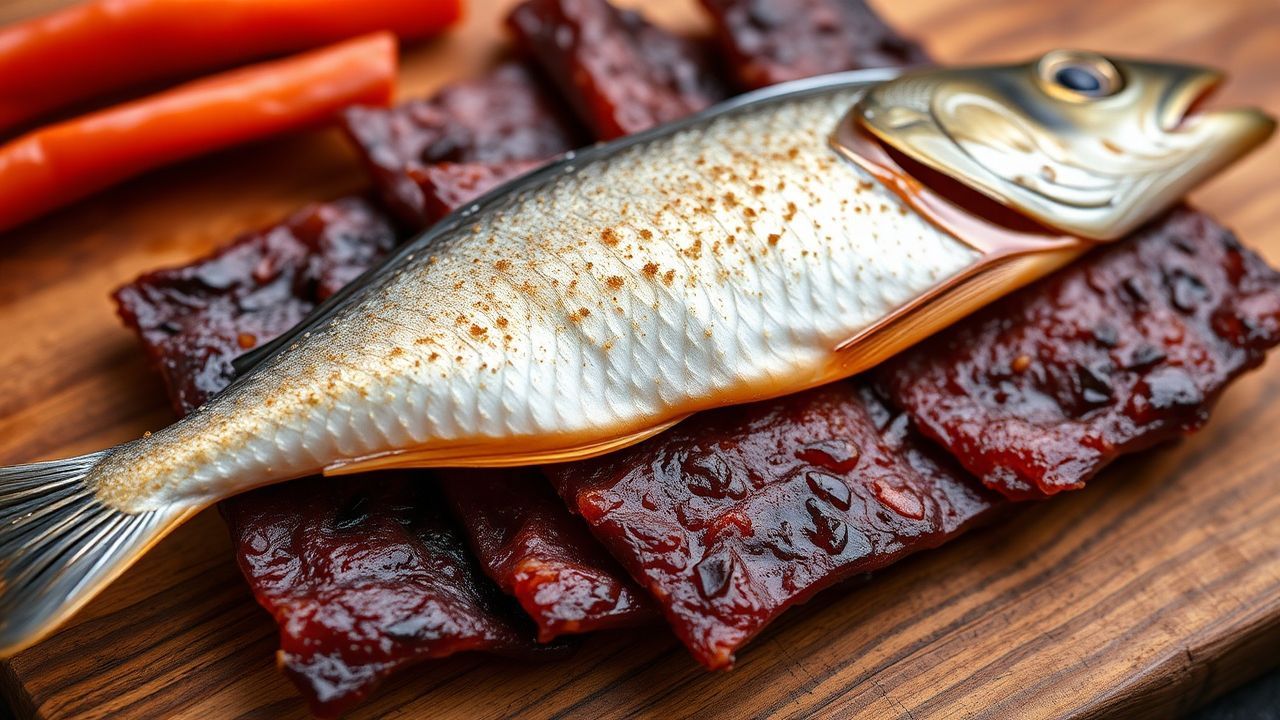
There is a deep, satisfying chew to well-made fish jerky that balances smoky, salty, and savory notes. This guide breaks down each step so you can make consistent, high-quality jerky at home using common tools and predictable techniques.
- Make-safe method: Slice thin, marinate, and dry to proper internal temperatures.
- Texture control: Cut against the grain for tenderness and test for pliability.
- Storage: Airtight or vacuum seal for the longest shelf life; refrigerate or freeze for months.
Prep and Cook Time
Preparation: 20 minutes for trimming, slicing, and mixing a marinade. Keep knife work steady to maintain even strip thickness.
Marinating: 6–8 hours is standard; overnight intensifies flavor. Plan time so drying starts with cold, well-drained strips.
Yield
This recipe yields about 6–8 servings depending on fillet thickness and moisture loss during drying. Expect roughly a 30–50% weight reduction from fresh fish to finished jerky.
Scale ingredients linearly: every 1 lb fresh fillet produces roughly 4–6 ounces of finished jerky. Adjust marinade quantity to fully cover the strips without drowning them.
Difficulty Level
Medium: The technique is simple but demands consistent slicing and attention to drying time. Small mistakes in thickness or temperature make the biggest difference in texture.
Use kitchen scales and a reliable thermometer for repeatable results. A dehydrator simplifies control; an oven needs monitoring and door-ajar ventilation.
Ingredients
Select lean, firm-fleshed fish for reliable results. Popular options include cod, salmon, pollock, or tuna; these dry evenly and give good chew.
- 1 lb fresh white fish fillets (skin removed)
- 1/2 cup soy sauce (low sodium preferred)
- 2 tbsp maple syrup or honey
- 1 tbsp apple cider vinegar
- 2 cloves garlic, minced
- 1 tsp smoked paprika
- 1/2 tsp black pepper, freshly ground
- 1 tsp cayenne (optional)
- 1 tsp sea salt
- 1 tsp liquid smoke (optional)
Substitute tamari for a gluten-free soy alternative or swap maple for honey to shift sweetness and mouthfeel. Keep salt level moderate to aid preservation while balancing flavor.
Instructions
Slice the fish: Trim fat and cut into strips about 1/4 inch thick, slicing against the grain for a tender bite. Aim for consistent strips so drying finishes uniformly.
Prepare the marinade: Whisk soy sauce, maple syrup, apple cider vinegar, garlic, smoked paprika, black pepper, cayenne, sea salt, and liquid smoke in a non-reactive bowl. Transfer marinade and fish into a zip-top bag to ensure full coverage.
Marinating and handling
Submerge strips fully and refrigerate 6–8 hours; overnight intensifies the flavor. Remove and shake off excess marinade—some surface moisture helps texture development during drying.
Place strips single-layer on dehydrator trays or on wire racks over a sheet pan for oven drying. Ensure air can circulate on all sides for even dehydration.
Drying methods
Set a dehydrator or oven to 145–160°F (63–71°C). Maintain steady temperature and air movement; err on the side of longer, lower drying for tenderness.
Dry 6–10 hours, testing after 6 hours. Finished jerky should be firm but pliable—not brittle. Cool completely before packing to avoid trapped moisture.
After drying, let jerky rest at room temperature until fully cool. Then package in airtight containers, vacuum bags, or resealable pouches with desiccant if storing at room temperature.
Chef’s Notes
Choose lean cuts and remove silver skin; fat can turn rancid and shorten shelf life. Texture depends on both cut direction and final moisture content.
Swap flavor elements to create variations: add ginger and scallion for an Asian profile or lemon zest and dill for brightness. Keep total salt and sugar levels consistent to protect safety and texture.
Let one full paragraph pass after the TIP block before adding any other callout. After this, note that liquid smoke provides aroma but not preservation; rely on time, temperature, and salt for safety.
Serving Suggestions
Serve fish jerky as a protein-forward snack on hikes, paired with citrus-soy dips, or crumbled over salads for a smoky punch. The chew pairs well with crisp vegetables or nutty grains.
Store small portions in single-serve bags for portion control and minimal resealing. Freeze long-term portions and thaw at room temperature when ready to eat for best texture.
Nutritional Snapshot
Per serving, fish jerky typically delivers a high protein count with low fat, depending on fish choice. A 1-ounce serving often runs 80–100 kcal with 15–20 g protein when made from lean white fish.
Adjust marinade sugar content to change carbohydrate counts. For strict low-carb plans, omit maple/honey and use a low-carb sweetener or no sweetener at all.
Food Safety and Storage
Follow validated time-temperature pairs when drying and use sanitary handling throughout. Refrigerate fresh fillets immediately and avoid cross-contamination with other raw proteins.
For room-temperature storage, use airtight containers and consume within 2–3 weeks. For extended storage, vacuum-seal and freeze up to three months; thaw at room temperature before use.
Q&A
Q&A: Catch the Flavor – Easy Homemade Fish Jerky Recipe Guide
What makes fish jerky a great snack option?
Fish jerky packs high-quality protein in a lightweight form that travels well. The concentrated flavors and compact size make it ideal for active outings and quick energy boosts.
Leaner species deliver long-lasting chew without greasiness, and homemade control ensures lower additives and clearer ingredient lists.
Which fish work best?
Lean, firm-fleshed species like cod, salmon, tuna, and mahi-mahi dry predictably and yield a pleasant texture. Avoid very oily fish if you want extended shelf life.
Fat shortens shelf life and can make jerky soft or greasy. Trim visible fat to extend storage life and maintain texture consistency.
How do I ensure my jerky is safe?
Start with fresh fish, use a salt-based marinade, and dry at 145–160°F (63–71°C) until strips are firm but pliable. Use a food thermometer to verify equipment temperature and check strips for consistent dryness.
Store in airtight packaging and refrigerate or freeze for long-term safety. Food preservation principles like proper dehydration and sanitation prevent spoilage and foodborne illness; see food preservation for background theory.
How long does homemade fish jerky last?
At room temperature in airtight packaging, expect 2–3 weeks. Refrigerated jars or vacuum-sealed bags extend this to several months; frozen vacuum-sealed portions last up to three months without major quality loss.
Always inspect for off-odors or visible mold before eating and discard any suspect packages immediately.
Insights and Conclusions
Fish jerky rewards careful prep and precise drying with a nutritious, portable snack. Small technique tweaks—consistent slicing, proper marinating, and steady drying—produce reliably good results.
Use the methods here as a baseline, then iterate on flavor and storage. Track times and temperatures for each batch to build a reproducible home production routine.
Further reading
To deepen your technical understanding, read about jerky traditions and drying techniques on Wikipedia: jerky and food drying. These pages outline historical context and preservation science used across cultures.
Apply those fundamentals, combine them with careful sanitation, and you will consistently catch great flavor in every batch.
See also: fish jerky