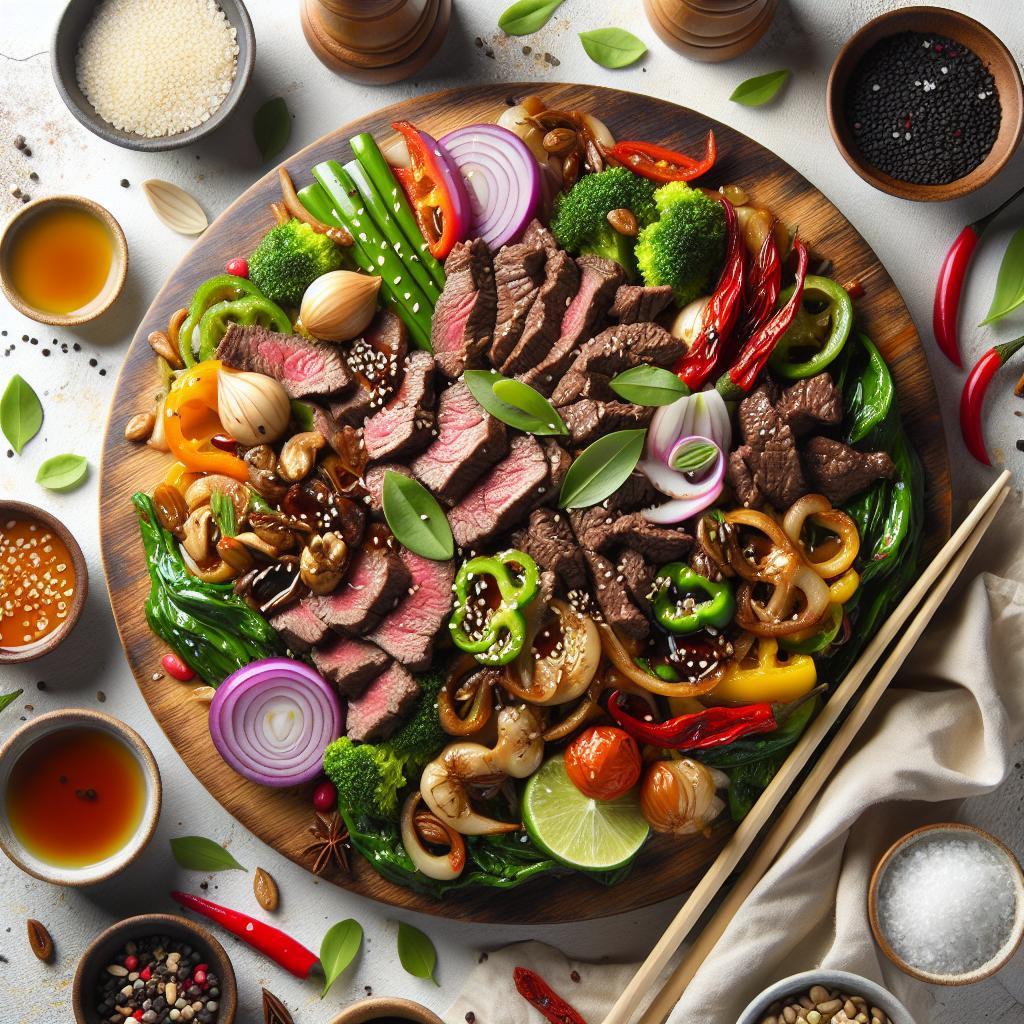

Beef Oriental channels classic Asian techniques to deliver bold, balanced flavors and satisfying texture. Thinly sliced beef, a concentrated marinade, and a rapid stir-fry sear produce a dish that works equally well for weeknight cooking or small dinner parties.
- High-heat sear: Thin slices and a very hot pan lock juices quickly.
- Sauce balance: Salt, acid, and a touch of sweetness create depth.
- Textural contrast: Crisp vegetables give lift to tender beef.
Prep and Cook Time
Preparation: 20 minutes. Keep mise en place tight: slice, measure, and organize before heating the pan. Preparing everything up front ensures the rapid cook phase runs smoothly.
Marination: 1–2 hours for flavor penetration. Shorter marination still yields good results, while excessive acid exposure can alter texture.
Cooking: 12–15 minutes active time. Most time goes into searing and a final toss; resting is minimal because the dish shines when served immediately.
Yield
This recipe yields 4 generous portions when paired with rice or noodles. Portions scale linearly, but keep wok crowding in mind; cook in batches for larger quantities.
Leftovers reheat well for one additional meal. Reheat briefly over medium heat to preserve tenderness and avoid overcooking the beef.
Difficulty Level
Rated Medium — this recipe asks you to master fast, high-heat technique and precise timing. If you have solid knife skills and basic stove control, you will succeed.
Professional tip: a well-seasoned wok or a heavy skillet gives the most even sear. Aim for hot oil that shimmers but does not smoke excessively.
Ingredients
Below are ingredient groups and rationale. Each group supports a specific function: flavor, texture, or finishing aromatics.
Use quality beef and fresh aromatics for the best results. Precise measurements help, but adapt seasoning to taste during the final toss.
Marinade Components
600 g sirloin, thinly sliced against the grain ensures tenderness. Cut to uniform thickness so all pieces cook at the same rate.
Combine soy, oyster, toasted sesame oil, honey, garlic, ginger, and five-spice for a layered profile. For background on soy sauce and its role in umami, review the culinary science behind it.
Aromatics and Vegetables
Use fresh garlic and grated ginger to build immediate aroma during searing. Onions and bell peppers provide sweetness and crisp texture.
Add scallions at the end for a bright finish and optional coriander for herbal lift. Red pepper flakes offer controlled heat if desired.
Pan Oil and Acids
Neutral vegetable oil tolerates high temperatures for searing. A splash of rice vinegar or a citrus squeeze adds brightness to balance salt and sweetness.
For gluten-free preparation, substitute tamari for soy sauce and maintain the same salt-to-acid balance for a comparable finish.
Instructions
Follow these steps to retain beef juiciness and achieve glossy sauce adhesion. Prepare all components before turning on heat; stir-frying demands speed.
Work in single batches if your pan is small to avoid steaming the meat. A full pan reduces surface contact and prevents browning.
Step-by-step Technique
1. Mix the marinade: Whisk soy sauce, oyster sauce, sesame oil, honey, garlic, ginger, five-spice powder, red pepper flakes, and rice vinegar until combined. This concentrated mix seasons and caramelizes quickly at high heat.
2. Marinate the beef: Toss the sliced beef with the marinade and chill for 1–2 hours. Marinating for up to 3 hours deepens flavor, but avoid much longer where acid can change texture.
Pan Work
3. Heat the wok: Add oil and heat until it shimmers. A properly hot surface is essential to a clean sear and minimal moisture loss.
4. Cook the vegetables: Stir-fry onions and bell peppers 2–3 minutes until tender-crisp, then push them to the wok side. Cook quickly to preserve color and crunch.
Sear and Finish
5. Sear the beef: Add marinated beef in a single layer and sear 3–5 minutes until edges brown and internal color is uniform. Turn pieces once to prevent overcooking.
6. Combine and glaze: Mix vegetables back in, toss once to meld flavors, and remove promptly from heat. Overcooking at this stage reduces tenderness and dulls aromatics.
Tips for Success: Elevate Your Beef Oriental
Quality cuts matter: Choose sirloin or flank for quick-cook applications; they deliver a good chew without heavy fat. Thin, uniform strips produce consistent results.
Temperature control: Aim for rapid heat and short contact time. That approach preserves juiciness and creates the desirable Maillard crust on the beef.
Adjust seasoning at the final toss rather than during marination. The sauce concentrates during searing, so a small splash of rice vinegar or sugar can rebalance flavor quickly.
Serving Suggestions
Serve Beef Oriental over steamed jasmine rice to absorb sauce, or pair with wheat or rice noodles for a broader texture range. A wedge of lime brightens the final bite.
A side of quickly blanched bok choy or a crisp Asian slaw complements the dish. Finish with toasted sesame seeds or extra scallions for visual contrast and aroma.
Nutritional Snapshot
Per serving estimates depend on cut and portion size; the sample nutrition is typical for a sirloin-based version with modest oil.
| Nutrient | Per Serving |
|---|---|
| Calories | 320 kcal |
| Protein | 35 g |
| Carbohydrates | 12 g |
| Fat | 14 g |

FAQ
This FAQ addresses common execution and adaptation questions for Beef Oriental. Answers focus on practical technique and ingredient swaps.
Each question below gives concise, actionable guidance for home cooks to replicate restaurant-style results.
Can I use a different cut of beef?
Yes. Lean cuts like flank or skirt work well when sliced thinly against the grain. They sear quickly and stay tender when not overcooked.
If you use a fattier cut, reduce added oil and trim visible fat to prevent smoking and excess grease in the pan.
How long should I marinate the beef?
Marinate 1–2 hours for reliable flavor infusion. A brief 20–30 minute toss still seasons the surface but yields less depth.
Avoid acidic marinades beyond 3 hours on thin slices; prolonged acid exposure can firm proteins and change texture.
Can I make Beef Oriental gluten-free?
Yes. Replace soy sauce with tamari or a certified gluten-free soy sauce alternative. Maintain the same salt ratio for balance.
Check oyster sauce labels for shellfish or gluten; consider a mushroom-based umami sauce as an alternative to keep the flavor profile robust.
How do I prevent the beef from becoming tough?
Slice against the grain and keep cooking times short at very high heat. Resting the meat before searing helps create a consistent internal temperature for better browning.
Do not over-marinate in acidic ingredients; and avoid prolonged reheating which further toughens lean proteins.
What beverage pairs best with Beef Oriental?
Light, aromatic teas such as jasmine or green tea complement the dish without overpowering its umami. Their palate-cleansing quality refreshes between bites.
For wine, choose a light-bodied red or a dry Riesling; both handle savory sauces and modest spice without clashing.
Final Notes
Beef Oriental rewards precise preparation and controlled heat. When you respect timing and the balance of salt, acid, and sweetness, the result tastes refined and layered.
Practice slicing and pan technique once or twice and you will notice consistent improvement. Use the tips above to tweak the recipe to your palate and available ingredients.
For more context on cooking techniques referenced here, consult resources on stir-frying and the history and composition of five-spice powder.
See also: Beef Oriental