
Comfort in a Bowl: Roasted Potato Leek Soup Delight
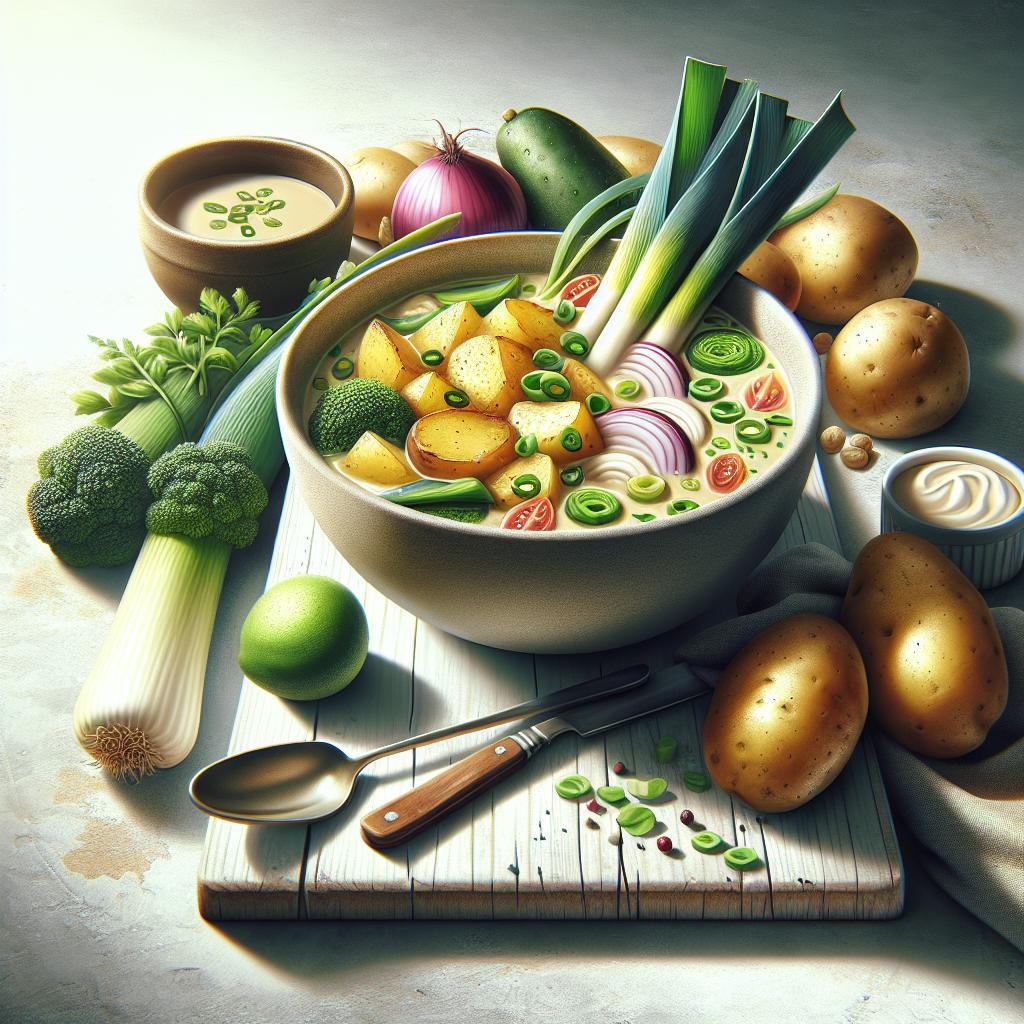
This roasted potato leek soup delivers a layered, caramelized base and a silky finish that feels deliberately composed. The roasted potatoes and sweated leeks create both depth and sweetness, giving each spoonful a balanced, comforting profile.
- Comfort in a Bowl: Roasted Potato Leek Soup Delight
- Prep and Cook Time
- Yield and Difficulty
- Ingredients
- Instructions
- Expert Tips for Garnishes and Serving Suggestions
- Mastering the Perfect Roast for Deep Flavor Development
- Balancing Creaminess and Texture for a Luxurious Experience
- Chef’s Notes: Tips for Success
- Vegan and Dietary Variations
- Nutrition Snapshot
- FAQ
- Roast for depth: Browning the potatoes builds nutty, savory notes that blending alone cannot provide.
- Keep texture: Puree most of the pot but save a few roasted cubes to preserve bite.
- Vegan option: Full-fat coconut milk or blended cashews mimic cream without dairy.
- Make-ahead friendly: Cool quickly and reheat gently to preserve texture and flavor.
Prep and Cook Time
Plan 15 minutes of active prep, 30–35 minutes to roast, and 10–15 minutes to finish on the stove. That schedule prioritizes efficient roasting and lets the potatoes develop the Maillard notes you want.
Expect about one hour from start to table for four servings. When you scale the batch, maintain single-layer roasting to ensure even browning and consistent results.
- Preparation Time: 15 minutes
- Cooking Time: 45 minutes
- Total Time: 1 hour
Yield and Difficulty
This recipe yields four generous bowls and reheats cleanly for lunches over several days. The technique ranks easy-to-medium and depends on basic roasting and blending rather than advanced skills.
If you are comfortable using a rimmed sheet and an immersion blender, you will execute this soup consistently. Focus on timing and temperature rather than complicated steps to get predictable results.
Ingredients
Choose high-quality staples: starchy potatoes, clean leeks, a neutral broth, and a finishing dairy or plant milk for silkiness. Starchy varieties like russets produce a naturally creamy texture when roasted and pureed.
Leeks add a gentle onion-sweetness that pairs with roasted potato body. For background on each ingredient, see the potato and the leek entries on Wikipedia.
- 4 large russet potatoes, peeled and cut into 1-inch cubes
- 3 large leeks, white and light green parts only, cleaned and sliced
- 3 tablespoons olive oil, divided
- 1 medium yellow onion, diced
- 3 cloves garlic, minced
- 4 cups vegetable broth, low sodium preferred
- 1 cup whole milk or unsweetened almond milk
- 1/2 cup heavy cream (optional)
- Salt and freshly ground black pepper, to taste
- Fresh thyme sprigs or 1 teaspoon dried thyme
- Chopped chives or parsley, for garnish
- Toasted sourdough, for serving (optional)
Instructions
Work in four clear stages: roast, sauté, simmer, then blend and finish. Each stage contributes a distinct layer of flavor and texture that culminates in a silky yet textured soup.
Prep tools now: a rimmed sheet, a large pot, and an immersion blender. When you blend hot liquid, blend in batches and vent the lid to avoid pressure buildup.
Roasting the Potatoes
Preheat the oven to 425°F (220°C). Toss potato cubes with 2 tablespoons oil, salt, and pepper and spread in a single layer on a rimmed, parchment-lined tray.
Roast until deep golden and crisp at the edges, about 30–35 minutes, turning once. High-heat roasting concentrates sugars through the Maillard reaction, creating savory, nutty compounds that enrich the soup.
Sautéing Leeks and Aromatics
While potatoes roast, heat 1 tablespoon oil in a large pot over medium heat. Add onion and cook until translucent, then add leeks and garlic and sweat gently until soft, about 8–10 minutes.
Stir frequently to release natural sugars without aggressive browning. Gentle sweating preserves the leeks’ sweet profile and avoids bitter notes that can develop under high direct heat.
Simmering and Blending
Add vegetable broth and thyme, bring to a gentle simmer, and cook 8–10 minutes to marry flavors. Add roasted potatoes, then use an immersion blender to puree most of the pot to a smooth texture.
Finish by folding in milk and, if using, cream. Warm through without boiling and adjust seasoning. Leave a few roasted cubes for bite if you prefer dimensional texture in the final bowl.
Expert Tips for Garnishes and Serving Suggestions
Garnishes shift perception quickly: a swirl of crème fraîche, chopped herbs, or toasted seeds adds contrast and aroma. Serve in a shallow, wide bowl so garnishes sit visibly on the surface and invite a contrasting spoonful.
Pair the soup with crisp salads or roasted vegetables to balance richness. A slice of toasted sourdough provides texture and makes the meal more substantial while complementing the roasted potato notes.
Mastering the Perfect Roast for Deep Flavor Development
Roasting transforms carbohydrates into complex, savory-sweet compounds through surface browning. Use high heat, minimal oil, and single-layer spacing so air circulates around each piece for even color.
Turn pieces once to expose different faces to heat and aim for golden edges rather than uniform color. That contrast between browned edges and tender center gives the soup a layered mouthfeel that a boiled approach cannot match.
Balancing Creaminess and Texture for a Luxurious Experience
Blend most of the base to a silky consistency while retaining a portion of roasted pieces to preserve texture. This method keeps the soup comforting without becoming one-dimensional or pasty.
Add dairy or plant-based fats gradually to stabilize the emulsion and avoid separation. If you choose coconut milk or cashew cream, warm gently and taste as you go to balance sweetness with savory notes.
Chef’s Notes: Tips for Success
Leeks hide grit within their layers; slice them and soak in cold water, then lift the cleaned pieces to drain. That simple step prevents sandy texture and protects blades and blenders from damage.
Make-ahead strategy: cool the soup quickly and store airtight for up to 2–3 days. Reheat on low and add a splash of broth if the consistency tightens during storage.
Vegan and Dietary Variations
To make the soup dairy-free, use full-fat coconut milk or blended, soaked cashews for richness. Add plant-based finishes at the end and warm gently to integrate texture without thinning the soup.
For higher protein, fold in cooked white beans or lentils near the end of cooking. Those additions blend smoothly with potato body and increase nutritional density without changing the comforting character.
Nutrition Snapshot
The recipe averages about 320 kcal per serving with carbohydrates mainly from potatoes, moderate fat from olive oil and optional cream, and modest protein from milk. Adjust fats and portion sizes to fit dietary goals.
Use lower-fat milk or plant-based alternatives to reduce calories while maintaining mouthfeel. Stir in leafy greens at the end for extra micronutrients without disrupting the dish’s core flavor.
| Nutrient | Per Serving |
|---|---|
| Calories | 320 kcal |
| Protein | 6 g |
| Carbohydrates | 45 g |
| Fat | 12 g |
FAQ
What makes roasted potato leek soup especially comforting?
The roasted potatoes add caramelized, savory notes that pair with the leeks’ gentle sweetness. Together they create a warm, layered palate that feels full-bodied yet refined.
Texture also contributes: creamy puree balanced with roasted chunks encourages lingering spoonfuls and enhances perceived satisfaction.
How does roasting the potatoes change the final flavor?
Roasting concentrates sugars and triggers Maillard browning, producing nutty, caramelized flavors you cannot get from boiling. These compounds become foundational aromatics once blended into soup.
Because of that, roasted potato leek soup stands up to bolder garnishes like smoked paprika or herb oil without losing its identity.
Can I make this soup dairy-free without losing richness?
Yes. Full-fat coconut milk or blended cashews recreate a creamy mouthfeel and integrate smoothly when added at the end. Test small adjustments to match your preferred texture and flavor balance.
Plant-based milks vary in fat and taste; choose the one that complements the leeks’ sweetness and the roasted potato base.
What storage and reheating tips keep the texture intact?
Cool quickly, store airtight for up to three days, and reheat slowly on low. If the soup thickens in storage, whisk in hot broth while warming to restore consistency.
To freeze, portion into airtight containers and thaw overnight in the refrigerator before reheating. Stir and warm slowly to preserve emulsified texture.
Related: See more potato leek recipes at potato leek recipes and the original recipe post at comfort in a bowl.
Further reading on technique: review roasting basics on roasting and how dairy affects mouthfeel at the dairy entry.
Recommended Reading:
- 7 Expert Secrets for Potato Leek Perfection
- 9 Expert Couscous Secrets for Perfect Texture
- 9 Incredible Air Fryer Crispy Chickpeas