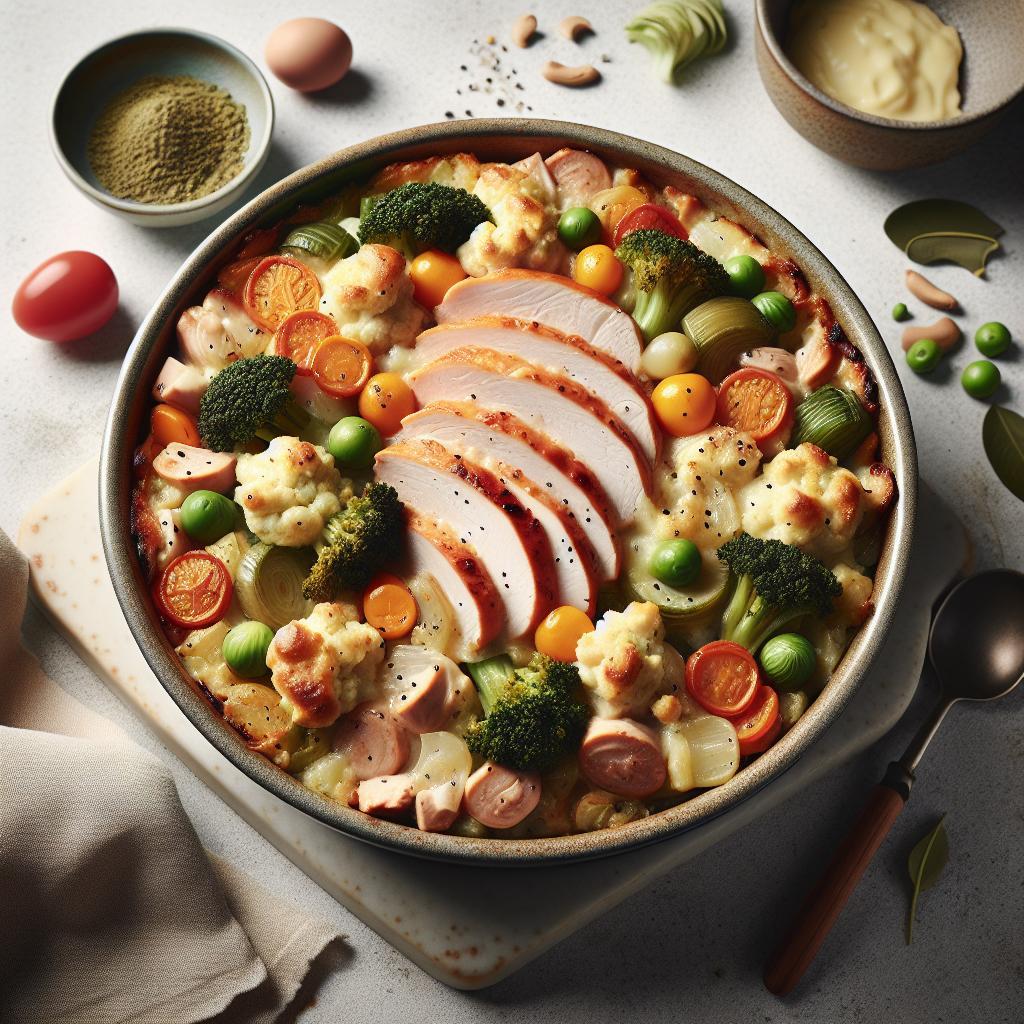

When cool evenings invite comfort food, a well-made turkey casserole answers the call. This dish balances a creamy sauce, tender turkey, and a crunchy top to deliver dependable family appeal. The recipe below focuses on technique and timing so you receive consistent results every time.
- turkey casserole: Origins and Culinary Context
- turkey casserole: Prep and Cook Time
- turkey casserole: Yield and Portions
- turkey casserole: Difficulty Level
- turkey casserole: Ingredients
- turkey casserole: Key Techniques — Roux and Sauce
- turkey casserole: Instructions
- turkey casserole: Tips for Success
- turkey casserole: Serving Suggestions
- turkey casserole: Variations and Substitutions
- turkey casserole: Nutrition per Serving
- turkey casserole: Food Safety and Storage
- turkey casserole: Reference Notes and Further Reading
- FAQ
- Leftover-friendly: Uses cooked turkey to save time and boost flavor.
- Make-ahead option: Assemble up to 24 hours before baking for stress-free serving.
- Texture balance: Roux-thickened sauce plus a crisp topping yields ideal mouthfeel.
- Customizable: Swap vegetables, cheeses, or crumbs to match dietary needs.
turkey casserole: Origins and Culinary Context
The turkey casserole sits within the family of one-dish bakes that home cooks prize for economy and crowd feeding. Its structure—protein, vegetables, starch, and binder—mirrors classic casserole logic and makes it ideal for leftovers.
For historical technique context, consult the general casserole entry on casserole. That page summarizes why cooks combined ingredients in a single vessel for practical serving and flavor melding.
turkey casserole: Prep and Cook Time
Plan a compact schedule so stove and oven work in sequence. Start with the sauté and roux on the stovetop, then finish in the oven so textures remain distinct.
Preparation: 25 minutes.
Cooking: 45 minutes.
Total: 1 hour 10 minutes.
turkey casserole: Yield and Portions
This recipe yields six generous servings and scales predictably. For larger groups, double into two 9×13 pans and stagger oven space to maintain even browning.
Leftovers refrigerate 3–4 days and reheat safely to 165°F. Freeze portions up to two months and thaw in the refrigerator for even reheating.
turkey casserole: Difficulty Level
Expectation: intermediate. The primary technical demand is a smooth roux-based sauce and controlled sautéing to avoid excess moisture. Those who practice basic sauces will find the steps approachable.
Key skills include managing medium heat, whisking while adding liquids, and tasting to adjust seasoning. Proper technique keeps the interior creamy and the topping crisp.
turkey casserole: Ingredients
Use cooked turkey for best efficiency—leftover or purpose-roasted. Choose breast for lean texture; dark meat adds richness and moistness if you prefer it.
- 3 cups cooked turkey breast, shredded or diced
- 2 tablespoons unsalted butter
- 1 medium yellow onion, finely chopped
- 3 cloves garlic, minced
- 1 cup sliced cremini mushrooms
- 1 cup carrots, diced
- 1/2 cup celery, diced
- 1/4 cup all-purpose flour, sifted
- 2 cups low-sodium chicken broth
- 1 cup whole milk
- 1 teaspoon dried thyme
- 1 teaspoon smoked paprika
- 1/2 teaspoon freshly ground black pepper
- 1/2 teaspoon sea salt, adjust to taste
- 1/4 teaspoon cayenne pepper (optional)
- 1/2 cup shredded sharp cheddar cheese
- 1 1/2 cups crushed buttery crackers or panko breadcrumbs
- Chopped fresh parsley, for garnish
turkey casserole: Key Techniques — Roux and Sauce
Begin with a classic rue-based binder. The method mirrors principles in traditional sauce making; reading about roux and béchamel clarifies why controlled heat and gradual liquid addition prevent lumps.
Work at medium heat and whisk continuously when adding warm stock. That practice yields a smooth, stable sauce that tolerates oven time without separating.
turkey casserole: Instructions
Follow this sequence: sauté aromatics and vegetables, build the roux, add liquids and reduce to sauce, fold in turkey and cheese, then bake. Sequence preserves texture and ensures even cooking.
Preheat the oven to 375°F (190°C). Butter a 9×13-inch casserole dish so the topping browns evenly and the dish releases cleanly after baking.
- Melt the butter in a large skillet over medium heat. Add chopped onion and sauté until translucent, about 4 minutes.
- Add garlic, mushrooms, carrots, and celery. Cook 6–8 minutes, stirring until vegetables soften and mushrooms release liquid.
- Sprinkle the flour over the vegetables. Stir 2–3 minutes to form a light roux and cook off raw flour taste.
- Gradually whisk in the warm broth and milk. Simmer until the sauce coats the back of a spoon, about 4–6 minutes.
- Season the sauce with thyme, smoked paprika, pepper, and salt. Taste and adjust; flavors concentrate during baking.
- Fold in turkey and half the cheese. Mix thoroughly to distribute the meat and lock moisture.
- Transfer to the prepared dish and level. Top with crushed crackers or panko and remaining cheese for a crisp crust.
- Bake uncovered 35–40 minutes until edges bubble and topping browns. Rest 10 minutes to set before serving.
turkey casserole: Tips for Success
Control moisture to avoid a soggy topping. Drain very wet mushrooms or sauté longer to evaporate excess liquid before adding flour.
Toast panko briefly in a dry skillet with a pat of butter for deeper flavor. Add the crumbs near the end of the bake for the brightest crunch.
- Choosing turkey: Breast for lean texture; dark meat for succulence.
- Layer seasoning: Taste at each stage to build complexity without oversalting.
- Texture harmony: Aim for a creamy interior with a distinct crunchy top.
- Make ahead: Assemble up to 24 hours; bake covered if very cold and add a few minutes to roasting.
turkey casserole: Serving Suggestions
Serve the turkey casserole with a crisp green salad that has an acidic dressing to cut richness. Acid refreshes the palate and balances the meal when serving multiple courses.
Offer warm rolls or simple roasted vegetables on the side. Those elements provide texture contrast and round a family-style plate for dinner guests.
turkey casserole: Variations and Substitutions
To lighten the dish, replace half the milk with low-fat Greek yogurt folded in off heat. That swap preserves creaminess while reducing overall fat.
For vegetarian versions, substitute a legume mix or extra mushrooms and use vegetable stock. You can also swap panko for chopped nuts for savory crunch and protein.
turkey casserole: Nutrition per Serving
Nutrition depends on exact ingredients and portioning. A typical serving provides a balanced mix of protein, carbohydrates, and fat suitable for a family meal.
Estimate: ~420 calories, 38 g protein, 26 g carbs, 18 g fat per serving when made as written. Adjust cheese and crumbs to shift calories modestly.
turkey casserole: Food Safety and Storage
Cool the casserole to room temperature and refrigerate within two hours. Store in shallow containers to speed chilling and label with the date for rotation.
Reheat until the internal temperature reaches 165°F. Freeze tightly wrapped portions up to two months; thaw overnight in the refrigerator to reheat evenly.
turkey casserole: Reference Notes and Further Reading
For classical sauce technique, review entries on béchamel sauce and roux. Those pages explain the science of binding and how heat affects texture.
To understand the role of the bird in regional cooking, consult the article on the turkey. It provides context for why turkey features prominently in holiday and family meals.
For technique summaries and recipe variations published on this site, see related coverage: turkey casserole and a complementary roast guide at roasted turkey breast recipe. These internal pages expand on protein prep and leftover planning.
FAQ
How do I adapt this turkey casserole for vegetarian diets?
Substitute cooked mushrooms, tofu, or legumes for turkey and use vegetable broth instead of chicken stock. Add a splash of soy sauce or miso paste for savory depth if needed.
Can I prepare this turkey casserole in advance and bake later?
Yes. Assemble and refrigerate up to 24 hours. Bake straight from the refrigerator, adding 5–10 minutes so the center reaches 165°F and bubbles through.
What is the best way to get a crunchy topping on a turkey casserole?
Combine panko or crushed crackers with melted butter and a little grated hard cheese, then toast briefly. Scatter over the casserole and bake until golden for a distinct textural contrast.
Which turkey cut works best in a casserole?
Breast provides lean, even texture; dark meat adds fat and depth. A mix gives both tenderness and succulence, especially if you expect reheating or freezing.
How can I prevent a watery turkey casserole?
Sauté vegetables until excess moisture evaporates and use a proper roux. Avoid adding ingredients that release large amounts of liquid unless you pre-roast them to concentrate flavor.
See also: Complete turkey casserole guide
Recommended Reading:
- 7 Proven Ways to Perfect Your Turkey Casserole (Comfort Food Guide)
- 7-Step Chicken Mole Recipe: Bold Flavor, Zero Alcohol
- Savor the Essence: 7 Authentic Mexican Sauces to Master