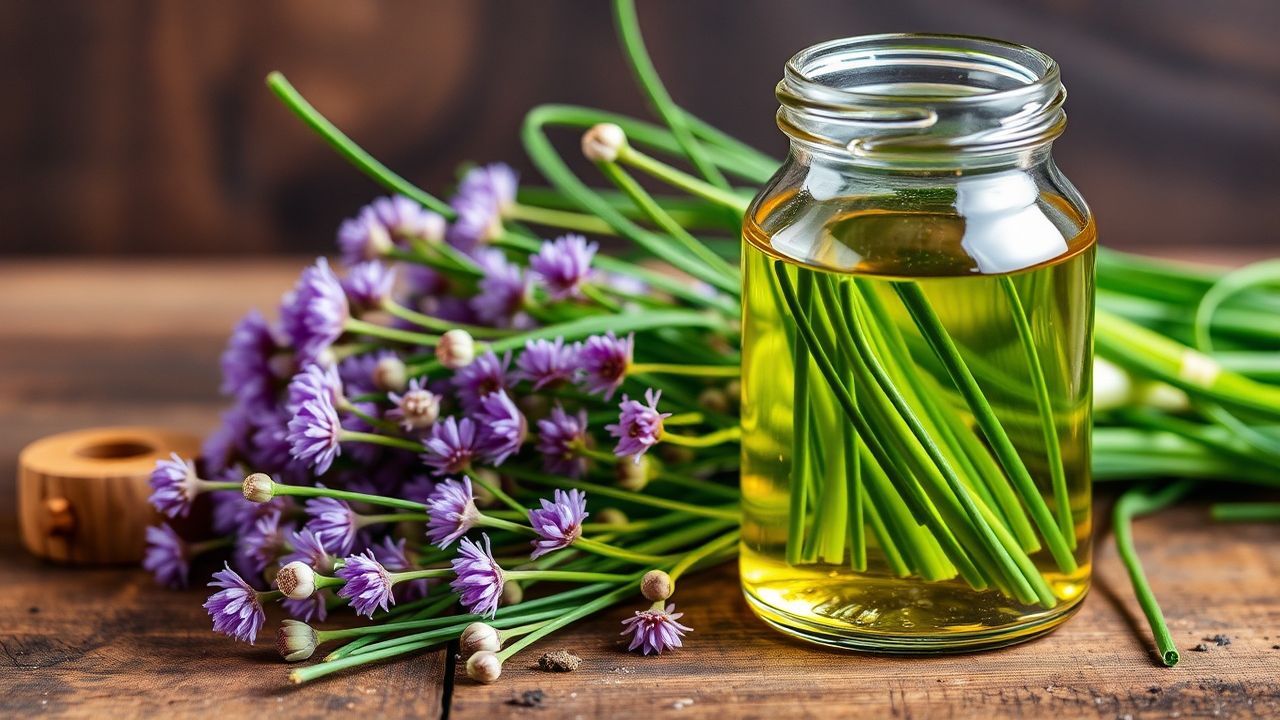

Chive vinegar captures spring’s onion-floral lift in a bottle. Use fresh chive blossoms, a neutral 5–6% vinegar, clean jars, and timed infusion to create a stable, aromatic condiment you will reach for often.
- Gathering and Preparing Fresh Chive Blossoms for Chive Vinegar
- Infusing Techniques to Capture the Essence of Chive Vinegar
- Balancing Ingredients and Fermentation Tips for Chive Vinegar
- Sanitation and Safety When Making Chive Vinegar
- Infusion Duration and Handling for Peak Chive Vinegar
- Straining, Bottling, and Storage for Chive Vinegar
- Creative Uses and Serving Suggestions with Chive Vinegar
- FAQ
- Bright, layered flavor: preserves chive blossom aroma without harsh onion bite.
- Simple, safe process: 5–6% acidity and sterilized jars give shelf stability.
- Small-batch friendly: easy to scale and ideal for gifts or testing intensity.
- Versatile finishing touch: brightens vinaigrettes, soft cheeses, and seafood.
Gathering and Preparing Fresh Chive Blossoms for Chive Vinegar
Harvest chive heads at full bloom on a dry morning to capture the most volatile aromatics. Pick only unblemished purple heads; damaged petals introduce off-flavors and reduce shelf life.
Trim the short green stems from the flower heads if you want a cleaner floral forward profile. Spread petals on a clean towel and air-dry 20–40 minutes to remove surface moisture that weakens extraction and clouds the finished vinegar.
Infusing Techniques to Capture the Essence of Chive Vinegar
Choose a neutral base such as mild white wine vinegar or light apple cider vinegar with 5–6% acidity for balanced extraction and safe preservation. A neutral base highlights the blossom’s delicate scent unlike stronger vinegars that compete with floral notes.
Pour warm—but not boiling—vinegar over fully dried petals in a sterilized glass jar; heat beyond 60°C wilts petals and can release bitter compounds. Seal the jar and store in a cool, dark place, shaking gently every 2–3 days to improve contact between liquid and petals.
Vinegar selection and why acidity matters
Vinegar acidity controls extraction and shelf stability; 5–6% acetic acid hits the sweet spot for flavor and microbial safety. For reference on vinegar chemistry, consult vinegar.
Lower acidity weakens preservation and raises risk; higher acidity can blunt floral aromatics. Match your vinegar strength to the infusion goals and to storage expectations.
Temperature, contact, and infusion rhythm
Warm vinegar increases solubility of aromatic compounds, but avoid heat that cooks the petals. Instead, use vinegar warmed to hand-hot and allow room-temperature steeping for two to three weeks for controlled extraction.
Taste starting at 14 days and extend to 21 days if you want deeper onion notes. Most home batches reach peak balance between 14 and 21 days; keep notes so you replicate favored results.
Balancing Ingredients and Fermentation Tips for Chive Vinegar
Keep added aromatics minimal so the chive blossom remains the lead note. A single peeled garlic clove or a tiny thyme sprig can add depth, but use them sparingly to avoid masking the floral character.
This process is an infusion into an acidic medium, not an active fermentation. The vinegar acts as the preserving agent; it does not require additional cultures. For context, read about fermentation to understand how living cultures differ from acid infusions.
Sanitation and Safety When Making Chive Vinegar
Sterilize jars and lids to reduce contamination risk; use boiling water or a short oven cycle designed for glass. Always handle petals and tools with clean hands to limit introduction of microbes or debris.
Use vinegars at the recommended acidity to ensure low microbial risk during storage. If you observe visible mold, sliminess, or foul odors, discard the batch and sanitize equipment before trying again.
Storage decisions affect longevity and quality. Unopened, properly made chive vinegar keeps quality for months; refrigeration after opening slows aroma loss and extends peak flavor.
Infusion Duration and Handling for Peak Chive Vinegar
Steep blossoms 14–21 days in a cool, dark location; many home cooks find 18 days provides the best floral lift with gentle onion backing. Taste periodically and strain once the vinegar reaches your preferred intensity.
Strain through a fine mesh, sieve, or double-layered cheesecloth into sterilized bottles; if clarity matters, filter a second time. Label bottles with bottling date and keep them away from heat and direct light to preserve volatile aromatics.
Straining, Bottling, and Storage for Chive Vinegar
After straining, allow bottled vinegar to rest 24–48 hours so micro-sediment settles before a final transfer or gift bottling. This brief rest improves clarity and reduces suspended particles in the finished product.
Use dark glass bottles to reduce light-induced aroma loss and cap tightly to limit oxidation. Refrigerate after opening for best long-term flavor; keep tasting notes so you know when to re-infuse for fresh brightness.
Creative Uses and Serving Suggestions with Chive Vinegar
Drizzle chive vinegar over spring greens, new potatoes, or soft goat cheese for an immediate lift. It also blends smoothly into vinaigrettes, mayonnaise, or as a light marinade for seafood and vegetables.
Combine a tablespoon of chive vinegar with neutral oil, a pinch of mustard, and a touch of honey for a fast dressing. Store small jars of infused vinegar for single-recipe use to avoid repeated contamination from dipping utensils into large bottles.
Prep and Infusion Time
Prep Time: 15 minutes of hands-on work for rinsing, trimming, and drying blossoms. Prepare jars and tools before you harvest to keep the process compact and sanitary.
Infusion Time: 14–21 days in a cool, dark place; taste periodically to avoid over-extraction. Adjust times based on blossom quality and vinegar choice for desired intensity in your chive vinegar.
Yield and Scaling
Yield from a roughly 1:1 blossoms-to-vinegar ratio is about 1 cup (240 ml) of finished chive vinegar per small jar. Small test jars let you dial intensity before you commit large blossom quantities to a batch.
Scale linearly: double the flowers and vinegar for double the yield, and use proportionate jar size to maintain even extraction and headspace. Larger batches require consistent agitation in the early days to ensure uniform flavor.
Difficulty Level and Troubleshooting
Difficulty ranges from easy to moderate depending on sanitation and timing. Most failures stem from excess moisture, weak vinegar acidity, or overpowering added aromatics.
If vinegar turns cloudy but smells clean, filter twice and refrigerate; if it smells yeasty, moldy, or otherwise off, discard. Preserve a small sample for comparison when you start a new batch so you can objectively assess freshness over time.
Ingredients
1 cup fresh chive blossoms, cleaned and dried. Choose heads that are bright and undamaged; discard any with browning or insects. For botanical context, learn about chives.
1 cup mild white wine vinegar or light apple cider vinegar (5–6% acidity). Optional: one peeled garlic clove or a small sprig of thyme to complement, not overpower, the chive blossom.
Instructions
1. Prepare the blossoms: Rinse briefly under cold water and dry on a clean towel to avoid diluting the infusion. Handle petals gently to avoid bruising that can release bitter notes.
2. Fill and infuse: Pack blossoms into a sterilized jar, add optional aromatics sparingly, and pour vinegar to completely submerge the flowers. Seal and store in a cool, dark location while shaking gently every few days.
3. Monitor and strain: Taste after 14 days and strain when the vinegar has the intensity you prefer. Bottle in sterilized containers and label with date and vinegar type for tracking.
Tips for Consistent Results
Harvest smart: Pick on dry mornings when petals carry concentrated oils and avoid dew or rain days that dilute aromatics. Use only healthy heads to avoid introducing off flavors.
Sanitation matters: Sterilize jars and lids with boiling water or a short oven cycle and always use clean utensils. Filter twice if clarity matters and rotate small-batch trials to refine timing and ratios.
Acetic acid provides the preservative backbone of vinegars and aids flavor extraction. For a short technical background, see acetic acid.
FAQ
This FAQ answers common technical and practical questions about making chive vinegar. Each response aims to help you make safe, flavorful batches you enjoy.
Q: How should I select chive blossoms for chive vinegar?
Choose bright, fully opened purple heads with a fresh scent and no brown spots. Harvest on dry days and handle gently to preserve volatile oils that make the vinegar vibrant.
Trim away green stems for a cleaner floral note, and air-dry petals briefly to remove dew and reduce dilution during infusion.
Q: Which vinegar types work best for chive vinegar?
Neutral, mild vinegars like white wine vinegar or light apple cider vinegar at 5–6% acidity work best. They extract floral notes without introducing heavy flavors that compete with the blossoms.
Match acidity to shelf expectations and flavor goals; check label acidity if you buy commercial vinegar. For preservation concepts, see food preservation.
Q: How long does chive vinegar keep once bottled?
Stored in a dark place unopened and refrigerated after opening, chive vinegar maintains good quality for roughly six months, with peak freshness sooner. Always inspect for off-odors or visible spoilage before use.
Labeling with production date helps track age and decide when to re-infuse fresh blossoms for best flavor. Use clean utensils each time to prevent contamination.
Q: Can I reuse chive blossoms for a second infusion?
Blossoms give most aroma in the first infusion and will yield a much weaker second batch. If you experiment, expect muted results and use a shorter secondary steep to capture what remains.
Small-batch trials let you determine whether a secondary extraction meets your taste rather than committing more blossoms at full strength.
Q: What pairings should I try with chive vinegar?
Try chive vinegar on spring greens, new potatoes, soft cheeses, grilled white fish, or as the acid component in delicate vinaigrettes. It pairs well with neutral oils and mild mustards.
Use it sparingly in marinades to preserve floral notes and avoid heavy heat that will damage volatile aroma compounds.
Final note: With clean tools, measured acidity, and patient timing, you can turn brief garden blooms into a bright, useful condiment. Adjust blossom ratios and infusion time to make chive vinegar that suits your palate.
See also: chive vinegar