
There is a special alchemy in prosciutto — thin, silky slices that dissolve on the tongue and balance salty, sweet, and nutty notes. Homemade prosciutto brings that artisan tradition into your control, pairing precise technique with patient aging to create complex flavor.
- Time and salt drive safety and flavor.
- Controlled temperature and humidity matter most.
- Quality pork and careful monitoring prevent spoilage.
- Thin slicing transforms texture and experience.
The steps that follow treat prosciutto as both science and craft. I anchor techniques to proven curing principles and practical controls so you can reproduce reliable results at home.
What Is Prosciutto
Prosciutto is a dry-cured ham originating in Italy; its texture and flavor come from salt, time, and controlled air-drying. For a concise reference on its heritage and protected varieties, see prosciutto on Wikipedia.
The word often implies long aging and a balance of salt extraction and enzymatic breakdown of muscle. Understanding those fundamentals helps you manage expectations and outcomes when you cure at home.
Prep and Cook Time
Home curing spans distinct phases: salting, initial drying, and long-term aging. Each phase has a predictable timeline that scales with leg size and ambient conditions.
Plan for active prep of 48 hours, an initial drying window of 4–6 weeks, and final aging of 9–12 months for a classic texture. Shorter aging produces firmer, saltier results; longer aging deepens aroma and complexity.
- Preparation: 2 days (trimming, salting, and resting)
- Salting and Drying: 4–6 weeks
- Aging Time: 9–12 months (or longer for intensified flavor)
Yield
A whole prosciutto leg yields a large centerpiece and many thin servings. Expect significant moisture loss during aging, which concentrates flavor and reduces weight.
A typical leg of 18–22 lb finishes smaller but serves up to 20 people thinly sliced. Label aging dates and track weight loss so you can evaluate each batch objectively.
- 1 whole prosciutto leg (approx. 18–22 lbs before curing)
- Serves up to 20, depending on portion size
Difficulty Level
Curing prosciutto sits at an advanced skill level because it combines food-safety controls with long-term patience. You must monitor temperature, humidity, and mold ecology to avoid spoilage.
With proper setup and attention, home curing is reproducible. You will need a reliable thermometer and hygrometer and a plan for consistent conditions during drying and aging.
Ingredients
Select a fresh hind leg with an intact fat cap and consistent muscle structure; fat preserves texture and carries flavor. For background on raw-cured meats and related techniques, consult meat curing fundamentals.
Use non-iodized curing salt and food-grade finishing salt to control extraction and surface protection. If you rely on specific breed qualities, review general notes on pork characteristics when sourcing.
- 1 whole fresh pork hind leg (skin on; heritage or pasture-raised preferred)
- 500 g curing sea salt (non-iodized, fine grain)
- 100 g finishing sea salt for surface crust
- Optional: 20 g crushed black peppercorns, 10 g juniper berries
- Cheesecloth or breathable linen for wrapping
- Butcher’s twine for hanging
Instructions
Follow a sequence: select and trim, salt thoroughly, rest under refrigeration, rinse and dry, wrap and hang, then monitor through aging. Each stage changes the meat’s moisture, pH, and aroma, so record observations.
Below I break the process into focused sub-steps with practical checks you can perform at home. Use a logbook: record dates, temperatures, humidity, and weight loss to refine future batches.
1. Select and Trim
Start with a clean, undamaged leg; remove bruises and trim excess soft fat, leaving about 1/4 inch of fat for protection and flavor. Keep the work area sanitized and use food-safe knives to avoid cross-contamination.
Check muscle integrity and remove any lymph nodes or blemishes that could trap moisture. If in doubt, consult a trusted butcher for inspection and trimming recommendations.
2. Apply Salt and Rest
Massage the leg with the measured curing salt until evenly coated, ensuring salt reaches crevices. Place in a non-reactive container and refrigerate at 34–38°F (1–3°C) to control bacterial activity.
Turn the leg every 12 hours for the first 48 hours to redistribute salt and to encourage even moisture extraction. Record the initial weight so you can track weight loss over time.
3. Rinse, Dry, and Surface Salt
After the primary cure, rinse the leg under cold water to remove excess salt and pat dry thoroughly with clean towels. Apply the finishing 100 g salt as a surface protective crust before drying.
Drying should occur in a clean, ventilated environment at moderate temperatures to avoid rapid case hardening. Case hardening happens when the surface dries too fast and the interior remains moist.
4. Wrap, Hang, and Age
Wrap the leg in cheesecloth or breathable linen and tie with butcher’s twine for hanging. Hang in a curing chamber maintained near 50–60°F (10–15°C) with 70–80% relative humidity for steady drying.
After the initial 4–6 week drying phase, monitor monthly as the leg loses moisture and develops aroma and elasticity. Aim for a firm but slightly yielding texture before slicing.
Tips for Success
Control environmental variables first: stability in temperature and humidity reduces risk and yields consistent flavor. Frequent small checks trump infrequent large interventions.
Keep a cleaning routine and inspect for undesirable mold daily during early stages. White, powdery molds are normal; remove them with a vinegar wipe if they appear excessively.
Label each leg with start dates and check weight every 2–4 weeks during the first months. Consistent records let you learn from each batch and improve predictability.
Serving Suggestions
Slice prosciutto as thinly as possible with a sharp knife or slicer; warming the blade slightly helps create paper-thin ribbons. Thin slicing is the final act that showcases long-term aging and fat breakdown.
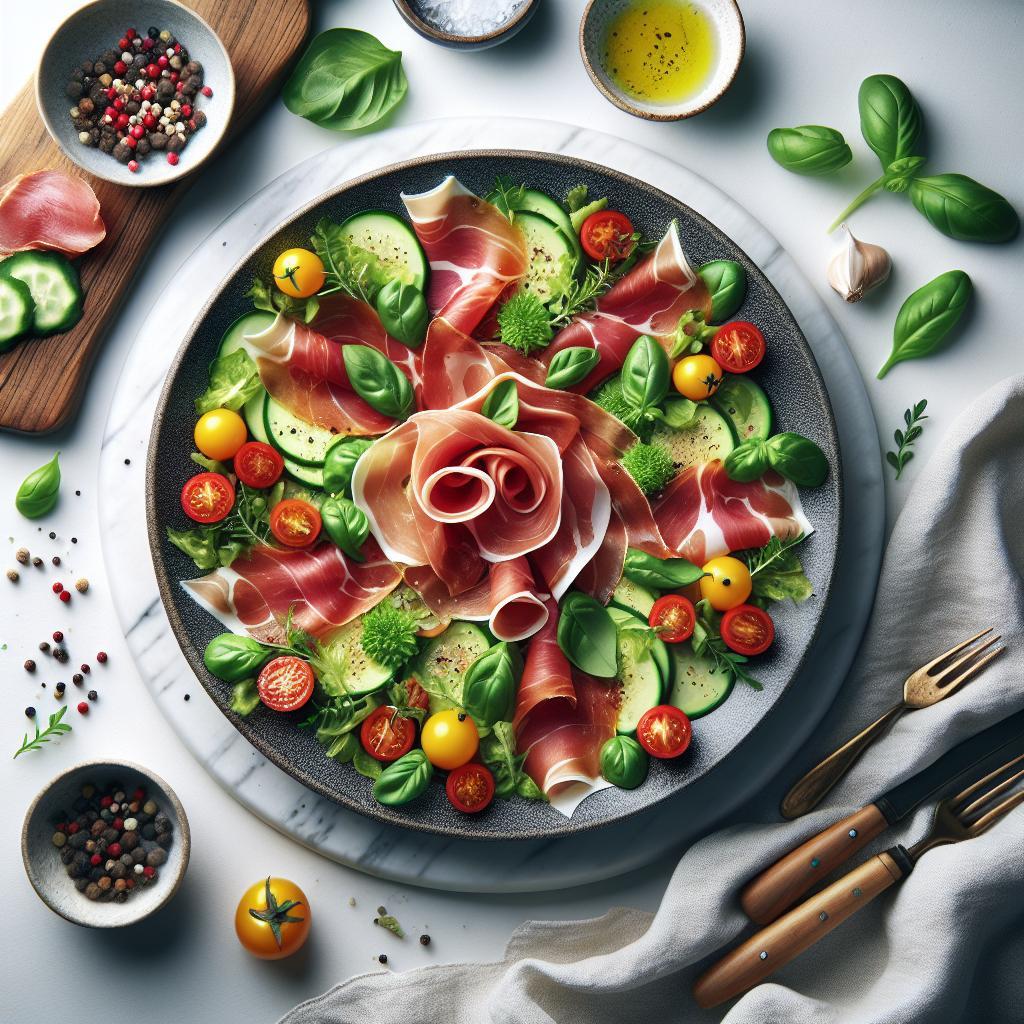
Pair prosciutto with ripe melon, figs, or Parmigiano-Reggiano for contrasting textures and flavors. For small plates, add marinated olives, pickled vegetables, and crusty bread to balance richness with acidity.
Nutritional Info
Prosciutto is protein-dense and relatively high in sodium and fat due to the curing process. Consider portion control; a 30 g slice provides concentrated flavor with moderate calories.
| Nutritional Info (per 30g slice) | Calories | Protein | Carbohydrates | Fat |
|---|---|---|---|---|
| Prosciutto | 80 kcal | 9 g | 0 g | 5 g |
Balance cured meats with fresh vegetables and lower-sodium components across a meal. Refrigerate leftovers loosely wrapped in parchment and consume within recommended timelines to maintain quality.
Additional Resources
For broader context on cured meats and culinary tradition, consult established references such as charcuterie. These resources clarify professional workflows and terminology.
Local regulatory guidance on home food processing can vary; check local public health resources before starting large-scale curing projects. Proper compliance reduces risk and protects both you and others who consume your product.
FAQ
What exactly is prosciutto and how does it differ from other hams?
Prosciutto is a dry-cured, uncooked ham traditionally from Italy, aged until it achieves a delicate texture and complex flavor. Unlike cooked hams, prosciutto relies on salt and time rather than heat to develop safety and taste.
Can I make prosciutto at home safely?
Yes, with strict hygiene, correct salt ratios, and stable temperature and humidity control you can make prosciutto at home. Record and monitor conditions and discard product if you observe signs of dangerous spoilage.
How long does proper curing take?
Typical home curing targets 9–12 months of aging after the initial salting and drying phases. Extended aging continues to concentrate flavor and develop aromatic complexity.
What environmental conditions are ideal?
Maintain roughly 50–60°F (10–15°C) with 70–80% relative humidity for even drying and safe aging. Avoid sharp temperature swings and keep airflow gentle to prevent localized mold issues.
How do I know when to slice?
Prosciutto is ready when it feels firm to the touch but retains a slight give and emits a clean, sweet-cured aroma. Thin slicing at room temperature reveals the true texture and flavor achieved by long aging.
Final Thoughts
Producing prosciutto at home rewards methodical work and respect for the curing timeline. Each batch teaches you about local microclimate interactions and refines your technique.
Follow safety practices, track data, and embrace patience. Over months of attentive care you convert simple pork into a refined, storied product that reflects both tradition and your hands-on skill.
See also: Prosciutto