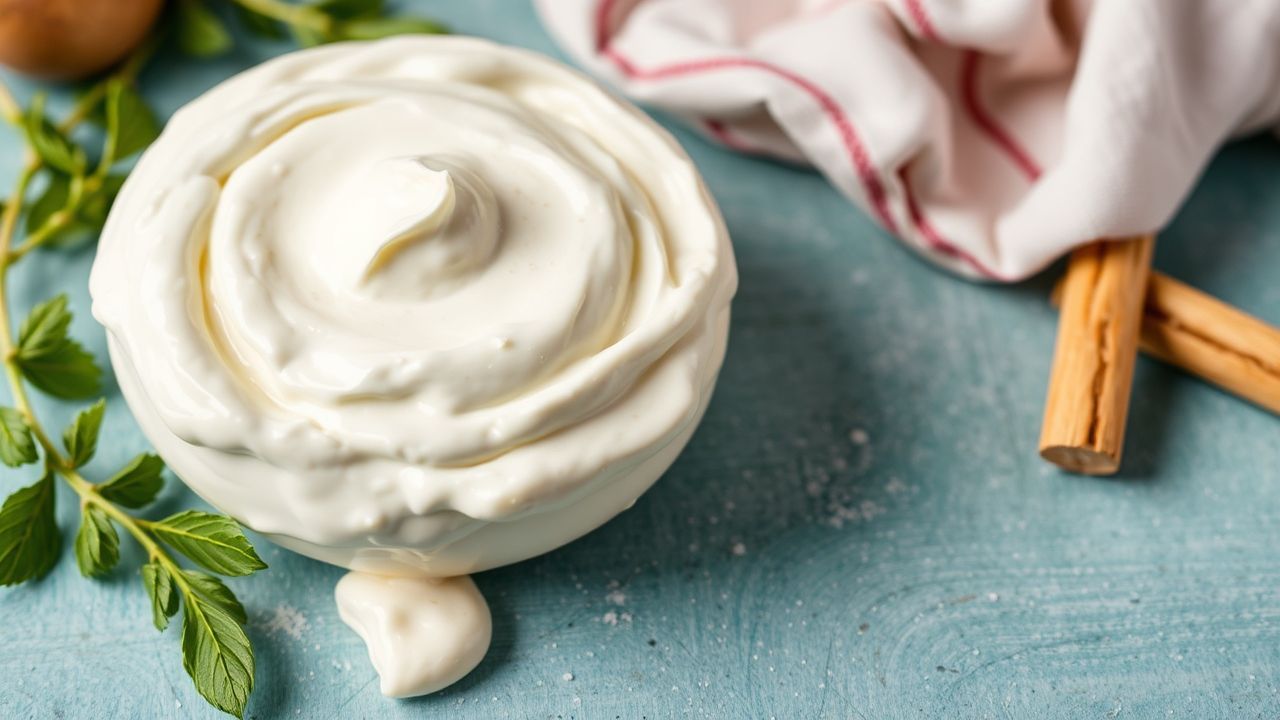

creme fraiche lifts sauces, fruits, and desserts with a silky tang that store jars rarely match. Making creme fraiche at home gives you control over thickness, tang, and ingredients using only cream and a live starter.
- Make thick, tangy creme fraiche with 1 cup cream and 1–2 tbsp starter.
- Room-temperature culture for 12–24 hours yields a spoonable texture.
- Store chilled for up to 2 weeks; stir before each use.
- Substitute safely with yogurt or sour cream if buttermilk is unavailable.
What creme fraiche is and why it matters
Creme fraiche is a cultured cream with a high fat content and mild acidity that brightens rich dishes while resisting curdling when heated. It finishes sauces and soups with a stable silkiness that lower-fat cultured creams cannot match.
The product results from controlled fermentation of cream by lactic cultures. That microbial action develops flavor and acidity while preserving the cream. For technical background on fermentation, see fermentation on Wikipedia.
Prep and cook time
Prep Time: 5 minutes. Culture Time: 12–24 hours. These windows let bacteria thicken the cream and create the characteristic tang of creme fraiche.
Total Time: About 24 hours including chilling. Skip refrigeration after culturing and the texture will stay loose and less stable for cooking.
Yield and difficulty
This recipe yields roughly 1 cup (240 ml) of creme fraiche—ideal for testing variations or small-batch cooking. The method suits home cooks and professionals because it uses simple ingredients and minimal technique.
Expect a low-effort process with a reliably high culinary return. Maintain clean utensils and approximate temperatures, and the culture will produce predictable results.
Essential ingredients and tools
Gather: 1 cup heavy cream (preferably not ultra‑pasteurized), and 1–2 tbsp starter such as cultured buttermilk, plain yogurt with live cultures, or a spoonful of commercial creme fraiche. Use a clean glass jar or ceramic bowl and a breathable cover.
If you want to read about traditional cultured dairy, consult buttermilk on Wikipedia for starter context and sour cream on Wikipedia for comparisons to similar products.
Ingredients (concise)
1 cup heavy cream — full fat yields best texture. 1–2 tbsp starter — live buttermilk, plain yogurt with active cultures, or a small spoon of commercial creme fraiche.
Avoid metal utensils when possible to protect culture activity. Store the finished product in a clean, airtight container in the fridge.
Step-by-step guide to achieve ideal texture
Step 1: Combine cream and starter. Pour room-temperature cream into a clean jar. Stir in 1–2 tablespoons of starter until evenly blended but not foamy. The starter supplies the lactic strains that drive the process.
Step 2: Cover and ferment. Loosely cover the jar and place it in a warm, draft-free spot at about 70°F (21°C). Allow 12–24 hours; check at 12 hours and again at 24 to judge thickness and tang. Warmer temperatures speed acid formation; cooler slows it.
Finishing and refrigeration
Step 3: Chill to set. When the mixture reaches spoonable thickness and a mild tang, seal the jar and refrigerate at least 6 hours. Cooling halts culture activity and firms the texture into the familiar creme fraiche consistency.
Step 4: Store and use. Keep refrigerated up to 2 weeks. Stir gently before using to reincorporate any separated whey. For cooking, add at lower heat to prevent sharp changes in texture.
Variations and flavoring
After refrigeration, fold in chopped herbs, citrus zest, or spices for flavored spreads. Make garlic-herb creme fraiche for savory dips, or mix with honey and vanilla for dessert toppings.
Limit added fresh ingredients to small batches and use within several days to preserve peak flavor. Acidic or watery inclusions can alter texture; add them after the culture sets.
Practical tips for consistent success
Use fresh, high-fat cream and avoid ultra‑pasteurized products for predictable culturing. Ultra‑pasteurized creams sometimes resist thickening because processing alters key proteins.
Keep the incubation temperature near 70°F (21°C). If the culture stalls, extend time a few hours rather than sharply increasing temperature, which can drive excessive sourness.
If you lack buttermilk, plain yogurt with live cultures or sour cream can act as starters. Compare starter behavior and adjust timing to get the preferred tang and body.
Sanitize jars and utensils before beginning to prevent unwanted microbes. Use airtight containers for refrigerated storage to slow flavor drift and moisture loss.
Creative culinary uses
Use creme fraiche to finish pan sauces and soups because it blends without breaking. Its higher fat content improves stability compared with lower‑fat dairy.
Dollop over fruit, pancakes, or desserts as a balancing tang. Mix with mascarpone for richer frostings, or fold into batters for tender baked goods.
Nutritional notes
Per 2-tablespoon serving, expect roughly 60 kcal and about 6 g fat. Exact values depend on cream fat content and starter. Creme fraiche adds flavor and texture more than significant probiotic benefit in most batches.
For broader context on milk-derived products and production, consult dairy on Wikipedia. That page explains fundamental distinctions across cultured dairy products.
Quality control and troubleshooting
If the culture never thickens, verify starter viability and room temperature during incubation. A weak starter or cool environment often causes slow or absent thickening.
Excessive sourness signals overfermentation. Reduce culture time or refrigerate sooner on your next batch. For more body, try cream with higher fat or extend chilling time to firm the texture.
FAQ
What is the simplest way to make creme fraiche?
Mix 1 cup heavy cream with 1–2 tablespoons of buttermilk or plain yogurt with live cultures, cover, and leave at room temperature 12–24 hours. Chill after it thickens and use within two weeks.
Can I use ultra‑pasteurized cream?
Ultra‑pasteurized cream sometimes resists culturing because high-heat processing alters proteins important for texture. For reliable results, choose fresh, high‑fat cream labeled pasteurized rather than ultra‑pasteurized.
How do I avoid curdling when cooking with creme fraiche?
Warm sauces gently and add creme fraiche at lower heat. Avoid boiling after adding cultured cream; its fat content gives better heat stability, but sudden high heat can still affect texture.
How long will homemade creme fraiche keep?
Store it sealed in the refrigerator for up to two weeks. Always inspect for off odors or visible mold before use. Stir before using to reincorporate any separated whey.
What starters work besides buttermilk?
Plain yogurt with live cultures, sour cream, or a spoonful of commercial creme fraiche can work as starters. Use active cultures only; heat‑treated refrigerated products may not culture well.
Follow the straightforward method above to produce consistent, flavorful creme fraiche at home. Small adjustments to fat content, temperature, and fermentation time let you dial the tang and thickness for your kitchen and recipes.
See also: creme fraiche