
Delightful chicken salad sandwiches update a classic midday favorite with crisp apples, celery, toasted nuts, and a bright Dijon-lemon dressing. This version focuses on texture contrast, balanced acidity, and practical meal-prep techniques so your sandwiches perform well at work, picnics, or casual gatherings.
- High-protein base: Poached or roasted chicken yields a tender, lean filling.
- Texture contrast: Apples, celery, and toasted nuts keep each bite lively.
- Make-ahead friendly: The salad stores up to 48 hours; assemble sandwiches just before eating.
Overview and Culinary Rationale
This recipe emphasizes reliable technique and ingredient synergy to produce consistent results. Moreover, it balances savory, sweet, and acidic elements so the salad reads as cohesive rather than scattered.
For context, the concept of a composed chicken salad aligns with traditional preparations documented in culinary references. For basic background on similar composed salads, consult Chicken salad on Wikipedia for classic variations and history.
Prep and Cook Time
Prep Time: 20 minutes. Cook Time: 12–15 minutes when poaching; resting time adds a few minutes. These windows keep the process fast for weeknight cooking while giving the chicken time to rest for shredding.
Total Time: 35 minutes, including brief cooling. Also, efficient mise en place shortens active assembly time and improves consistency across batches.
Yield
Serves: 4 generous sandwiches. You can stretch this to 6 smaller servings for party platters or buffet lines where portions trend lighter.
If you prepare extra, refrigerate the chicken salad in an airtight container for up to 48 hours. Also, keep bread separate to prevent sogginess and preserve texture.
Difficulty Level
Skill: Easy. The recipe relies on simple knife work and basic poaching or roasting skills accessible to most home cooks.
However, technique matters: precise seasoning and gentle folding preserve the salad’s texture. For a primer on poaching technique, see Poaching (cooking).
Ingredients
Below are the core components; small adjustments tailor the salad to texture or dietary needs. Use quality mayonnaise or a mayo-yogurt blend to balance creaminess and tang.
Key ingredients include lean cooked chicken, mayonnaise, Dijon mustard, lemon juice, apples, celery, toasted nuts, and fresh herbs. For information on mayonnaise composition and regional variations, refer to Mayonnaise on Wikipedia.
- 2 cups cooked chicken breast, shredded or diced
- 1/2 cup mayonnaise (or 1/4 mayo + 1/4 plain Greek yogurt)
- 1 tablespoon Dijon mustard
- 1 stalk celery, finely chopped
- 1 small apple (Honeycrisp or Granny Smith), diced with skin on
- 2 tablespoons fresh lemon juice
- 1/4 cup toasted pecans or walnuts, coarsely chopped
- 2 tablespoons fresh parsley, finely chopped
- 1 teaspoon honey (optional)
- Salt and freshly ground black pepper, to taste
- 8 slices whole-grain bread or preferred sandwich bread
- Butter lettuce leaves or baby spinach, for layering
Instructions
Follow these steps to maximize texture and flavor. Work methodically: cook, cool, then combine gently to maintain crispness in mix-ins.
Before you start, toast nuts and chop produce so assembly flows quickly. Also, cold ingredients help the dressing cling without breaking the emulsion.
1. Prepare the chicken
If using raw chicken breasts, poach them in gently simmering water with aromatics for 12–15 minutes until an instant-read thermometer reads 165°F (74°C). Then cool briefly and shred or dice into 1/2-inch pieces.
If you prefer roasting for depth, roast at 400°F (200°C) for 20–25 minutes until done, then rest before shredding. Both methods deliver lean protein that holds texture in a dressing.
2. Mix the dressing
Combine mayonnaise, Dijon mustard, lemon juice, and honey if using in a bowl; whisk until smooth. Taste and adjust acidity or sweetness; the dressing should taste slightly brighter than you want because it will mellow after mixing with chicken.
Also, season the dressing with salt and pepper incrementally. Proper seasoning at this stage prevents a flat final salad and reduces the need for heavy-handed corrections later.
3. Add crunchy elements and combine
Fold in celery, diced apple, and toasted nuts gently so pieces remain distinct. Then add shredded chicken and parsley, mixing until evenly coated but not pulverized.
Taste and fine-tune seasoning with salt, pepper, and extra lemon if needed. For nut-free needs, substitute toasted sunflower seeds for a similar crunch and flavor profile.
[WARNING]Pro-Caution: Avoid overmixing the salad; vigorous stirring breaks apples and celery into mush and releases excess water from produce. Also, keep the mixture chilled to slow enzyme activity that can soften textures.
Assembling and Storage
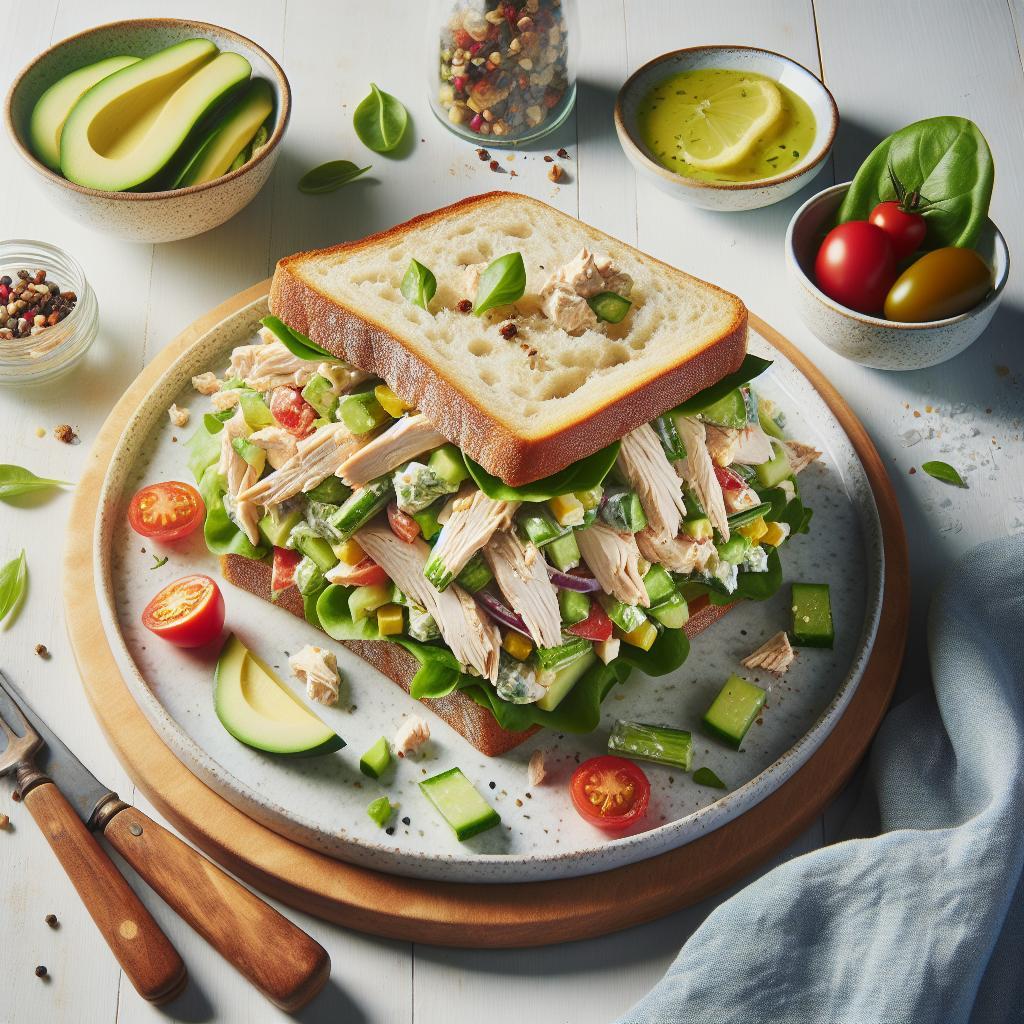
Toast bread lightly if desired and spread a thin protective layer of butter or cream cheese to deter sogginess. Next, layer lettuce leaves, then a generous scoop of chicken salad, finishing with the top slice pressed gently to compact.
Store the prepared chicken salad in an airtight container in the refrigerator for up to 48 hours. Keep the bread separate and assemble sandwiches within a few hours of serving for best texture.
Tips for Success
Small technique adjustments make a big difference. For example, chilling the chicken before combining reduces the chance of dressing separation and preserves crunch in the apples and celery.
Also, use coarse chop sizes for apples and celery to maximize textural contrast. Finally, taste as you go: acidity, salt, and sweetness achieve balance through incremental adjustments rather than large corrections.
Serving Suggestions
Serve sandwiches on a rustic board or individual plates for a casual presentation. Also, garnish with thin apple slices or a sprig of parsley to signal freshness and add visual contrast.
Pair the sandwiches with crisp vegetable sticks, a small green salad, or a chilled soup for a balanced midday meal. For broader sandwich context and variations across cultures, see Sandwich on Wikipedia.
Nutritional Snapshot
The recipe yields an approximate macro profile per serving: around 350 kcal, 28 g protein, 18 g carbohydrates, and 18 g fat, depending on exact ingredient brands and portioning. Small swaps like yogurt for half the mayo reduce fat and add protein.
Also, apples and nuts contribute fiber and micronutrients; celery adds volume with minimal calories. For general nutrition literacy, consult Nutrition on Wikipedia.
| Nutrient | Per Serving |
|---|---|
| Calories | 350 kcal |
| Protein | 28 g |
| Carbohydrates | 18 g |
| Fat | 18 g |
FAQ
How long does chicken salad last in the fridge?
Properly refrigerated in an airtight container, chicken salad lasts up to 48 hours. Also, keep bread separate to avoid sogginess and preserve texture until assembly.
Can I make the salad nut-free without losing crunch?
Yes—swap toasted sunflower or pumpkin seeds for nuts to retain crunch and similar mouthfeel. Moreover, seeds add healthy fats and make the recipe allergy-friendly.
What bread works best for this sandwich?
Whole-grain, sourdough, brioche, and croissants each offer distinct contrasts: hearty, tangy, or buttery. For low-carb options, use large lettuce leaves or sturdy leafy greens as wraps.
Is there a lighter dressing option?
Mix half mayonnaise with half plain Greek yogurt to reduce fat while maintaining creaminess. Also, adjust lemon juice and mustard to preserve brightness when reducing mayo.
Can I freeze chicken salad?
Freezing chicken salad is not recommended because the texture of mayonnaise and produce degrades on thawing. Instead, store cooked chicken frozen and prepare the salad fresh when ready to serve.
Finally, adapt the core formula—protein, binder, acid, crunchy mix-ins, and herbs—to invent variations that match your pantry and palate. Small changes deliver big rewards in flavor and texture.

See also: chicken salad