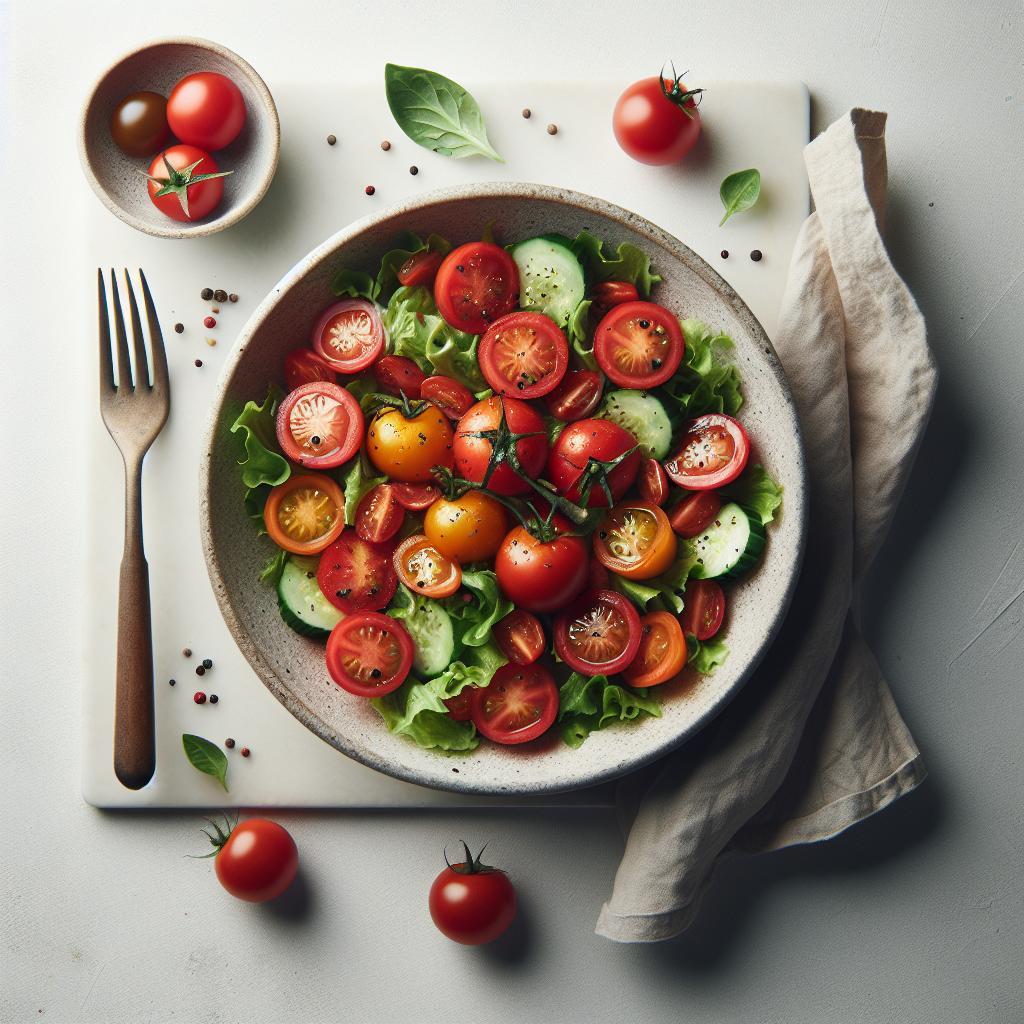

There is a particular pleasure in a dish that celebrates a single ingredient at its peak. A simple tomato salad does that: it highlights ripe tomatoes with a few thoughtful complements to create bright, balanced flavor.
- Choose ripe fruit: flavor starts with the tomato itself.
- Use restrained seasoning: salt and acid boost sweetness.
- Keep textures: minimal tossing preserves shape and juiciness.
- Finish just before serving: freshness matters for color and bite.
Choosing the Perfect Tomatoes for Maximum Freshness and Flavor
Quality begins with the produce. Seek tomatoes that feel heavy for their size, show vibrant color, and yield slightly under gentle pressure to indicate optimal ripeness.
For variety and complexity, include multiple types. Use standard slicing tomatoes for body, cherry tomatoes for concentrated sweetness, and heirloom varieties for visual contrast and nuanced flavor. See the tomato entry for botanical and cultivar context.
Buying local shortens the supply chain and often delivers better-tasting fruit. Farmers’ markets and local growers let you judge ripeness by feel and aroma, which correlates strongly with sugar-acid balance.
When fresh heirlooms are available, they reward you with distinctive textures and color. For background on cultivar diversity, consult the heirloom plant overview.
Mastering the Balance of Herbs and Seasonings to Elevate Your Salad
Herbs should support the tomato rather than compete with it. Fresh basil and flat-leaf parsley add aromatic lift, while small amounts of minced chives provide an oniony whisper without dominance.
Season in layers: a light sprinkle of flaky salt directly on cut tomatoes, a turn of fresh pepper, then the dressing. This technique unlocks juices and builds flavor without masking the fruit.
For herb guidance, review common culinary herbs and their flavor profiles at the basil entry and related herb resources. Try mint or oregano sparingly for regional variations.
Simple Dressings That Bring Out the Natural Sweetness of Tomatoes
Dressings in a tomato salad should be lightweight and bright. A high-quality extra-virgin olive oil adds mouthfeel and a fruity backbone that complements tomato sugars.
Balance oil with a focused acid: aged balsamic or a fresh citrus squeeze gives contrast and lifts sweetness. Research on olive oil and balsamic vinegar explains flavor differences and production methods useful for selection.
Add a small measure of honey or maple syrup if tomatoes are low in sugar; this rounds the edges and harmonizes with the acid. Whisk gently to emulsify and pour in a thin stream to avoid saturating the fruit.
Toss the salad briefly to coat, then rest briefly if using dense additions like cheese so flavors meld. However, avoid dressing too far ahead to prevent waterlogged tomatoes.
Creative Additions to Transform Your Tomato Salad into a Culinary Delight
Additions should introduce texture or contrast without stealing the spotlight. Toasted nuts or seeds add crunch, while soft cheeses create creamy pockets that pair well with acidic dressing.
Bright elements such as cucumber, thin radish slices, or sweet corn bring contrast and refreshment. Olives or capers introduce briny counterpoints that work well in moderation.
For a finished touch, a light dusting of smoked paprika or a few microgreens can add aroma and color. Keep additions proportional so the tomato remains the primary flavor and visual anchor.
When substituting for allergies, use toasted sunflower or pumpkin seeds instead of nuts to retain crunch and calorie density.
Prep and Cook Time
Prep Time: 15 minutes. This includes washing, cutting, and assembling ingredients at room temperature for best flavor release.
Cook Time: None. This is a no-cook salad that relies on ingredient quality and temperature control.
Yield
Serves 4 as a light starter or side dish. Scale ingredients linearly for larger groups while keeping herb and acid proportions stable.
For a main-course portion, add a protein like grilled chicken or a full ball of burrata and increase quantity by one-third per person.
Difficulty Level
Easy—assembly-focused with no technical cooking required. Techniques emphasize knife skills and tasting to adjust seasoning.
Even novice cooks can achieve balanced results by following measured dressing ratios and handling tomatoes gently to preserve structure.
Ingredients
- 4 cups heirloom tomatoes, assorted colors, cut into bite-sized pieces
- 1/4 cup fresh basil leaves, torn
- 2 tbsp fresh flat-leaf parsley, finely chopped
- 1 tbsp fresh chives, minced
- 3 tbsp extra-virgin olive oil
- 2 tbsp aged balsamic vinegar or fresh lemon juice
- 1 tsp honey or pure maple syrup
- 1/4 tsp flaky sea salt, plus more to taste
- Freshly cracked black pepper, to taste
- 2 tbsp toasted pine nuts or roasted almonds (optional)
- 1/4 cup crumbled feta or torn burrata (optional)
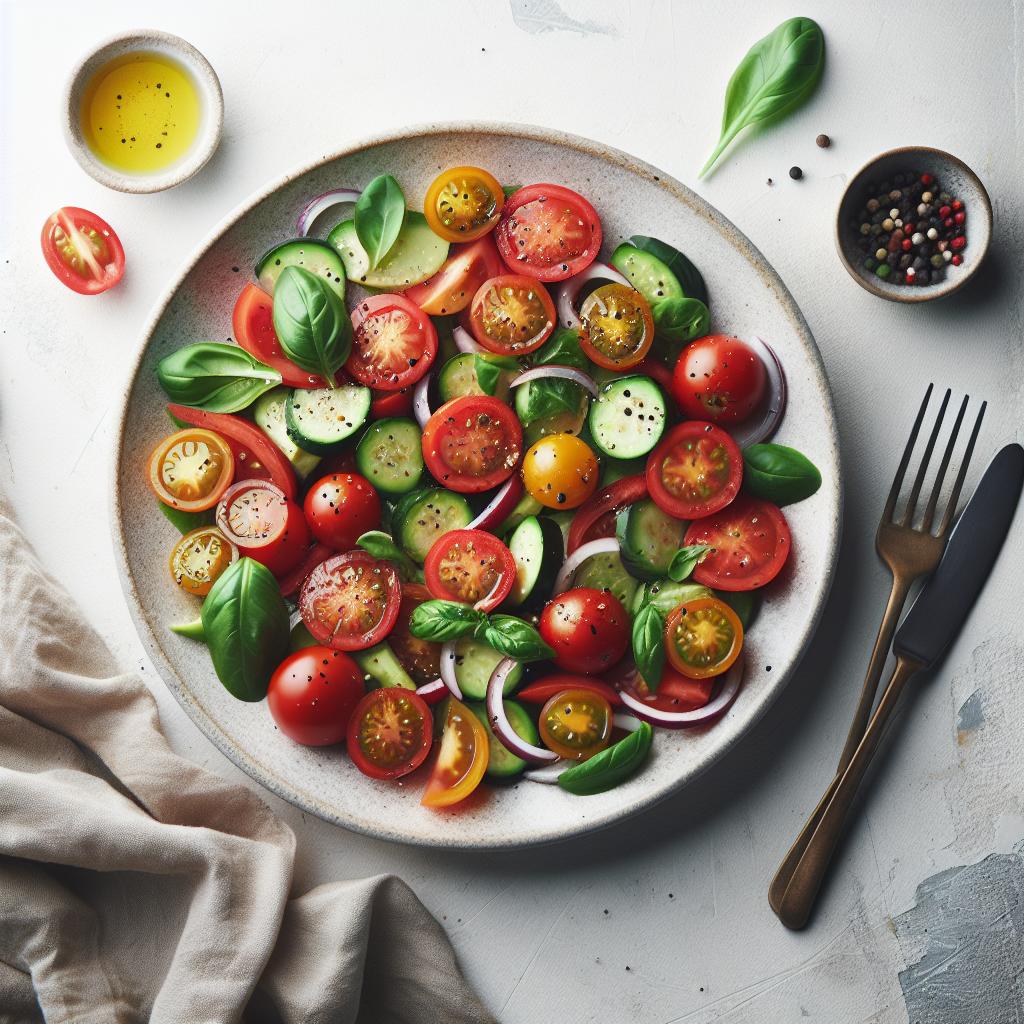
- Thin slices of radish or diced cucumber for garnish (optional)
- Pinch of red pepper flakes (optional)
Instructions
- Prepare the tomatoes: Rinse and dry. Cut into varied pieces to showcase color and texture, avoiding crushing the fruit.
- Mix the dressing: Whisk olive oil, balsamic (or lemon), and honey. Season lightly with salt and freshly cracked pepper, then taste and adjust.
- Combine salad ingredients: Place tomatoes in a large bowl. Add torn basil, parsley, and chives; fold gently to avoid bruising.
- Toss with dressing: Pour the dressing in a thin stream and fold until evenly coated. Drain any excess before plating if large juices develop.
- Add creative touches: Scatter toasted nuts and cheese. Garnish with radish or cucumber slices for contrast.
- Final seasoning: Taste and add more salt, pepper, or a squeeze of acid if needed. For heat, finish with red pepper flakes.
- Serve fresh: Present at room temperature to maximize aroma and flavor. The salad holds best when enjoyed shortly after assembly.
Chef’s Notes
- Tomato selection: If heirlooms are unavailable, vine-ripened tomatoes are a solid substitute. Avoid underripe supermarket fruit that lacks aroma.
- Herb variations: Try mint or oregano for regional twists; reduce quantities to keep balance with the tomato.
- Make-ahead tips: Keep dressing separate and toss the salad within 10 minutes of serving to retain texture and color.
- Allergies and substitutions: Use toasted sunflower seeds instead of nuts for a nut-free version without losing crunch.
Serving Suggestions
This salad pairs well with crusty bread, grilled fish, or simply as a light course for warm-weather meals. The fresh herbs and bright dressing complement grilled proteins especially well.
For plating, arrange in a shallow bowl and finish with a final drizzle of oil and a scatter of herbs to highlight color and texture. Consider edible flowers for visual flair.
| Nutrient | Per Serving |
|---|---|
| Calories | 140 kcal |
| Protein | 3 g |
| Carbohydrates | 7 g |
| Fat | 11 g (mostly healthy fats) |

FAQ
What makes a tomato salad truly fresh and flavorful?
Ripe, in-season tomatoes with minimal but targeted seasoning make a major difference. Salt, acid, and a quality oil unlock and highlight the tomato’s natural sugars.
Additionally, using varied tomato types improves texture and visual appeal while keeping preparation simple and direct.
Which tomato varieties work best for a simple salad?
Heirloom, cherry, and vine-ripened tomatoes each bring specific strengths: color, concentrated sweetness, and structural slices respectively. Combine types for balance.
For cultivar background and taste characteristics, review the tomato resource to guide selection.
How can I elevate a basic tomato salad without overcomplicating it?
Introduce one contrasting texture and one complementary flavor: for example, toasted nuts for crunch and a soft cheese for cream. Keep quantities modest to preserve tomato focus.
Also, balance the dressing carefully: a bright acid and a good oil go a long way when used sparingly.
How should leftovers be stored to preserve quality?
Store in an airtight container in the refrigerator and consume within 24 hours. Keep dressing separate if you anticipate leftovers to prevent sogginess.
Note that tomatoes will release juice over time; plan portions accordingly to maintain texture.
Can I adapt this salad for dietary preferences?
Yes. The base tomato salad is naturally vegan and gluten-free. Add plant-based cheeses or avocado for a richer main-course option while keeping the dressing simple.
For nut-free needs, swap nuts with toasted seeds to retain crunch and calorie content.
See also: Tomato Salad