
10 Brilliant Creamy Garlic Chicken Recipes
garlic chicken delivers comfort, bright flavor, and wide appeal. This version focuses on a silky garlic-parmesan cream sauce that clings to well-seared chicken for texture and balance in every bite.
- History and origins of garlic chicken
- Ingredients for garlic chicken (Metric & Imperial)
- How to make garlic chicken — Detailed preparation method
- Nutritional information per serving
- Expert pro-tips to elevate garlic chicken
- Common mistakes and pro-caution for garlic chicken
- Variations and serving suggestions for garlic chicken
- Conclusion and final plating notes
- FAQ
- Pro technique: Sear first to build fond for the sauce.
- Ingredient impact: Fresh garlic and cold cream shape sauce mouthfeel.
- Quick weeknight option: Ready in about 30–35 minutes with chef-level finish.
- Flexible: Use the sauce with pasta, rice, or roasted veg.
History and origins of garlic chicken
Garlic-forward poultry dishes appear across Mediterranean and European kitchens where garlic, butter, and cream meet seared meat. The pairing of garlic with dairy and seared proteins dates back through many regional traditions that refined texture and richness.
For botanical and culinary context, review the garlic entry on Wikipedia and the role of chicken in global diets via the chicken as food page.
garlic and chicken as food offer background on how each ingredient moved from pantry staple to plated main.
Ingredients for garlic chicken (Metric & Imperial)
Below is a tested ingredient list scaled for four servings. Weigh meat when possible for consistent results, and measure cream chilled to help emulsion stability.
Substitutions and small swaps follow the list so you can tune fat, tang, and texture without losing the core technique.
- 4 boneless, skin-on chicken breasts — 900 g (about 2 lbs)
- Salt and black pepper — to taste
- 2 tbsp olive oil — 30 ml
- 3 tbsp unsalted butter — 45 g
- 8 cloves garlic, minced — ~24 g
- 120 ml dry white wine (optional) — 1/2 cup
- 240 ml heavy cream — 1 cup
- 2 tsp Dijon mustard — 10 g
- 2 tbsp fresh lemon juice — 30 ml
- 1/2 cup grated Parmesan — 50 g
- 2 tbsp chopped fresh parsley — 8 g
- Pinch red pepper flakes (optional)
For background on dairy and cheese chemistry, consult the cream and Parmigiano-Reggiano pages on Wikipedia to understand fat content and melting behavior.
cream and Parmigiano-Reggiano explain why cold cream and aged cheese behave differently when reduced and whisked into sauces.
How to make garlic chicken — Detailed preparation method
Read the full method before starting so mise en place flows: garlic prepped, dairy chilled, and thermometer at hand. The technique centers on searing to develop Maillard flavor and finishing in a gentle cream reduction.
Key steps break into four clear stages: prepare and season, sear, build the sauce, and finish. Each stage controls heat and timing to avoid bitter garlic or broken cream.
Step 1: Prepare and season the chicken
Pat chicken dry with paper towels to remove surface moisture; this promotes even browning and better contact with the pan. Lightly score the thickest part to help the center cook evenly and season both sides with salt and pepper at least 10 minutes before searing.
Let the chicken rest at room temperature briefly to reduce chill; this short rest helps the sear develop. If you prefer less fat, remove skin after cooking rather than before searing to retain crispness during browning.
Step 2: Sear for flavor (critical step)
Heat the olive oil in a heavy skillet over medium-high until it shimmers, then add 1 tbsp butter. Place chicken skin-side down and press gently to ensure even contact; sear 5–7 minutes until deep golden, flip and sear the second side 4–5 minutes.
Transfer chicken to a plate and keep the pan hot but not smoking. Proper fond—the browned bits—becomes the backbone of the sauce; preserve it by not overcrowding the pan or scraping it away before deglazing.
Step 3: Build the creamy garlic sauce
Reduce heat to medium and add the remaining butter, then the minced garlic; sauté 30–60 seconds until fragrant but not browned. If using wine, deglaze with a dry white and simmer 1–2 minutes to concentrate flavor and evaporate alcohol.
Stir in heavy cream and Dijon mustard, then lower to a gentle simmer until the sauce thickens slightly (about 3–5 minutes). Finish with lemon juice and Parmesan, whisking until smooth; always taste and adjust seasoning before returning chicken to the pan.
Step 4: Finish the dish
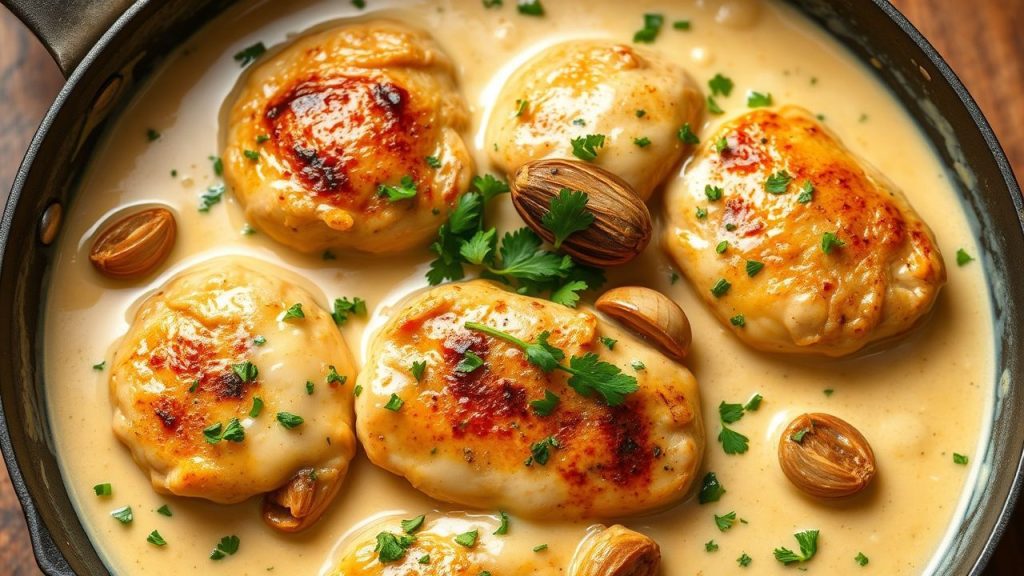
Return chicken to the skillet, spoon sauce over each piece, and simmer 2–3 minutes so flavors marry and temperatures even out. Spoon sauce over the skin to keep meat moist and to let the sauce cling for serving.
Garnish with chopped parsley and serve immediately over mashed potatoes, rice, or pasta to absorb the sauce. If the sauce gets too thick, thin it with a splash of chicken stock, water, or extra cream and heat gently.
Nutritional information per serving
Nutrition estimates below use skin-on breasts and heavy cream; values will vary by brand and portion. Per serving (4 servings): Calories 680 kcal; Protein 42 g; Fat 46 g; Saturated Fat 21 g; Carbohydrates 6 g.
To lower calories, swap half-and-half for heavy cream or remove skin before serving. Tempering Greek yogurt into the warm sauce off-heat adds tang and reduces fat without collapsing texture.
Expert pro-tips to elevate garlic chicken
Small choices change quality: cold cream keeps the sauce stable, while coarse salt on the skin before searing draws moisture and promotes crisper skin. Keep a light splash of stock handy to adjust consistency when reheating.
For deeper, sweeter garlic, roast whole heads and blend into the cream; for sharper, use raw minced garlic briefly sautéed. A final grating of nutmeg can harmonize cream and garlic in cooler months without overwhelming the palate.
Common mistakes and pro-caution for garlic chicken
Burning garlic makes it bitter; add minced garlic to hot fat but move it quickly and avoid browning. Also, adding cream to a pan that is too hot risks breaking the emulsion—simmer gently.
Under-seasoning the sauce is common—adjust salt, pepper, and lemon before serving. For food safety, always confirm chicken reaches 75°C/165°F with a thermometer, especially for thicker or bone-in cuts.
Variations and serving suggestions for garlic chicken
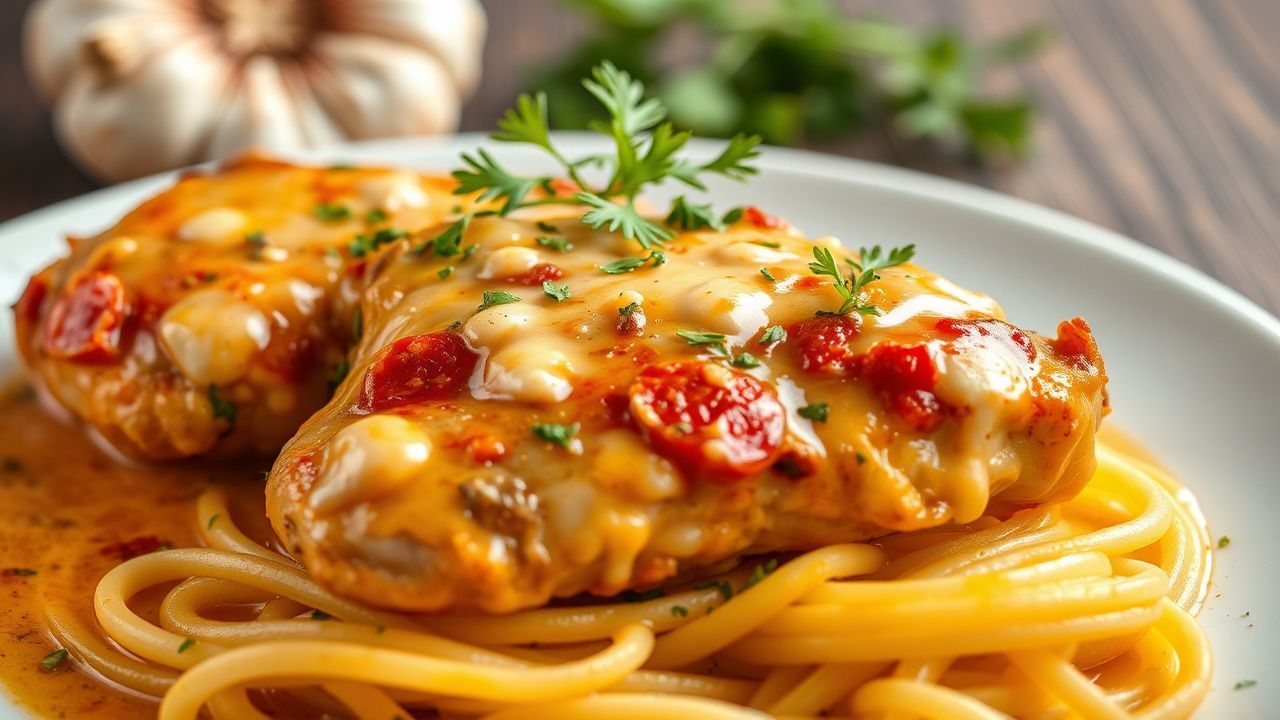
Slice the cooked chicken and toss with linguine and extra sauce for a quick pasta main. Shred the breasts and fold into a bake with mushrooms and spinach for a casserole that reheats well.
For a lighter forkful, replace cream with low-fat milk thickened with a cornstarch slurry, or add roasted tomatoes and fresh basil for an Italian leaning. Pair with roasted root vegetables or a crisp salad to cut richness.
Conclusion and final plating notes
The reliable path to excellent creamy garlic chicken is consistent: dry the chicken, build flavor on the fond, and reduce the sauce to coat the back of a spoon. Fresh garlic, correct seasoning, and a finishing acid make the difference between good and memorable.
Plate with contrast: a starch to soak sauce, a green for color, and a sprinkle of texture—crispy breadcrumbs or toasted nuts. Small details elevate presentation and mouthfeel for weeknight and dinner-party service alike.
FAQ
How long does garlic chicken take to cook?
Expect about 30–35 minutes from prep to plate for boneless breasts using sear-and-simmer. Thicker or bone-in pieces require additional oven time; use a thermometer to confirm 75°C/165°F.
Can I make garlic chicken ahead of time?
Yes. Cook fully and refrigerate the sauce and chicken separately for up to 48 hours. Reheat gently over low heat with a splash of stock or cream to restore texture.
What substitutes work for heavy cream?
Half-and-half or whole milk thickened with a 1 tsp cornstarch slurry reduces fat while retaining body. For tang, temper in full-fat Greek yogurt off-heat and avoid boiling to prevent curdling.
Is garlic chicken spicy?
Not by default. The dish is rich and garlicky; add red pepper flakes or chopped chiles while building the sauce to introduce heat if desired.
Can I use thighs instead of breasts?
Absolutely. Bone-in, skin-on thighs stay juicier and forgive slight overcooking. Sear longer on the skin to render fat and adjust oven finish time to reach the safe internal temperature.
See also: garlic chicken | chicken recipes
Recommended Reading:
- 9 Expert Couscous Secrets for Perfect Texture
- 9 Incredible Air Fryer Crispy Chickpeas
- 5 Proven Secrets for Silky Creamy Garlic Beef Sauce
See also: garlic chicken