
5 Chef Secrets to Perfect Silky Garlic Sauce for Beef
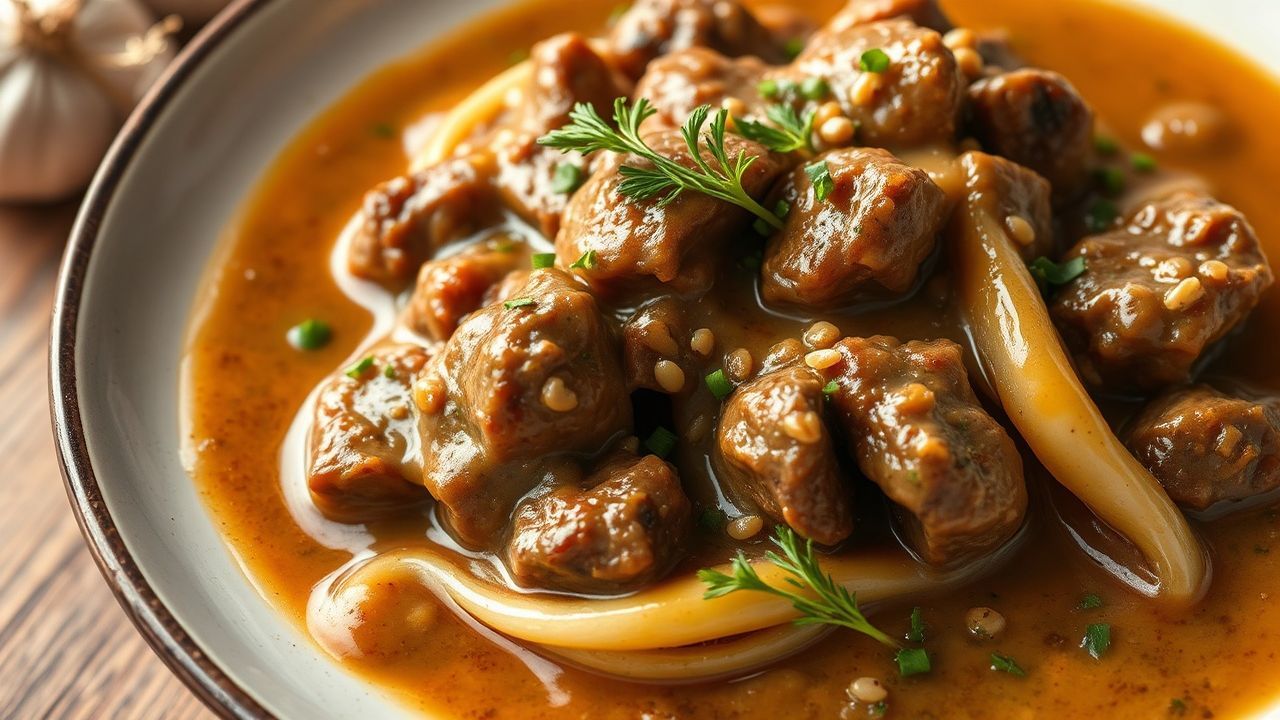
This guide lists five chef-tested techniques to produce a reliably silky, creamy garlic sauce that elevates beef. Each secret isolates a single technical lever so you can reproduce a glossy, clingy finish every time.
- Introduction: Why this garlic sauce works
- Secret 1 — Build deep flavor: Roasting, browning, and deglazing
- Secret 2 — Garlic handling: Roast, sauté, or purée
- Secret 3 — Emulsify for silkiness: Fat, starch, and technique
- Secret 4 — Balance flavors: Salt, acid, and aromatics
- Secret 5 — Temperature and finish: Make it cling, not separate
- Ingredients: Precise list for 4 servings
- Preparation Method: Step-by-step with chef notes
- Nutrition per serving (approximate)
- Expert Pro-Tips: Elevate to restaurant quality
- Related reading and references
- FAQ
- Build flavor first: brown beef and deglaze to capture fond for depth.
- Emulsify off-heat: finish with cold butter or cream to create a stable sheen.
- Balance precisely: bright acid and restrained salt sharpen the profile.
- Control temperature: avoid high heat when fats are present to stop breaking.
Introduction: Why this garlic sauce works
Garlic drives aroma and savory backbone; handled correctly it lifts beef without dominating. Roast cloves give rounded sweetness while late garlic additions deliver top-note lift.
The method uses searing to create Maillard compounds, deglazing to capture pan fond, reduction to concentrate, and an off-heat emulsification to make the sauce cling. For technical context on the Maillard chemistry, see Maillard reaction.
Secret 1 — Build deep flavor: Roasting, browning, and deglazing
Browned beef creates Maillard reaction compounds that read as nutty and savory; these compounds live in the fond on the pan surface. Proper searing creates the flavor base you will lift into the sauce.
Sear in a heavy pan without crowding; work in batches to maintain surface temperature. Deglaze immediately with wine or stock and reduce slightly to dissolve the browned bits into the liquid.
Practical technique: How to brown and deglaze
Pat beef dry and season just before searing to avoid drawing moisture out. Use a heavy skillet on high heat and let the meat release naturally before flipping to form a consistent crust.
After searing, pour off most fat but keep about a tablespoon to carry flavor. Add 60–120 ml of wine or stock, scrape the fond, then reduce until the liquid thickens slightly before adding cream or butter to finish.
Secret 2 — Garlic handling: Roast, sauté, or purée
The way you process garlic dictates aroma and perceived heat. Roasted garlic yields sweet, caramelized cloves while quick-sautéed garlic adds a bright edge; a raw purée gives more punch.
For balance, combine mashed roasted garlic with a small amount of late-stage sautéed minced garlic. This layering prevents a one-note sharpness and produces complexity that pairs well with beef.
Chef note: timing garlic additions
Add minced garlic at the end of the onion sauté for roughly 30–45 seconds to avoid bitter, burnt flavors. Watch closely since garlic browns faster than onions and will shift the sauce profile if overcooked.
To distribute roasted garlic evenly, blitz the cloves with a splash of cream or neutral oil, then whisk that paste into the sauce. This disperses sweet garlic flavor without leaving lumps.
Secret 3 — Emulsify for silkiness: Fat, starch, and technique
A glossy, clingy sauce depends on a stable emulsion that suspends fat droplets in the watery phase. Basic emulsion behavior clarifies why temperature and order matter; read more on emulsion basics.
Build body either by reduction or by using a light thickener: a small roux, beurre manié, or a concentrated reduction will make the sauce cling. Each option shifts texture and flavor slightly.
Method: Roux vs. beurre manié vs. reduction
Use a roux for a rounded, slightly toasty thickness: brown equal parts butter and flour briefly and cook out raw flour taste before adding liquids. Learn the classic roux approach at roux (culinary).
Beurre manié lets you finish faster: knead raw flour into softened butter and whisk into simmering sauce. Alternatively, reduce stock and wine until syrupy for a starch-free concentrate that highlights beef flavor.
Finish by whisking a swirl of cream and small cubes of cold butter off the heat. That off-heat incorporation produces a glossy, stable emulsion that resists breaking during plating.
Secret 4 — Balance flavors: Salt, acid, and aromatics
Salt amplifies meat and garlic while a focused acid brightens the overall profile. A splash of lemon juice or a touch of sherry vinegar will lift the sauce without changing its identity.
If you need extra savory depth without more salt, dissolve a small anchovy fillet into the sauce or add a pinch of mushroom powder. These umami sources reinforce the garlic and beef tones.
Practical balancing act for home cooks
Taste after reduction and again after adding cream or butter. Small adjustments—teaspoons of acid or pats of butter—let you tune brightness and richness incrementally.
If the sauce tastes flat, add a teaspoon of lemon juice. If it feels too sharp, whisk in a tablespoon of cream or a cold pat of butter to smooth edges and restore balance.
Secret 5 — Temperature and finish: Make it cling, not separate
Temperature control is the final technical piece. Add fats off the heat and rewarm gently; this sequence prevents curdling and keeps the sauce silky against hot beef slices.
Strain the finished sauce through a fine sieve to remove coagulated bits and aromatic shards. The result is a restaurant-polished pour that coats sliced meat evenly.
Finishing touches and plating technique
Rest sliced beef briefly so juices redistribute, then toss slices lightly in the sauce or spoon a thin ribbon over the top. A small knob of butter at the end gives spot-gloss for presentation.
Garnish sparingly with chopped parsley or microgreens to add visual contrast. Offer a lemon wedge for diners who want extra brightness at the table.
Ingredients: Precise list for 4 servings
Scale ingredients linearly for larger portions. Use fresh garlic, unsalted butter, and low-sodium stock to control final salt and texture.
Ingredients: 800 g beef (sirloin or flank), salt and pepper, 2 tbsp olive oil, 60 g unsalted butter, 100 g yellow onion finely diced, 6 cloves minced + 1 head roasted, 120 ml dry white wine, 500 ml beef stock, 120 ml heavy cream, 1 tbsp flour or cornstarch slurry, 1 tbsp lemon juice, 2 tbsp chopped parsley.
Preparation Method: Step-by-step with chef notes
Step 1: Roast one head of garlic at 200°C/400°F for 30–40 minutes until soft. Cool and mash the cloves into a smooth paste to add sweetness without raw bite.
Step 2: Pat beef dry, season, and sear in a hot pan with olive oil until a deep brown crust forms. Rest the beef to preserve juices before finishing and slicing.
Continued method
Step 3: Reduce heat, add butter, sauté onion until translucent, then add minced garlic for 30–45 seconds. Add wine to deglaze and reduce until slightly syrupy.
Step 4: Add stock and roasted garlic mash; simmer until reduced by roughly one-third. If using a roux, brown the flour in butter first. If using cornstarch, mix into cold water before adding.
Step 5: Off the heat, whisk in heavy cream and cold butter pieces to emulsify. Finish with lemon juice, salt, and pepper. Rewarm on low if needed but do not boil.
Step 6: Slice beef and spoon sauce over. Garnish and serve so the garlic sauce clings and appears glossy on the plate.
Nutrition per serving (approximate)
Calories: 620 kcal. Protein: 42 g. Fat: 38 g. Saturated fat: 17 g. Carbs: 12 g. Sodium varies by stock and added salt. Use lower-fat cream or reduce butter to cut calories, noting a loss in silkiness with leaner swaps.
To preserve mouthfeel when reducing fat, concentrate stock longer to extract natural gelatin from bones or collagen-rich scraps. That gelatin helps the sauce cling without extra fat.
Expert Pro-Tips: Elevate to restaurant quality
Simmer stock with beef bones or roasted vegetables for hours to extract gelatin. That gelatin improves mouthfeel and sheen and reduces the need for additional thickeners.
Finish with a compound butter of softened butter, parsley, and lemon zest for glossy aroma and extra gloss. Add it at the end so the flavor stays vibrant and the sauce remains silky.
Tools that matter
A heavy-bottomed pan ensures consistent searing and controlled fond development. A small whisk and a fine sieve are key tools for finishing and polishing the sauce.
An immersion blender helps fully homogenize the sauce when you want an ultra-smooth texture. Use a reliable thermometer for repeatable doneness on beef slices.
Related reading and references
For technical background, consult the following references on key topics. Each link opens in a new tab for easy cross-checking.
garlic, Maillard reaction, emulsion, and roux.
Pair these readings with hands-on trials to refine wine choice, reduction point, and acid balance until the sauce matches your taste and cut of beef. For more recipes and variations, see our internal guides on garlic sauce and broader technique notes at CookHarvest recipes.
FAQ
How can I prevent the garlic sauce from separating?
Finish with cold butter or cream off the heat and whisk continuously to build a stable emulsion. If the sauce weakens, whisk in a small amount of reduced, gelatin-rich stock to rescue texture.
Can I make this garlic sauce ahead?
Yes. Cool quickly and refrigerate for up to 48 hours. Reheat gently and whisk in a splash of stock or cream to restore silkiness; avoid boiling to prevent separation.
Is there a dairy-free way to get similar silkiness?
Use full-fat coconut cream or an emulsified olive-oil-and-starch method. Reduce stock to concentrate body, then whisk in the dairy substitute off heat for richer mouthfeel.
How intense should garlic be in the sauce?
Intensity is personal. Start with roasted garlic as the base and add measured amounts of raw or sautéed garlic for brightness. Remember flavors concentrate as the sauce rests.
Which beef cuts pair best with this garlic sauce?
Sirloin, ribeye, skirt, and flank pair well. For braised or slow-cooked beef, skim excess fat and reduce the cooking liquid for a naturally gelatinous, clingy sauce.
See also: garlic sauce variations
Recommended Reading:
- 9 Essential Couscous Secrets for Perfect Texture
- 9 Irresistible Air Fryer Crispy Chickpeas
- 10 Brilliant Lemon-Garlic Baked Fish Recipes (Fast & Flavorful)