
Harvest Harmony: Crafting the Perfect Roasted Sweet Potato Salad
Roasted sweet potatoes take center stage in this seasonal salad, offering caramelized edges and a silky interior that pair with bright, crunchy components. The recipe focuses on balanced textures and a maple-apple cider vinaigrette to lift natural sweetness.
- Key takeaway: Roast at high heat for crisp edges and tender centers.
- Key takeaway: Combine warm cubes with cooled grains for texture contrast.
- Key takeaway: A simple vinaigrette bonds flavors without overpowering.
Why this salad works
Roasting triggers caramelization and the Maillard reaction on sweet potato surfaces, concentrating sugars and adding savory notes. That process creates a contrast with fresh greens and acidic dressing, producing a layered taste profile.
Quinoa and seeds add chew and crunch while pomegranate seeds or citrus provide bright acidity that balances the root vegetable’s richness. These contrasts create a composed plate that suits casual dinners and holiday spreads alike.
Prep and Cook Time
Preparation: 20 minutes. Prepare vegetables, measure spices, and preheat the oven to save time. Simple mise en place keeps the roast phase efficient.
Roasting: 35–40 minutes at 425°F (220°C). Flip halfway for even browning. Allow a short cool period before tossing to protect leafy greens.
- Total: Approximately 1 hour
Yield
This recipe serves 6 as a side dish or 4 as a light main course. Portion sizes depend on whether you plate with sides or serve buffet-style.
Scale easily: double the sweet potatoes and grains for larger groups; roast in batches to avoid overcrowding the pan.
Difficulty Level
Rated Easy to Medium for home cooks familiar with basic knife work and oven roast techniques. The timing is forgiving and swaps are straightforward.
Tools required: a sharp chef’s knife, a rimmed baking sheet, a large bowl, and a whisk or jar for emulsifying the dressing.
Ingredients
Gather quality produce and pantry staples to highlight textures. Use firm sweet potatoes without soft spots and fresh greens for the best results.
Key ingredients in this recipe include roasted sweet potatoes, cooked quinoa, arugula, pomegranate seeds, toasted pepitas, and a maple-apple cider vinaigrette.
- 3 large sweet potatoes, peeled and cut into 1-inch cubes (preferably Garnet or Jewel)
- 2 tbsp extra virgin olive oil
- 1 tsp smoked paprika
- 1/2 tsp ground cumin
- Freshly ground black pepper, to taste
- Sea salt, to taste
- 1 cup cooked quinoa, cooled
- 1/2 cup pomegranate seeds
- 1/4 cup toasted pumpkin seeds (pepitas)
- 1 small red onion, thinly sliced
- 2 cups baby arugula or mixed greens
- For the dressing: 3 tbsp extra virgin olive oil, 1 tbsp maple syrup, 2 tbsp apple cider vinegar, 1 tsp Dijon mustard, salt and pepper
Reference notes: sweet potato is a starchy root with soluble sugars that caramelize during roasting. Also, quinoa adds protein and texture as a pseudocereal.
Instructions
1. Preheat the oven to 425°F (220°C). Line a rimmed baking sheet with parchment for even heat distribution. Preheating ensures immediate browning when the potatoes hit the pan.
2. Toss the sweet potato cubes with olive oil, smoked paprika, cumin, salt, and pepper in a large bowl until evenly coated. Spread in a single layer to avoid steaming and to encourage caramelization.
3. Roast for 35–40 minutes flipping every 15 minutes. Look for golden brown edges and a fork-tender interior. Remove and let cool slightly to avoid wilting the greens when combined.
4. Prepare the dressing by whisking olive oil, maple syrup, apple cider vinegar, Dijon, salt, and pepper until emulsified. Taste and adjust acidity or sweetness to balance the savory roasted potatoes.
5. Assemble the salad in a large bowl: warm roasted sweet potatoes, cooled quinoa, arugula, pomegranate seeds, toasted pepitas, and thinly sliced red onion. Gently toss to combine while preserving the texture of the potatoes.
6. Serve immediately for warm contrasts, or chill for 30 minutes to let flavors meld. If chilling, dress lightly before serving to prevent sogginess.
Chef’s Notes: Tips for Success
Variety matters: Garnet and Jewel varieties roast well due to higher moisture and sugar content. Roasting concentrates sugars and deepens flavor through controlled browning.
Even cutting: Uniform 1-inch cubes produce consistent doneness. Small pieces risk burning; large pieces undercook in the same time frame.
Roasting temperature: A high oven temperature of 425°F promotes crisp edges while protecting the interior. This is standard practice to balance texture and time efficiency.
Make ahead: Roast potatoes a day in advance and store in an airtight container; reheat briefly or assemble at room temperature to preserve salad texture.
Serving Suggestions
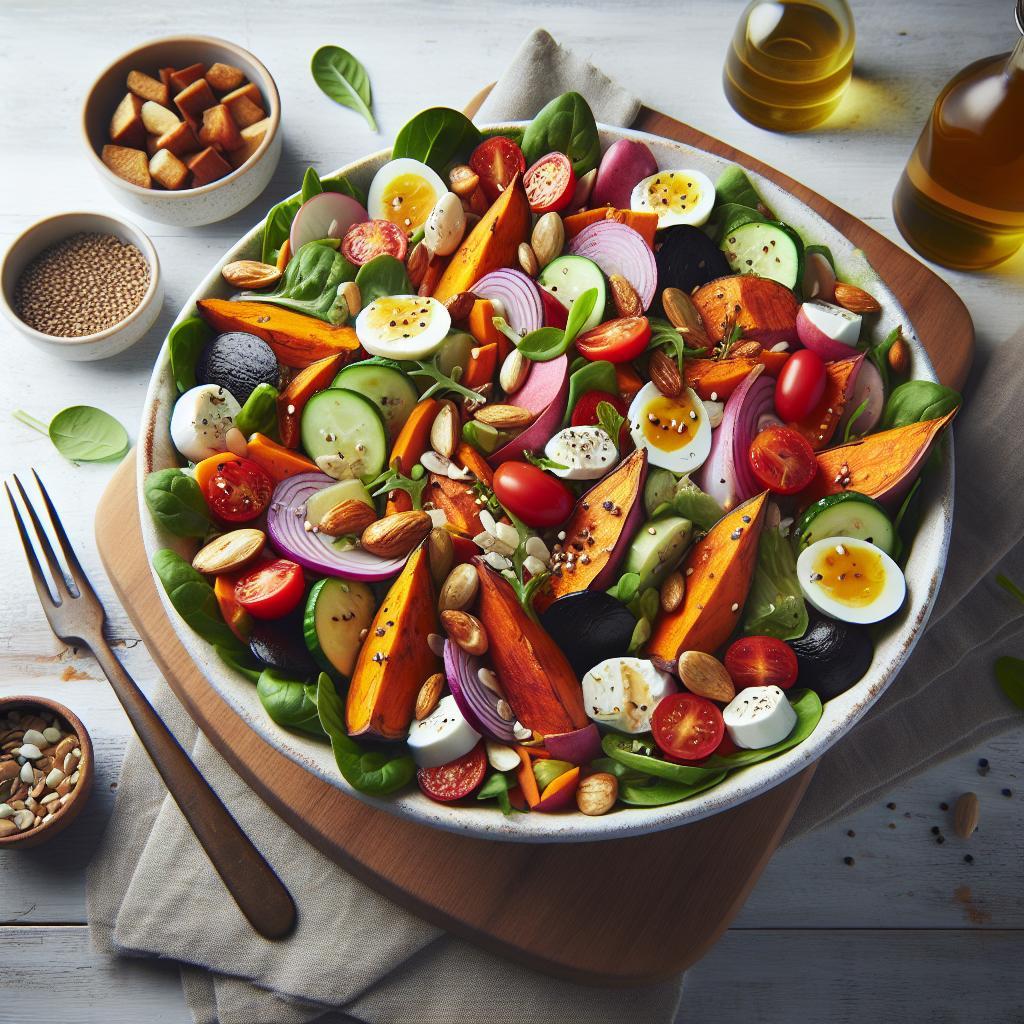
Serve the salad in a wide shallow bowl to highlight color contrasts and garnish with extra pomegranate seeds and toasted pepitas. Fresh herbs such as cilantro or mint add aromatic lift.
Pair with crusty bread or roasted seasonal vegetables for a full plate. For a protein boost, add chickpeas or a simple pan-seared tofu for vegetarian diners.
Nutritional Snapshot
This recipe balances carbohydrates, healthy fats, and plant proteins to create a filling side or light main. Nutrition varies with portion and added proteins.
Per serving estimates (side): Calories 320, Protein 6g, Carbohydrates 48g, Fat 10g. Adjustments such as added nuts will change totals.
| Nutrient | Per Serving |
|---|---|
| Calories | 320 |
| Protein | 6g |
| Carbohydrates | 48g |
| Fat | 10g |
Serving Variations and Seasonal Swaps
In autumn, add roasted beets or butternut squash to amplify the root-vegetable theme. These roast well at the same temperature and complement the potatoes’ sweetness.
In spring or summer, swap pomegranate for citrus segments or fresh peas for brightness. Herbs like basil or tarragon shift the salad toward a lighter, fresher profile.
FAQ
How do I get perfectly caramelized sweet potatoes?
Cut uniform cubes, use enough oil to coat surfaces, and roast in a single layer at 425°F. Flip once or twice; avoid disturbing the pan frequently to let browning develop.
High heat drives Maillard browning on the surface, locking in depth of flavor while keeping the interior tender.
Can I make this salad vegan or gluten-free?
The base recipe is naturally gluten-free and vegetarian. For vegan, use maple or agave instead of honey if substituting sweeteners.
Adding legumes such as chickpeas increases protein without disrupting dietary constraints.
What grains pair well besides quinoa?
Farro, bulgur, or barley work if you prefer chewier textures; note that barley and farro contain gluten. Quinoa remains an ideal gluten-free option with a neutral flavor profile.
Cook grains to al dente to maintain texture when combined with warm roasted potatoes.
How far ahead can I prepare elements?
Roasted sweet potatoes keep up to 3 days refrigerated; dressing stores 4–5 days. Assemble close to serving time for best texture.
Store components separately and toss just before serving to prevent greens from wilting.
Are there reliable references for ingredient background?
For botanical and culinary context, consult reputable resources: sweet potato, olive oil, and pomegranate. These explain origin, composition, and common uses.
Understanding ingredient properties helps predict how they behave under heat and in acidulated dressings.
Final Thoughts
The roasted sweet potato salad combines simple techniques with seasonal ingredients to create an approachable yet refined dish. Focus on texture contrast and balanced acid to elevate the natural sweetness of the roots.
Follow the roast-and-toss method, keep components fresh, and adjust flavorings to match your palate. The result rewards modest effort with memorable flavor and visual appeal.
See also: sweet potato salad