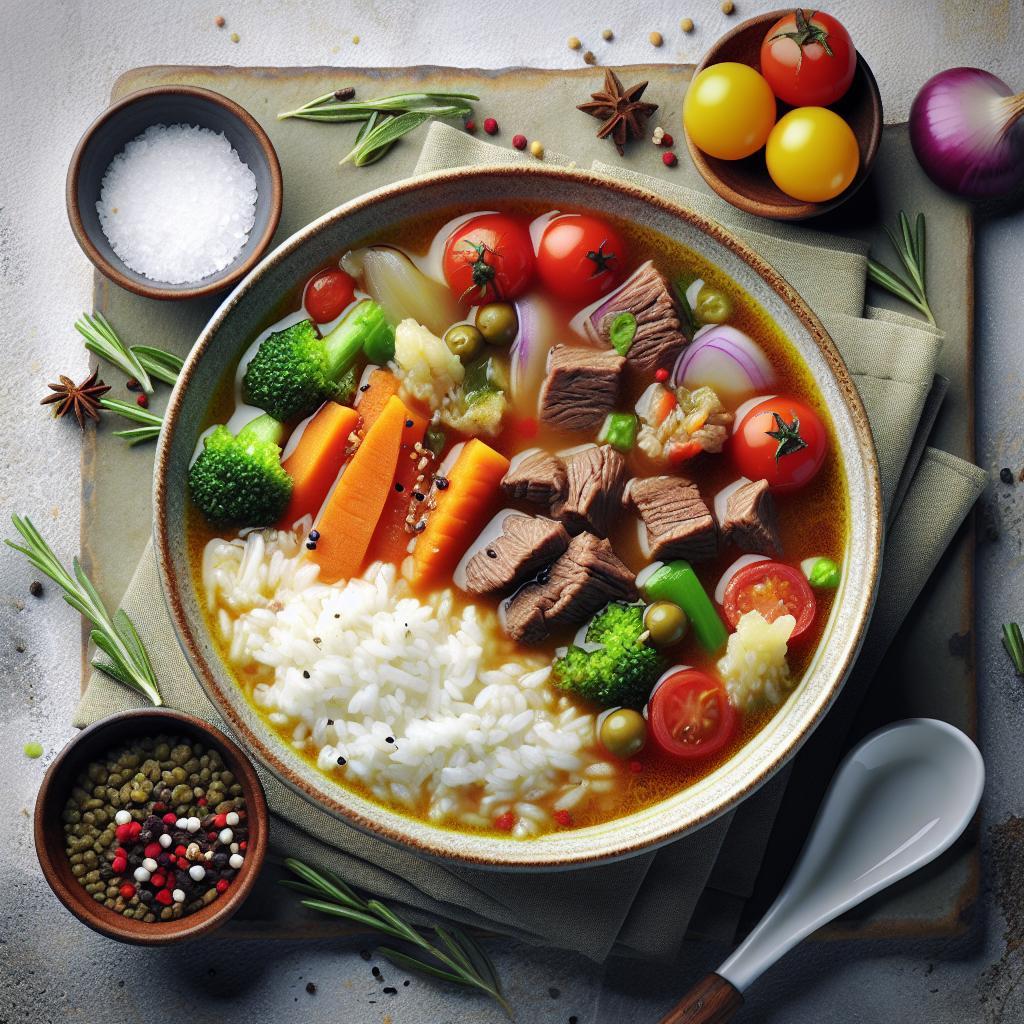

Beef Soup: A Comfort Bowl of Flavor
Beef soup delivers a compact package of umami, texture and comfort. Proper browning, patient simmering and rice timing combine to create a bowl that feels intentionally built rather than tossed together.
- Deep flavor: Brown the beef and deglaze the pot for concentrated taste.
- Texture control: Add rice late or cook separately to avoid mushy grains.
- Make-ahead friendly: Flavors meld overnight; reheat gently and stir in fresh rice if frozen.
The Rich Foundations of This Beef Soup
Begin with well-marbled beef to supply collagen that converts to gelatin during a long simmer. That gelatin gives the broth body and the mouthfeel diners expect from a classic beef soup.
Use a strong broth and aromatics to amplify the meat. The meat gives umami and protein, rice supplies comforting body, and vegetables balance the savory base.
Prep, Timing, Yield for the Beef Soup
Preparation: 20 minutes. Cooking: 2 hours 30 minutes. Total: 2 hours 50 minutes. A gentle simmer extracts flavor without breaking the meat apart.
Yield: Serves 6 generous bowls. Difficulty: Medium — requires staging and timing for best rice texture and beef tenderness.
Ingredients
Gather uniform ingredients so everything finishes at the same moment. Use long-grain white rice for a neutral texture, or choose whole grains if you want more chew.
Below is the ingredient list with emphasized quantities for quick scanning and shopping.
- 1 ½ pounds beef chuck roast, cut into 1-inch cubes
- 2 tablespoons olive oil
- 1 large yellow onion, finely chopped
- 3 cloves garlic, minced
- 3 medium carrots, peeled and diced
- 2 stalks celery, diced
- 1 teaspoon dried thyme
- 1 teaspoon smoked paprika
- 6 cups low-sodium beef broth
- 1 cup long-grain white rice, rinsed until water runs clear
- 1 bay leaf
- Salt and freshly ground black pepper, to taste
- 2 tablespoons fresh parsley, chopped (optional garnish)
Method: Step-by-Step for a Robust Beef Soup
Work in clear stages: brown the beef, sweat the aromatics, deglaze, simmer, then add rice. Each stage controls texture and concentrates flavor for a more composed soup.
Use a heavy-bottomed pot to maintain even heat and prevent hotspots. A stable simmer turns connective tissue into gelatin and makes the broth silky.
Prepare the Beef
Pat beef cubes dry to encourage Maillard browning. Moist pieces steam instead of sear and lose the caramelized flavor that defines great beef soup.
Heat oil over medium-high and brown in batches for 5–7 minutes until deeply caramelized. Remove browned pieces and set aside to avoid crowding and steam.
Sauté the Aromatics
Reduce heat to medium and sweat onions, carrots and celery until softened and aromatic, about 5–7 minutes. This softens the vegetables and develops natural sweetness.
Stir in garlic, thyme and smoked paprika for 30–60 seconds so the spices bloom without burning. Blooming spices build a layered aromatic backbone for the beef soup.
Deglaze and Simmer
Return the browned beef to the pot and pour in the broth while scraping the fond. Those browned bits on the pot bottom carry concentrated flavor for the soup base.
Add the bay leaf, bring to a gentle boil, then reduce heat to low and cover. Simmer about 2 hours until the beef is tender and the broth shows body.
Add Rice and Finish
Stir in rinsed rice after the long simmer and season with salt and pepper. Cover and simmer 20–25 minutes until rice is tender but still distinct.
If you prefer firmer grains, cook rice separately and combine before serving. This keeps the rice texture ideal and protects leftovers from turning mushy.
Discard the bay leaf, ladle hot beef soup into bowls, and finish with chopped parsley for brightness. Serve with crusty bread or a crisp salad for contrast.
When you brown deeply, you create complex flavors from the Maillard reaction; that chemistry transforms surface amino acids into savory compounds that enrich the broth.
Chef’s Notes and Practical Adjustments
Choice of cut matters. Beef chuck offers connective tissue and marbling that break down during slow simmering and produce a silky texture natural to classic beef soup.
Substitute long-grain white rice with brown rice or barley for more chew; increase cooking time and liquid proportion accordingly. Each grain behaves differently and needs adjustment.
Make-ahead: the beef soup gains depth overnight. Cool quickly, refrigerate, and reheat gently over low heat to avoid overcooking rice and toughening proteins.
Freezing: freeze portions without rice, or slightly undercook rice to prevent a mushy texture after thawing and reheating. Reintroduce fresh rice when serving for best texture.
Serving Suggestions to Elevate the Beef Soup
Pair beef soup with a crisp green salad or toasted bread to balance the bowl’s richness. A short squeeze of lemon brightens the broth and cuts through fat cleanly.
Garnishes that add texture include chopped scallions, shredded cheddar, or extra parsley. Small finishing touches enhance aroma, color and mouthfeel.
Nutritional Snapshot (per serving)
This beef soup supplies protein from beef, carbohydrates from rice, and fats from oil and meat. Adjust portions to match dietary goals or swap grains to tweak fiber content.
Calories and macros vary with cut and exact quantities; the table below reflects the recipe as written using leanish chuck and one cup cooked rice per serving.
| Calories | Protein | Carbohydrates | Fat |
|---|---|---|---|
| 350 kcal | 28 g | 30 g | 10 g |
Tech Notes: Tools and Technique for Better Beef Soup
Use a heavy pot or Dutch oven for consistent heat; thin pans create hotspots that scorch fond. Even heat improves fond formation and prevents burnt bits from spoiling the soup.
A kitchen thermometer helps you hold a gentle simmer. Maintain 185–205°F (85–96°C) to extract collagen without aggressive boiling that breaks meat apart.
Slow Cooker and Pressure Options
For slow cookers, brown beef first and transfer everything to the insert. Cook on low for 6–8 hours and add rice during the last 30 minutes to preserve texture.
Pressure cookers reduce time but concentrate flavors differently. If using a pressure option, reduce broth slightly and watch rice timing carefully to avoid overcooking.
Resources and Further Reading
Learn more about the science behind browning and slow simmering to refine technique and repeat results. These resources explain core principles and grain behavior.
Reference links below provide core background on ingredients and reactions that shape the finished soup.
For additional recipes and variations on beef soup, see our internal guides on related techniques and slow-cooked meals.
Explore these internal resources for fast reference and more recipes that adapt to pantry staples and seasonal produce.
FAQ
What cut of beef should I choose for best results?
Choose cuts with connective tissue such as chuck; slow simmering converts collagen into gelatin. That gelatin gives the broth body and the tender mouthfeel expected in a beef soup.
If you prefer leaner meat, shorten the simmer time and consider adding a marrow or knuckle bone to enrich the broth.
How do I keep rice from getting mushy in beef soup?
Add rice during the final 15–25 minutes of cooking depending on grain type, or cook rice separately and add to bowls just before serving. This preserves texture and prevents overhydration during reheating.
Plan for a slight softening as the soup rests; undercook rice by a minute if you expect multiple reheats.
Can I make this beef soup in a slow cooker?
Yes — brown the beef first for best flavor, then transfer everything to the slow cooker. Cook on low for 6–8 hours and add rice during the final 30 minutes to avoid mush.
Adjust rice timing based on your slow cooker model; heat profiles vary and will change how quickly grains cook.
How should I store and freeze beef soup?
Cool quickly and refrigerate in airtight containers for up to 3 days. For longer storage, freeze without rice or undercook rice slightly before freezing to avoid a gummy texture after thawing.
When reheating, bring to a gentle simmer and refresh texture with a splash of broth if the soup thickened while chilled.
What grains can replace rice in this beef soup?
Barley, farro, and brown rice make hearty substitutes that add chew and flavor absorption. Each grain needs adjusted liquid ratios and longer cooking times.
Test small batches to dial ratios for your preferred grain before scaling the recipe for a full pot.
See also: Beef soup
- Beef Soup: A Comfort Bowl of Flavor
- The Rich Foundations of This Beef Soup
- Prep, Timing, Yield for the Beef Soup
- Ingredients
- Method: Step-by-Step for a Robust Beef Soup
- Chef’s Notes and Practical Adjustments
- Serving Suggestions to Elevate the Beef Soup
- Nutritional Snapshot (per serving)
- Tech Notes: Tools and Technique for Better Beef Soup
- Resources and Further Reading
- FAQ
Recommended Reading:
- Hearty Harmony: 7 Essential Steps for Rich Beef Soup
- Savor the Richness: Creamy Spinach Chicken Pasta Delight
- Savor the Flavor: One-Pot Cajun Chicken Rice Recipe Guide