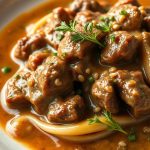
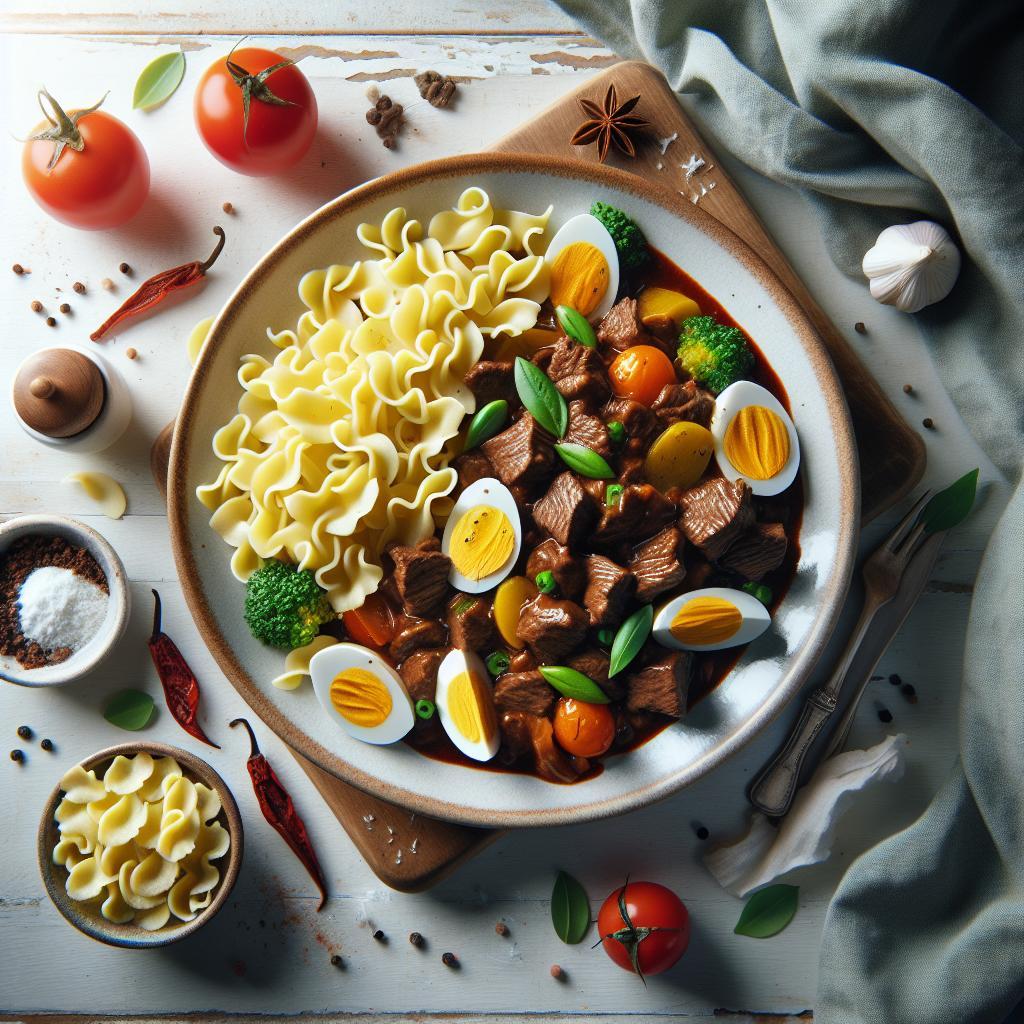

There is a comforting power to a steaming bowl of hearty beef goulash — rich, paprika-forward, and paired with tender egg noodles for satisfying mouthfeel. Slow simmering develops depth, glossy sauce, and fork-tender meat that reward a little patience and precise technique.
- Classic flavor: Paprika anchors the dish and defines goulash color and aroma.
- Best cut: Use well-marbled chuck for braise-friendly tenderness.
- Timing matters: Low, steady simmer yields the richest texture and clarity.
Hearty Beef Goulash with Egg Noodles: Exploring Rich Flavors and Traditional Ingredients
Goulash traces to Central Europe and stands as a culinary pillar in Hungarian tradition, where paprika plays a central role. For context on origins and variations, see goulash on Wikipedia and Hungarian cuisine on Wikipedia.
The assembled ingredients create a balanced profile: umami from beef, bright acidity from tomatoes, and smoky-sweet warmth from paprika. When plated over wide egg noodles, the sauce adheres and elevates each bite; read more about noodles at Noodle.
Prep and Cook Time
Preparation: 20 minutes. Gather mise en place before you heat the pot to keep the workflow efficient and avoid overbrowning or burning spices.
Cooking: 2 hours 15 minutes total, including time to sear, sauté, and simmer. Allow at least two hours of gentle simmer for best results.
Yield
Serves 6 hearty portions. Plan for generous portions if serving with sides like pickled vegetables or a green salad.
If you intend to freeze, portion into meal-sized containers while still slightly warm to minimize condensation in storage.
Difficulty Level
Medium. The technique centers on correctly searing meat and protecting paprika from direct high heat so it does not burn and turn bitter.
Focus on controlled simmering rather than rushing to reduce the sauce; time, not high heat, creates the signature silky body.
Ingredients
2 lbs beef chuck, cut into 1-inch cubes; 3 tbsp vegetable oil; 2 large onions, finely chopped; 4 cloves garlic, minced; 3 tbsp sweet Hungarian paprika; 1 tsp smoked paprika (optional); 1 tbsp tomato paste; 4 cups low-sodium beef broth; 1 cup crushed tomatoes; 1 red bell pepper, diced; 2 carrots, sliced; 2 tsp caraway seeds; 1 bay leaf; salt and black pepper to taste; 12 oz wide egg noodles; fresh parsley for garnish.
For meat selection and broader context about beef cuts, see the general information on Beef. Well-marbled chuck or brisket breaks down into gelatin-rich morsels when braised low and slow.
Instructions: Step-by-Step
1. Brown the beef: Heat 2 tablespoons oil in a heavy-bottomed pot over medium-high heat. Add cubed beef in a single layer and brown well in batches to develop fond; overcrowding will steam the meat instead of searing it.
2. Sauté aromatics: Reduce heat to medium, add remaining oil, then onions. Sauté until soft and lightly caramelized, about 6–8 minutes, then stir in garlic and cook 30–60 seconds until fragrant.
3. Add paprika and tomato paste: Remove pot briefly from the heat and sprinkle in the sweet Hungarian paprika and smoked paprika if using. Stir in tomato paste to coat the aromatics; return to low heat for 1–2 minutes to bloom the spices without burning them.
4. Simmer: Return browned beef to the pot. Add beef broth, crushed tomatoes, diced bell pepper, sliced carrots, caraway seeds, and bay leaf. Bring to a gentle boil, then lower to a simmer and cook uncovered for about 2 hours until meat is fork-tender and the sauce has reduced and thickened.
5. Cook noodles and finish: While the goulash simmers, cook wide egg noodles in generously salted water until al dente, drain, and toss with a teaspoon of oil to prevent sticking. Remove the bay leaf, adjust seasoning, and serve goulash ladled over noodles with chopped parsley.
Garnish options include a dollop of sour cream or crème fraîche to add cooling richness and a bright shower of fresh herbs for contrast.
Technique Notes
Use high-heat searing to create Maillard flavors, then reduce to low heat to convert collagen into gelatin. That gelatin creates the luxurious mouth-coating texture that distinguishes great goulash.
Protect paprika by adding it off heat or over very low heat; scorched paprika tastes acrid and can ruin an otherwise balanced pot.
Let the finished goulash rest 15–30 minutes before serving if possible; flavors meld as it cools slightly, and reheated portions often taste superior.
Tips for Success
Beef choice: Use chuck or brisket for the best yield of tender, flavorful meat. Leaner cuts will tighten and lose succulence during long simmering.
Paprika quality: Fresh, single-origin Hungarian sweet paprika provides vivid color and clarity. Avoid pre-mixed blends that may contain fillers or stale spices.
Make-ahead: Goulash often improves after a day in the refrigerator as flavors marry. Reheat gently to preserve texture and prevent the sauce from separating.
Variations: Swap bell pepper for mushrooms to add umami, or introduce a small pinch of cayenne for heat. Maintain balance by testing incremental adjustments.
Serving Suggestions
Serve in deep bowls so the noodles and sauce mingle naturally. A spoonful of sour cream cools the palate and contrasts the paprika’s warmth.
Complement with crisp cucumber salad, pickled vegetables, or lightly dressed greens to offer acidity against the rich stew base. For historical context on paprika and its cultural role, see Paprika.
| Nutrient | Amount per Serving |
|---|---|
| Calories | 520 kcal |
| Protein | 38 g |
| Carbohydrates | 36 g |
| Fat | 22 g |
Storage and Make-Ahead
Cool goulash to room temperature within two hours and refrigerate in airtight containers for 3–4 days. Freeze portions for up to three months for meal prep convenience.
Store noodles separately when possible; combine just before serving to preserve texture. If you must store them together, undercook noodles slightly to avoid mush after reheating.
FAQ
What makes beef goulash different from other stews?
Goulash is defined by its use of paprika and a blend of aromatics that create a bright, earthy, and sometimes smoky profile. Unlike heavier stews, goulash often focuses on clarity of spice and glossy sauce adhesion to noodles.
Can I substitute the beef with a vegetarian option?
Yes. Use hearty mushrooms, seitan, or textured vegetable protein to absorb the paprika-tomato base. Simmer until textures are tender, and adjust liquid if plant proteins absorb more broth.
How do I adjust spice heat without losing balance?
Add heat in small increments—cayenne, hot paprika, or fresh chilies work well. Taste as you go and balance with a touch of acidity or dairy if the heat overpowers the core flavors.
Why do recipes recommend resting goulash before serving?
Resting allows flavors to integrate and sauce viscosity to stabilize as temperatures fall slightly. This translates to a more cohesive and satisfying mouthfeel on serving.
What is the best way to reheat leftover goulash?
Reheat gently over low heat with a splash of broth to refresh texture; high heat can break emulsions and toughen meat. Microwave in short bursts, stirring between cycles to reheat evenly.
For further reading on regional variations and historical notes, consult the goulash and Hungarian cuisine references linked earlier to deepen your understanding.

See also: Beef Goulash