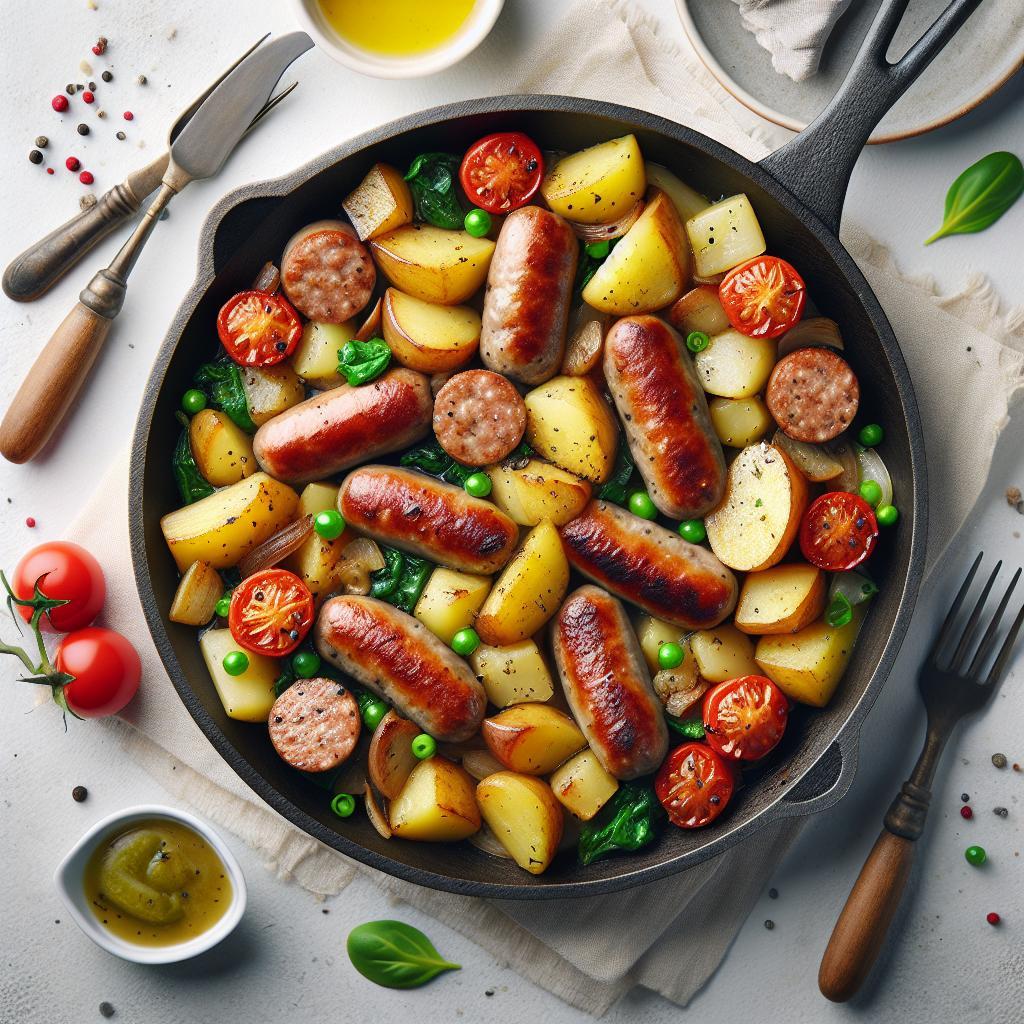

When weeknight hunger meets limited time, a sausage skillet answers with bold flavor and simple technique. This beef-forward one-pan recipe pairs seared beef sausage with golden-diced potatoes for a meal that tastes deliberate while coming together quickly.
- Hearty Sausage Skillet Inspiration for Comfort Food Lovers
- Prep and Cook Time for Sausage Skillet
- Yield and Difficulty of This Sausage Skillet
- Sausage Skillet Ingredients
- Sausage Skillet Instructions
- Tips for Success: Elevating Your Sausage Skillet
- Serving Suggestions for Sausage Skillet
- Variations and Swaps for the Sausage Skillet
- Nutrition Estimates for Sausage Skillet
- FAQ
- One-pan efficiency: ready in about 40 minutes with minimal cleanup.
- Balanced textures: crisp potato crust contrasts juicy browned beef sausage.
- Adaptable: swap proteins or herbs for vegetarian or spiced variations.
Hearty Sausage Skillet Inspiration for Comfort Food Lovers
This sausage skillet draws on rustic, pan-driven cooking where searing and fond build deep flavor. Browning sausage first releases rendered fat and caramelized bits that the potatoes then absorb for a cohesive profile.
For context on the ingredient traditions behind sausages and potatoes, consult these references: sausage varieties and potato types. These pages explain how fat content and starch type affect cooking and texture.
Prep and Cook Time for Sausage Skillet
Prep Time: 15 minutes. Keep vegetables and potatoes diced uniformly to ensure even sear and consistent browning across the pan.
Cook Time: 25 minutes. Heat control and avoiding pan crowding determine the final crispness. Plan for roughly 40 minutes total from start to finish.
Yield and Difficulty of This Sausage Skillet
Serves 4 hearty portions. Scale the recipe proportionally for more people, but finish larger batches in multiple pans to preserve high-heat sears and even browning.
Difficulty rates as easy-to-medium. The technique focuses on temperature control and timing rather than high-level knife skills, making it accessible to home cooks who follow sequencing.
Sausage Skillet Ingredients
Choose ingredients that support searing and flavor build. A higher-fat beef sausage browns predictably and helps form an appealing crust on starchy potatoes.
Measure and mise en place before heating the pan. Gather spices and herbs so seasoning happens in stages rather than rushed at the end.
- 1 lb beef sausage, sliced into 1/2-inch rounds
- 4 medium Yukon Gold potatoes, diced into 1/2-inch cubes
- 1 large yellow onion, thinly sliced
- 2 cloves garlic, minced
- 2 tablespoons olive oil
- 1 teaspoon smoked paprika
- 1/2 teaspoon dried thyme
- 1/2 teaspoon freshly cracked black pepper
- Salt, to taste
- 2 sprigs fresh rosemary (optional)
- Fresh parsley, chopped for garnish
Sausage Skillet Instructions
Use a large heavy skillet—cast iron offers steady heat and reliable browning. A stable pan surface gives you control when forming a crust on potatoes and searing the sausage evenly.
Follow steps in order; staged cooking and short rests let flavors develop without overcooking any element.
- Heat oil in the skillet over medium-high. Once shimmering, add the sliced beef sausage and sear until edges brown, about 5 minutes. Transfer sausage to a plate and reserve rendered fat.
- Add the diced potatoes to the same pan. Spread them into a single layer and sauté without stirring for 6–8 minutes to encourage a crisp crust, then flip and cook until golden on most sides, about another 6 minutes.
- Stir in the sliced onion and minced garlic. Cook until the onion softens and becomes translucent, around 3–4 minutes, scraping up any fond from the pan.
- Season with smoked paprika, dried thyme, freshly cracked black pepper, and a pinch of salt. Stir to coat the potatoes and awaken aromatics.
- Return the sausage to the skillet, nestling rounds into the potatoes. Add rosemary sprigs if using, cover loosely, and cook 4–5 minutes so flavors meld and the sausage finishes through.
- Remove rosemary. Taste and adjust salt or pepper. Garnish with chopped parsley and let the skillet rest briefly before plating to allow juices to settle.
Let the skillet rest for one minute before serving; a short pause makes portioning cleaner and helps flavors even out in the pan.
Tips for Success: Elevating Your Sausage Skillet
Small technical moves yield measurable improvements. Control moisture and avoid overcrowding the pan to keep the potatoes crisp without burning them.
Parboiling cubed potatoes briefly reduces total sear time. After a short boil, drain and shake them in a colander to rough the surface; that texture crisps faster in the skillet.
Season in stages: a base seasoning during cooking and a finishing adjustment after combining ingredients. A splash of low-sodium beef broth or a teaspoon of Worcestershire sauce during the final meld ups the umami without masking the beef sausage.
Serving Suggestions for Sausage Skillet
Serve straight from the skillet for a rustic presentation or portion into bowls for easy weeknight meals. Bright, acidic sides pair well to cut through the dish’s richness.
Try a crisp lemon vinaigrette salad or quick-sautéed green beans to add contrast. A squeeze of lemon and fresh herbs at the end provide a clean finish and lift the overall balance.
Variations and Swaps for the Sausage Skillet
Make a vegetarian version by using plant-based beef sausages that mimic texture and fat. Thick slices of firm tofu, browned on both sides, also work as a neutral protein base.
For a spicier profile, select beef chorizo or add cayenne. For herb-forward results, increase fresh rosemary or thyme and finish with lemon zest to cut richness and add brightness.
Nutrition Estimates for Sausage Skillet
Nutrition varies by specific brands and portion sizes. Use these practical estimates per serving for meal planning and calorie accounting.
Per serving (estimate): 420 kcal; Protein 28 g; Carbohydrates 30 g; Fat 22 g. Adjust using leaner sausage or fewer potatoes to change macronutrient balance.
FAQ
What makes this sausage skillet different from other one-pan meals?
The focused sequence of searing sausage first, then finishing potatoes in the rendered fat builds a layered, savory profile. That staged approach maximizes browning and keeps the sausage juicy while creating crisp potato edges.
Using a heavy pan and managing heat adds depth through fond while preventing overcooking.
Can I customize the vegetables in this sausage skillet?
Yes. Hearty additions like bell peppers, mushrooms, or quick-cooking greens work well. Add delicate greens late so they retain texture and color.
Dice substitutions to a similar size as the potatoes so everything finishes at the same time and requires minimal juggling.
How do I get perfectly crispy potatoes without burning them?
Control heat and avoid overcrowding the pan. Parboiling or steaming cubed potatoes reduces total sear time; finish on high heat undisturbed to build a crust.
Flip potatoes only when most exposed surfaces are golden. A well-seasoned cast-iron pan provides steady heat for reliable results.
Is this sausage skillet suitable for meal prep?
Yes. Cool portions quickly, store in airtight containers, and refrigerate within two hours. Reheat in a skillet to revive crispness or microwave and then finish with a quick pan toss.
Stored properly, refrigerated portions last 3–4 days. Freeze for longer storage but expect a softer texture when thawed.
What herbs and spices amplify the sausage skillet?
Garlic, smoked paprika, and freshly cracked black pepper form a solid backbone. Fresh rosemary or thyme adds aromatic lift during the final meld.
Finish with chopped parsley or a squeeze of lemon for a bright counterpoint to the dish’s richness. For more on rosemary and its uses, see rosemary.
This sausage skillet pairs straightforward technique with a forgiving ingredient list, making it a dependable weeknight main. Follow the searing and staging guidance above and adjust seasonings to taste for consistent, crisp, flavorful results.
See also: sausage skillet