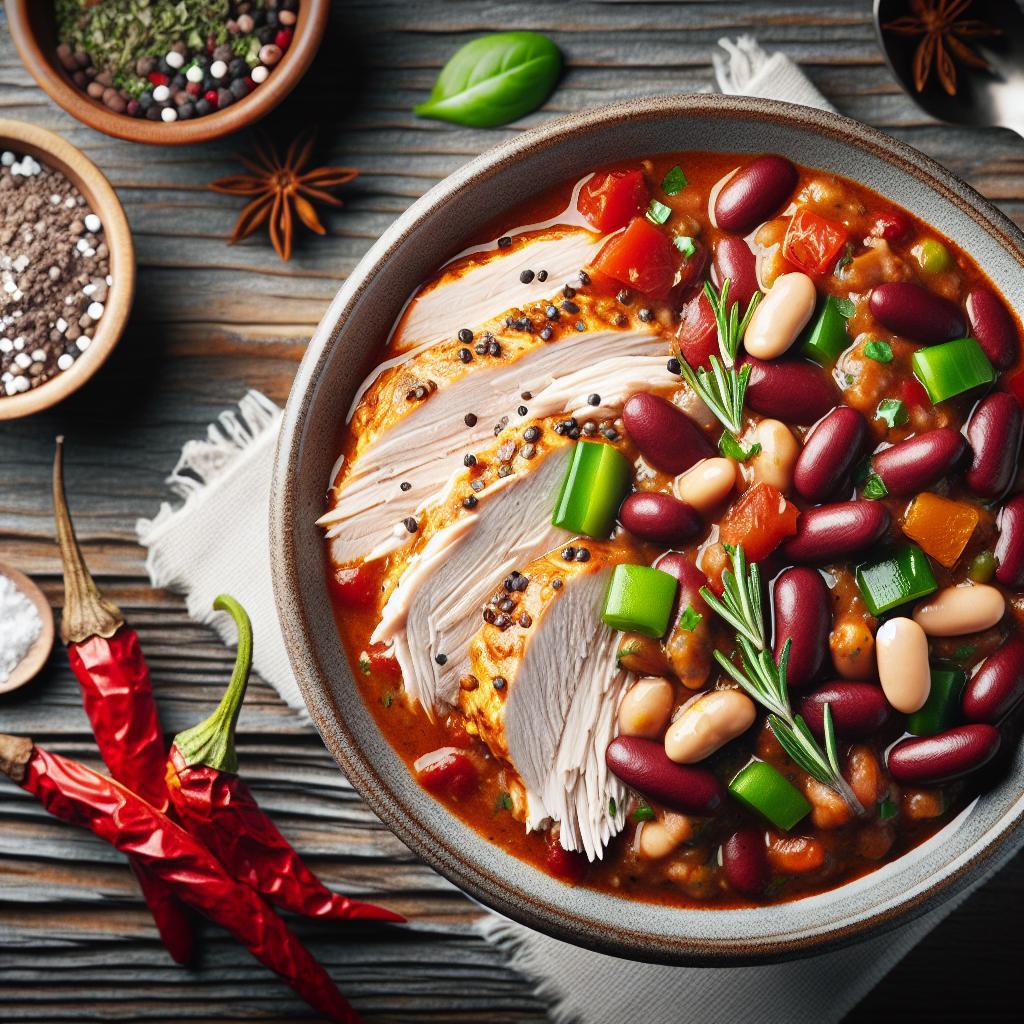

turkey chili delivers lean protein, fiber from beans, and bold savory flavor in a single pot. This version focuses on texture, seasoning strategy, and meal-prep techniques so you get consistent results every time.
- Prep and Cook Time
- Yield
- Difficulty Level
- Ingredients
- Step by Step Guide to Creating Rich and Hearty Turkey Chili at Home
- Preparing Dried vs. Canned Beans
- Choosing the Right Beans and Ingredients for Maximum Flavor and Nutrition
- Tips for Success
- Serving Suggestions and Creative Twists to Elevate Your Comfort Meal
- Nutrition Per Serving
- Storage and Meal Prep Strategy
- Internal Resources
- FAQ
- Final Notes
- Quick weeknight-friendly: about one hour from start to finish with minimal hands-on time.
- Nutrition-forward: lean protein, high fiber, and controlled sodium when you choose low-sodium canned goods.
- Batch-cook friendly: flavors deepen after resting; freezes well for future meals.
- Flexible serving: serve over grains, baked sweet potatoes, or use as a casserole base.
Prep and Cook Time
Preparation: 15 minutes. Cooking: 45 minutes, mostly gentle simmering to develop depth.
The timeline suits busy cooks who want bold flavor without long hands-on time. Simmering gently for 30 minutes lets the components meld and allows natural reduction to thicken the pot.
Yield
This recipe yields six generous servings—ideal for families or batch cooking. You can halve or double the ingredient list without changing technique.
Leftovers keep in the refrigerator for up to three days or in the freezer for up to three months. Label portions to speed reheating and portion control when you meal-plan.
Difficulty Level
Easy to medium: the required techniques are sautéing, browning, and simmering. Attention to seasoning and texture matters more than advanced skills.
Beginner cooks will succeed by following step order and achieving a solid brown on the turkey. Experienced cooks can vary bean blends and heat levels by adjusting spice ratios.
Ingredients
For consistent results use 1 lb lean ground turkey, a 50/50 mix of kidney and black beans, one can diced tomatoes, tomato paste, and 2 cups low-sodium broth. Choose low-sodium canned goods to manage salt precisely.
Beans supply fiber, texture, and satiety. For background on legumes and their nutritional role, consult legume. For information about turkey as a food source, see turkey (bird).
Step by Step Guide to Creating Rich and Hearty Turkey Chili at Home
Successful chili follows a clear progression: prepare beans, build aromatics, brown protein, add liquids, then simmer while tasting to balance seasoning. Follow this order to avoid common texture and flavor traps.
Use a heavy-bottom pot or a Dutch oven to avoid hot spots and to promote even browning. That vessel choice helps you maintain a steady simmer and reduces sticking during longer cooking.
Browning and Flavor Building
Heat 2 tablespoons of olive oil over medium and sauté one finely chopped onion until translucent. Add minced garlic and diced bell pepper and cook briefly to soften while preserving bright aromatics.
Raise heat to brown the ground turkey in batches. Browning develops Maillard compounds that deliver savory depth—an overview is available at Maillard reaction.
Spices and Liquids
Add 1 tablespoon chili powder, 2 teaspoons ground cumin, and 1 teaspoon smoked paprika, stirring to briefly toast the spices. For context on cumin as a culinary spice, see cumin.
Stir in diced tomatoes, a tablespoon of tomato paste, cooked or canned beans, and 2 cups low-sodium broth. Bring to a low boil, then reduce heat and simmer uncovered for 30 minutes while adjusting seasoning toward the end.
Preparing Dried vs. Canned Beans
If using dried beans, soak overnight and simmer until tender before adding to the chili. Partially cooked beans will resist softening if simmered in acid without prior tenderizing.
Canned beans provide speed but rinse well to remove packing liquid and excess sodium. Different beans deliver distinct textures—kidney beans hold shape, while black beans add creaminess.
Choosing the Right Beans and Ingredients for Maximum Flavor and Nutrition
Combining kidney and black beans balances toothsome bite and creamy body while increasing dietary fiber and important micronutrients. Beans also contribute plant-based protein and slow-digesting carbs for lasting fullness.
Lean ground turkey reduces saturated fat relative to many red meats but still supplies concentrated protein. Swap in dark meat or add a small amount of olive oil if the mixture feels dry while browning.
When pressure-cooking dried beans, follow manufacturer instructions and release pressure safely. Overcooking canned beans in a long boil will break them down excessively, so add canned beans late in the simmer when possible.
For texture, remove a cup of beans, mash them, and return them to the pot to thicken naturally. A light reduction over the last 10–15 minutes also thickens without adding thickeners.
Tips for Success
Adjust salt and acid near the end of cooking to prevent over-salting during reduction. Add a splash of lime juice or a tablespoon of vinegar right before serving to brighten the final bowl.
Control heat gradually. Start with mild chili powder and add cayenne or chipotle in small increments while tasting. This gives you predictable spice control for different eaters.
Serving Suggestions and Creative Twists to Elevate Your Comfort Meal
Serve the chili over steamed brown rice, quinoa, or stuffed sweet potatoes for a complete plate. Garnish with plain Greek yogurt, sliced avocado, or shredded cheese for creamy contrast and cooling texture.
Finish with toasted pumpkin seeds, chopped scallions, or crushed tortilla chips for crunch. For a casserole-style twist, layer chili in a skillet and top with a quick cornbread batter before baking.

Nutrition Per Serving
This recipe yields roughly 320 kcal per serving with about 28 g protein, 30 g carbohydrates, and 8 g fat. Values reflect lean turkey, mixed beans, and low-fat garnishes commonly used.
Adjust portions and sides to change totals: serving over grains increases carbs, while a vegetable salad lowers overall calories per meal. Use the table as a planning guide.
| Nutrient | Per Serving |
|---|---|
| Calories | 320 kcal |
| Protein | 28 g |
| Carbohydrates | 30 g |
| Fat | 8 g |
Storage and Meal Prep Strategy
Cool the chili to room temperature within two hours and refrigerate in shallow containers to chill quickly. Use within three days or freeze in meal-size portions for up to three months.
Label frozen containers with date and portion size for efficient meal planning. Thaw overnight in the refrigerator and reheat on low, stirring until steaming throughout to preserve texture.
Internal Resources
For more turkey chili variations and serving ideas, consult our internal recipe collection at turkey chili recipes. For slow-cooker techniques and timing, see slow-cooker turkey chili.
These internal guides offer timing charts, spice swaps, and reheating tips to keep your meal prep efficient and tasty. They pair well with the techniques described above.
FAQ
What makes turkey chili with beans a nutritious comfort meal?
The dish pairs lean animal protein with fiber-rich legumes to balance macronutrients. That mix supports satiety and steadier blood sugar than refined-carb meals.
Beans supply micronutrients like iron and magnesium while the turkey provides a high-quality protein source for muscle repair and fullness.
Can I make this recipe gluten-free?
Yes. Use gluten-free labeled spices and canned goods when necessary. Most basic chili ingredients—turkey, beans, tomatoes, and common spices—are naturally gluten-free.
Check labels on broths and spice blends to avoid hidden gluten in some commercial products. When in doubt, choose single-ingredient spices and homemade stock.
How can I thicken runny chili without flour or cornstarch?
Remove a cup of beans, mash them, and return them to the pot to thicken naturally. Alternatively, simmer uncovered for 10–15 minutes to reduce excess liquid.
Pureeing a portion of the cooked ingredients in an immersion blender also increases body while keeping the ingredient list simple.
Is ground turkey a good alternative to ground beef in chili?
Ground turkey provides lower saturated fat and a high protein yield, making it a practical swap for those reducing red meat. Brown it well to maximize savory flavor.
If desired, add a tablespoon of olive oil when browning to boost mouthfeel. A small amount of tomato paste can also deepen umami and color.
How long does flavor improve after making chili?
Chili usually deepens in flavor after several hours or overnight as spices and aromatics meld. Refrigerate and reheat gently before serving the next day for best results.
For make-ahead service, cool, store, and reheat in small batches to preserve texture and avoid over-reducing the sauce during reheating.
Final Notes
This turkey chili with beans adapts well to dietary needs while delivering consistent comfort and nutrition. Keep the core framework—browned protein, toasted spices, tomatoes, beans, and low-sodium broth—and tweak toppings and sides to suit your table.
Small, deliberate adjustments during simmering—salt, acid, and spice—yield predictable, satisfying improvements. When you follow the sequence and taste as you go, reproducible success follows.
See also: turkey chili
See also: turkey chili