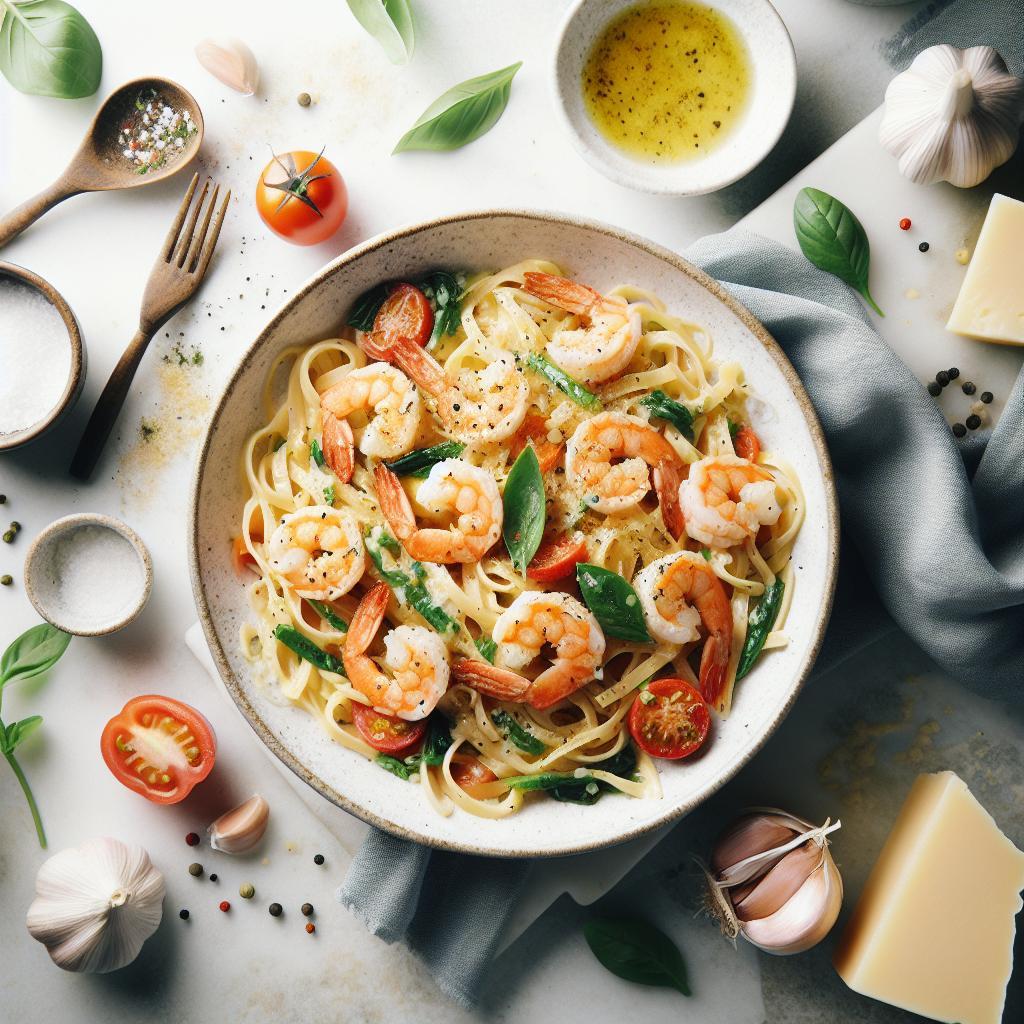

There’s something utterly irresistible about the silky embrace of creamy garlic shrimp pasta. The dish pairs succulent shrimp with a rich, savory cream sauce and pasta that holds every flavorful strand.
- Quick wins: Learn timing and heat control for tender shrimp and a silky sauce.
- Sauce technique: Use reserved pasta water to adjust texture without diluting flavor.
- Flavor balance: Brighten richness with lemon and fresh herbs for contrast.
Overview
This recipe channels coastal Mediterranean flavor while remaining approachable for home cooks. I explain precise steps, ingredient choices, and small technique adjustments that produce consistent, restaurant-quality results.
Along the way you’ll get expert guidance on shrimp selection, garlic handling, cheese integration, and plating. Where helpful, I link to authoritative references so you can verify culinary detail quickly.
Prep and Cook Time
Preparation: 15 minutes. Cooking: 20 minutes. Total: approx. 35 minutes. These times reflect active cooking for four servings using fresh, prepped ingredients.
Plan mise en place: mince garlic, zest lemon, and measure cream and cheese before you heat a pan. Doing so prevents rushed steps and keeps shrimp from overcooking.
Yield and Difficulty
Yield: Serves 4 generously. This quantity matches 12 oz pasta and 1 lb shrimp for hearty portions without leftovers that lose texture.
Difficulty: Medium. The techniques are straightforward, but attention to timing and heat makes a measurable difference in tenderness and sauce finish.
Ingredients
Use quality components and simple substitutions that preserve texture. For example, authentic Parmigiano-Reggiano delivers melting consistency and savory depth; choose a similar hard Italian cheese if unavailable.
Key ingredients (serves 4):
- 12 oz linguine or fettuccine pasta (Pasta)
- 1 lb large shrimp, peeled and deveined (Shrimp)
- 6 cloves garlic, minced (Garlic)
- 2 tbsp unsalted butter
- 1 tbsp olive oil
- 1 cup heavy cream
- 1/2 cup freshly grated Parmigiano-Reggiano
- 1/4 cup fresh parsley, finely chopped
- 1/2 tsp crushed red pepper flakes (optional)
- Salt and black pepper to taste
- Juice of 1/2 lemon
Instructions
Follow this sequence to keep shrimp tender and the sauce emulsified. I use active-heat control and staged combining to avoid curdling and overcooking.
1. Cook the pasta: Bring a large pot of salted water to a rolling boil and cook linguine until al dente, about 9–11 minutes. Reserve 1 cup of pasta water before you drain.
2. Sauté the shrimp: Heat olive oil and butter over medium-high heat in a large skillet. Season shrimp with salt and pepper, sear until just pink and opaque—about 2–3 minutes total—and remove to a plate.
3. Create the garlic base: Lower heat to medium-low and add minced garlic to the same skillet. Sauté gently for 1–2 minutes until fragrant and golden, stirring to prevent browning.
4. Make the creamy sauce: Lower heat further and add heavy cream, stirring as it warms. Whisk in grated Parmigiano-Reggiano a little at a time until the sauce turns silky; if sauce tightens, add reserved pasta water by tablespoons to loosen without thinning flavor.
5. Combine and finish: Return shrimp to the skillet and stir in drained pasta and lemon juice. Toss gently to coat. Adjust seasoning with salt, pepper, and crushed red pepper flakes for heat if desired.
6. Garnish and serve: Finish with chopped parsley and a light scatter of additional grated cheese. Plate immediately to preserve cream texture and shrimp juiciness.
Technique Notes and Ingredient Choices
Choosing the right shrimp size and cooking at correct heat are repeatable variables you can control. Larger shrimp make plating attractive and reduce the risk of overcooking when searing.
Use room-temperature cream and freshly grated cheese when possible. Pre-grated blends can contain anti-caking agents that prevent smooth melting and may cause grainy sauce texture.
When seasoning, taste in stages. Salt the pasta water, then taste the combined dish before final seasoning. This staged approach prevents over-salting and keeps the lemon and cheese balanced.
Tips for Success
Sauté garlic on medium-low heat so it softens and releases aromatics but does not brown. Browned garlic can taste bitter and will change the sauce profile.
Control the cheese addition: add it off direct high heat or the sauce may separate. A gentle heat and continuous whisking produce a glossy finish and creamy mouthfeel.
Cook pasta to al dente exactly as package timing suggests, then combine immediately with sauce. The slightly firm bite helps pasta hold the cream and keeps texture lively in the finished plate.
If you plan to prep ahead, cook shrimp and pasta separately and reheat gently. Reheat the sauce slowly over low heat and re-emulsify with a small splash of reserved pasta water before combining.
Serving Suggestions
Bright components balance the cream. A light lemon zest and fresh parsley provide aromatic lift and visual contrast to the ivory sauce.
Pair the dish with simple sides that refresh the palate: a green salad tossed with lemon vinaigrette or roasted asparagus with olive oil. Bread for mopping up sauce always works; keep buttered garlic bread to a light toast to avoid overwhelming the main flavors.
Nutrition and Portioning
Estimated per-serving nutrition: around 520 kcal, 38 g protein, 45 g carbohydrates, and 22 g fat. These values come from the combination of pasta, shrimp, cream, and cheese.
Adjust portions for dietary targets: reduce cream quantity and replace with a lighter alternative such as a milk-Greek yogurt blend if you need to lower calories while keeping a creamy mouthfeel.
Notes on Culinary Tradition
The dish draws on Mediterranean flavor logic: simple, high-quality ingredients combined for bold, balanced results. For background on regional influences, consult an overview of Mediterranean cuisine.
Garlic and seafood pairings appear across many coastal cuisines, and this recipe follows that lineage while using contemporary emulsification techniques for cream-based sauces.
FAQ
Q1: How do I keep shrimp from becoming rubbery?
Sear shrimp quickly at medium-high heat and remove as soon as they turn pink and opaque. Carryover heat will finish them, so return them to the sauce only briefly before serving.
Q2: Can I substitute heavy cream?
Yes. For a lighter option use a blend of whole milk and Greek yogurt, or a full-fat coconut milk for a different flavor profile. Expect subtle changes in mouthfeel and flavor.
Q3: What pasta shapes work best?
Long ribbon pastas like linguine and fettuccine excel because they lift sauce along their strands, delivering consistent bites of shrimp and sauce. Short tubular pastas can work but change the eating experience.
Q4: How do I fix a split or grainy sauce?
Lower the heat immediately and whisk in a small amount of reserved pasta water to re-emulsify. If necessary, remove from heat and whisk in a cold tablespoon of butter to bring the sauce back together.
Q5: Can I add vegetables without overpowering the dish?
Yes. Add quick-cooking items like spinach, cherry tomatoes, or asparagus tips near the end of cooking to retain color and texture while keeping the shrimp the central protein.

Discover more recipes and verify technique through reputable culinary sources and ingredient pages cited above. The methods here rely on standard culinary science and practical, repeatable steps used by professional chefs.
See also: shrimp pasta