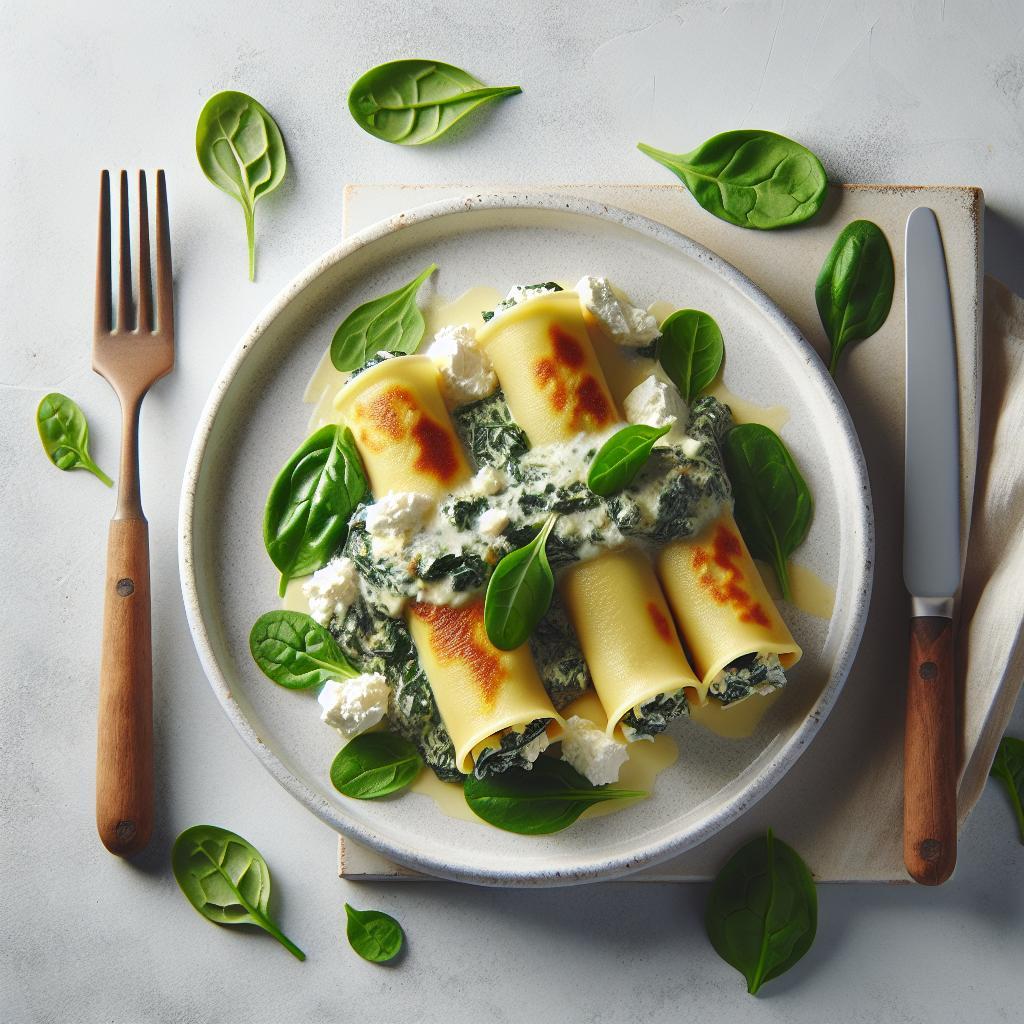

Indulgent Creamy Spinach & Ricotta Cannelloni Delight
Spinach Cannelloni combines velvety ricotta with bright, wilted spinach tucked into tender pasta tubes and topped with a silky herb cream sauce. This Spinach Cannelloni recipe rewards careful technique and quality ingredients for reliably creamy results.
- Spinach Cannelloni: Overview and Flavor Profile
- Prep and Cook Time for Spinach Cannelloni
- Yield and Portioning for Spinach Cannelloni
- Difficulty Level
- Ingredients
- Instructions
- Tips for Success: Spinach Cannelloni Techniques
- Make-Ahead, Freezing, and Storage for Spinach Cannelloni
- Serving Suggestions for Spinach Cannelloni
- Nutritional Information (per serving)
- Ingredient Variations and Substitutions
- Visual and Texture Notes
- FAQ
- High-impact, low-effort: Make Spinach Cannelloni ahead to save time without losing flavor.
- Texture-first: Drain ricotta and press spinach to prevent a watery filling.
- Sauce matters: A properly whisked béchamel-style cream sauce ensures even baking and a glossy finish.
- Versatile: Swap greens or cheese blends while keeping the same method for consistent Spinach Cannelloni.
Spinach Cannelloni: Overview and Flavor Profile
Spinach Cannelloni balances rich whole-milk ricotta and a touch of Parmesan with the vegetal lift of spinach and a hint of freshly grated nutmeg. The cream sauce rounds the filling and keeps the pasta soft while baking.
The components each play a technical role: drained ricotta gives body, well-squeezed spinach prevents run-off, and a stable roux-thickened cream binds everything. For background on ricotta texture, see ricotta.
Prep and Cook Time for Spinach Cannelloni
Preparation: 25 minutes. Cooking: 40 minutes. These estimates assume you preheat the oven before assembly and have mise en place ready.
Allow a short rest after baking—5 minutes helps the sauce set so slices hold shape. For chilled or frozen builds, add 5–15 minutes to the covered bake time as needed.
Yield and Portioning for Spinach Cannelloni
This recipe yields 6 generous portions when using 12 tubes filled moderately. Each tube should be filled so pieces slice neatly for plating.
Scale ingredients proportionally for larger trays; increase bake time when using deeper dishes so heat reaches the center without burning the surface.
Difficulty Level
Medium. The most technical tasks are removing excess water from cooked greens and making a lump-free cream sauce. Experience with a whisk and a sieve makes both straightforward.
Read through the sequence before starting and complete mise en place to keep the workflow efficient. Novices will find the steps repeatable once practiced.
Ingredients
Use high-quality dairy and fresh herbs for the cleanest flavor. For guidance on cheese seasoning, consult the Parmigiano-Reggiano style and adjust salt accordingly.
Core ingredients include cannelloni tubes, fresh spinach, whole-milk ricotta, cream, butter, flour, Parmesan, and fresh basil and parsley. Salt and pepper tune seasoning at each stage.
- 12 cannelloni pasta tubes (fresh or dried)
- 450g fresh spinach, washed and chopped
- 400g whole milk ricotta cheese
- 1 small onion, finely chopped
- 2 cloves garlic, minced
- 2 tbsp olive oil
- 1 cup grated Parmesan cheese
- 1 tsp freshly grated nutmeg
- 300ml whole milk cream
- 2 tbsp all-purpose flour
- 30g unsalted butter
- 1 tbsp chopped fresh basil
- 1 tbsp chopped fresh parsley
- Salt and freshly ground black pepper to taste
- Extra virgin olive oil for drizzling
Instructions
Follow the steps in sequence: prepare the filling, make the sauce while the filling cools, fill the tubes, then assemble and bake. Each step contains technical notes to avoid common issues like watery filling.
For related tips on pasta handling and sheet rolling, see our internal pasta shapes guide. For a deeper look at ricotta handling, visit our ricotta guide.
Prepare the spinach filling
Heat oil and sweat onion over medium heat until translucent, then add garlic briefly. Add chopped spinach and cook until wilted and most moisture has evaporated.
Season lightly and cool the greens before combining with ricotta. Press or squeeze the cooked spinach in a sieve or cheesecloth to remove excess water and prevent a loose filling.
Mix the ricotta filling
Combine cooled spinach with ricotta, half the Parmesan, and nutmeg. Stir gently to integrate without overworking the cheese; overmixing can make the filling gluey.
Taste and adjust salt and pepper. If the ricotta feels loose, drain it in cheesecloth for 15 minutes to concentrate flavor and improve texture.
Prepare the creamy herb sauce (béchamel-style)
In a saucepan, melt butter and whisk in flour to form a pale roux; cook 2 minutes without browning. Gradually whisk in cream until the sauce thickens enough to coat a spoon evenly.
Finish off-heat with the remaining Parmesan and chopped herbs. This cream-adjusted technique mirrors a classic béchamel sauce but yields a silkier texture for Spinach Cannelloni.
Fill, assemble, and bake
Use a piping bag or small spoon to fill each tube, placing them snugly in a buttered baking dish. Pour cream sauce evenly so every tube gets coverage during baking.
Cover loosely with foil and bake at 180°C (350°F) for 30 minutes, then remove the foil and bake an additional 8–10 minutes until golden and bubbling. Rest 5 minutes before serving to improve sliceability.
Tips for Success: Spinach Cannelloni Techniques
Small technique changes yield large improvements in texture and flavor for Spinach Cannelloni. Pressing spinach and draining ricotta create a concentrated filling that holds up during bake and slice.
Use freshly grated nutmeg and fresh Parmesan for brighter flavor and better melting. Pre-grated cheeses often contain anti-caking agents that alter texture and sauce behavior.
Consider textural variations: fold in a small amount of shredded mozzarella for stretch or toasted pine nuts for crunch. These additions keep the core technique intact while adding contrast.
Make-Ahead, Freezing, and Storage for Spinach Cannelloni
You can assemble Spinach Cannelloni up to 24 hours ahead and refrigerate tightly covered. Bake from chilled, adding 5–10 minutes to covered bake time to ensure even heating.
For freezing, assemble but do not bake. Wrap tightly and freeze for up to two months. Bake from frozen at 180°C (350°F), covered, adding time until internal temperature reaches 74°C (165°F) and sauce bubbles.
Serving Suggestions for Spinach Cannelloni
Serve on warm plates and finish with a drizzle of extra virgin olive oil and a dusting of Parmesan. A sprig of fresh basil or parsley brightens the rich dish.
Pair Spinach Cannelloni with a crisp salad or lightly dressed greens and a citrusy beverage to cut through the cream. Keep side dishes simple to let the filling shine.
Nutritional Information (per serving)
This Spinach Cannelloni provides protein and calcium from ricotta and Parmesan, plus iron and vitamins from spinach. Portion control balances indulgence with nutritional needs.
Estimated per-serving values assume whole-milk dairy and standard pasta. Adjust calories and macronutrients when substituting lower-fat dairy or gluten-free pasta.
| Nutrient | Amount |
|---|---|
| Calories | 460 kcal |
| Protein | 22 g |
| Carbohydrates | 44 g |
| Fat | 22 g |
Ingredient Variations and Substitutions
Swap baby spinach for Swiss chard or finely chopped kale, but extend cooking for tougher stems. When using heartier greens, cut very small and cook a touch longer to soften fibers evenly.
For a dairy-free version, press a tofu-based ricotta and use a cashew cream base; nutritional yeast can provide savory cheese notes. For gluten-free, use certified gluten-free pasta tubes or rolled sheets to create Spinach Cannelloni.
Visual and Texture Notes
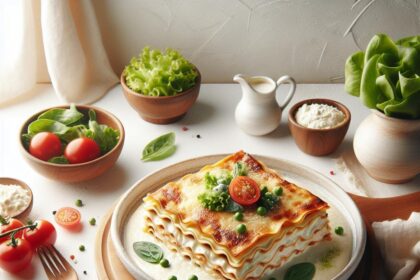
When baked correctly, the top will be lightly golden and the sauce glossy. Slicing should yield tidy portions that hold shape with visible layers of filling and sauce.
A tender pasta with slight resistance to the bite signals the ideal cook. Overbaked cannelloni will collapse and dry; underbaked will feel firm and unset in the center.
FAQ
Q: How can I prevent a watery filling?
Drain cooked spinach thoroughly by pressing in a sieve or wrapping in cheesecloth and squeezing. Also drain ricotta in cheesecloth for 15 minutes if it seems loose.
Use a fine mesh sieve and apply steady pressure, then combine only when both components are cool to avoid releasing more water during mixing.
Q: Can I use store-bought no-boil cannelloni?
Yes. No-boil tubes work if you provide ample sauce; they absorb moisture as they bake. For dried tubes, par-cook al dente if package instructions recommend.
Cover well during the initial bake so no-boil sheets hydrate evenly and prevent the tops from scorching before the centers cook through.
Q: What cheese mix melts best for Spinach Cannelloni?
Whole-milk ricotta is the base for creaminess; grated Parmesan adds umami and salt. Small amounts of shredded mozzarella increase stretch without overwhelming the ricotta’s texture.
Use freshly grated cheeses for better melt and flavor control. Pre-grated blends may contain stabilizers that change sauce behavior during baking.
Q: Is Spinach Cannelloni suitable for freezing, and how do I reheat?
Freeze unbaked, tightly wrapped, for up to two months. Bake from frozen at 180°C (350°F), covered, adding 15–25 minutes depending on dish depth until heated through and bubbling.
For best results, allow a brief rest after baking so internal temperature evens out and slices hold together when plated.
Q: Where can I learn more about the pasta type?
For background on the shape and regional use, consult the cannelloni entry. It explains traditional fillings and regional variations that inform modern technique.
Explore our internal posts for related recipes and handling tips that transfer directly to Spinach Cannelloni preparation.
See also: Spinach Lasagna Rolls | Ricotta-Stuffed Pasta Ideas
See also: Spinach Cannelloni