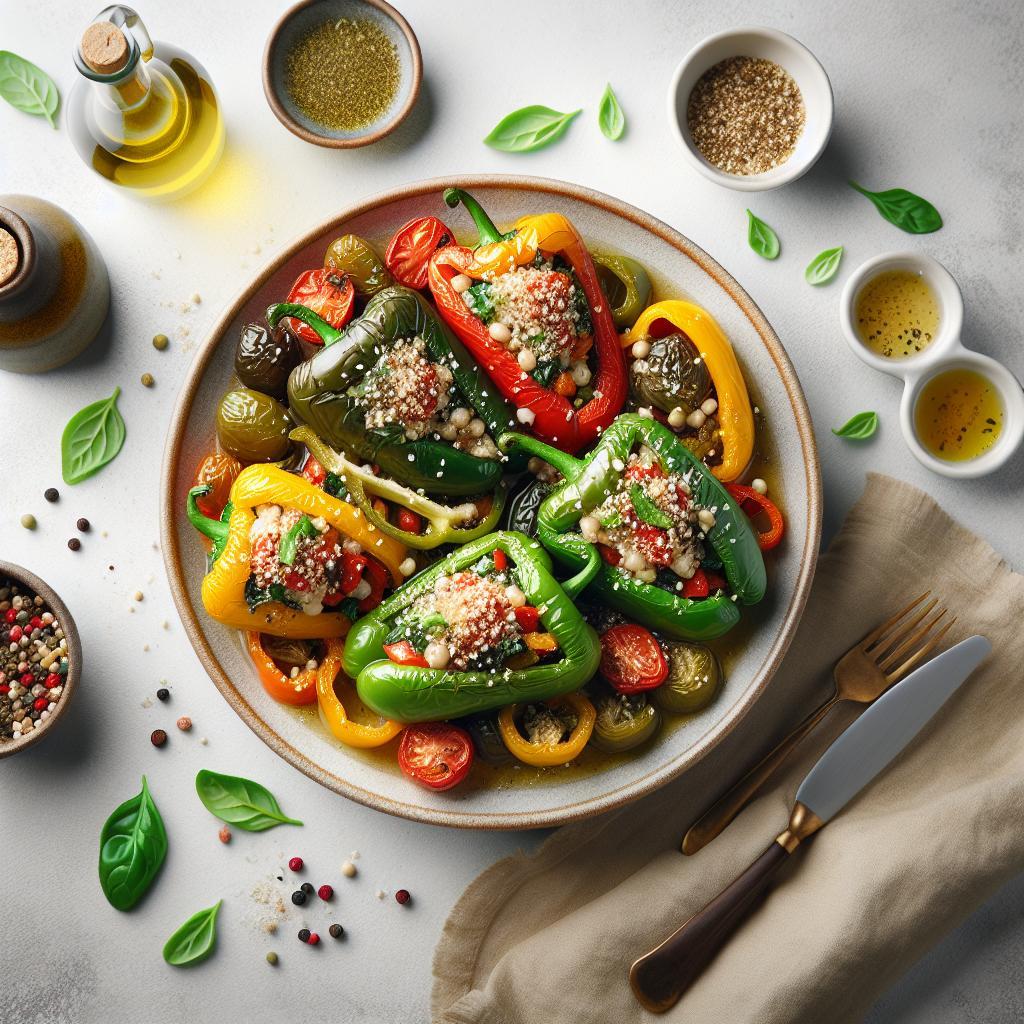

Mediterranean stuffed peppers showcase bright citrus, briny accents, fresh herbs, and textured grains to create a main course that feels both light and satisfying. This recipe turns bell peppers into a colorful centerpiece that balances nutrition, texture, and layered taste.
- Introduction to Stuffed Peppers
- Prep and Cook Time for Stuffed Peppers
- Yield and Difficulty for Stuffed Peppers
- Ingredients for Stuffed Peppers
- Instructions for Stuffed Peppers
- Stuffed Peppers: Tips for Success
- Pro-Cautions for Stuffed Peppers
- Serving Stuffed Peppers Suggestions
- Stuffed Peppers Nutritional Information
- Cultural Context and Stuffed Peppers Variations
- Final Notes on Stuffed Peppers
- FAQ
- Key takeaway: Roast peppers briefly, then finish stuffed to lock sweetness and preserve structure.
- Key takeaway: Use quinoa or bulgur for texture; feta and olives add savory contrast.
- Key takeaway: Make the filling ahead and warm it before stuffing to speed service and deepen flavor.
- Key takeaway: Balance moisture carefully so centers heat through without soggy walls.
Introduction to Stuffed Peppers
This Mediterranean approach leans on fresh produce, olive oil, lemon, and herbs to lift stuffed peppers from a simple casserole to a layered, herb-forward entrée. The technique emphasizes roast timing and a filling that balances fat, acid, and grain for consistent results.
The recipe here nods to regional traditions while remaining vegetable-forward and flexible for meat or vegan variants. For context on the broader eating pattern that informs these choices, consult the Mediterranean diet overview at Mediterranean diet.
Prep and Cook Time for Stuffed Peppers
Prep: 25 minutes. Cook: 40 minutes, assuming grains are cooked ahead. Allow a short rest after baking to let juices redistribute and flavor settle.
The total active time averages about 65 minutes from start to finish. This makes the dish practical for weeknights or relaxed weekend dinners when you want bold flavor without fuss.
Yield and Difficulty for Stuffed Peppers
Yield: Serves 4 generously. The recipe scales easily: double for a crowd, halve for two. Use shallow roasting pans to fit more peppers in one layer.
Difficulty: Medium. Success depends on roast timing to avoid collapse and on calibrating filling moisture so peppers remain juicy but structurally intact. Technique matters more than exotic ingredients.
Ingredients for Stuffed Peppers
Choose firm, colorful bell peppers that will hold a filling and present well. For background on the vegetable, see the bell pepper entry at bell pepper.
Below are the core ingredients for four peppers. Quantities scale linearly and tolerate straightforward swaps.
- 4 large bell peppers (red, yellow, or orange), tops removed and seeded
- 1 cup cooked quinoa (or couscous/bulgur)
- 1 cup diced ripe tomatoes
- 1/2 cup finely chopped red onion
- 1/2 cup chopped cucumber (seeds removed)
- 1/3 cup crumbled feta cheese
- 1/4 cup pitted Kalamata olives, sliced
- 1/4 cup chopped fresh parsley
- 2 tbsp chopped fresh mint
- 2 cloves garlic, minced
- 1/2 cup cooked chickpeas
- 3 tbsp extra virgin olive oil, divided
- 1 tbsp fresh lemon juice
- 1 tsp ground cumin
- Salt and freshly ground black pepper, to taste
Ingredient notes and swaps
Quinoa gives a light, nutty texture; bulgur or farro add chew if you want substance. For more on quinoa, see the quinoa entry.
Feta supplies salty creaminess and pairs well with citrus and mint; see background on feta at feta. Use a firm vegan cheese or seasoned tofu for plant-only versions.
Instructions for Stuffed Peppers
1. Preheat and oil: Heat the oven to 400°F (200°C). Lightly oil a baking dish large enough to hold peppers upright so they roast evenly.
2. Roast peppers: After slicing tops and removing seeds, brush each pepper inside and out with 1 tablespoon olive oil. Roast cut side up for 10–15 minutes to soften the walls without collapsing them.
3. Assemble filling: In a bowl, combine cooked quinoa, tomatoes, red onion, cucumber, chickpeas, olives, parsley, mint, and feta. Stir in garlic, cumin, lemon juice, and the remaining olive oil, then season to taste.
4. Stuff and finish: Fill each pepper loosely to allow steam circulation. Return peppers to the oven and bake 20–25 minutes until tender and heated through, testing with a paring knife for doneness.
5. Rest and serve: Rest peppers for 5 minutes after baking. Finish with a drizzle of olive oil or a spoonful of strained yogurt to add richness and contrast.
Step-by-step notes
Use warm filling to reduce overall oven time and preserve herb freshness. Packing warm filling into roasted pepper shells minimizes chilled pockets that slow reheating.
If filling feels dry before baking, add a tablespoon or two of stock or tomato juice. Adjust salt after any added liquid so flavors remain balanced.
Stuffed Peppers: Tips for Success
Choosing peppers: Select peppers with firm shoulders and no soft spots to prevent leaks during baking. Color variety enhances both taste and plating.
Moisture balance: Aim for a moist but not watery filling; drained chickpeas and a squeeze of lemon will tighten texture and boost brightness. Taste and adjust salt and acid as you build flavors.
For texture contrast, toast a handful of pine nuts or add pomegranate seeds at plating. These small touches increase perceived value and keep plates interesting.
Make-ahead strategy
Prepare the filling up to 24 hours in advance and refrigerate uncovered to avoid sogginess. Bring the filling to room temperature before stuffing to reduce bake time and protect pepper texture.
Stuffed peppers generally do not hold well if assembled and refrigerated overnight; assemble on the day you bake for best results. Reheat gently to prevent the walls from collapsing.
Pro-Cautions for Stuffed Peppers
Overcooking risk: Over-roasting turns pepper walls mushy and causes collapse, losing both texture and visual appeal. Monitor during the final 10 minutes and probe with a small knife rather than relying on time alone.
Salt management: Ingredients like olives and feta carry concentrated salt. Taste the filling before adding extra salt, especially if you plan to include cured proteins like lamb.
Serving Stuffed Peppers Suggestions
Garnish with fresh parsley or mint and a scatter of toasted pine nuts or pomegranate arils for crunch and color. These accents lift texture and create an inviting finish.
Serve peppers with a crisp cucumber-tomato salad or creamy tzatziki on the side for cooling contrast. Warm pita or a whole-grain pilaf rounds the plate and turns peppers into a shared Mediterranean spread.
For complementary recipe ideas and variations on stuffed vegetables, check internal guides at Stuffed Peppers collection and a simple Mediterranean salad recipe at Mediterranean Salad for pairing inspiration.
Stuffed Peppers Nutritional Information
Estimated per-serving values give a menu-planning baseline: about 320 kcal, 12 g protein, 38 g carbohydrates, and 12 g fat. Substitutions will change these numbers predictably.
Swapping grains or adding protein alters macronutrient ratios: bulgur or barley increase fiber, while added lamb raises fat and protein. Use these levers to match dietary needs.
Cultural Context and Stuffed Peppers Variations
Stuffed vegetables appear across Mediterranean and Near Eastern cuisines under names like dolma and gemista. These dishes vary by region in grain choice, herbs, and meat inclusion.
For historical context and related preparations, consult the dolma entry at dolma. The recipe here leans vegetable-forward and borrows elements without reproducing a single regional tradition.
Regional swaps
Use rice and dill in Eastern Mediterranean versions or add pine nuts and currants for Levantine notes. If you want a meatier profile, brown ground lamb with warm spices first and fold into the filling.
Grain choices shape the final texture: farro and barley give chew; quinoa keeps the center light. Adjust bake time slightly when adding dense grains or proteins so peppers heat through evenly.
Final Notes on Stuffed Peppers
Well-made Mediterranean stuffed peppers deliver layered flavor through straightforward technique and careful seasoning. Focus on roast timing and moisture control rather than rare ingredients.
Use fresh herbs and lemon to dial brightness and choose grains to tune mouthfeel. These peppers work as a colorful main or as part of a shared mezze spread.

FAQ
Below are common questions home cooks ask when adapting or serving stuffed peppers. Each answer addresses practical technique, timing, and substitution choices.
Can I make these gluten-free?
Yes. Swap bulgur or couscous for quinoa or rice, and verify processed items like broth for hidden gluten. Quinoa and rice maintain texture while keeping the dish gluten-free.
How do I keep peppers moist after baking?
Balance filling moisture, cover with foil for the first half of baking, and add a splash of stock or tomato purée if needed. Rest the peppers briefly after baking so steam redistributes inside.
Can this recipe be vegan?
Absolutely. Replace feta with a firm, tangy vegan cheese or seasoned tofu and omit dairy garnishes. Nutritional yeast and a touch of lemon will add savory depth.
What grain works best for texture?
Quinoa stays light and nutty; bulgur adds chew. Farro and barley bring a heartier bite for where you want more substance. Choose based on desired mouthfeel and cook time.
How far ahead can I assemble the peppers?
Prepare the filling up to 24 hours ahead to deepen flavor. Stuff the peppers the same day you bake them; refrigerated stuffed peppers can become watery if assembled too far in advance.
See also: Stuffed Peppers collection for more recipes and Mediterranean Salad pairing ideas.
Recommended Reading:
- 10 Expert Tips for Flavor-Packed Stuffed Peppers
- 10-Minute Beef Stir-Fry: Fast, Flavorful One-Pan Dinner
- 7 Bright Reasons to Make Zesty Greek Lemon Soup (Avgolemono)