
7 Ultimate Moroccan Tagine Recipes — Amazing Best Guide to Authentic Flavors
Moroccan tagine combines slow-simmered spices, stacked ingredients and a conical lid to create stews with intense, layered aroma. This guide gives origin context, exact ingredients and chef-level methods so you can reproduce authentic results at home.
- 7 Ultimate Moroccan Tagine Recipes — Amazing Best Guide to Authentic Flavors
- Why Moroccan tagine matters: cultural roots and flavor science
- Traditional Moroccan tagine ingredients: pantry and fresh items
- Step-by-step Moroccan tagine preparation: method and chef notes
- Detailed nutritional information per serving
- Expert pro-tips to elevate your Moroccan tagine
- Serve and pair your Moroccan tagine with confidence
- FAQ
- Key takeaway: Use correct spices and low, steady heat to maximize aroma.
- Key takeaway: Measure liquids and allow steam to recirculate under the conical lid.
- Key takeaway: Choose preserved lemon and fresh saffron for authentic profile.
- Key takeaway: Slow cooking concentrates flavor and reduces the need for extra fat.
Why Moroccan tagine matters: cultural roots and flavor science
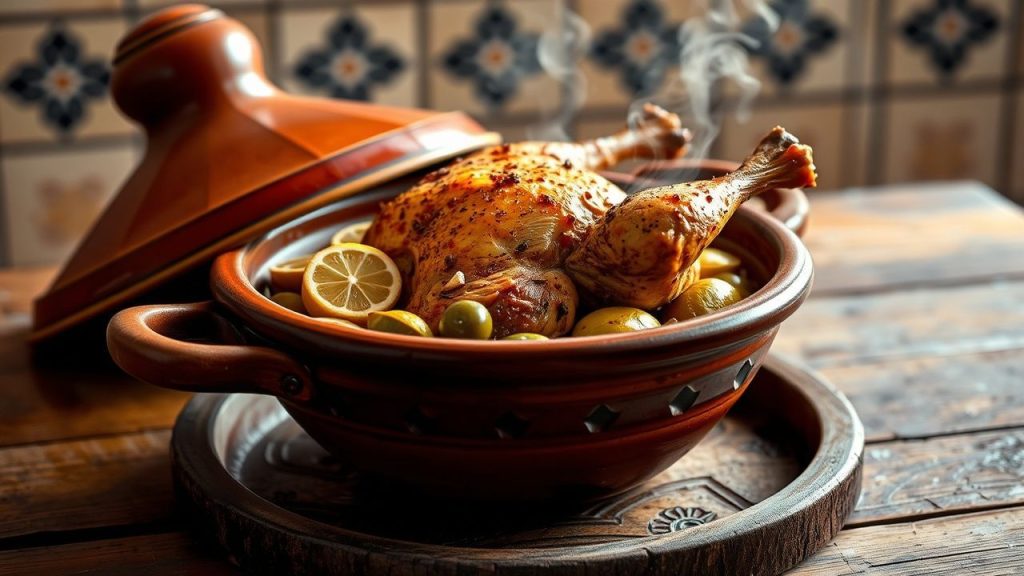
The tagine acts as both vessel and technique; the lid traps steam and returns condensed liquid to the food, producing tender protein and a concentrated sauce. This mechanical condensation defines the method and shapes timing and liquid ratios.
The design reflects centuries of North African trade and culinary exchange and links to wider Maghrebi practice. See the culinary history of the tagine for context on shape and regional use.
Traditional Moroccan tagine ingredients: pantry and fresh items
Across Morocco three classic templates recur: Chicken with Preserved Lemon & Olives, Lamb with Prunes & Almonds, and a Vegetable Tagine with Chickpeas. Each template relies on precise spice balance and quality of core ingredients.
Maintain a pantry with dried spices, good olive oil, preserved lemons and low-sodium stock. For layered spice complexity, keep ready-made blends and whole spices, and reference the profile of ras el hanout when you need floral, warm notes.
Chicken with Preserved Lemon & Olives — Ingredients
This bright, savory tagine uses preserved lemon rinds and quality green olives for acidic lift and salt. Keep chicken pieces uniform so they finish at the same time.
- 1 whole chicken, cut into 8 pieces (about 1.6 kg / 3.5 lb)
- 2 preserved lemons, rinds thinly sliced (approx. 120 g / 4 oz)
- 150 g green olives, pitted (5.3 oz)
- 2 medium onions, thinly sliced (300 g / 10.6 oz)
- 3 garlic cloves, minced
- 2 tsp ground ginger (10 g)
- 2 tsp ground cumin (10 g)
- 1 tsp turmeric (4 g)
- 1 pinch saffron threads, soaked (0.1 g)
- 60 ml olive oil (4 tbsp)
- 250 ml chicken stock (1 cup)
- Salt and pepper to taste
Lamb with Prunes and Almonds — Ingredients
This sweet-savory tagine balances collagen-rich lamb with dried fruit and toasted nuts. The long, gentle cook converts connective tissue into a silky mouthfeel.
- 1 kg lamb shoulder, cubed (2.2 lb)
- 200 g dried prunes (7 oz)
- 50 g blanched almonds (1.7 oz)
- 2 tbsp honey (30 ml)
- 2 cinnamon sticks
- 1 tbsp ras el hanout (15 g)
- 400 ml beef stock (1.6 cups)
- 60 ml olive oil (4 tbsp)
Vegetable Tagine with Chickpeas — Ingredients
This vegetarian template supplies bulk and protein without meat by using chickpeas, root vegetables and eggplant. Texture contrast between braised veg and toasted seeds keeps the dish satisfying.
- 1 medium eggplant, sliced
- 2 carrots, chopped
- 2 zucchinis, chopped
- 1 can (400 g) chickpeas, drained
- 2 tomatoes, chopped or 1 can diced tomatoes
- 2 onions, sliced
- 1 tsp turmeric, 1 tsp paprika, 1 tsp cumin
- 200 ml vegetable stock (¾ cup)
Step-by-step Moroccan tagine preparation: method and chef notes
Successful tagine technique relies on mise en place, controlled heat and deliberate layering. Browning, sweating aromatics and gently simmering build sauce complexity without over-reducing liquids.
You can use a clay tagine, cast-iron tagine or a heavy Dutch oven; each reproduces the sealed environment needed for condensation and slow braising. Cast iron gives even heat retention and works well for home kitchens.
Chicken with Preserved Lemon & Olives — Method
1. Heat olive oil in the tagine or Dutch oven over medium heat. Brown chicken pieces 3–4 minutes per side until golden, then remove and set aside.
2. Add onions and garlic and sweat until translucent, about 6–8 minutes. Stir in ginger, cumin, turmeric and soaked saffron and toast 30–45 seconds to bloom aroma.
3. Return chicken to the base, add preserved lemon slices, olives and stock. Bring to a gentle simmer, cover and lower heat to a bare simmer.
4. Simmer 45–60 minutes, rotating pieces halfway for even cooking. Finish with chopped parsley and a squeeze of fresh lemon before serving.
Lamb with Prunes and Almonds — Method
1. Brown lamb cubes in batches to avoid steaming; set aside browned meat. Proper browning builds Maillard flavors that deepen the sauce.
2. Sauté onions until caramelized. Add ras el hanout and cinnamon; toast briefly to release oils. Return lamb, add stock, prunes and honey, then cover and simmer low.
3. Cook 90–120 minutes until lamb pulls apart and the sauce thickens slightly. Toast almonds and scatter on top for textural contrast and aroma.
Vegetable Tagine with Chickpeas — Method
1. Salt eggplant slices and let sit 20 minutes; rinse and pat dry. Sear eggplant, carrot and zucchini to concentrate flavor, then set aside.
2. Sweat onions, add spices, then return vegetables and chickpeas with 200 ml stock. Simmer covered 35–45 minutes until tender.
3. Adjust salt and acid late in the cook to balance sweetness; finish with a drizzle of olive oil or a spoonful of tahini for silkiness.
Detailed nutritional information per serving
The Chicken with Preserved Lemon & Olives recipe yields roughly 520 kcal per serving, with protein around 36 g and fat about 32 g. Values change with cuts, skin left on, olive brine and the stock used.
To reduce sodium rinse olives and use low-sodium stock. To cut fat, remove skin or reduce oil during browning; those swaps keep texture while improving macro balance for menu labeling.
Expert pro-tips to elevate your Moroccan tagine
Check spice freshness and toast whole spices before grinding to intensify aroma. Brown ingredients in batches; that step creates layered flavors rather than one flat profile.
After the [TIP] box, let ingredients rest briefly before adding liquids; this pause preserves the toasted aromatics in the base. Small timing tweaks yield noticeable sensory gains.
When using saffron, steep threads in warm liquid for 5–10 minutes to pull color and perfume. Use the steeped liquid rather than whole threads so the color disperses evenly.
Use a diffuser or low burner with clay ware to prevent thermal shock. If you cook on high heat, switch to a heavy Dutch oven that tolerates rapid temperature shifts.
Serve and pair your Moroccan tagine with confidence
Serve tagine over couscous, rice or crusty bread to capture its sauce and present the dish attractively. Garnish with chopped parsley, toasted almonds or preserved lemon slices for contrast.
Once you master timing and spice ratios, adjust sweet or savory accents to suit your palate. Pair tagines with bright salads and a medium-bodied red or a crisp white for balanced dining.
FAQ
How long should I cook a Moroccan tagine?
Cook times vary by protein: chicken 45–60 minutes, lamb 90–120 minutes, vegetables 30–45 minutes. Focus on fork-tender texture rather than the clock.
Can I use a Dutch oven instead of a clay tagine?
Yes. A heavy Dutch oven reproduces the sealed, moist environment of a tagine and works well for slow braises. Cast iron retains heat and gives consistent results.
What spices define a Moroccan tagine?
Core spices include cumin, ginger, turmeric, paprika and ras el hanout; saffron and cinnamon appear in sweet-savory versions. Use fresh spices for maximum perfume.
How do I store and reheat leftovers?
Cool to room temperature, then refrigerate in an airtight container for up to three days. Reheat gently over low heat, adding a splash of stock if the sauce tightened.
Can I make a vegetarian Moroccan tagine that’s filling?
Yes. Combine chickpeas, eggplant, root vegetables and tomatoes with tahini or seared tofu for protein. Serve over barley or couscous for extra heft.
See also: tagine, ras el hanout, couscous
See also: Moroccan tagine