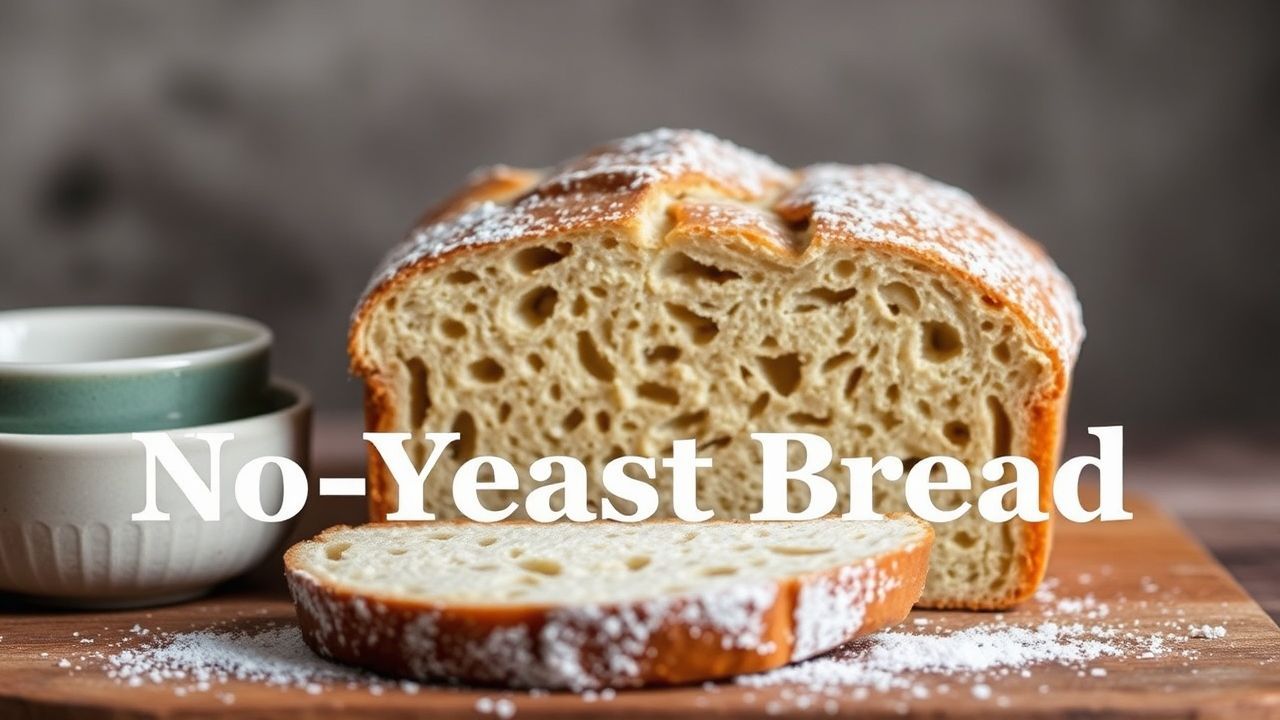

No-Yeast Bread Basics: Easy Recipes for Homemade Loaves
There is nothing quite like pulling a warm loaf from your oven—the crisp exterior, the tender crumb, and the aroma that makes the kitchen feel lived-in and welcoming. No-yeast breads deliver that comfort quickly by relying on chemical leaveners and a few smart techniques rather than hours of proofing.
- Fast results: Ready in under an hour using baking powder or baking soda.
- Simple pantry ingredients: Most recipes use flour, a leavener, salt, and a liquid.
- Versatile canvas: Add herbs, cheese, or seeds to customize flavor and texture.
What is no-yeast bread?
No-yeast bread rises without baker’s yeast, using chemical leaveners or fermented batters instead. This category includes soda breads and quick breads that react quickly and bake the same day.
For background on chemical leaveners used in these recipes, see baking powder and how it produces carbon dioxide when moistened and heated. Also consult quick breads for common methods and variations.
Prep and Cook Time
Prep: 15 minutes. Accurate weighing and room-temperature ingredients speed the process and improve crumb structure. Keep tools and pans ready before you mix.
Cook: 25–30 minutes at 375°F (190°C). Ovens vary, so check for a golden top and a clean toothpick to confirm doneness.
Yield
This recipe yields one medium loaf that serves 6–8 people. Slice across the grain for consistent portions and even toasting later.
Adjust the recipe scale for larger batches, but maintain the same wet-to-dry ratio to preserve texture and bake time predictability.
Difficulty Level
Easy — ideal for beginners or cooks who want fresh bread without long proofing. Techniques focus on mixing gently and timing the bake accurately.
Because no-yeast breads use immediate chemical reactions, they require attention to mixing and oven temperature rather than kneading and resting.
Ingredients
Ingredient selection drives crumb, flavor, and shelf life. Use fresh leavening, proper salt levels, and a neutral liquid like buttermilk or a cultured milk substitute.
For a primer on cultured milk products used in quick breads, consult buttermilk. It provides acidity to activate baking soda and adds tenderness and flavor.
- 2 cups all-purpose flour, sifted for lightness
- 1 tablespoon baking powder for natural rise
- ½ teaspoon baking soda, optional but improves tenderness
- ¼ teaspoon salt to balance flavors
- 1 tablespoon sugar or honey for subtle sweetness
- 1 cup buttermilk or cultured milk, room temperature
- 2 tablespoons melted butter for moist crumb and richer taste
Instructions
Follow the sequence precisely: dry ingredients first, then wet, then a gentle fold. This preserves trapped gas and avoids overdeveloping gluten.
Mixing should be brief and purposeful. Overmixing yields a tough crumb because gluten tightens as you agitate the batter.
Mixing the Batter
Combine flour, baking powder, baking soda, salt, and sugar in a large bowl. Whisk to distribute the leaveners uniformly so the rise stays even throughout the loaf.
Make a well, pour in the buttermilk and melted butter, then fold with a wooden spoon until just combined. The batter should be slightly sticky; stop when streaks of flour disappear.
Baking and Cooling
Transfer batter into a greased or parchment-lined loaf pan and smooth the top for an even rise. Slide the pan into your preheated oven and bake 25–30 minutes until golden and a toothpick comes out clean.
Allow the loaf to rest in the pan for 10 minutes before unmolding onto a wire rack. Cooling stabilizes the crumb and prevents moisture buildup that leads to sogginess.
Tips for Success
Small technique adjustments make a big difference. Fresh leavening is non-negotiable: expired baking powder yields dense results.
Also pay attention to temperature—room-temperature liquids mix more evenly and encourage a predictable reaction from the leaveners.
Use add-ins strategically. Herbs and cheeses change hydration slightly, so reduce liquid by a tablespoon if you fold in wet ingredients like grated fresh cheese.
To test baking powder: drop a pinch into hot water—fresh powder should fizz vigorously. If not, replace to avoid flat loaves.
Substitutions and Variations
Make this dairy-free by using unsweetened almond or oat milk acidified with 1 tablespoon lemon juice per cup to mimic buttermilk. Mix and rest 5 minutes before using.
For whole-grain versions, replace 25–50% of the all-purpose flour with whole wheat and increase hydration by 10–15% to offset bran absorption. Expect a slightly denser crumb.
Serving Suggestions
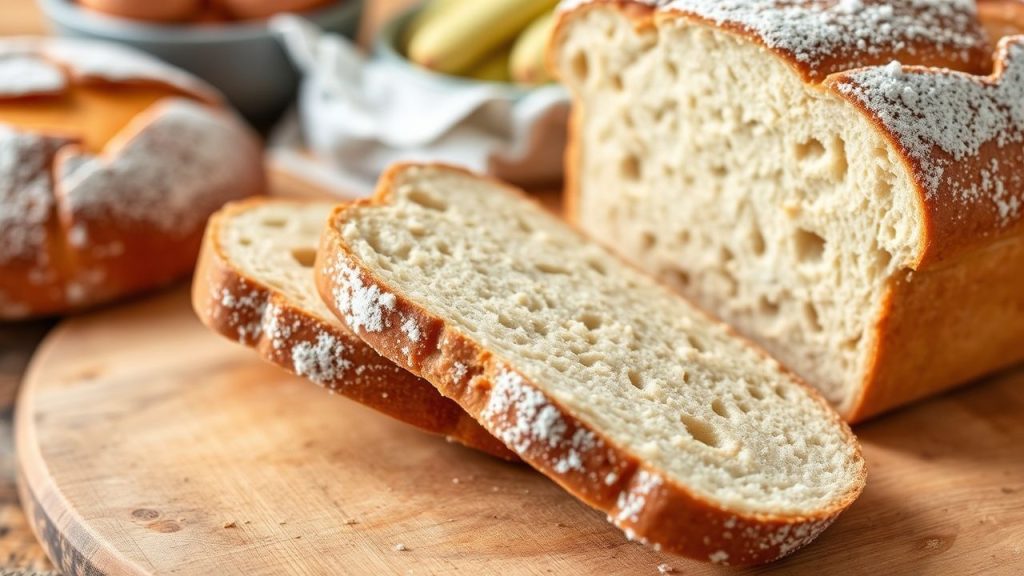
Slice and serve warm with butter or jam for breakfast. Also try the loaf as a base for open-faced sandwiches: the denser crumb holds toppings well.
For dinner pairings, serve alongside soup or stew. Garnish with coarse salt and chopped herbs for texture and a flavor lift.
Nutrition Snapshot
One slice (1/8 loaf) averages about 150 calories with modest protein and fat, depending on butter and add-ins. Adjust serving size according to appetite and sides.
To increase protein and fiber, swap some all-purpose flour for a high-protein flour or add seeds and nuts. Keep leavening ratios consistent when making these swaps.
| Nutrient | Amount per Slice (1/8 loaf) |
|---|---|
| Calories | 150 |
| Protein | 4g |
| Carbohydrates | 28g |
| Fat | 3g |
Q&A: No-Yeast Bread Basics
This section answers common questions that bakers ask when they switch from yeast to chemical leaveners. Each answer focuses on practical steps that improve the final loaf.
Where appropriate, compare techniques to yeast-based baking; for deeper background on biological leavening, see the yeast article.
Q1: What exactly is no-yeast bread?
No-yeast bread is any loaf that relies on chemical leaveners (baking powder/soda) or naturally fermented batters rather than baker’s yeast. It produces a quick rise and a rustic crumb.
Q2: Why choose no-yeast methods?
They save time and require fewer specialized steps. For cooks managing schedules or avoiding yeast for dietary reasons, quick breads are reliable and flexible.
Q3: Can I swap this loaf into yeast recipes?
Direct swaps rarely succeed because proofing and hydration differ. Instead, use recipes crafted for no-yeast methods or adapt ratios carefully while testing in small batches.
Q4: How do I keep the bread from going stale fast?
Store wrapped at room temperature up to 48 hours, or freeze slices for longer storage. Reheat briefly to refresh crumb and aroma before serving.
Concluding Remarks
Baking without yeast opens fast and flavorful options for home cooks. With fresh leavening, measured ingredients, and gentle mixing, you can produce reliably tasty loaves in under an hour.
Experiment with herbs, cheeses, and whole-grain flours to create signature loaves. For more recipes and techniques, see our easy bread recipes and practical baking tips collections on the site.
FAQ
How long does no-yeast bread stay fresh?
At room temperature in an airtight container, expect freshness for 1–2 days. Freeze slices for up to 3 months and toast or warm before serving.
Can I use whole wheat flour?
Yes, but replace only 25–50% initially. Whole wheat absorbs more liquid and yields a denser loaf; increase hydration slightly to compensate.
What activates baking soda?
Acidic ingredients like buttermilk, yogurt, or lemon juice react with baking soda to release carbon dioxide. For background, consult the baking powder and leavening chemistry pages.
Are quick breads the same as soda breads?
Soda breads fall under the quick-bread umbrella; they specifically use baking soda and an acid for rise. See quick breads for distinctions and examples.
Where can I learn more about fermented quick batters?
Look into sourdough and naturally leavened batters to explore fermentation-driven textures. For an overview of those processes, see the sourdough entry.
See also: No-Yeast Bread