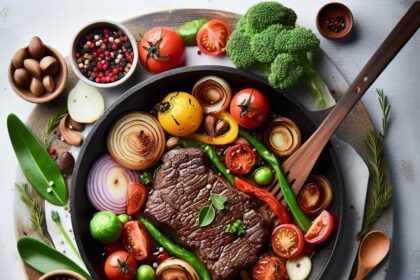
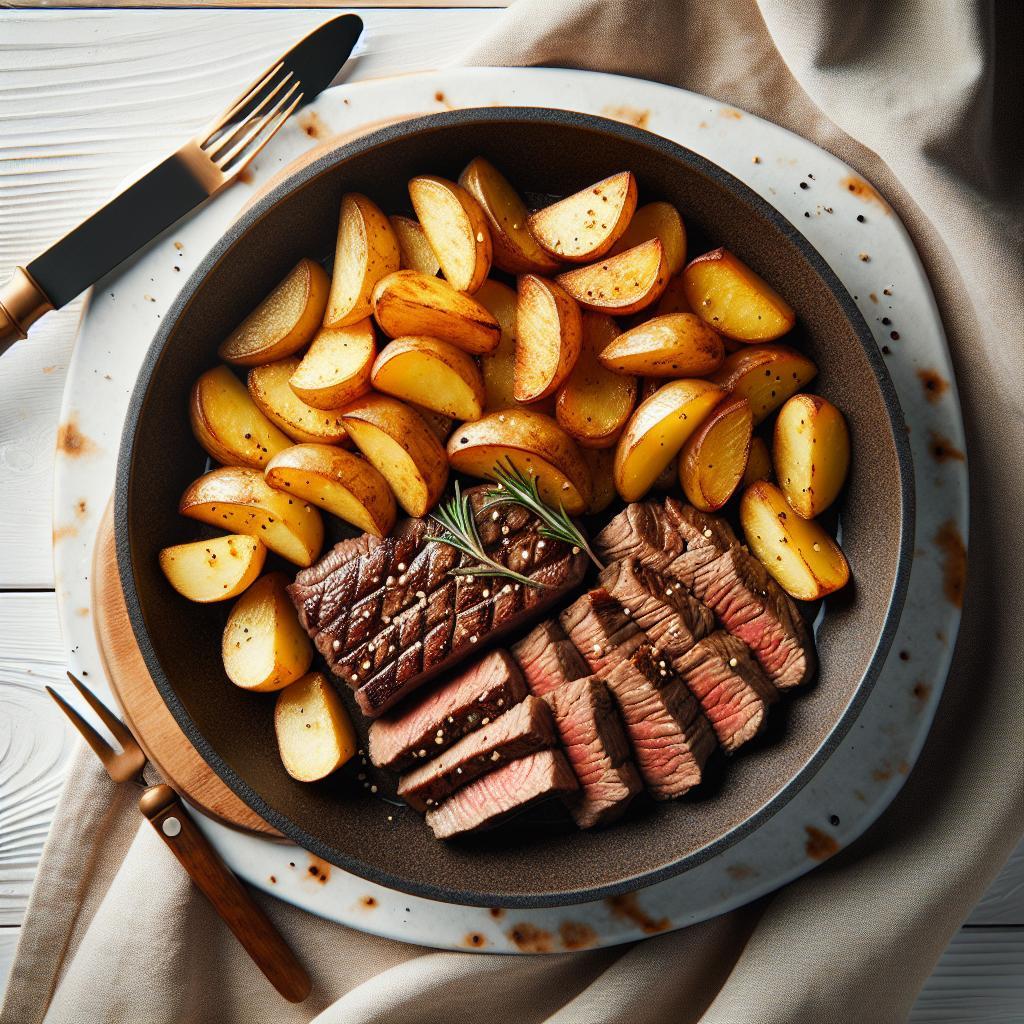

There is a simple joy in a single-pan dinner that delivers bold flavor, hearty satisfaction, and only one item to wash. This sheet pan steak and potatoes method balances juicy steak with crisp, golden potatoes for a meal that performs well on weeknights and for casual entertaining.
- Fast prep: Ready in ~40 minutes from start to finish.
- Minimal cleanup: One sheet pan does the heavy lifting.
- Flexible: Swap cuts, herbs, or vegetables to suit taste.
- Reliable results: Controlled high heat gives crust and caramelization.
Prep and Cook Time
Preparation: 15 minutes. Gather and cut steak and potatoes, measure spices, and preheat the oven to ensure even roasting.
Cooking: 25 minutes. Start the potatoes first, then add seasoned steak to finish together for shared browning and flavor development.
Yield & Difficulty
This recipe yields 4 servings, depending on appetite and side choices. It’s sized for two pounds of combined steak and potatoes, which scales up or down easily.
Difficulty: Easy. The technique relies on timing and temperature control rather than advanced searing skills, making it approachable for cooks at most levels.
Ingredients
Use quality primary ingredients for the best outcome. Choose a flavorful steak cut and uniform potatoes to promote even roasting.
Aiming for simplicity, the ingredient list focuses on pantry spices and a citrus accent for brightness. For background on the primary proteins and vegetables, see beef and potato.
- 1.5 lbs ribeye or sirloin steak, trimmed and cut into 1-inch thick pieces
- 1.5 lbs baby Yukon gold potatoes, halved
- 3 tbsp olive oil, divided
- 1 tsp smoked paprika
- 1 tsp garlic powder
- 1 tsp dried rosemary, crushed
- 1 tsp kosher salt
- ½ tsp freshly ground black pepper
- 2 tbsp fresh parsley, chopped (for garnish)
- 1 lemon, zested and juiced
Instructions
Work cleanly and in stages: start potatoes first, then add the steak so both components finish with ideal texture. Use a high oven temperature for efficient caramelization and to preserve steak juiciness.
For even heat and less sticking, line the pan with parchment or a reusable silicone mat. For more on dry-heat methods, consult the roasting (cooking) entry.
Step-by-step (7 steps)
- Preheat: Set the oven to 425°F (220°C). Line a large sheet pan for even roasting and easier cleanup.
- Season potatoes: Toss halved potatoes with 2 tablespoons olive oil, half the smoked paprika, half the garlic powder, ½ tsp salt, and ¼ tsp pepper. Arrange potatoes on one side of the sheet pan in a single layer.
- Roast potatoes: Place the pan in the oven and roast the potatoes for 15 minutes to begin softening and browning.
- Season steak: Pat steak pieces dry, then coat with remaining olive oil and the rest of the spices. Lightly sprinkle lemon zest over the meat for a bright note.
- Add steak to pan: Remove the pan and add steak pieces to the empty side, spacing them so hot air circulates for even browning.
- Finish roasting: Roast for another 8–12 minutes, depending on thickness and desired doneness. Aim for 125–130°F for rare, 130–135°F for medium-rare, and 140–145°F for medium; verify with a food thermometer.
- Rest and finish: Remove steak, tent loosely with foil for 5 minutes to redistribute juices. Toss potatoes with a squeeze of lemon juice and return briefly to the oven if you want extra crisping.
Chef’s Notes
Steak choice: Ribeye brings marbling and richness, while sirloin offers leaner meat with beefy flavor. Both cut types work well with this method because roasting develops a crust while preserving interior juice.
Timing details: If steak pieces vary in thickness, group similar sizes so cooking time matches across the pan. Also, remove smaller pieces earlier to avoid overcooking larger ones.
Seasoning and Variations
Keep the base seasoning simple: salt, pepper, garlic, and smoked paprika give direct, familiar flavors. Then, tailor the profile with cayenne for heat or swap rosemary for thyme for an earthier tone.
To change the texture profile, consider finishing with a pat of garlic-herb butter or a drizzle of high-quality olive oil. For context on that ingredient, see olive oil.
When you plan ahead, par-cook potatoes partially in salted water for 6–8 minutes, then roast to shorten oven time and increase interior creaminess. This approach suits larger potato pieces.
Serving Suggestions
Pair this sheet pan entree with quick sides that cut richness: a crisp green salad with a vinaigrette, or lightly charred asparagus adds freshness and textural contrast.
For presentation, fan steak slices over the potatoes, sprinkle with chopped parsley, and offer a lemon wedge. A small spoonful of compound butter elevates flavor without complex prep.
Nutritional Info
Estimated nutrition per serving varies with cut and added fat. The table below provides a practical baseline for planning portions and macros.
Adjust values for leaner cuts or reduced oil to match dietary targets.
| Nutritional Info (per serving) | Calories | Protein | Carbs | Fat |
|---|---|---|---|---|
| Steak & Potatoes | 480 | 35g | 30g | 22g |
FAQ
What cut of steak works best for sheet pan cooking?
Choose cuts that cook quickly and remain tender: ribeye, sirloin, or strip steak perform reliably. These cuts have enough internal fat or natural tenderness to stay juicy under high heat.
How do I get potatoes uniformly crispy?
Cut potatoes into uniform pieces, use enough oil to coat surfaces, and spread them in a single layer. Pre-roasting for 10–15 minutes before adding the steak helps build a crisp exterior.
Can I add other vegetables to the pan?
Yes. Add denser veg like carrots or parsnips with the potatoes; more delicate vegetables like asparagus should go in during the final 8–10 minutes. Staggering timing prevents overcooked produce.
What internal temperature should I aim for?
Use a reliable food thermometer: rare 120–125°F, medium-rare 130–135°F, and medium 140–145°F. Pull the steak a few degrees before target because residual heat raises the temperature during resting.
How do I scale this recipe?
Scale ingredients linearly and use additional sheet pans rather than crowding a single pan. Multiple pans allow consistent heat circulation and browning across batches.
One-pan cooking rewards careful timing and simple seasoning. Follow these steps, and you will repeatedly produce a dinner that is efficient to prepare and satisfying to eat.
See also: Sheet Pan