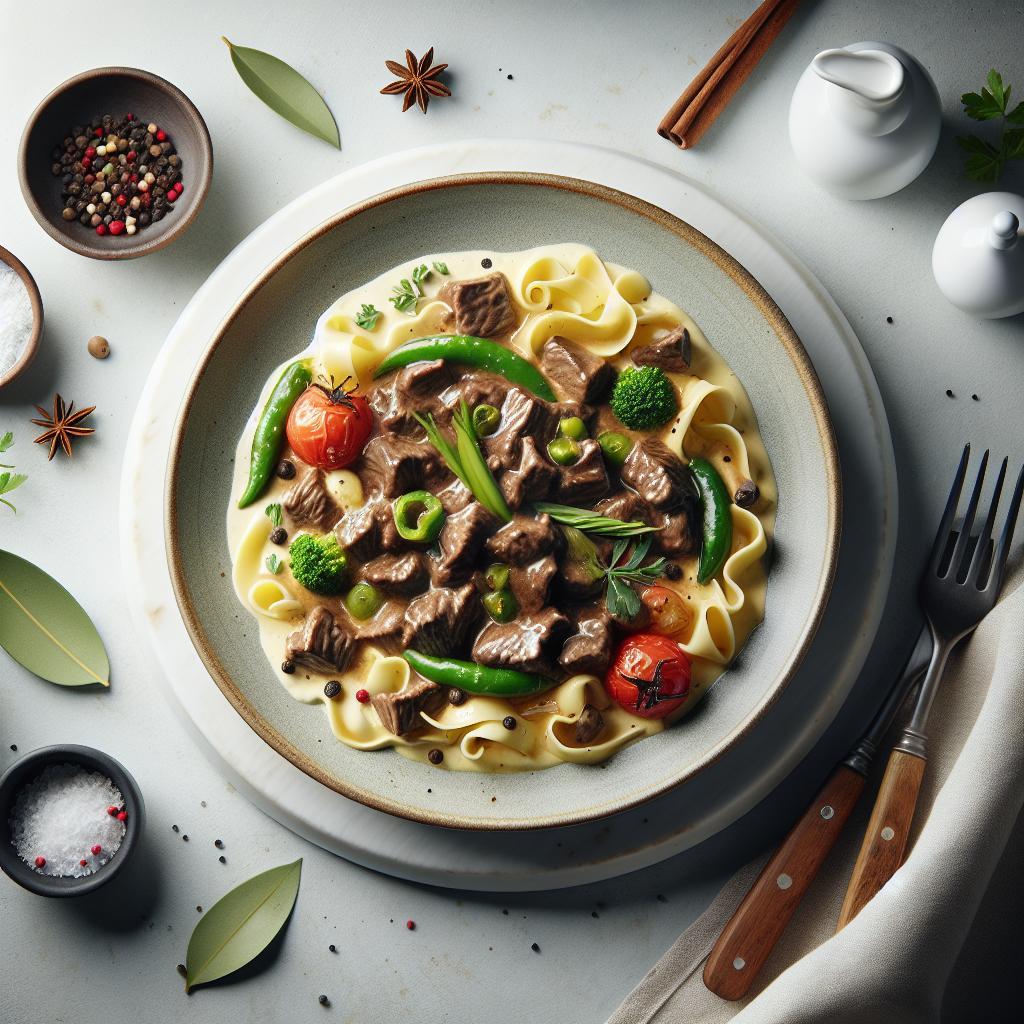

When hunger hits and time is limited, you can still plate a dish that feels indulgent and homemade. This 20-minute Beef Stroganoff delivers tender beef and a silky sauce with a few professional techniques that save time without sacrificing texture.
- Ready in 20 minutes: sear thin beef, sauté mushrooms, and finish off with tempered sour cream.
- High-impact tips: slice against the grain, deglaze the pan, and fold in dairy off the heat.
- Flexible sides: serves well over egg noodles or rice for gluten-free options.
- Make-ahead: prepare the beef-mushroom base and add sour cream at service to keep sauce silky.
Quick Tips for Achieving Ultimate Creaminess
Select full-fat dairy for stability and mouthfeel; full-fat sour cream or crème fraîche provide the fat needed to cloak the sauce with gloss. Temper sour cream by whisking a spoonful of hot broth into it before folding; this prevents sudden temperature shock and keeps the emulsion intact.
Use low heat after adding dairy and avoid boiling, which drives separation. For background on sour cream chemistry, consult the dairy notes on sour cream to understand fat content and acid balance.
Choosing the Right Beef
The right cut makes rapid-cook stroganoff possible: choose a naturally tender cut that sears fast. Sirloin and tenderloin work well; sirloin provides flavor at good value and slices clean when cut thin against the grain.
For context on common beef cuts and muscle structure, refer to the guide on sirloin steak. Slice thinly across fibers to shorten chew-time and preserve juiciness during the quick sear.
Best Cuts for Speed and Tenderness
Sirloin tip, top round (when sliced very thin), ribeye, and tenderloin all perform well when prepared correctly. Avoid chuck or brisket unless you plan to braise; those cuts need long, moist heat to break down collagen into gelatin.
Trim visible connective tissue and cut uniform strips so each piece cooks at the same rate. This minimizes overcooked edges and undercooked centers.
Slicing Technique
Chill the beef slightly for clean slices. Use a sharp knife and steady pressure; thin strips of about 1/4 inch yield the fastest, most tender results.
Always cut across the grain to interrupt muscle fibers—this reduces chew and improves perceived tenderness without extra cook time.
Ingredients, Prep Time and Yield
This recipe serves four and balances protein, aromatics, and dairy for a classic finish. The formula aims for quick searing, concentrated pan flavor, and a stable dairy finish.
Prep about 7 minutes; active stove time runs 13 minutes. Keep mise en place ready to avoid pauses that cool the pan and slow the cook.
Ingredients
- 1 lb beef sirloin, thinly sliced against the grain
- 2 tbsp unsalted butter
- 1 medium yellow onion, finely chopped
- 3 cloves garlic, minced
- 8 oz cremini mushrooms, sliced
- 1 cup beef broth, low sodium
- 1 tbsp Dijon mustard
- 1 cup full-fat sour cream, room temperature
- 2 tsp smoked paprika
- Salt and freshly ground black pepper, to taste
- Fresh parsley, finely chopped for garnish
- Cooked egg noodles or rice, for serving
Step-by-Step Stove-Top Method
Heat a large skillet over medium-high and melt one tablespoon of butter. Sear beef strips in a single layer until browned on both sides, about 2 minutes per side; remove and rest to stop carryover cooking.
Reduce heat to medium, add remaining butter, then sauté onions until translucent. Add garlic and mushrooms; cook until mushrooms release moisture and turn golden—this concentrates umami and prevents a watery sauce.
Deglazing and Finishing
- Pour in beef broth and scrape browned fond from the pan. This step yields concentrated flavor and a stable base for the sauce.
- Stir in Dijon mustard and smoked paprika, then return beef with accumulated juices. Simmer for 2–3 minutes until the beef reaches planned doneness.
- Remove the skillet from heat and temper the sour cream by whisking a spoonful of hot broth into it. Fold the tempered sour cream into the pan sauce gently; adjust seasoning with salt and pepper.
- Keep the skillet off high heat and warm for 1–2 minutes to marry flavors. Serve immediately over egg noodles or rice.
Serving, Pairing and Make-Ahead Strategies
Plate stroganoff over buttered egg noodles for authenticity or choose fluffy rice for a gluten-free option. For technical notes on noodles, see the overview on egg noodles.
Garnish with chopped parsley for color and a fresh finish. Serve with steamed green beans or roasted asparagus to cut richness and add texture contrast.
For quick weeknight rotations, store the beef-mushroom base in the refrigerator and reheat gently; fold in fresh sour cream at service for peak creaminess. Explore more weeknight-friendly options on our Quick & Easy Dinner Ideas and Weeknight Recipes pages.
Chef’s Notes, Variations and Troubleshooting
To lighten the sauce, substitute Greek yogurt at the end, but use full-fat yogurt and avoid high heat to prevent separation. A splash of Worcestershire sauce deepens umami if you want a heartier profile.
If the sauce splits, whisk in a slurry of cornstarch and cold water (start with 1 tsp cornstarch + 1 tbsp water) over low heat to bring it back together. This acts as an emergency emulsifier without altering flavor significantly.
Nutritional Snapshot
Per serving estimates balance protein and fats for a satisfying plate. These values vary with choice of side and specific cuts used.
| Nutrient | Per Serving |
|---|---|
| Calories | 420 kcal |
| Protein | 38 g |
| Carbohydrates | 15 g |
| Fat | 22 g |

FAQ
How does this recipe stay creamy without long simmering?
Short answer: fat and temperature control. Full-fat sour cream or crème fraîche gives the sauce body, while tempering and removing the pan from direct heat prevent curdling.
Deglazing with broth and returning meat only for a brief simmer concentrates flavor without extended cook time, preserving tenderness.
Can I substitute other meats?
Yes. Thinly sliced pork tenderloin or chicken breast will work using identical searing and timing adjustments. Slice uniformly and watch carryover cooking to avoid toughness.
For vegetarian swaps, use large portobello or a mix of cremini and shiitake mushrooms to replicate a meaty texture and umami depth.
What thickener should I use if I want a gluten-free sauce?
Use cornstarch or rice flour as a thickening agent. Mix with cold water to form a slurry and add it to the simmering base before folding in sour cream.
Avoid adding flour directly to dairy off the heat; this can create lumps. Always dissolve starch in cold liquid first.
How do I reheat leftovers without separating the sauce?
Reheat gently over low heat with a splash of broth. Stir frequently and add fresh sour cream or a small knob of butter at the end to refresh the texture.
Avoid microwaving at high power as rapid heating can cause the dairy to separate.
Where can I learn more about classic stroganoff history?
For historical context and regional variations, review the entry on Beef Stroganoff on Wikipedia. It outlines origins and how the dish evolved into modern variants.
Understanding the classic helps you make intentional swaps while preserving the dish’s character.
See also: Beef Stroganoff