
Quick & Tasty: Mastering Easy Beef Quesadillas at Home
- Why Beef Quesadillas Work
- Prep and Cook Time
- Yield
- Difficulty Level
- Choosing the Perfect Cut: Exploring Beef Varieties for Maximum Flavor
- Essential Ingredients for Flavorful Quesadillas Beyond Just Beef and Cheese
- Step by Step Guide to Assembling and Cooking Your Quesadilla Like a Pro
- Creative Twists and Serving Suggestions to Elevate Your Beef Quesadilla Experience
- Chef’s Notes & Tips for Success
- Nutritional Information
- Food Origins and Context
- Q&A
- Final Thoughts
- FAQ
There is something satisfying about a perfectly crisp, cheese-stretched quesadilla filled with seasoned beef and bright garnishes. You can make a restaurant-quality quesadilla quickly by focusing on technique, ingredient timing, and heat control.
- Fast build: Ready in about 25 minutes from pantry and fridge staples.
- High impact: Minimal ingredients, maximum flavor when you sear and season correctly.
- Flexible: Swap cuts, cheeses, or add-ins to match dietary needs or flavor goals.
Why Beef Quesadillas Work
Beef quesadillas combine three reliable elements: savory protein, a melty binder, and a toasty wrapper. Together they deliver contrast in texture and a concentrated flavor profile that everyone recognizes and enjoys.
Also, the format scales well for feeding a family or a small party. You can prepare fillings ahead and finish on demand, which reduces hands-on cook time.
Prep and Cook Time
Prep: 15 minutes. Cook: 10 minutes. For most home cooks, total hands-on time stays under 30 minutes. That speed makes quesadillas a top weekday choice.
Work in batches if you serve a crowd, and keep finished quesadillas warm in a low oven. Meanwhile, use the non-stick skillet for the next round to maintain consistent browning.
- Preparation: 15 minutes
- Cooking: 10 minutes
- Total: 25 minutes
Yield
Serves 4 hearty quesadillas (two each). You can scale easily by multiplying the filling and stacking cooked quesadillas in foil for a party.
Leftover filling stores well in the refrigerator for up to 48 hours. Reheat gently and reassemble to preserve texture and avoid soggy tortillas.
Difficulty Level
Easy. The technique centers on timing and heat rather than advanced knife work. Beginners can follow the recipe and get consistent results within a few tries.
Experienced cooks can add complexity through marinades or finishing sauces. Yet the base method stays the same across skill levels.
Choosing the Perfect Cut: Exploring Beef Varieties for Maximum Flavor
Pick a cut that suits your prep time and taste goals. Thin-sliced skirt or flank steak sears quickly and gives a pronounced beef flavor when seasoned and rested properly.
For speed, use a lean ground beef and drain excess fat. For richness, choose thinly sliced ribeye or sirloin and sear on high heat to develop Maillard browning.
Learn basic differences in beef anatomy to guide choices. For background on beef types and butchery terms, consult beef and related references.
Essential Ingredients for Flavorful Quesadillas Beyond Just Beef and Cheese
Keep your pantry stocked with flexible, high-return elements: flour tortillas, a sharp melting cheese, fresh aromatics, and a compact spice mix. These components let you build consistent flavor fast.
Use a blend of cheeses for both stretch and bite: Monterey Jack or mozzarella for melt, plus a sharper cheddar for contrast. Also, fresh lime and cilantro lift the finished quesadilla with acidity and herbal brightness.
- Flour tortillas (8-inch): flexible and perfect for even cooking
- Sharp cheddar or Monterey Jack cheese: meltable and flavorful
- Fresh garlic (1 clove, minced): aromatic depth
- Onion (½ cup, finely chopped): caramelizes for sweetness
- Fresh cilantro (2 tablespoons, chopped): bright accent
- Spices: ground cumin (1 tsp), smoked paprika (½ tsp), chili powder (½ tsp)
- Jalapeño (optional): diced for heat
- Oil: olive or avocado, 2 tbsp for sautéing
- Lime wedges: serve for citrus contrast
Step by Step Guide to Assembling and Cooking Your Quesadilla Like a Pro
Start by preparing the beef to uniform thickness to ensure even cooking. If using steak, slice against the grain into thin strips and season with salt, pepper, and the spice mix.
If you choose ground beef, brown it and drain fat to avoid a soggy filling. Then mix in sautéed aromatics so the flavors meld before assembly.
Detailed Cooking Steps
Heat 1 tablespoon oil in a skillet over medium heat and cook onions until translucent, about five minutes. Stir in garlic and jalapeño for one minute until fragrant, then combine with the beef and cilantro off-heat.
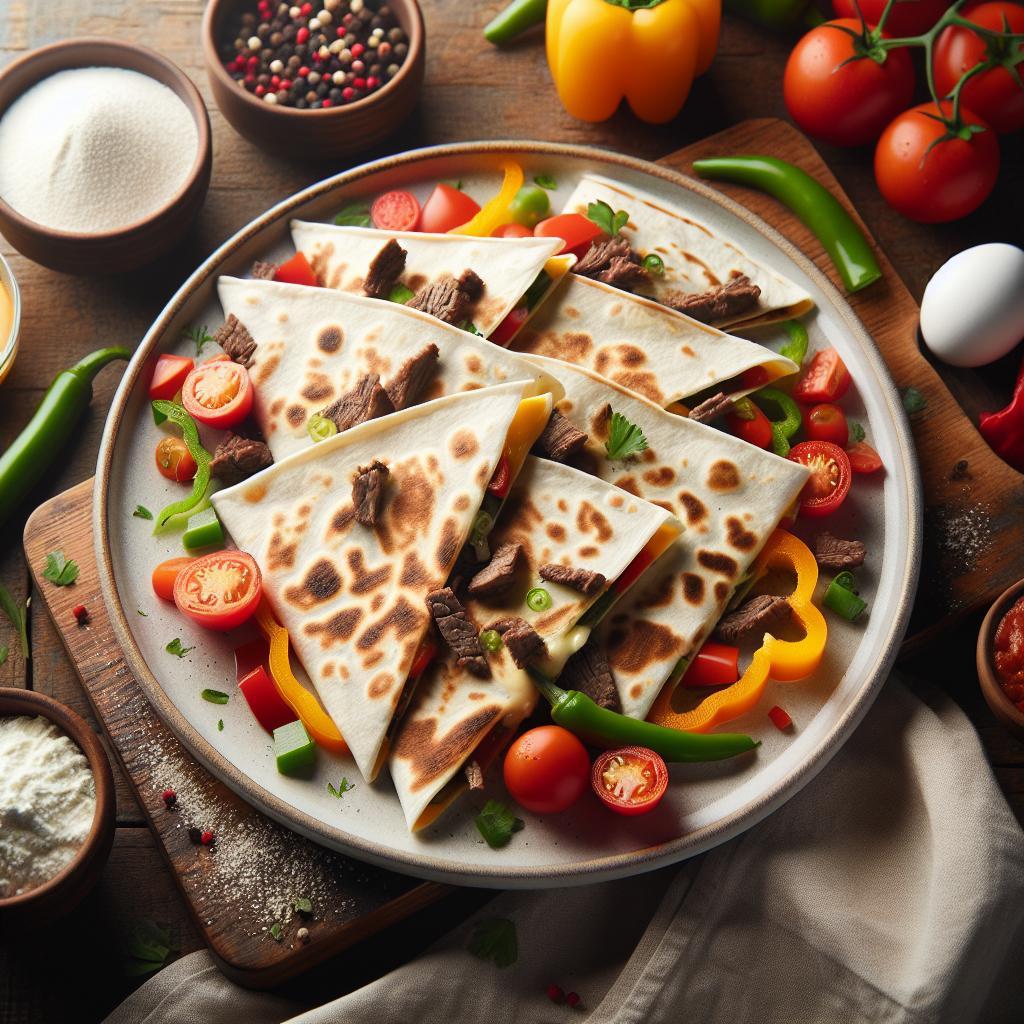
Assemble: heat a non-stick skillet over medium, place one tortilla, add ¾ cup shredded cheese, spread half the beef mix, sprinkle ¼ cup cheese, and top with a second tortilla. Press lightly and cook three to four minutes per side until golden and the cheese melts.
Let each quesadilla rest briefly before slicing; the short rest stabilizes the cheese and prevents fillings from spilling. Slice with a sharp knife or pizza wheel into wedges and serve hot.
Creative Twists and Serving Suggestions to Elevate Your Beef Quesadilla Experience
Introduce small changes that amplify texture and flavor. Roast poblano peppers for smoky depth, or add a spoon of fresh guacamole and salsa verde on the side for contrast.
For crunch, top with thinly sliced radishes or quick-pickled red onions dressed in lime. Pair with a fresh salad or simple grilled corn for a well-rounded plate.
Find recipes for complementary sides on our site, such as Homemade Chicken Tacos or a serving suggestion like Grilled Corn. These internal guides help complete a Mexican-inspired meal.
Chef’s Notes & Tips for Success
Small technique details determine final quality. Use medium heat so tortillas brown evenly while cheese reaches full melt; too-high heat burns the tortilla before the cheese binds the filling.
Mix cheeses for best texture: a high-melt cheese plus a sharp partner gives both stretch and flavor. Also, drain moist fillings before assembly to avoid sogginess.
Make-ahead strategy: cook and refrigerate the beef filling for up to two days, then assemble and finish just before serving. This approach maintains crispness and concentrates flavor.
Nutritional Information
Per serving (two quesadilla wedges), expect roughly 450 kcal, 28 g protein, 35 g carbs, and 20 g fat. Values vary with cut choice, portion size, and cheese type.
To reduce calories or fat, swap to lean ground turkey or a plant-based alternative and increase vegetable content. For more on tortillas and their role in cuisine, reference tortilla.
| Per Serving (2 Quesadilla Wedges) | Calories | Protein | Carbs | Fat |
|---|---|---|---|---|
| Energy | 450 kcal | 28 g | 35 g | 20 g |

Food Origins and Context
Quesadillas trace to traditional Mexican snack and street food forms that use tortillas as a wrapper for fillings. The dish evolved in regional kitchens, often reflecting local cheeses and proteins.
For cultural and historical context, see quesadilla and Mexican cuisine. Those pages outline regional variations and ingredient histories.
Q&A
Q&A: Quick & Tasty – Mastering Easy Beef Quesadillas at Home
Q1: What makes beef quesadillas a popular choice for a quick meal?
A: They combine simple techniques with bold flavor. You get protein, melted cheese, and a toasted wrapper that provides instant satisfaction.
A: Moreover, the format scales easily. Prepare filling in advance to save time during busy evenings.
Q2: How do I choose the best cut of beef for quesadillas?
A: Use thinly sliced skirt or flank for seared strips, or lean ground beef for quick browning. Each approach yields a different mouthfeel but both perform well.
A: Retain a little intramuscular fat for flavor, yet avoid overly fatty cuts that release excess oil into the tortilla.
Q3: What spices enhance beef quesadillas without overpowering them?
A: A compact mix—cumin, smoked paprika, and chili powder—supports the meat and cheese without competing. Fresh garlic and cilantro add aromatic lift.
A: Finish with a squeeze of lime to balance richness and make flavors pop.
Q4: Can I make beef quesadillas ahead of time?
A: Yes. Cook and cool the filling, refrigerate up to 48 hours, then assemble and finish just before serving. You preserve texture and speed up service.
A: For events, keep finished quesadillas wrapped in foil in a 200°F oven to maintain warmth without drying them out.
Final Thoughts
Mastering beef quesadillas comes down to three things: knife speed, heat control, and balancing moisture. Focus on those and you will consistently get crisp tortillas with gooey, well-seasoned filling.
With practice, you will customize fillings for seasonality and guests, turning a simple formula into a dependable household favorite. Happy cooking!
For a deeper look at cuts and culinary use, consult the beef resource. Also explore our internal recipe series such as Homemade Chicken Tacos and Grilled Corn for cohesive meal planning.
FAQ
How long will cooked beef filling keep?
Refrigerate cooked filling in an airtight container for up to 48 hours. Reheat to steaming before assembling to ensure food safety and texture.
Which cheese melts best for quesadillas?
Monterey Jack, mozzarella, and young cheddar melt reliably. Combining a high-melt cheese with a sharper cheddar gives both stretch and flavor depth.
Can I freeze assembled quesadillas?
Yes. Freeze individually on a tray, then bag. Reheat in a hot oven or skillet from frozen, adding a minute to allow even thaw and melt.
What pan gives the best crust?
A cast-iron or heavy non-stick skillet provides even contact heat for consistent browning. Use medium heat and a light press to achieve golden crust without charring.
How do I avoid a soggy tortilla?
Drain moist fillings and use moderate cheese to bind. Toasting the tortilla briefly before assembly reduces moisture transfer and keeps texture crisp.
See also: Beef Quesadillas