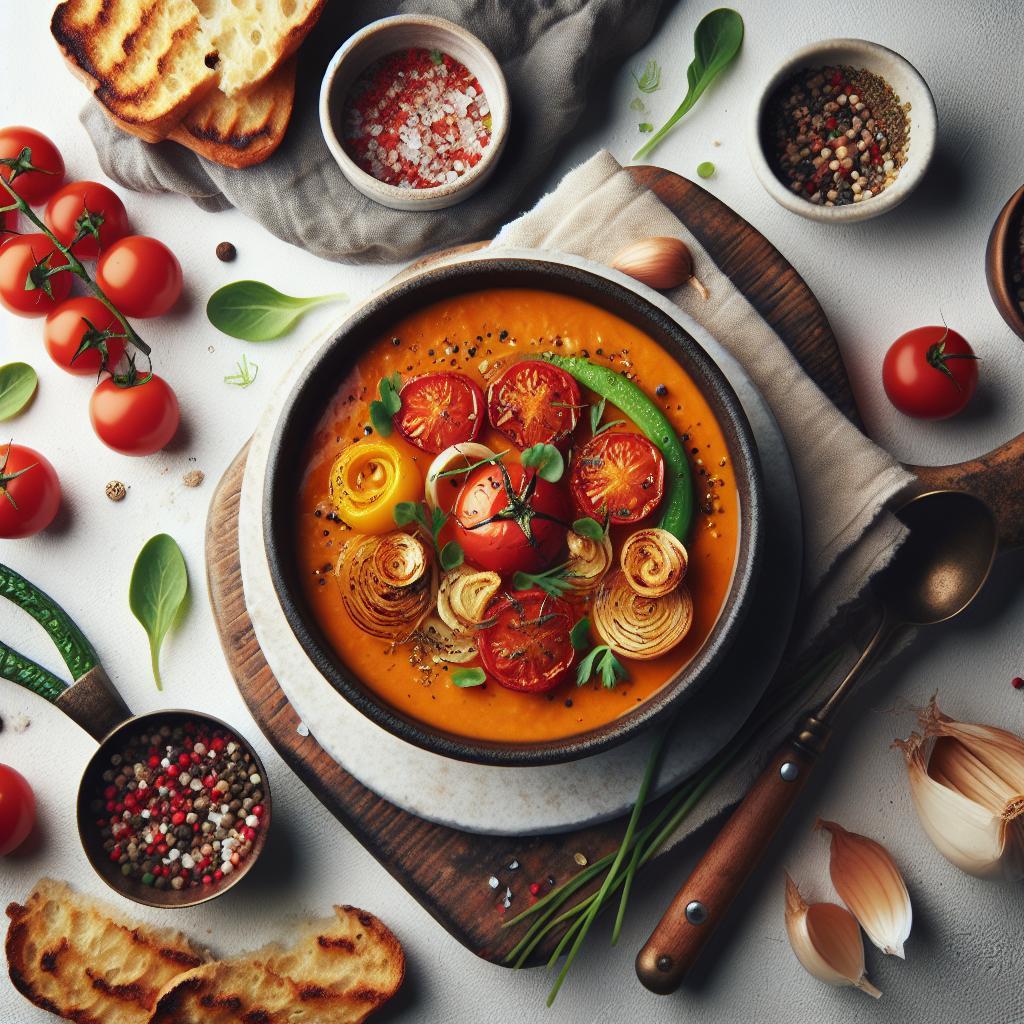

There’s something comforting about a warm bowl of tomato soup that connects to simple, nourishing meals. Roasting transforms tomatoes by concentrating sugars and adding smoky notes that lift the entire dish.
- Roasting intensifies natural sweetness and adds caramelized, smoky flavor.
- Layering herbs and acid balances richness and brightens the soup.
- Dairy-free creaminess comes from cashews or roasted vegetables when blended until silky.
- Make-ahead friendly: flavors marry overnight and freeze well for quick meals.
The Art of Roasting Tomatoes for Maximum Flavor
Roasting drives complex Maillard and caramelization reactions that concentrate tomato flavor and add savory notes. Pick ripe but firm fruit so the flesh softens without collapsing during roasting.
Slice evenly and arrange cut-side up on a baking sheet for consistent heat exposure. For technical background on the tomato itself, consult tomato biology and varieties for selection guidance.
Use a moderate oven temperature so sugars caramelize without burning; 400°F (200°C) typically yields well-browned skins and soft, juice-rich interiors. For a primer on dry-heat cooking that explains how heat develops flavor, see roasting techniques.
Generously coat with extra virgin olive oil to encourage even browning and protect the flesh from drying. Learn more about oil selection at olive oil references that cover grades and flavor profiles.
Choosing the Perfect Herbs and Spices to Elevate Your Soup
Fresh basil offers a bright, sweet counterpoint to roasted depth; add some at the end to preserve aromatic oils. Thyme and smoked paprika deepen savory notes without masking tomato character.
Garlic enhances umami when roasted with the tomatoes; it softens and sweetens in the oven, adding a gentle pungency. Finish the soup with a splash of balsamic or a touch of vinegar to lift sweetness and sharpen the palate.
Crafting a Creamy Texture Without Dairy
Blend in soaked raw cashews or roasted cauliflower to achieve silkiness without cream. Soak cashews at least four hours, then puree with a portion of the hot soup until perfectly smooth.
Use a high-speed blender or immersion blender and reheat gently to maintain texture. If you want nutritional context about tomato compounds, consult the lycopene entry for how heat affects antioxidant availability.
Serving Suggestions to Complement Your Roasted Tomato Soup
Serve the soup in warm bowls and finish with a drizzle of herb oil, a scattering of toasted seeds, or a small spoonful of dairy-free pesto for visual contrast and texture. Pair with grilled sourdough or garlic focaccia to provide a crunchy element for dipping.
For a complete meal, offer a crisp salad tossed in a lemon vinaigrette to cut through the roasted richness. For a protein boost, serve with roasted chickpeas or a side of white beans blended into the soup for body and satiety.
Prep and Cook Time
The total timeline mixes active prep with slow roasting to build flavor. Allow time for cooling if you plan to blend in a blender to avoid steam pressure issues.
- Preparation: 15 minutes
- Roasting: 40 minutes
- Simmering and Blending: 20 minutes
- Total Time: 1 hour 15 minutes
Adjust times based on oven performance and tomato size; larger tomatoes may need a few extra minutes. Always check for caramelized edges and soft centers before removing from the oven.
Yield
This recipe produces about 4 generous bowls suitable for a family meal or two servings with leftovers. Leftovers refrigerate well and often taste better after the flavors meld overnight.
Freeze in airtight containers for up to two months to preserve peak flavor for future quick meals. Reheat gently on the stove to avoid breaking emulsions formed by blended cashews or roasted vegetables.
Difficulty Level
Rating: Easy to Medium. The technique requires basic knife skills and attention to roasting time, but the steps stay straightforward. Timing and layering flavors make the real difference in outcome.
Beginner cooks can follow the recipe reliably by prepping ingredients uniformly and monitoring the oven. Use a kitchen timer and a reliable thermometer if you want precise control over oven heat.
Ingredients
Gather produce and pantry staples before you begin to streamline the roasting process. Uniformity in tomato size helps them roast evenly.
- 4 lbs ripe tomatoes (Roma or heirloom), halved
- 6 cloves garlic, peeled
- 1 large yellow onion, sliced
- 1/4 cup extra virgin olive oil
- 1 tsp sea salt
- 1/2 tsp freshly ground black pepper
- 1 tsp smoked paprika
- 2 sprigs fresh thyme
- 1 large handful fresh basil leaves, divided
- 3 cups vegetable broth
- 1/2 cup soaked raw cashews (optional, for creaminess)
- 1 tbsp balsamic vinegar
Substitute low-sodium broth to control sodium, and adjust salt after blending. If using canned tomatoes in a pinch, choose whole peeled and drain excess liquid before roasting for best texture.
Instructions
Follow these steps in order to capture the caramelized flavor base that defines roasted tomato soup. Preheating and arranging components carefully deliver consistent results.
- Preheat your oven to 400°F (200°C). Line a baking sheet with parchment paper.
- Arrange the tomatoes cut-side up, garlic cloves, and onion slices evenly across the baking sheet. Drizzle with olive oil and sprinkle with sea salt, black pepper, and smoked paprika.
- Add fresh thyme sprigs on top, then roast the vegetables for 40 minutes, or until the tomatoes are caramelized and softened with slight charring.
- Remove from oven and discard thyme sprigs. Transfer everything to a large pot, including any juices.
- Pour in the vegetable broth and bring the mixture to a boil over medium heat. Reduce to a simmer and cook for 10 minutes to meld flavors.
- Add soaked cashews if using, then blend the soup using an immersion blender until smooth and creamy. Alternatively, transfer in batches to a blender, careful with the hot liquid.
- Stir in fresh basil leaves and balsamic vinegar, then taste for seasoning and adjust salt or pepper as needed. Warm through gently without boiling.
- Serve piping hot, garnished with basil oil or a fresh basil leaf, cracked pepper, and toasted seeds or nuts as desired.
When using a countertop blender, vent the lid and use a towel to hold it to prevent steam buildup. For an extra-smooth finish, pass the soup through a fine-mesh sieve before serving.
Tips for Success
Small technique choices affect texture and flavor. Roast until you see both soft flesh and some charring at the edges for concentrated taste.
- Select ripe yet firm tomatoes for roasting to ensure juicy flesh without becoming mushy.
- Roast garlic whole to mellow its sharpness and enhance sweetness.
- Don’t skip the balsamic vinegar; it brightens and balances the rich roasted flavors beautifully.
- For a vegan creamy touch, soak cashews overnight or for at least 4 hours to guarantee a smooth blend.
- Make ahead: The soup tastes even better the next day as flavors continue to marry—store in the fridge up to 3 days or freeze for up to 2 months.
Letting the roasted pan juices join the pot preserves volatile flavor compounds that live in the caramelized residue. Scrape everything off the baking sheet and add to the pot for maximum depth.
Use a ladle to transfer hot soup in small batches, and hold a folded towel over the lid when blending to deflect steam. If you use an immersion blender, pulse rather than run continuously to reduce splatter.
Serving Suggestions
Plate with contrasting textures and bright flavors that balance the roasted richness. A swirl of herb oil and toasted seeds provide crunch and visual appeal.
Offer grilled cheese or toasted sourdough for dipping and a green salad dressed with lemon vinaigrette to cut through the roast. These pairings turn the soup into a full meal without adding heavy components.
| Nutrient | Per Serving |
|---|---|
| Calories | 180 kcal |
| Protein | 5 g |
| Carbohydrates | 22 g |
| Fat | 8 g |
Nutrition varies with ingredient choices. Use low-sodium broth or reduce added oil to trim calories and sodium without sacrificing texture.
Final Notes on Roasted Tomato Soup
This recipe elevates a classic by adding roasted, caramelized notes that deepen flavor without complicating technique. The approach suits weeknight cooking and scaled-up entertaining alike.
Adjust herbs and creaminess to personal preference and dietary needs; the method reliably produces layered flavor. Store leftovers in portioned containers for fast, flavorful lunches or dinners.
FAQ
What makes roasted tomato soup different from standard tomato soup?
Roasting caramelizes tomato sugars and adds smoky, savory notes that a stovetop simmer alone cannot replicate. The result reads as richer and more complex on the palate.
Can I make this soup vegan and still keep a creamy texture?
Yes. Use soaked cashews or roasted cauliflower to provide body and a smooth mouthfeel when blended. Coconut cream works sparingly, but it adds a distinct flavor note.
How long should I roast tomatoes for the best flavor?
Roast at about 400°F (200°C) for 35–45 minutes until the edges brown and the flesh collapses slightly. Timing may vary with tomato size and oven type.
Can I serve roasted tomato soup cold?
Absolutely. Chill fully and adjust seasoning before serving. Cold roasted tomato soup makes a refreshing summer starter when finished with herb oil and crunchy garnishes.
How do I store and reheat leftovers?
Refrigerate up to 3 days or freeze in portions for up to 2 months. Reheat gently on the stovetop to preserve texture and prevent separation.
See also: Tomato Soup