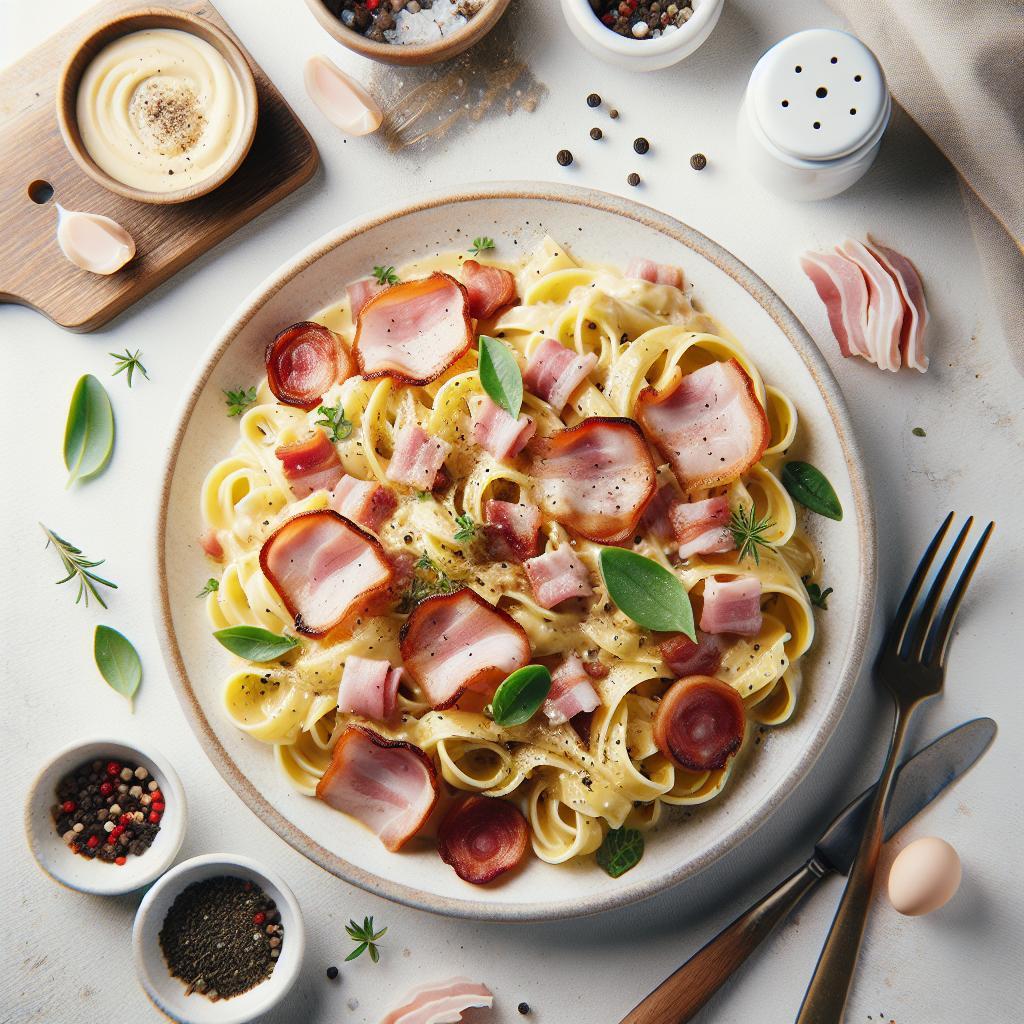

Savor Creamy Carbonara with Turkey Bacon reimagines a Roman favorite into a lighter, highly satisfying plate. This version preserves the silky egg-and-cheese emulsion while substituting lean turkey bacon for cured pork, yielding a smoky profile with reduced fat.
- Quick dinner: Ready in 30 minutes from start to finish.
- Flavor balance: Egg emulsion and Pecorino anchor the sauce; turkey bacon adds a lean smoke note.
- Technique-driven: Heat control and reserved pasta water determine final creaminess.
What Makes This Carbonara Different
This recipe adapts the classic Roman carbonara concept by using turkey bacon to reduce saturated fat while keeping the signature silky sauce. The swap requires minor technique tweaks to preserve texture and mouthfeel.
Swapping proteins shifts salt and moisture levels, so you adjust seasoning and crisping time. You still rely on hot pasta water and off-heat tossing to create a stable emulsion rather than a cream-based sauce.
At-a-Glance Timings and Yield
Prep: 10 minutes. Cook: 20 minutes. The recipe serves four generous portions and suits weeknight entertaining or a relaxed family dinner.
Timing centers on perfect al dente pasta and crisp turkey bacon without overcooking the eggs. Reserve pasta water and move off direct heat when combining to secure a glossy coating on each strand.
Ingredients & Key Choices
Choose quality primary ingredients to maximize simple recipes. Use 12 oz of long pasta such as spaghetti, 6 slices of high-quality turkey bacon, 3 large eggs, and 1 cup freshly grated Pecorino Romano.
Also keep two garlic cloves, a tablespoon of extra-virgin olive oil, fresh black pepper, and coarse salt for pasta water. These simple components deliver maximum impact when handled deliberately.
Ingredient Notes
Pasta: Long strands trap the emulsion effectively; whole-grain or legume-based options add fiber and protein. Cook to al dente so the sauce adheres without becoming gummy.
Cheese: Pecorino Romano provides sharpness and a crystalline texture when freshly grated. Avoid pre-grated blends that may contain anti-caking agents that hinder melt-in-sauce behavior.
Step-by-Step Instructions
Follow sequencing and temperature control closely. Start with a large pot of vigorously boiling salted water; the salt level should taste like seawater to season the pasta properly.
Reserve one cup of pasta water before draining. That starchy liquid is the primary tool to adjust viscosity and stabilize the egg-and-cheese emulsion.
Cooking the Components
Heat a skillet over medium and add olive oil with crushed garlic; sauté until aromatic and lightly golden, then discard the garlic to avoid sharp raw garlic pockets. Add chopped turkey bacon and render until crisp, about six minutes.
While bacon cooks, whisk eggs vigorously with grated cheese and a generous grind of black pepper until smooth. The mixture should have a silky consistency that will emulsify with pasta water.
Assembling the Carbonara
Return drained pasta to the skillet with the turkey bacon and set the pan off the heat. Work fast: pour the egg-cheese mix over the pasta, tossing briskly to coat each strand.
Add reserved pasta water a few tablespoons at a time until the sauce becomes glossy and clings to the pasta. Adjust seasoning with additional black pepper; serve immediately for best texture.
Chef’s Notes: Technique & Variations
Temperature control makes or breaks carbonara. Combine eggs and cheese off the heat to avoid curdling; the residual warmth of pasta and pan cooks the eggs gently into a silk emulsion.
Texture depends on tossing speed and water ratio. If the sauce sits too long it may thicken; refresh with another splash of warm pasta water when plating to revive silkiness.
For a herb lift, finish with chopped flat-leaf parsley or microgreens right before serving to add color and a fresh counterpoint to the savory sauce. Minor add-ins like peas or lightly wilted spinach can increase nutrients without undermining texture.
Serving Suggestions and Pairings
Plate the pasta in shallow bowls to display glossy strands and allow steam to concentrate aromatics. Finish with extra grated Pecorino and a robust crack of black pepper.
Pair with a crisp green salad dressed in lemon vinaigrette or roasted seasonal vegetables to offset the richness. A slice of rustic bread or garlic knots works well for diners who enjoy mopping up the remaining emulsion.
Nutritional Snapshot
Per serving estimates (approximate): 450 kcal, 22 g protein, 58 g carbohydrates, 12 g fat. Substituting turkey bacon trims saturated fat compared with cured pork options while keeping protein high.
To boost fiber and micronutrients, choose whole-grain or legume-based pasta and add a cup of vegetables such as spinach or peas. These changes increase satiety and nutrient density without sacrificing the dish’s creamy appeal.
| Nutrient | Per Serving |
|---|---|
| Calories | 450 kcal |
| Protein | 22 g |
| Carbohydrates | 58 g |
| Fat | 12 g |

Make-Ahead and Storage
Prepare components ahead: cook turkey bacon and pasta, then cool and store separately for up to two days in airtight containers. Hold egg-and-cheese mixture refrigerated in a sealed jar until ready to assemble.
When reheating, warm the pasta gently with a splash of water in a skillet, then toss with the chilled egg-cheese mix off the direct heat to reconstruct the emulsion. Repeated high heat will degrade texture, so reassemble quickly and serve.
FAQ
The following targeted questions cover common concerns and technique points to help you execute this recipe confidently.
What changes when using turkey bacon instead of pancetta?
Turkey bacon lowers saturated fat and alters salt and moisture content. Expect a milder, less fatty mouthfeel; crisping properly and adjusting seasoning compensates and still yields robust flavor.
How do I prevent the eggs from scrambling?
Work off the heat and use reserved pasta water to temper the eggs while tossing vigorously. The combined heat from the pasta and hot water cooks the eggs gently into a smooth, silky coating.
Can I make this dairy-free?
Yes. Replace Pecorino with a well-formulated plant-based hard-cheese alternative or nutritional yeast blend and increase textural richness with a little dairy-free cream or blended silken tofu. Adjust salt and acid to recreate balance.
Which pasta shapes work best?
Long strands like spaghetti or linguine suit carbonara because they wrap and display the emulsion. Short shapes will work, but you must slightly increase water and mixing to achieve the same coating effect.
Is carbonara traditionally made with cream?
Classic Roman carbonara uses eggs, hard cheese, and cured pork without cream. The sauce becomes creamy through emulsification with starchy pasta water rather than added dairy cream.
If you want further reading on the recipe’s origin and technique, consult reliable culinary resources and historical overviews for context and variations. For example, background on the dish and regional practices is available via the linked encyclopedia entries earlier in the article.
Enjoy the balance of tradition and innovation on your plate: tender pasta, silken sauce, and crisp turkey bacon come together for a satisfying meal that respects technique and reduces excess fat without sacrificing taste.
See also: Carbonara