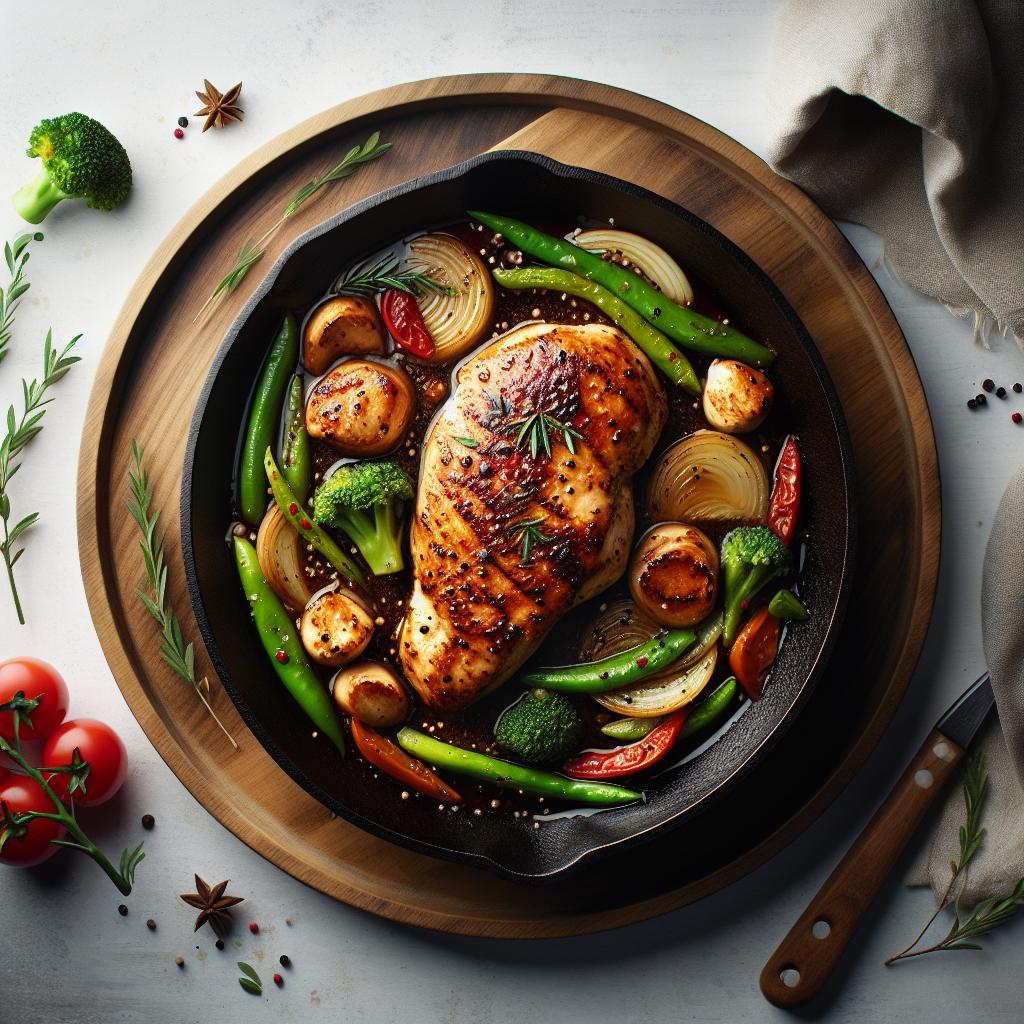

When dinner needs to be simple yet memorable, skillet balsamic chicken delivers. Golden-seared breasts finish under a glossy balsamic glaze that balances bright acidity with restrained sweetness.
- Ready in 30 minutes: quick one-skillet prep and cook times.
- High flavor, low fuss: minimal ingredients, maximum depth.
- Weeknight-friendly: easy technique for consistent results.
- Make-ahead options: glaze stores well and refreshes when reheated.
Savor Skillet Balsamic Chicken
This skillet balsamic chicken recipe focuses on controlled searing, a balanced reduction, and a finishing emulsion for shine. Each step targets texture and flavor so the chicken stays juicy while the glaze thickens to cling to the meat.
The technique relies on predictable heat management and simple chemistry: searing triggers the Maillard reaction for savory crust, and slow reduction concentrates the vinegar’s sugars into a syrupy glaze. Use fresh herbs and a quality balsamic for best results.
Prep and Cook Time
Prep Time: 10 minutes. Trim, pat dry, and season to promote even browning. Allow chicken to come briefly to room temperature for predictable cooking.
Cook Time: 20 minutes. Sear on medium-high, then finish in pan with the glaze. Total time remains about 30 minutes from start to plate.
Yield
Serves 4 generously. Portions scale well by adjusting pan size and reducing in batches to avoid crowding.
For larger groups, keep finished chicken warm on low oven heat while you glaze additional batches so the sauce doesn’t over-reduce.
Difficulty Level
Easy. Home cooks with basic pan skills achieve great results by following temperature and timing cues.
Key checkpoints: golden-brown sear, internal temperature of 165°F, and a glaze reduced to a ribbon-like consistency.
Ingredients
Assemble quality components for a reliable, flavorful glaze. The ingredient list emphasizes ingredient ratios and the finishing butter to balance acidity.
For protein context, this recipe uses standard boneless, skinless breasts; for background on poultry as an ingredient, see chicken as food. Choose similar-sized breasts for even cooking.
- 4 boneless, skinless chicken breasts, trimmed and patted dry
- 1 cup balsamic vinegar (use a good-quality balsamic for the best glaze)
- 2 tablespoons honey or pure maple syrup
- 3 cloves garlic, minced
- 2 tablespoons olive oil
- 1/2 teaspoon salt
- 1/2 teaspoon freshly ground black pepper
- 1 teaspoon fresh thyme leaves (or 1/2 teaspoon dried thyme)
- 2 tablespoons unsalted butter, chilled and cubed
- Fresh basil leaves for garnish
- Optional: sliced cherry tomatoes or sautéed mushrooms for serving
Instructions
Follow the sequence: season, sear, rest, reduce, emulsify, and finish. Each step preserves moisture and builds concentrated flavor in the glaze.
Work with a heavy skillet that holds heat well. Avoid overcrowding the pan to ensure even browning and to maintain high surface temperature for proper searing.
- Season the Chicken: Sprinkle breasts evenly with salt, pepper, and thyme. Press the seasoning into the surface so it adheres.
- Heat the Skillet: Warm olive oil in a large, heavy skillet over medium-high until it shimmers. A properly heated pan minimizes sticking.
- Sear the Chicken: Place breasts into the skillet and sear until a deep golden crust forms, about 4–6 minutes per side depending on thickness. Flip once for even color and cook until the internal temperature reaches 165°F.
- Remove Chicken: Transfer the cooked chicken to a warm plate and tent loosely with foil. Resting redistributes juices for a tender bite.
- Prepare the Glaze: Lower heat to medium. Add garlic to the same pan and sauté briefly until fragrant—avoid browning to prevent bitter notes.
- Add Balsamic and Honey: Pour in balsamic vinegar and stir in honey, scraping brown bits from the pan. Simmer gently until the liquid reduces by half and becomes syrupy, roughly 6–8 minutes.
- Finish the Sauce: Off the heat, whisk in chilled butter cubes to emulsify the glaze and create a glossy finish that clings to the chicken.
- Reunite Chicken and Glaze: Return breasts to the skillet and spoon glaze over each piece. Keep warm for 1–2 minutes to meld flavors before plating.
- Serve: Plate the chicken, drizzle extra glaze, and garnish with fresh basil and optional vegetables.
Tips for Success
Technique matters. Use an instant-read thermometer for accuracy and rest the meat after searing to seal in juices. These small steps produce a professional-texture result at home.
Pound breasts to an even thickness to avoid overcooking thin edges while the center finishes. Uniform pieces sear and finish uniformly, leaving no dry edges.
- Even thickness: A quick pound with a mallet gives consistent results and faster searing.
- Patience with reduction: Maintain a simmer and stir occasionally so the glaze reduces evenly without burning.
- Butter finish: Cold butter whips into the hot liquid and emulsifies the sauce for a silky texture.
- Spice it up: Add a pinch of chili flakes for a subtle heat layer in the glaze.
Serving Suggestions
The balsamic glaze soaks beautifully into creamy bases. Serve the chicken over mashed potatoes, buttery polenta, or a bed of long-grain rice to capture every drop of sauce.
Bright vegetable sides lift the plate. Roast asparagus, sautéed green beans, or a crisp salad add freshness and textural contrast. For more ideas, see our internal collections such as Healthy Chicken Dinner Recipes and Quick Weeknight Recipes.
Nutrition Facts
The following table provides a practical estimate per serving based on the ingredient list. Adjust portions and finishing butter to modify calorie and fat values.
Use this as a baseline for meal planning and for pairing sides that complement calorie goals without masking flavor.
| Nutrient | Per Serving |
|---|---|
| Calories | 320 kcal |
| Protein | 38 g |
| Carbohydrates | 9 g |
| Fat | 12 g |
Ingredient Notes and Substitutions
If you can’t source a traditional balsamic, test a blend of a good red wine vinegar with a touch of sweetener. The final profile will differ from aged balsamic but remains bright and useful.
For herb alternatives, thyme and basil work well. For background on this herb category, consult the thyme reference. Fresh herbs always offer brighter aromatics than dried.


FAQ
How do I keep the chicken juicy?
Start with warm-ish meat and avoid overcooking by monitoring internal temperature. Rest the chicken after searing to redistribute juices and preserve moistness.
Can I use thighs instead of breasts?
Yes. Thighs tolerate longer cooking and tend to stay juicier. Adjust sear time and ensure even cooking by matching thickness or using bone-in pieces as appropriate.
How long does the glaze keep?
Refrigerate the glaze up to 5 days in an airtight container. Gently rewarm before spooning over freshly reheated chicken to restore gloss and texture.
Is there a low-sugar option?
Reduce or omit added honey; use a very small amount to prevent an overly sharp finish. Concentrate the vinegar more slowly to avoid bitterness if you reduce sugar further.
What wine pairs well with balsamic chicken?
Choose a medium-bodied red with moderate acidity, or a white with bright acidity like a dry Riesling. These wines complement the sweet-tart glaze without overpowering the protein.
Discover more recipes and plating ideas in our internal recipe collections for sauces and weeknight mains. Experiment with small swaps to find the balance you prefer; this skillet method scales well and adapts to pantry ingredients.
For a primer on the central ingredient, explore the history and production of balsamic vinegar, which explains why aged balsamics carry richer, sweeter notes suited for finishing sauces.
See also: balsamic chicken