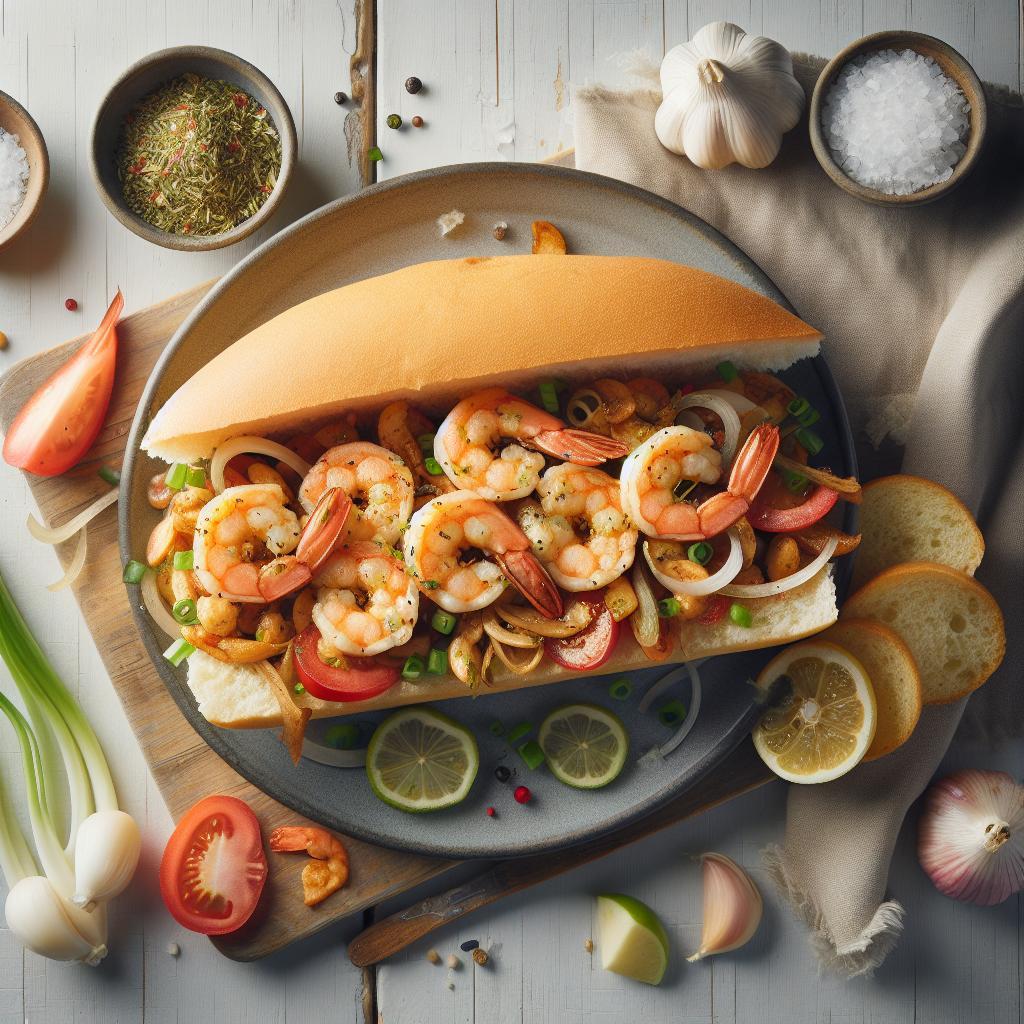

Savor the classic Shrimp Po’boy with crisp fried shrimp, bright remoulade, and a properly toasted French roll for the authentic New Orleans bite. The Shrimp Po’boy balances texture and acidity so each sandwich hits crunchy, juicy, and bright notes in every mouthful.
- Origins and Flavor Profile of the Shrimp Po’boy
- Prep and Cook Time for Shrimp Po’boy
- Yield and Holding Notes for Shrimp Po’boy
- Difficulty Level and Tools for Shrimp Po’boy
- Ingredients for the Shrimp Po’boy
- Instructions to Build the Best Shrimp Po’boy
- Tips for a Superior Shrimp Po’boy
- Safety and Handling for Shrimp Po’boy
- Serving Suggestions for Shrimp Po’boy
- Nutrition & Plate Composition for Shrimp Po’boy
- FAQ
- Key takeaways: crisp crust, bright remoulade, thin-crusted roll.
- Speed: roughly 35 minutes active time for four sandwiches.
- Technique: consistent oil temperature and uniform shrimp size matter most.
- Scalability: fry in batches and keep sauce chilled until assembly.
Origins and Flavor Profile of the Shrimp Po’boy
The Shrimp Po’boy grew from New Orleans street-food culture and local seafood supply, a working-class sandwich that relies on simple ingredients executed well. For historical context, the sandwich belongs to the broader po’ boy tradition and reflects regional seasoning techniques.
Flavor hinges on contrasts: a crunchy, salted crust against meaty shrimp and a tangy remoulade that cuts through the fried richness. Regional influences from New Orleans and surrounding Gulf seafood practices contribute Creole and Cajun accents.
Prep and Cook Time for Shrimp Po’boy
Plan about 35 minutes total active time for a batch that serves four, covering brine or buttermilk soak, heat-up, fry, and assembly. Efficient mise en place reduces idle time and protects crust quality by avoiding overloading the fryer.
Two quick steps speed production: uniform shrimp sizing and a thermometer to hold oil at a steady 350°F (175°C). Those measures keep frying consistent and prevent greasy or undercooked shrimp.
Yield and Holding Notes for Shrimp Po’boy
This recipe yields four generously filled Shrimp Po’boy sandwiches and scales proportionally for larger crowds. Fry in controlled batches and keep fried shrimp on a wire rack to preserve crunch while you finish assembly.
If you must hold shrimp briefly, rest them in a warm (not hot) oven and keep the remoulade refrigerated until assembly; chilled sauce brightens the sandwich and prevents early sogginess. Refrigerated remoulade will last up to three days when stored properly.
Difficulty Level and Tools for Shrimp Po’boy
Intermediate: you need basic frying skill, temperature control, and quick assembly. Essential tools include a deep skillet or dedicated fryer, an instant-read thermometer, a slotted spoon, and a wire rack for draining.
These tools give predictable heat control and handling so your Shrimp Po’boy reaches an even golden crust without overcooking the shrimp interior. A steady workflow—setting stations for shrimp, breading, frying, and assembly—delivers consistent results.
Ingredients for the Shrimp Po’boy
The ingredient list divides components so you can prep efficiently and avoid cross-contamination between sauce and seafood. Separate bowls for dredge, wet soak, and finished shrimp reduce errors while frying.
Use the ingredient breakdown below to stage your work: shrimp, sauce, and assembly components each have a dedicated prep station for speed and cleanliness.
For the Shrimp
1 lb large shrimp, peeled and deveined (tails optional); 1 cup buttermilk; 1 ½ cups all-purpose flour; 1 cup fine cornmeal; 2 tsp Cajun seasoning; 1 tsp garlic powder; salt and black pepper; vegetable oil for frying. Uniform shrimp size ensures even cook times.
Buttermilk tenderizes and helps the breading adhere; cornmeal adds tooth without turning heavy. Maintain a 75/25 flour-to-cornmeal ratio for color control and a resilient crust that stands up inside the roll.
For the Remoulade Sauce
½ cup mayonnaise; 2 tbsp Creole or Dijon mustard; 1 tbsp lemon juice; 1 tsp hot sauce; 1 tbsp chopped parsley; 1 small garlic clove, minced; 1 tsp paprika; salt and pepper to taste. The remoulade should be tang-forward to balance the fried shrimp.
Make the remoulade ahead to let flavors marry. A rested, chilled sauce slices through fried richness and keeps the sandwich bright at first bite.
For the Sandwich Assembly
4 thin-crusted French rolls or baguettes with a soft interior; 1 cup shredded iceberg lettuce; ½ cup thinly sliced tomatoes; ¼ cup dill pickle slices. Choose rolls that resist sogginess—look for thin, crisp crust and interior springs.
If you need a quick primer on ideal bread structure, consult the baguette profile for crumb and crust characteristics that work best in a Shrimp Po’boy: Baguette. A proper loaf prevents the sandwich from collapsing under sauce and fried filling.
Instructions to Build the Best Shrimp Po’boy
Follow sequence: soak shrimp, set up breading station, heat oil, fry in batches, then assemble immediately. Consistent sequencing preserves texture and ensures timing across components.
Monitor oil temperature at 350°F (175°C) with an instant-read thermometer and use quick, uniform batches to keep the oil from cooling. Drain shrimp on a wire rack rather than paper to maintain airflow and crispness.
- Marinate the Shrimp: Soak shrimp in buttermilk for 10–15 minutes to tenderize and help the breading adhere.
- Prepare the Breading: Mix flour, cornmeal, Cajun seasoning, garlic powder, salt, and pepper in a shallow dish.
- Heat the Oil: Fill a deep skillet with oil to a 2-inch depth and heat to 350°F (175°C); hold steady.
- Bread the Shrimp: Remove shrimp from buttermilk, letting excess drip, then dredge and press to adhere.
- Fry the Shrimp: Fry in batches until golden-brown, about 2–3 minutes total per shrimp depending on size. Drain briefly on a wire rack.
- Make the Remoulade: Whisk mayo, mustard, lemon, hot sauce, parsley, garlic, and paprika. Adjust to a tangy, slightly spicy finish.
- Prepare the Bread: Slice rolls lengthwise and toast lightly to reinforce crunch and create a moisture barrier.
- Assemble the Shrimp Po’boy: Spread remoulade on both halves, layer lettuce, pickles, tomatoes, then fried shrimp. Finish with extra sauce if desired.
- Serve Immediately: Serve at once for the best contrast between crisp shrimp and toasted bread.
Practice produces consistent timing and temperature control; test a single shrimp to dial in exact fry time for your equipment. Small adjustments to dredge ratio and oil temperature tune final color without sacrificing texture.
Tips for a Superior Shrimp Po’boy
Maintain 350°F (175°C) oil temperature; if oil cools the crust will absorb fat, and if it runs hot the exterior will burn before the shrimp cook through. Keep shrimp size consistent and fry in small batches for predictable results.
For extra resilience in the crust, double-dip the shrimp: buttermilk, seasoned flour, quick re-dip, and final dredge. That builds a thicker coating that resists early sogginess inside the roll.
Let the remoulade rest in the refrigerator for at least an hour, preferably overnight, to let acids and aromatics balance. Chilled sauce brightens the sandwich and reduces the chance of the bread turning soggy during assembly.
Safety and Handling for Shrimp Po’boy
Hot oil presents burn risk. Use long-handled tools, never leave frying unattended, and keep a lid nearby to smother any small flare-ups. These simple precautions reduce the chance of injury.
Cook shrimp to opaque flesh and an internal temperature near 120–125°F for large shrimp, checking visually for firmness and color rather than relying solely on time. Proper doneness retains moisture while ensuring safety.
Serving Suggestions for Shrimp Po’boy
Serve the Shrimp Po’boy with classic Southern sides like creamy coleslaw or pickled okra to add acid and texture contrast. A crisp lager or saison pairs well with the fried crust and remoulade acidity.
For a composed platter, add a fried whitefish option or a cold, crisp salad to balance the plate. Small sides keep each portion focused on the sandwich as the centerpiece.
Nutrition & Plate Composition for Shrimp Po’boy
A standard Shrimp Po’boy serving runs near 480 kcal, with protein from the shrimp and carbs from the roll; most fat comes from frying and the mayonnaise base of remoulade. Adjustments—grilling shrimp or using a lighter roll—shift macronutrients predictably.
To lower calories, substitute yogurt or reduced-fat mayonnaise in the remoulade and choose whole-grain or thinner rolls. Those swaps maintain flavor direction while improving nutritional profile for calorie-conscious diners.
FAQ
What defines an authentic Shrimp Po’boy?
An authentic Shrimp Po’boy pairs fried shrimp with a tangy, mayo-forward remoulade, shredded lettuce, tomato, and pickles on a thin-crusted French loaf. The sandwich centers on texture contrast and a bright sauce to cut the fried richness.
Can I make a lighter Shrimp Po’boy?
Yes. Substitute grilled or air-fried shrimp, use reduced-fat mayo or Greek yogurt in the remoulade, and select a whole-grain or lighter roll. These changes reduce calories without losing the sandwich’s core profile.
How do I prevent a soggy Shrimp Po’boy?
Toast the bread lightly, drain fried shrimp on a wire rack, and assemble just before serving. Spread remoulade sparingly to limit moisture transfer and keep crunch for the first bite.
What sides pair best with a Shrimp Po’boy?
Classic pairings include coleslaw, pickled vegetables, and fried potato wedges; a cold salad or tart pickles add acid that complements the fried sandwich. Choose sides that provide contrast in temperature and texture.
Where can I read more about po’ boy and regional cuisine?
For further context on the sandwich and its place in regional foodways, consult reputable references on the po’ boy, New Orleans, and remoulade. These entries summarize history and culinary traditions relevant to the Shrimp Po’boy.
Follow the steps above, practice timing and temperature control, and experiment with spice levels and bread varieties to make the Shrimp Po’boy your own while honoring the sandwich’s classic structure. Laissez les bon temps rouler!
See also: Cajun cuisine for regional seasoning context.

See also: Shrimp Po’boy