
Savor the Comfort: A Guide to Classic Turkey Casserole
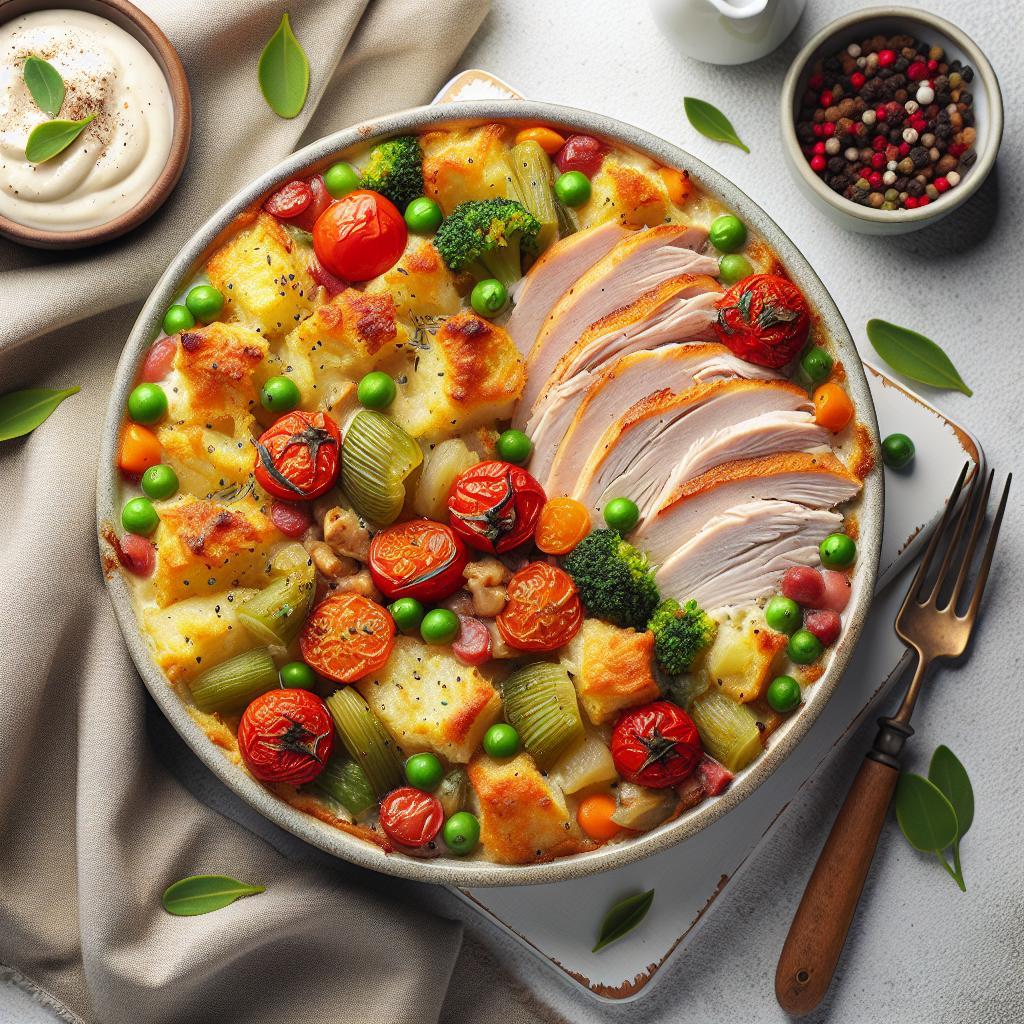
There is something irresistibly heartwarming about the humble turkey casserole. It transforms leftover turkey into a creamy, savory bake that feeds a family and stretches holiday protein into new meals.
This guide gives precise technique for a lump-free sauce, crunchy topping, timing, and storage so you deliver consistent results every time. The directions use common kitchen terms like roux and béchamel and explain when to use each for the smoothest finish.
- Quick result: Ready in about one hour and serves six.
- Sauce control: Make a roux-based béchamel for a stable, creamy binder.
- Texture tip: Buttered crumbs or panko add needed crunch without drying the filling.
- Make-ahead: Assemble day-before and bake fresh for best top texture.
Prep and Cook Time
Preparation: 20 minutes. Use warm milk when making the sauce to avoid lumps during incorporation.
Cooking: 40 minutes. Bake until bubbly and golden at the edges. Rest 10 minutes before serving so the sauce sets.
- Total: 1 hour (plus resting time)
Yield
This recipe makes 6 generous portions. It feeds a family comfortably or provides a main for a small gathering.
For larger groups, scale ingredients linearly and use a 13×9 or two smaller dishes to avoid over-crowding and uneven baking.
Difficulty Level
Rated Easy to Medium. The main technique that raises difficulty is the sauce—once you master a basic roux and whisking method, the rest is straightforward.
Home cooks with a basic set of tools (saucepan, skillet, whisk) will find this recipe accessible and reliable.
Ingredients
Ingredients balance protein, vegetables, and a cream binder to produce a cohesive casserole. Use cooked turkey for best texture; shred or dice to your preference.
When selecting cheese, pick one that melts well for body and flavor. Sharp varieties give depth while milder cheeses yield a creamier mouthfeel.
- 3 cups cooked turkey, shredded or chopped
- 2 cups mixed fresh vegetables (carrots, peas, green beans), steamed
- 1 medium onion, finely diced
- 3 cloves garlic, minced
- 3 tbsp unsalted butter
- 3 tbsp all-purpose flour, sifted
- 2 cups whole milk, warmed
- 1 cup low-sodium chicken broth
- 1 ½ cups shredded sharp cheddar cheese
- ½ cup grated Parmesan cheese
- 1 tsp Dijon mustard
- Salt and freshly ground black pepper, to taste
- 1 tsp dried or fresh thyme, chopped
- 1 cup crushed buttery crackers or panko breadcrumbs for topping
- 2 tbsp olive oil for sautéing
Ingredient substitutions and notes
For lower fat, replace half the milk with low-fat milk or use plain Greek yogurt stirred in off-heat to avoid curdling. Whole milk gives a silkier finish.
For a different flavor profile, swap sharp cheddar for a blend with Gruyère or Monterey Jack. For background on cheddar varieties see Cheddar cheese.
Instructions
Follow the steps with attention to temperature and timing. Sauté aromatics first and keep vegetables just tender to avoid a mushy bake.
Assemble the casserole in a greased 9×13-inch dish; even distribution ensures uniform baking and serving portions.
- Prepare the turkey and vegetables: If not using leftovers, roast or pan-cook turkey breast until 160°F (71°C) internal temperature. Cool, then shred.
- Sauté aromatics: Heat olive oil in a skillet. Cook diced onion until translucent, about 5 minutes. Add garlic and cook 30–60 seconds until fragrant.
- Craft the creamy sauce: Melt butter in a saucepan over medium heat. Whisk in flour to create a roux and cook 1–2 minutes until slightly golden. Gradually whisk in warmed milk and chicken broth until smooth and thickened.
- Enhance flavor: Remove sauce from heat and stir in Dijon, half the cheddar, Parmesan, thyme, salt, and pepper. Combine until melted and silky.
- Combine the casserole: Add turkey, sautéed onion and garlic, and vegetables into the sauce. Stir gently to coat. Taste and adjust seasoning.
- Assemble: Transfer the mixture to the prepared baking dish. Top with remaining cheddar and sprinkle crushed crackers or panko.
- Bake: Preheat oven to 375°F (190°C) and bake uncovered 25–30 minutes until bubbling and golden around the edges.
- Rest and serve: Rest 10 minutes before serving so the filling firms for easier portioning.
After the warning, allow at least one paragraph describing safety and recovery options.
If your sauce breaks (separates), whisk in a small amount of room-temperature milk off heat to re-emulsify. Strain through a fine sieve if lumps persist.
Sauce technique: roux and béchamel explained
A roux is equal parts fat and flour cooked briefly to remove raw flour flavor. It forms the base for a béchamel when combined with milk.
For technique background and historical context, see Roux (food) and Béchamel sauce. Using warmed milk avoids shocks that form lumps.
Tips for Success
Small adjustments yield consistent, restaurant-quality casserole. Control moisture to avoid a soupy bake by draining vegetables and using warm dairy.
Layer flavors: build seasoning in steps—salt during sautéeing, adjust after sauce assembly, and finish with a final check before baking.
- Variations: Swap vegetables seasonally—broccoli or mushrooms work well.
- Make-ahead: Assemble the day before and refrigerate covered; add 10 extra minutes to baking time if cold from fridge.
- Sauce troubleshooting: If thin, simmer gently until it thickens; if too thick, whisk in a splash of chicken broth.
- Cheese choice: Sharp cheddar offers depth; a milder melting cheese gives a silkier finish.
Store leftovers promptly in airtight containers. Label with date and consume within three days for best quality; freeze portions for longer storage.
Savor the Comfort: Serving Suggestions and Storage Hacks
Garnish with chopped parsley or chives to brighten color and flavor at service. Pair with a crisp salad to cut through the richness.
Reheat gently: cover with foil and warm in a 325°F (160°C) oven until heated through. Add a splash of milk when reheating to revive creaminess without thinning the sauce excessively.
| Nutrient | Per Serving |
|---|---|
| Calories | 420 kcal |
| Protein | 38 g |
| Carbohydrates | 18 g |
| Fat | 22 g |

Q&A
This Q&A addresses common technique and adaptation questions to refine your method and planning.
Each answer aims to be practical so you can act immediately in the kitchen with confidence.
Q1: What makes a turkey casserole a timeless comfort food?
A1: Turkey casserole combines a tender protein, creamy binder, and crunchy topping. The textural contrast and straightforward prep make it ideal for family meals.
Q2: Can I use leftover turkey for the casserole?
A2: Yes. Leftover roasted or rotisserie turkey works very well. Shred or dice and stir into the sauce—no additional long cooking required.
Q3: What are classic ingredients found in a turkey casserole?
A3: Cooked turkey, mixed vegetables, a roux-based cream sauce or béchamel, shredded cheese, and a breadcrumb or cracker topping represent the classic structure.
Q4: How can I make the creamy sauce from scratch?
A4: Make a roux (butter + flour), then slowly whisk in warmed milk until thick. Season and add cheese off heat to avoid graininess.
Q5: How do I reheat to preserve moisture?
A5: Reheat covered in a low oven or microwave with a damp paper towel. Add a splash of milk to refresh texture if needed.
FAQ
The following short questions and answers are schema-ready and designed for quick answers in search results.
How long does a turkey casserole keep in the fridge?
Store in an airtight container up to 3 days. Label with date to track freshness.
Can I freeze turkey casserole?
Yes. Portion into freezer-safe containers and freeze up to 2 months. Thaw in the refrigerator overnight before reheating.
Is a roux required for this casserole?
A roux gives the most stable, silky sauce. You can use canned condensed soups for speed, but the roux-based sauce offers superior texture and flavor.
What temperature should turkey reach if cooking fresh?
Cook turkey breast to 160–165°F (71–74°C) internal temperature, then rest. Proper cooking preserves moisture and safety.
Can I make this vegetarian?
Replace turkey with firm beans, roasted vegetables, or plant-based proteins and use vegetable broth. The dish will change category but keeps the casserole format.
For context on casserole history and common methods, see Casserole. For background on the turkey ingredient itself, review Turkey (bird).
See also: Turkey Casserole