
Savor the Creamy Delight of Mushroom Risotto with Parmesan
This recipe shows how to build a silky, restaurant-quality mushroom risotto using precise technique and the right ingredients. Follow measured steps for starch extraction, mushroom browning, and off-heat finishing to get consistent results.
- Warm broth shortens cook time and encourages steady starch release.
- Texture goal: grains al dente suspended in a glossy, slightly loose sauce.
- Sear mushrooms: brown separately and fold in late to keep texture and depth.
- Finish off-heat: butter and Parmesan added off-heat create a stable emulsion and shine.
Overview and Culinary Context
Risotto depends on controlled starch release from short-grain rice to form its signature cream. Heat, agitation, and sequential liquid additions coax amylopectin out of each grain to make a cohesive emulsion.
This technique developed in Northern Italy where rice and aged cheeses shaped regional dishes. For technical background, consult risotto on Wikipedia and the entry on Lombardy for regional context.
Prep and Cook Time
Plan roughly 50 minutes total: 15 minutes for mise en place and 35 minutes of active cooking. Active time includes mushroom searing, sweating aromatics, and ladling warm broth.
Watch the rice after 20 minutes. Timing affects texture: slightly shorter time yields firmer rice; longer yields softer grains and a looser finish.
Practical timing tips
Keep broth warm to avoid temperature drops that stall starch release and extend cooking. A steady simmer in the broth pot makes ladling easier and keeps cooking predictable.
Use a ladle and add liquid in measured increments. Frequent tasting during the final minutes gives the best guide to doneness.
Yield and Difficulty
This recipe serves four generously and scales linearly by multiplying rice and liquid. Use a heavy-bottomed pan for even heat when increasing volume.
Skill level sits at medium: the method requires attention to heat and rhythm more than advanced technique. Proper mise en place and warm broth remove many common mistakes.
Serving and scaling notes
When scaling, keep the rice-to-liquid ratio consistent and increase pan surface area to maintain evaporation rates. Stirring rhythm should remain steady to release starch without breaking grains.
For catering, par-cook rice to 70–80% and finish just before service with hot broth and cheese for peak texture.
Ingredients
Gather ingredients in advance. Warm broth, grated cheese, and pre-sliced mushrooms let you finish the dish cleanly and with minimal delay.
Key components: short-grain, starchy rice; quality mushrooms for umami; aged hard cheese for savory finish. See the rice variety notes at Arborio rice and cheese aging at Parmigiano-Reggiano.
- 1 ½ cups Arborio rice
- 4 cups low-sodium vegetable broth, kept warm
- 2 tablespoons unsalted butter
- 2 tablespoons extra virgin olive oil
- 1 small onion, finely chopped
- 3 cloves garlic, minced
- 12 ounces mixed mushrooms (cremini, shiitake, oyster), sliced
- ½ cup freshly grated Parmesan cheese
- Salt and freshly ground black pepper, to taste
- Fresh parsley, finely chopped, for garnish
- Optional: 1 tablespoon lemon juice
Instructions
Follow steps in sequence. Risotto rewards steady technique and attention to temperature over improvisation.
Work with warm broth and measured ladles. Cold liquid slows starch extraction and produces inconsistent texture.
- Prepare mushrooms: Heat 1 tablespoon olive oil in a skillet over medium-high. Sear mushrooms with a pinch of salt until deeply browned and the moisture has evaporated, about 7–8 minutes; set aside.
- Sauté aromatics: In a heavy pan, heat remaining oil and 1 tablespoon butter. Sweat onion until translucent, about 5 minutes. Add garlic and cook 30–60 seconds until fragrant.
- Add rice: Stir in Arborio and toast for 90–120 seconds until edges look translucent. Toasting helps even absorption and adds a subtle nutty note.
- Begin ladling broth: Add ½ cup warm broth and stir frequently. When nearly absorbed, add another ladle. Repeat for 20–25 minutes until rice reaches al dente.
- Fold in mushrooms & cheese: When rice is just shy of done, fold in seared mushrooms. Remove from heat, add grated Parmesan and remaining butter, and stir vigorously to emulsify.
- Season and rest: Adjust salt and pepper to taste. Add lemon juice if using. Let the risotto rest 1–2 minutes to settle, then plate and garnish with parsley and extra cheese.
Chef-level finishing
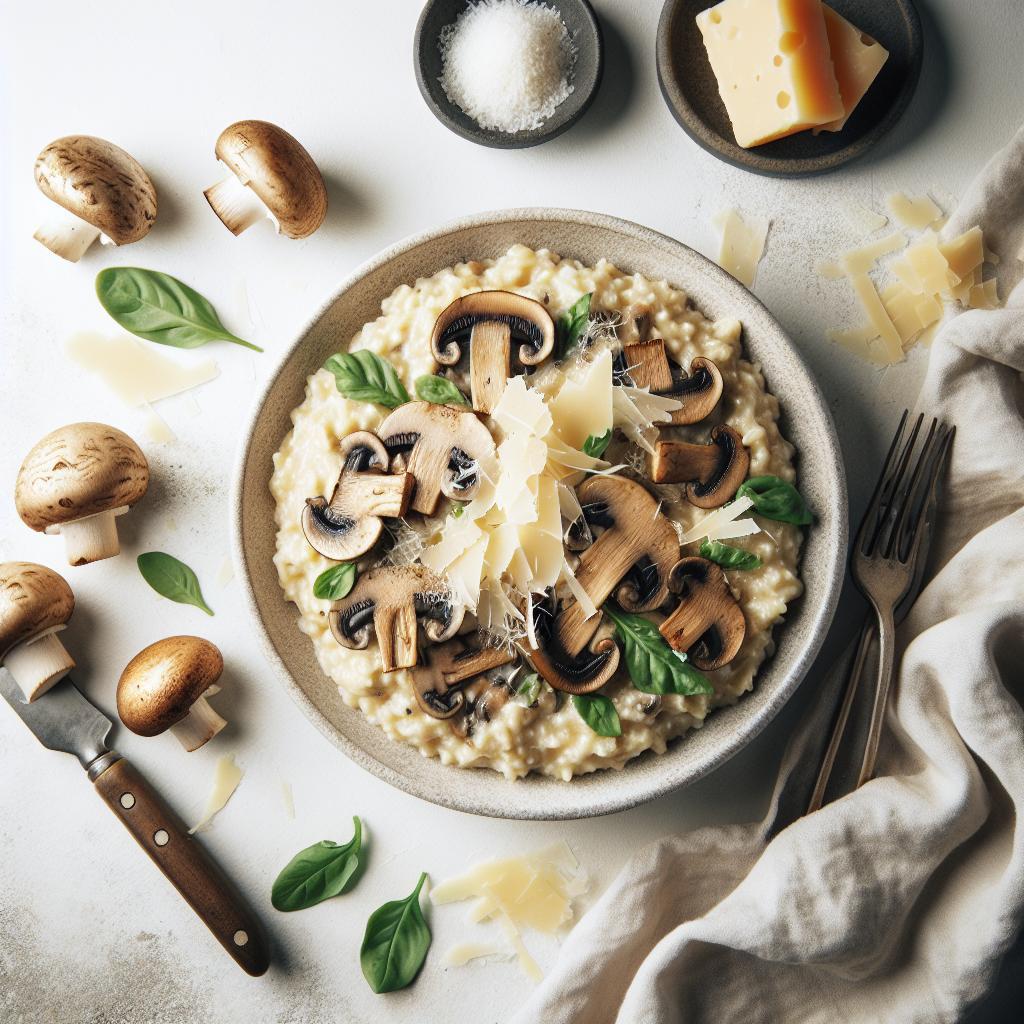
Stir vigorously off-heat to create a glossy sauce that clings to each grain. The final texture should spread slowly when the pan tilts, indicating proper creaminess.
Serve immediately. Risotto loses its ideal texture as it cools, so time plating to coincide with service.
Technique Tips for Consistent Texture
Control heat across two vessels: a warm broth pot and a medium-heat cooking pan. Keep the broth at a gentle simmer to make ladling predictable and to maintain steady rice cooking.
Stir with intention. You do not need constant aggressive stirring; frequent, deliberate strokes release starch without breaking grains into glue.
Common texture issues
Gluey risotto usually results from over-stirring or adding too much liquid too fast. Keep a steady rhythm and taste often in the last minutes.
Broken grains from rough stirring will give a pasty mouthfeel. Use a wide spoon and smooth, controlled movements to avoid crushing rice.
Chef’s Notes
Small disciplined steps produce the classic risotto mouthfeel: glossy, clingy, and slightly fluid. Taste often in the final minutes to judge doneness.
Switch mushroom varieties seasonally. Wild chanterelles or morels add aroma and complexity when available; factory-stable options like cremini provide reliable texture.
Variations and Dietary Swaps
For a richer finish, fold in a small amount of cream or mascarpone off-heat. For dairy-free, replace butter with olive oil and use a reputable vegan Parmesan substitute or nutritional yeast.
Adjust salt carefully when using vegan cheese substitutes, since their sodium levels vary. Finish with acid—lemon or a splash of vinegar—to lift the flavors.
Serving Suggestions
Serve risotto in shallow bowls so the glossy texture shows. Garnish with shaved Parmesan and a small herb sprig to add visual contrast.
Pair the dish with a light, unoaked white wine or a simple green salad to balance earthiness. For a composed meal, add roasted seasonal vegetables on the side.
Nutrition Snapshot
This dish delivers moderate calories, with carbohydrates from rice and protein from cheese. Adjust fat by reducing butter and olive oil for a lighter plate.
Portion control and accompaniments change the nutritional profile. Add a side salad to boost fiber and vegetable intake for balance.
| Nutrient | Per Serving |
|---|---|
| Calories | 380 kcal |
| Protein | 12 g |
| Carbohydrates | 48 g |
| Fat | 14 g |

Practical FAQ
Quick, actionable answers for the common technique and substitution questions cooks ask while preparing risotto.
Each reply focuses on steps you can apply immediately in the kitchen for a better final result.
What rice should I use for the creamiest risotto?
Use short-grain rice high in amylopectin such as Arborio for predictable starch release. Carnaroli tolerates longer cooking and resists overcooking if you prefer a firmer bite.
See the rice characteristics at Arborio rice for technical notes.
Why does my risotto become gluey or too soft?
Gluey texture usually comes from over-stirring or adding too much liquid at once. Maintain a steady rhythm and add broth in measured ladles to control starch extraction.
Also avoid breaking grains by stirring roughly; gentle, frequent strokes are more effective than aggressive scraping.
How do I get deep mushroom flavor without overpowering the rice?
Sear mushrooms separately at higher heat until they brown and their juices concentrate. Fold them in near the end to preserve texture and prevent dilution of the risotto.
Reserve a spoonful of mushroom pan juices for extra umami if you want more depth without stewing the rice.
Can I make this risotto ahead for guests?
Risotto serves best immediately, but you can par-cook the rice to 70–80% doneness, cool quickly, and finish before serving. Reheat with hot broth and finish with butter and cheese just prior to plating.
For large gatherings, finish off-heat in a warm pan while guests arrive so the texture remains at its best at service.
What are simple substitutions for a dairy-free version?
Replace butter with olive oil and use a quality vegan Parmesan or nutritional yeast for savory depth. Stir in a touch of plant-based cream at the end for richer mouthfeel.
Taste as you go—vegan cheeses vary in salt content, so adjust seasoning gradually to avoid oversalting.
Learn more on CookHarvest: visit the CookHarvest home or browse the mushroom risotto tag for related recipes and technique articles.
Mastering mushroom risotto is a practice in control: consistent heat, measured liquid, and warm finishing ingredients produce a reliable, silky result. Apply these seven pro techniques and refine them with each cooking session to reach dependable restaurant-style texture and flavor.
Recommended Reading:
- 7 Pro Tips for the Ultimate Hearty Chicken Casserole
- Savor Every Bite: 7 Expert Garlic Butter Steak Bites Tips
- Buttery Bliss: 7 Expert Steps to Master Creamy Cheesy Grits