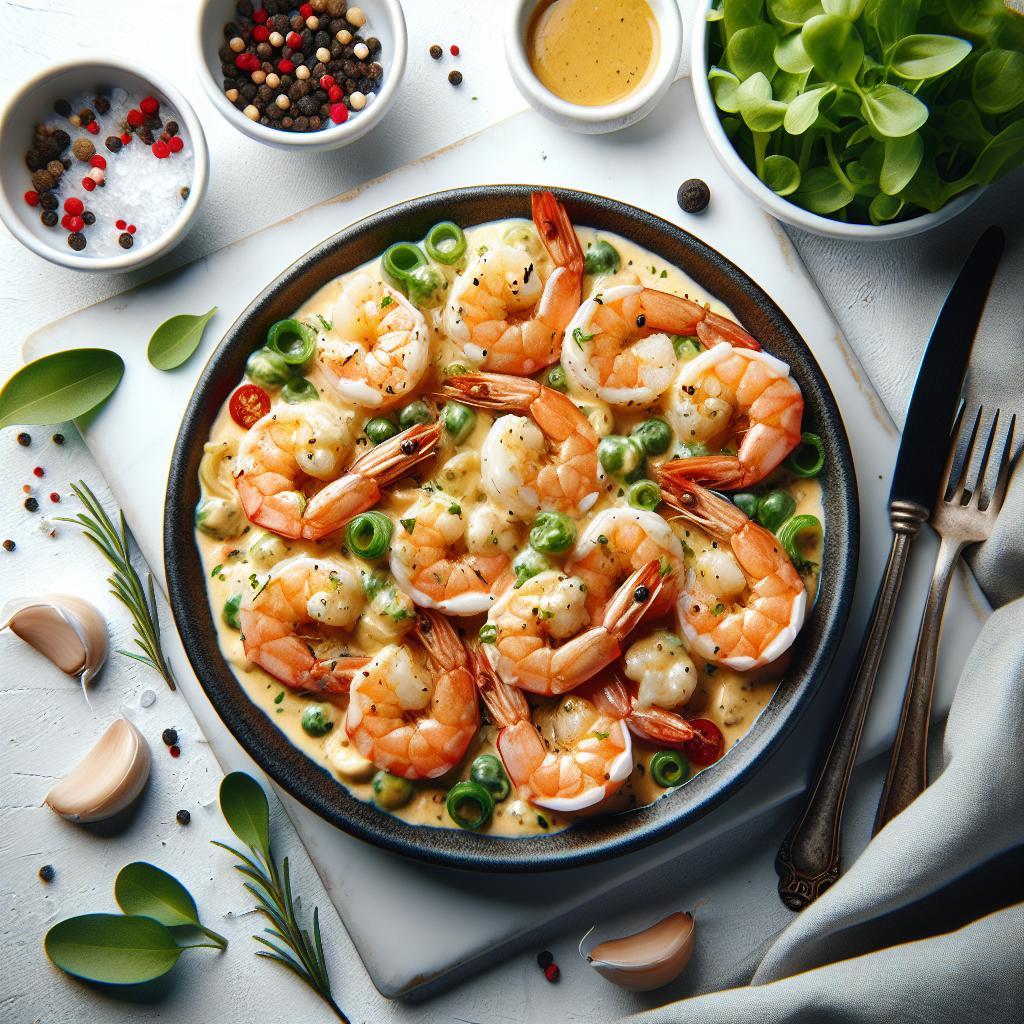

Savor the flavor when tender shrimp meet a velvety garlic cream sauce. This recipe prioritizes precise technique: quick searing, controlled heat, and balanced seasoning produce a restaurant-quality plate you can finish at home.
- Fast cooks: Ready in about 25 minutes from start to finish.
- Texture-first: Sear shrimp quickly to lock in moisture and prevent rubberiness.
- Balanced sauce: Use cream, acid, and cheese to create smooth richness without heaviness.
- Flexible sides: Serve over pasta, rice, or vegetables for different meals.
Intro to Creamy Garlic Shrimp
This dish showcases two simple stars: shrimp and garlic. When you handle both with attention to time and temperature, you get a silky sauce and plump seafood every time.
The technique blends quick high-heat searing and a gentle simmer for the sauce. With minimal ingredients, you can still build layers of flavor through seasoning and finishing touches.
Prep and Cook Time
Preparation Time: 15 minutes. Prepare mise en place: peel and devein shrimp, mince garlic, grate cheese, and have cream and lemon ready.
Cook Time: 10 minutes. Searing shrimp takes only minutes; the sauce needs a short simmer to thicken and emulsify with cheese.
Yield and Difficulty
Yield: Serves 4. This portion works well over 12–16 ounces of pasta or two cups of cooked rice for family-style plating.
Difficulty: Medium. The most technical parts are timing shrimp cook and temperature control for garlic and cream. With practice you gain confidence fast.
Ingredients
Use the freshest, highest-quality ingredients you can source. Fresh shrimp and freshly grated cheese make a measurable difference in texture and flavor.
Core ingredients (serves 4): 1 lb large shrimp, 4 tbsp unsalted butter, 6 cloves garlic (minced), 1 cup heavy cream, 1/2 cup freshly grated Parmigiano-Reggiano, 1 tsp smoked paprika, 1/2 tsp crushed red pepper (optional), salt and freshly ground black pepper, 2 tbsp chopped fresh parsley, juice of 1/2 lemon, cooked linguine or jasmine rice for serving.
For background reading on shrimp biology and sourcing, see shrimp. For garlic science and varieties, consult garlic.
Kitchen Tools and Setup
Use a heavy skillet or stainless-steel pan that holds heat evenly. A microplane and a set of tongs speed the process and keep things tidy.
Keep all ingredients at hand before you heat the pan. Once the skillet goes on medium-high, the sequence moves quickly and you need to act with confidence.
Instructions
Step 1 — Prepare the shrimp: Pat shrimp very dry with paper towels. Dryness ensures a clean sear instead of steaming.
Season sparingly with salt, pepper, and a light dusting of smoked paprika for subtle warmth. Let seasoned shrimp rest while you heat the pan.
Sear the shrimp
Heat 2 tablespoons of butter in a large skillet over medium-high heat until it foams. Add shrimp in a single layer; do not crowd the pan.
Sear shrimp 2 minutes per side until pink and slightly golden. Transfer to a plate; residual carryover will finish cooking them later without toughening the flesh.
Build the sauce
Lower the heat to medium and add the remaining 2 tablespoons of butter. Add minced garlic and sauté briefly to soften the raw edge but avoid browning; garlic turned brown becomes bitter.
Pour in heavy cream slowly while stirring. Simmer gently for 3–4 minutes to thicken slightly. Then whisk in freshly grated Parmigiano-Reggiano until the sauce becomes glossy and smooth.
Add crushed red pepper flakes if you want heat, then squeeze in lemon juice and fold in chopped parsley. Taste and adjust seasoning to balance richness with brightness.
Return shrimp to the skillet, tossing gently to coat in sauce. Heat for one to two minutes: the goal is to warm shrimp through, not to continue cooking them aggressively.
Serve: Plate shrimp over hot linguine or jasmine rice and spoon extra sauce over the top. Finish with a sprinkle of parsley and a few grinds of black pepper for contrast.
Allow the plate to rest 30 seconds before serving. This short pause lets the sauce settle and marry with the shrimp without losing heat.
Tips for Success: Mastering the Creamy Garlic Shrimp
Tip — choose shrimp by size and origin: Large shrimp (16/20 or 21/25 counts) hold up better to quick searing. Wild-caught often offers firmer texture, while responsibly sourced farmed shrimp can be sweet and consistent.
Heat control: Use medium-high for searing and medium for sauce. This approach prevents butter from burning and lets garlic release aromas without charring.
If you need a lighter sauce, replace half the heavy cream with low-sodium chicken stock; reduce quickly to concentrate flavor. Alternatively, use half-and-half but expect a thinner finish.
Serving Suggestions to Elevate Your Dish
Present the dish over al dente linguine or a bed of steamed jasmine rice to capture every drop of sauce. The starch you choose changes the meal profile: pasta for Italian-leaning comfort, rice for simpler, cleaner plating.
Pair with roasted asparagus or sautéed baby spinach for color and contrast. A squeeze of fresh lemon zest on the plated dish brightens the palate and cuts richness.
For pairing context on dairy and cheese, consult cream (dairy) and Parmigiano-Reggiano references to understand their flavor contribution to sauces.
Variation Ideas
Make the dish dairy-free by substituting full-fat coconut milk or cashew cream. Both provide richness but change the flavor profile; adjust seasoning accordingly.
Add seafood variety with scallops or chunks of firm white fish. Reduce cooking time for delicate proteins and always finish them gently in the sauce to preserve texture.
Nutrition and Timing
Per-serving nutrition for this recipe typically sits around 380 kcal with approximately 35 g protein, 8 g carbs, and 22 g fat, depending on portion sizes and substitutions used.
Cooking time remains quick: 15 minutes prep and 10 minutes cook. Because shrimp cook so fast, you minimize active stove time and can focus on quality finishing touches.
| Nutritional Info (per serving) | Calories | Protein | Carbs | Fat |
|---|---|---|---|---|
| Creamy Garlic Shrimp | 380 kcal | 35 g | 8 g | 22 g |

Common Mistakes and Quick Fixes
Overcrowding the pan is the most common mistake. When shrimp steam, they turn rubbery and release liquid that thins the sauce.
If your sauce breaks or looks grainy, lower the heat and whisk in a tablespoon of cold water or a small knob of butter off the heat. This simple technique re-emulsifies fats and smooths texture.
For method guidance on pan techniques, review resources on sautéing to understand heat, movement, and pan choice.
Q&A
What makes creamy garlic shrimp a standout dish?
Its contrast: quick-seared, tender shrimp paired with a rich, silky sauce flavored by garlic and cheese. The interplay of textures and bright finishing acid makes the dish memorable.
Which shrimp type works best?
Large, peeled, and deveined shrimp cook predictably. Choose shrimp labeled by count (e.g., 16/20) that match your desired texture and presentation.
How do I prevent garlic from burning?
Cook garlic on medium heat and add it after reducing the pan from high sear. Stir constantly and remove from direct high heat once it becomes fragrant.
Can I make this dairy-free?
Yes. Use full-fat coconut milk or a cashew cream for body. Expect a different flavor profile and adjust seasonings to maintain balance.
How do I keep shrimp tender?
Avoid overcooking. Remove shrimp from heat as soon as they turn opaque and pink; they will finish cooking gently when returned to the warm sauce.
Closing Remarks
Mastering creamy garlic shrimp revolves around pacing: fast, confident sears followed by slow, controlled sauce building. Each step contributes to a balanced plate that feels indulgent yet fresh.
With the techniques and tips here, you can reliably produce a glossy, flavorful sauce and succulent shrimp. Practice once or twice and the timing becomes second nature—then you can experiment with sides and variations to make the recipe your own.
FAQ
How long should I thaw frozen shrimp?
Thaw overnight in the refrigerator or quickly in a sealed bag under cold running water for 15–20 minutes. Pat completely dry before cooking to ensure a good sear.
Can I use pre-grated cheese?
Pre-grated cheese often contains anti-caking agents that prevent smooth melting. Freshly grated Parmigiano-Reggiano yields a silkier sauce.
What side dishes are best?
Al dente linguine, jasmine rice, roasted asparagus, or a simple green salad all pair well. Choose a side that will soak up the sauce and add complementary texture.
Is smoked paprika necessary?
Smoked paprika adds depth and subtle warmth, but you can omit it. Use a pinch of cayenne or regular paprika if you prefer a different heat profile.
How long will leftovers keep?
Store in an airtight container in the refrigerator for up to two days. Reheat gently over low heat to avoid breaking the sauce and to preserve shrimp texture.
See also: Garlic Shrimp