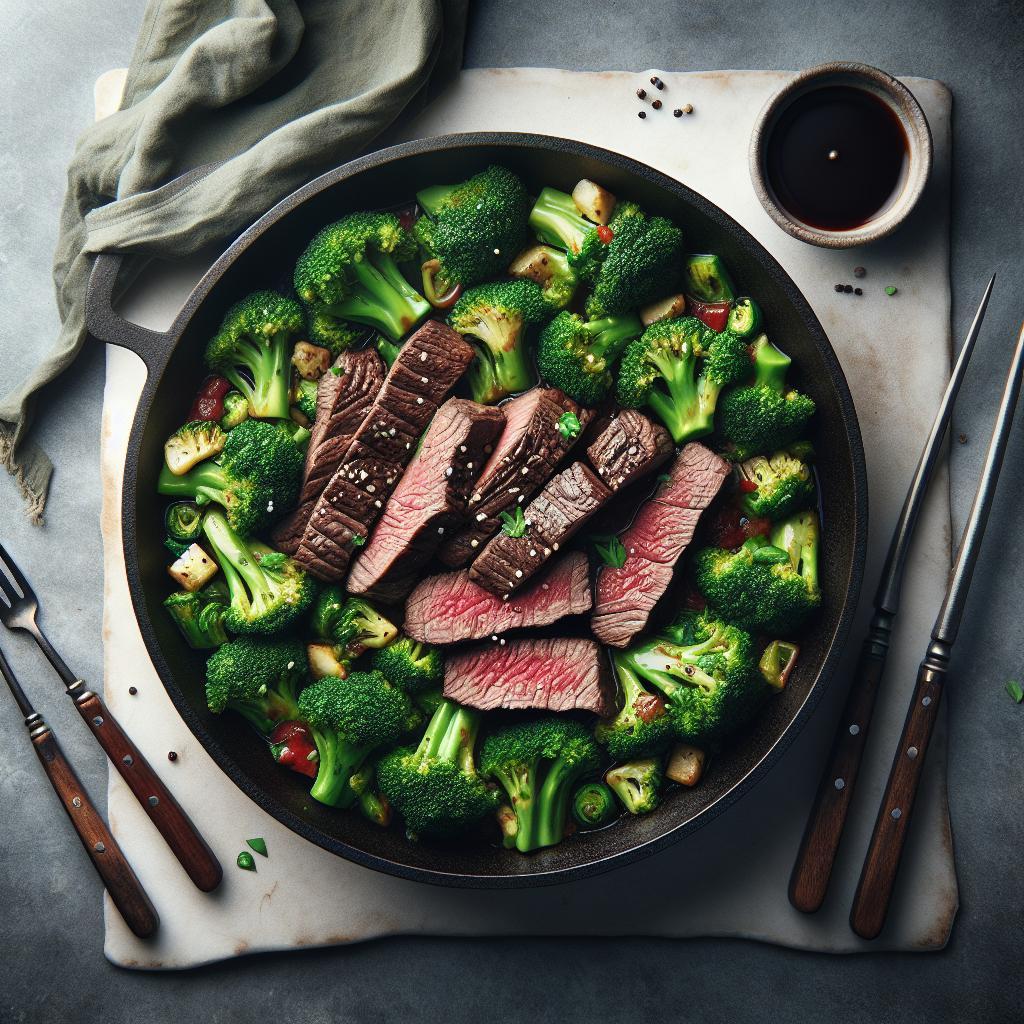

Beef Broccoli hits the weeknight sweet spot: fast, savory, and reliably textural. This easy beef and broccoli skillet recipe uses a short marinade and a glossy pan sauce to deliver restaurant-style results at home.
- Overview: Beef Broccoli Balance
- At a Glance
- Prep and Cook Time for Beef Broccoli
- Yield and Difficulty: Beef Broccoli Portions
- Ingredients for Beef Broccoli Skillet
- Instructions: 5-Step Beef Broccoli Method
- Tips for Success: Beef Broccoli Techniques
- Serving Suggestions
- Nutrition and Storage
- Variations and Beef Broccoli Substitutions
- Tools and Technique Notes
- Internal Resources
- FAQ
- Ready in about 27 minutes—fast prep and focused cooking.
- Tender, thin-sliced beef sears quickly and stays juicy.
- Crisp-tender broccoli keeps color and bite for texture contrast.
- One-skillet cooking minimizes cleanup and concentrates flavor.
Overview: Beef Broccoli Balance
This beef broccoli skillet balances savory, salty, and a touch of sweet to coat beef and broccoli with a glossy sauce. The core technique uses high-heat searing, deglazing, and a brief sauce reduction to concentrate flavor.
We apply quick sear and sauce-thickening practices derived from stir-fry technique to protect vegetable color and beef texture. For background on the technique, see stir-frying.
At a Glance
Key takeaways for fast success with this beef broccoli skillet.
- Prep fast: Slice the steak thin and measure the sauce.
- Staging matters: Cook broccoli first, then sear beef in batches.
- Finish glossy: Add a smooth cornstarch slurry at the end.
Prep and Cook Time for Beef Broccoli
Preparation: 15 minutes. Thinly slice the steak against the grain, grate fresh ginger, and measure sauces. Efficient mise en place prevents overcooking.
Cooking: 12 minutes. Work at medium-high to high heat: broccoli first, then beef, then sauce. Total time is about 27 minutes from start to plate.
Yield and Difficulty: Beef Broccoli Portions
Servings: Four hearty portions. This yield works for a family dinner or batch-prep lunches. Cool and store leftovers in airtight containers for up to 3–4 days in the refrigerator.
Skill Level: Easy. Basic knife work and pan control suffice. This recipe reinforces practical skills: searing, deglazing, and slurry thickening that transfer to many skillet dishes.
Ingredients for Beef Broccoli Skillet
Choose a lean, quick-cooking cut of beef and vibrant broccoli. Keep the marinade focused so each ingredient enhances the umami profile.
Gather components before you begin to streamline the cook sequence and avoid overcooking. Slice beef thin across the grain and trim broccoli into uniform florets for even cooking.
- 12 oz flank or skirt steak, thinly sliced against the grain
- 4 cups fresh broccoli florets
- 3 tbsp low-sodium soy sauce
- 2 tbsp oyster sauce
- 1 tbsp toasted sesame oil
- 1 tbsp freshly grated ginger
- 2 garlic cloves, minced
- 1 tsp brown sugar
- 1/2 cup beef broth or stock
- 1 tbsp cornstarch mixed with 2 tbsp cold water (slurry) — use cornstarch for glossy thickness
- 2 tbsp neutral oil for cooking
- Optional: sesame seeds and sliced green onions for garnish
Instructions: 5-Step Beef Broccoli Method
Follow a staged approach: marinate, sear, deglaze, thicken, and finish. Staging keeps broccoli crisp and beef juicy while concentrating flavors in the pan sauce.
Use a wide, hot skillet to encourage browning rather than steaming. Avoid crowding the pan; brown in batches when necessary for consistent caramelization.
Step 1: Prepare the marinade
Whisk soy sauce, oyster sauce, sesame oil, grated ginger, minced garlic, and brown sugar until combined. Pour over sliced beef, toss to coat, and refrigerate for at least 10 minutes; up to 1 hour intensifies flavor without over-tenderizing.
If you want a deeper savory note, reserve a tablespoon of the marinade and add it to the sauce slurry at the end. This concentrates umami without compromising texture.
Step 2: Cook the broccoli
Heat 1 tbsp oil in a large skillet over medium-high heat. Add broccoli and sauté for 4–5 minutes until bright and slightly crisp; remove and hold to avoid overcooking.
For predictable results in busy kitchens, par-cook florets briefly by blanching or steaming, then refresh in the pan. That two-step approach preserves color and speeds final assembly.
Step 3: Sear the beef
Add remaining oil and raise heat to high. Arrange marinated beef in a single layer and sear 2–3 minutes, stirring or flipping quickly until browned. Thin slices cook fast and stay tender when removed promptly.
Work in batches to avoid steam buildup. Use a heavy-bottom skillet or cast iron for steady heat; thinner pans can spike temperature and burn sugars in the marinade.
Step 4: Build the sauce
Lower heat to medium-high and pour in beef broth, scraping the pan bottom to lift fond. Return broccoli to the skillet and stir to combine, redistributing flavors evenly across the pan.
A smooth sauce forms when the liquid carries browned bits from the pan. If you cook at too high a boil, reduce the heat before adding the slurry to prevent cloudiness.
Step 5: Thicken and finish
Stir the cornstarch slurry into the skillet and simmer 1–2 minutes until the sauce turns glossy. Remove from heat, garnish, and serve immediately to capture ideal texture contrasts.
Serve over steamed jasmine rice or cauliflower rice to absorb the sauce. Garnish with sesame seeds and sliced green onions; add chili oil for a spicy lift.
Manage broccoli texture by par-cooking if you prefer more predictable results. Toss par-cooked florets in hot oil for a minute to refresh surface texture and color before final saucing.
Tips for Success: Beef Broccoli Techniques
Slicing against the grain shortens muscle fibers and improves tenderness. Use a sharp knife and chill the meat briefly for firmer texture and cleaner, thinner slices.
Work with high, even heat and keep ingredients moving. That approach creates fond on the beef, which the liquid lifts into a concentrated pan sauce for better flavor adherence to broccoli and rice.
Serving Suggestions
Serve the beef broccoli skillet over steamed jasmine rice to capture every ounce of sauce. Rice or another neutral grain soaks up the glossy sauce and balances salt and fat.
For a lower-carb plate, choose cauliflower rice. Garnish with toasted sesame seeds and thinly sliced green onions for aroma and visual contrast. Add sliced chilies for those who prefer heat.
Nutrition and Storage
Per-serving nutrition shifts with cut choice and oil amounts. A lean flank portion with measured oil usually produces a protein-forward plate with moderate fat and controlled carbs coming from the sauce and broccoli.
Store cooled leftovers in airtight containers for up to 3–4 days. Reheat gently on low heat with a splash of water or broth to avoid overcooking the broccoli and to restore sauce consistency.
| Nutrition Facts (per serving) | Amount |
|---|---|
| Calories | 320 kcal |
| Protein | 35 g |
| Carbohydrates | 14 g |
| Fat | 12 g |
Variations and Beef Broccoli Substitutions
Swap steak for thin-sliced chicken breast or firm tofu for a different protein profile. Adjust cook times: chicken needs full cooking through, and tofu benefits from pressing and a crisp sear.
To cut sodium, use low-sodium soy sauce or tamari and boost umami with a small amount of mushroom powder. Reduce brown sugar and cornstarch to suit dietary needs without losing sauce body.
Tools and Technique Notes
A heavy skillet or well-seasoned cast iron gives predictable heat retention and browning. Nonstick pans can work, but they won’t develop the same fond for sauce flavor development.
Use a wide pan for even contact and avoid crowding. If smoke becomes excessive, lower the heat slightly and work in smaller batches to maintain control.
Internal Resources
For more on high-heat pan technique, see our guide to Quick stir-fry techniques. It explains surface moisture control, batch cooking, and timing for vegetables.
For marinade fundamentals and safe timing, consult our Marinade basics and timing page. It outlines acid balance, salt levels, and when to reserve versus use marinade.
FAQ
Q1: What cut of beef gives the best texture for beef broccoli?
Use flank or skirt steak for quick cooking and robust flavor. Slice thinly against the grain to shorten muscle fibers and maximize tenderness.
Q2: How do I keep broccoli bright green and crisp?
Cook broccoli until just crisp-tender and shock briefly if needed. A quick high-heat pan toss before serving restores color and texture without overcooking.
Q3: Can I make this beef broccoli recipe gluten-free?
Yes. Swap regular soy sauce for a certified gluten-free tamari and verify all condiments. Cornstarch naturally contains no gluten and works well for thickening.
Q4: How should I reheat leftovers to preserve texture?
Reheat gently over low heat in a skillet with a splash of water or broth to steam and separate pieces. Microwaving in short bursts with stirring also avoids rubbery beef.
Q5: What causes a gummy or cloudy sauce, and how do I fix it?
A gummy sauce typically results from overcooked cornstarch or adding a cold slurry to a vigorous boil. Mix the slurry smoothly and add it while the sauce simmers; cook briefly until glossy.
Combining straightforward technique with measured ingredients yields consistent weeknight results. This beef broccoli skillet rewards small adjustments and encourages confident, repeatable cooking.

See also: Beef Broccoli
Relevant references for technique and ingredients: oyster sauce, cooking oil, and rice.
See also: Beef Broccoli