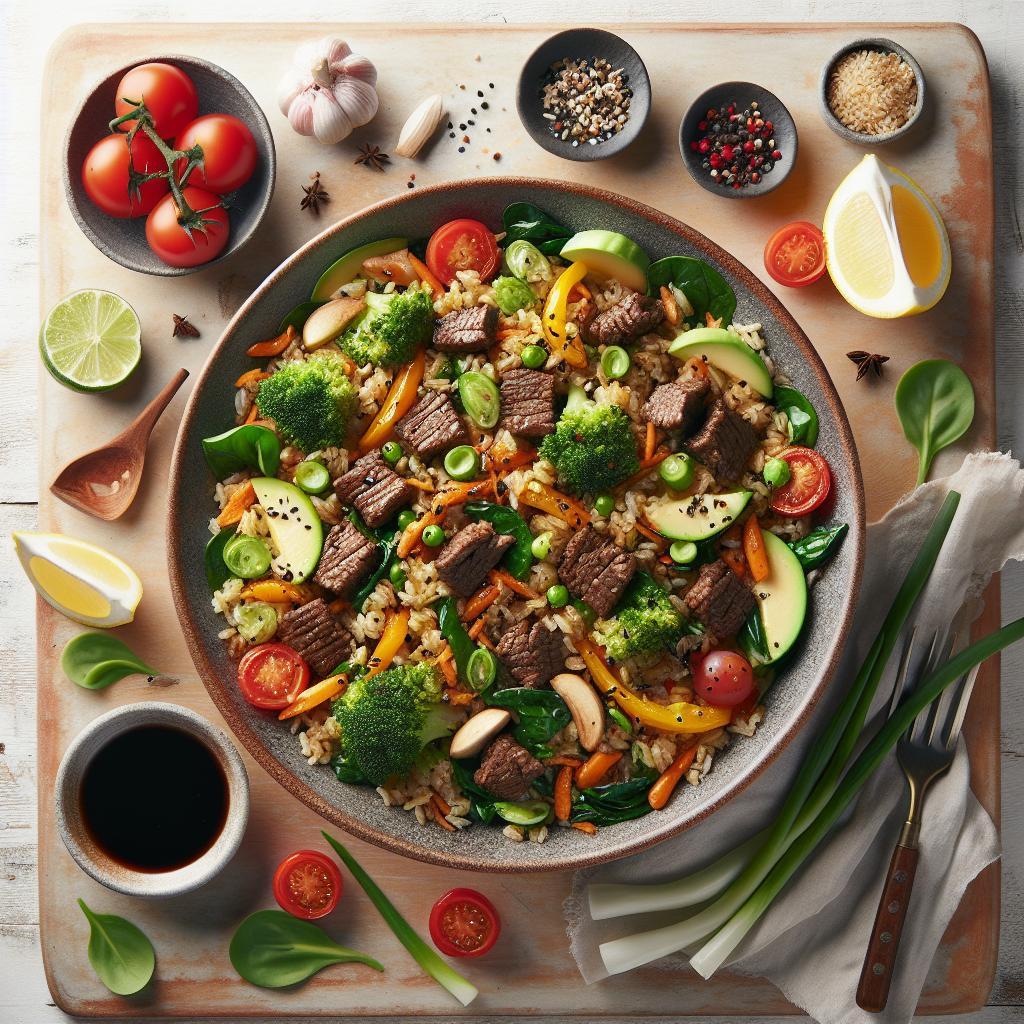

Beef fried rice delivers bold umami, crisp-tender vegetables, and a satisfying textural contrast when you get temperature and timing right. This recipe focuses on technique so you can reproduce restaurant-quality results at home without complicated tricks.
- Use day-old jasmine rice for better texture and separation.
- Sear beef quickly at very high heat to lock in juices and flavor.
- Stagger ingredients to preserve each element’s texture.
- Finish with toasted sesame oil for aroma and balance.
Prep and Cook Time
Plan ahead: most of the time is passive chilling for the rice and brief marinating for the meat. Active stove time stays short if mise en place is complete.
Prep Time: 20 minutes | Cook Time: 15 minutes | Total Time: 35 minutes
Yield
This recipe produces a hearty main course for four people when served with modest sides. You can scale quantities linearly for larger pans or crowds.
Serves: 4 generously
Difficulty Level
Expect a medium skill level: you must control high heat, slicing, and timing. However, straightforward technique beats complicated steps.
If you know basic pan skills and can multitask, you will execute this dish consistently. The payoff is big flavor for relatively little effort.
Ingredients
Gather everything before you heat the pan; stir-frying moves fast. Measure sauces, dice vegetables, and slice the beef thinly to ensure even cooking.
We recommend jasmine rice for its aroma and grain structure. See the jasmine rice entry for varietal notes and storage tips.
- 2 cups jasmine rice, cooked and chilled overnight
- 12 oz beef sirloin or ribeye, thinly sliced against the grain
- 3 tablespoons neutral oil (vegetable or avocado), divided
- 2 large eggs, lightly beaten
- 1 cup diced carrots
- 3/4 cup frozen peas, thawed
- 4 green onions, sliced thinly
- 4 cloves garlic, minced
- 1-inch piece fresh ginger, finely grated
- 3 tablespoons soy sauce (low sodium preferred)
- 1 tablespoon oyster sauce (optional)
- 1 teaspoon toasted sesame oil
- Salt and freshly ground black pepper, to taste
- Red chili flakes, optional for heat
Instructions
Set your wok or largest skillet on the stove and preheat well. Having a hot pan and everything prepped prevents steaming and produces optimal browning.
As you work, keep ingredients in small batches and return items to the pan only to reheat. This approach preserves texture and temperature throughout the dish.
Prepare the Beef
Pat beef slices dry to remove surface moisture; moisture interferes with browning. Thin, even slices cut across the grain deliver tenderness when seared quickly.
Season lightly with salt and pepper. If you prefer, marinate up to 30 minutes in a simple mixture of soy sauce and a pinch of sugar for added depth.
Stir-Fry Sequence
Use a high-heat sequence: sear beef, set aside, scramble eggs, then cook aromatics and vegetables before adding rice. This order gives each component its ideal texture.
When combining, return beef and eggs at the end, toss with sauces, and let the rice develop a light crust for flavor contrast and mouthfeel.
- Sear the Beef: Heat 1 tablespoon oil over high heat until shimmering. Add beef in a single layer and sear 1–2 minutes per side until caramelized. Remove and rest.
- Scramble Eggs: Add a touch more oil, pour in beaten eggs, and stir to soft curds. Remove when just set.
- Sauté Aromatics: Lower heat slightly, add remaining oil, then garlic and ginger. Sauté 30 seconds until fragrant but not browned.
- Cook Vegetables: Add carrots and stir 2–3 minutes. Add peas and green onion whites, and cook until vegetables are tender-crisp.
- Add Rice: Break up chilled rice and add to pan. Stir-fry 4–5 minutes to warm and allow surface moisture to evaporate.
- Season and Combine: Return beef and eggs. Drizzle soy sauce, oyster sauce (optional), and sesame oil. Toss briskly to combine and heat through.
- Finish: Let the pan rest 30–60 seconds to form a slight crust, then toss once more. Adjust seasoning and serve immediately.
Tips for Success
High heat and timing beat complexity. A hot pan creates the Maillard browning that gives beef and rice that savory, toasty character.
For details on the chemistry of browning during searing, see Maillard reaction. Use this knowledge to avoid overcooking while maximizing flavor.
Keep the rice cold; refrigeration firms the grains and reduces steam. If your rice clumps, use a fork or fingers to separate before stir-frying.
Use a heavy, well-seasoned wok or a large stainless skillet. A roomy surface area allows ingredients to contact the hot metal and develop those prized charred bits.
Serving Suggestions
Serve hot, garnished with sliced green onions and a final drizzle of sesame oil. Offer crushed peanuts or roasted cashews for crunch and contrast.
Pair with simple sides like steamed bok choy or a light cucumber salad to balance richness. For flavor variation, finish with chopped cilantro or Thai basil.
Nutritional Info (Per Serving)
This dish balances protein and carbohydrates and provides a moderate fat content depending on oil choice. Adjust portions for dietary needs.
Use leaner beef cuts or reduce oil for lower calories. Here are approximate values based on the recipe below.
| Nutritional Info (Per Serving) | Amount |
|---|---|
| Calories | 475 kcal |
| Protein | 32 g |
| Carbohydrates | 50 g |
| Fat | 14 g |

The tools and ingredients you choose shape the final result. For example, using a proper wok and a neutral oil with a high smoke point helps you deliver even searing and clean flavor. Learn more about the traditional pan used for stir-frying at wok.
When seasoning, a small amount of oyster or mushroom sauce can add umami. For background on common flavoring ingredients, review the soy sauce topic for varieties and salt profiles.
FAQ
What makes beef fried rice better than plain rice?
Beef fried rice layers savory, textural, and aromatic elements. The seared beef and toasted rice surfaces add depth while aromatics like garlic and ginger provide brightness.
Additionally, contrasting textures from vegetables and eggs make each bite multidimensional, which plain rice cannot deliver on its own.
Which cut of beef should I use?
Choose quick-cooking, tender cuts such as sirloin, flank steak, or ribeye. Slice very thin across the grain to minimize chew and maximize tenderness.
Trim excess fat for cleaner bites, but leave some marbling to carry flavor under high heat.
Why use day-old rice?
Chilled rice dries slightly, separating grains and preventing the sticky, mushy texture that fresh rice can create when stir-fried. This step preserves a light, fluffy structure.
If pressed for time, spread hot rice on a tray and chill briefly to remove surface steam before frying.
Can I make this vegetarian?
Yes. Substitute beef with sliced shiitake or portobello mushrooms and add tofu or tempeh for protein. Use mushroom-based sauces to maintain savory depth.
Adjust cooking times to preserve mushroom texture and avoid over-softening vegetables.
How do I reheat fried rice without losing texture?
Reheat in a hot pan with a teaspoon of oil and stir constantly until heated through. High heat helps evaporate any residual moisture and revives grain separation.
Reheating in a microwave can work, but it risks sogginess; a pan method more closely restores the original texture.
See also: beef fried rice