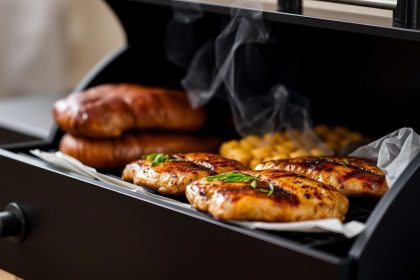
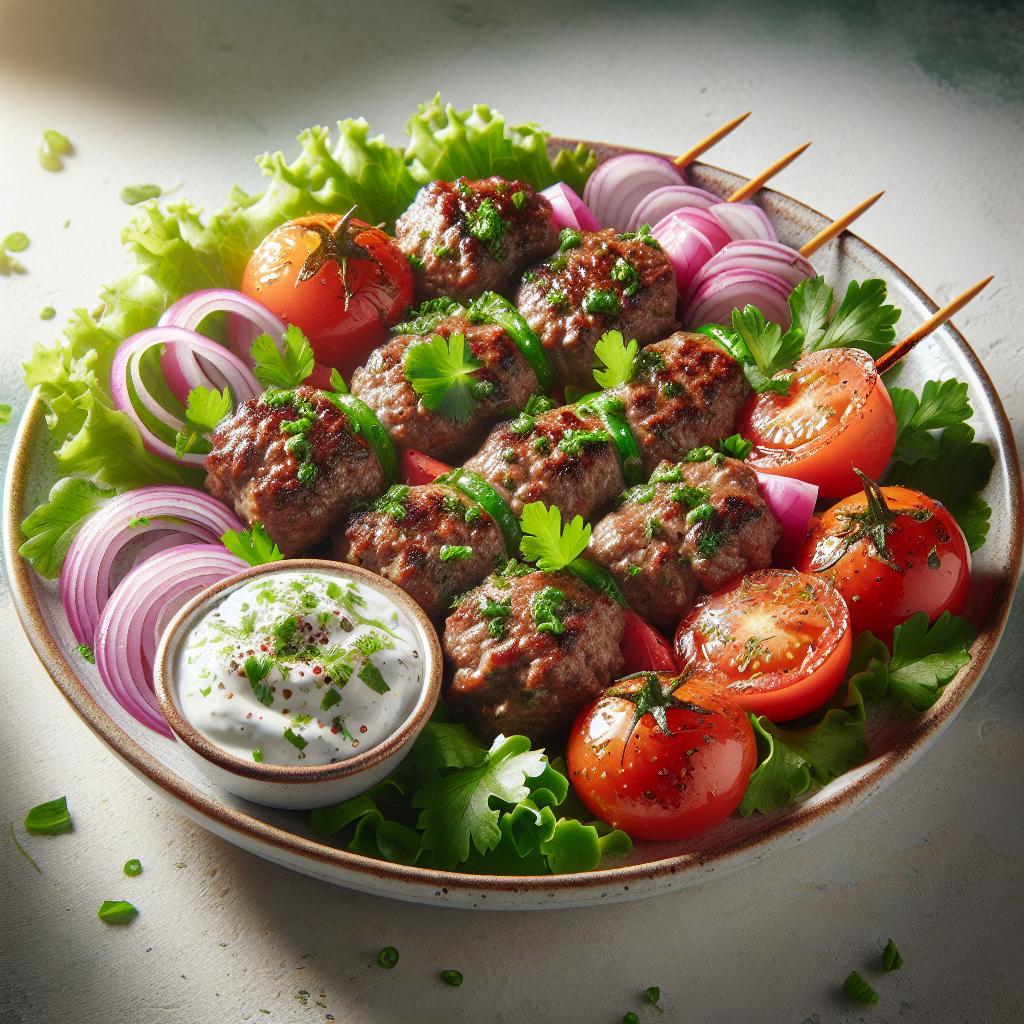

There’s a sizzling story behind every skewer of beef kofta kebabs—fragrant spices, tender ground beef, and high-heat finishing that create a memorable bite.
- Balance texture and fat: aim for 15–20% fat for juiciness and binding.
- Spice architecture: layer warm spices with fresh herbs for bright, rounded flavor.
- Heat control: sear over medium-high, then finish over moderate heat for even doneness.
Crafting the Perfect Blend: The Essential Spices and Ingredients for Authentic Beef Kofta Kebabs
Start with quality ground beef and a precise spice mix to get authentic kofta flavor. Use fresh parsley and cilantro for brightness and warming spices like cumin and allspice for depth.
Combine aromatic textures and binding techniques for kebabs that hold on the skewer without becoming dense. For background reading on the dish’s basics, see Kofta on Wikipedia.
Prep and Cook Time
Plan for a short active prep and a longer chill to let flavors meld. Resting the shaped kofta solidifies the mixture and reduces breakage on the grill.
Typical timing fits a family meal: 20 minutes prep, 60 minutes chill, and 12–15 minutes cooking for eight skewers.
- Preparation: 20 minutes
- Chilling Time: 1 hour (recommended)
- Cooking: 12–15 minutes
- Total: ~1 hour 35 minutes
Yield
Recipe yields roughly eight medium-sized kebabs, serving four people comfortably. Scale ingredients to suit larger gatherings or meal prep.
Portion control helps: each skewer should contain about 60–70g of meat for even cooking and consistent results.
Difficulty Level
Intermediate cooks will excel here, especially those comfortable with hand-mixing and managing grill heat. The technique rewards careful attention.
Mastering simple details like chilling and shaping makes a big difference in the final texture and appearance.
Ingredients
Use fresh, aromatic ingredients and accurate spice measurements for reproducible results. The list below is a reliable baseline for classic beef kofta.
Swap small elements to suit local taste, but keep the fat content and herb-to-spice balance intact for best texture.
- 500g lean ground beef (about 80–85% lean)
- 1 small onion, finely grated
- 3 cloves garlic, minced
- 1/2 cup fresh parsley, finely chopped
- 2 tbsp fresh cilantro, finely chopped
- 1 tsp ground cumin
- 1/2 tsp ground allspice
- 1/2 tsp ground cinnamon
- 1/4 tsp chili flakes (optional)
- 1 tsp smoked paprika
- 1 tsp salt
- 1/2 tsp black pepper, freshly ground
- 1 tbsp olive oil (plus more for grilling)
- Metal or soaked wooden skewers
Instructions
Follow a disciplined process: mix gently, shape carefully, chill, then grill with controlled turns. Each step protects moisture and builds flavor.
Handle the meat as little as necessary and keep it cold until it hits the heat to prevent toughness and shrinkage.
- Prepare the beef mixture: In a large bowl, combine beef, grated onion, garlic, parsley, cilantro, and spices. Add olive oil to help bind. Mix gently until homogeneous but avoid overworking.
- Shape the kofta: Divide into eight portions. Wet hands and form around skewers into slightly flattened sausages for even grilling.
- Chill before grilling: Arrange skewers on a tray, cover, and refrigerate at least 1 hour to firm the mixture and improve cohesion.
- Preheat the grill: Bring the grill to medium-high and oil the grates. On a stovetop, use a heavy grill pan over medium-high heat.
- Grill the kofta: Cook 6–7 minutes per side, turning every 2–3 minutes. Aim for even char and internal temperature around 70°C (160°F) for ground beef.
- Rest: Remove from heat and rest 5 minutes to let juices redistribute before serving.
Use an instant-read thermometer to check doneness and avoid overcooking. Temperature control yields consistent texture and food-safety compliance.
For indoor cooking, sear in a grill pan and finish in a hot oven to replicate outdoor high-heat conditions.
Chef’s Notes and Tips for Success
Small adjustments change outcomes dramatically: a finely grated onion boosts moisture while minimal mixing preserves tenderness. Listen to texture cues when shaping.
Binding agents like breadcrumbs or egg work, but traditional kofta often relies on meat fat and chilling for cohesion. Test a small patty before shaping all skewers.
Rotate skewers frequently to develop even grill marks and avoid charring the exterior while the center cooks through. Keep a spray bottle of water handy for flare-ups.
If the mixture feels too loose, add a small spoonful of breadcrumbs. Avoid adding too much filler to keep the meat’s primary flavor front and center.
For smoky depth, briefly toast whole spices before grinding. This step releases essential oils and enhances aroma without changing the ingredient list.
Serving Suggestions
Present kofta over fragrant rice, inside warm flatbread, or plated with a refreshing yogurt dip. Texture contrast matters: crisp salad offsets juicy meat.
Pair with classic condiments such as tahini or a cucumber-yogurt sauce. For background on these condiments, see Tahini on Wikipedia and Basmati rice on Wikipedia.
Bright garnishes like pomegranate seeds and fresh mint add a flavor lift and visual appeal. Serve grilled vegetables or a parsley-forward salad for balance.
When wrapping in pita, brush bread with olive oil and warm briefly for pliability and added aroma.
| Nutrient | Per Serving |
|---|---|
| Calories | 320 kcal |
| Protein | 28 g |
| Carbohydrates | 4 g |
| Fat | 20 g |
Unlocking Regional Variations: Exploring Flavor Profiles and Cooking Styles Across Cultures
Kofta adapts gracefully across regions. The same technique appears throughout the Middle East, South Asia, and North Africa with local spices and cooking methods.
Learn more about the culinary contexts that shaped kofta and related dishes in Middle Eastern cuisine on Wikipedia and apply those flavor cues to your own kitchen.
Persian variants might add saffron or rose water for aromatic notes, while Indian styles include garam masala and coriander. Turkish versions emphasize sumac and yogurt accompaniments.
Try regional permutations incrementally: change one spice at a time to understand how it shifts the overall profile and texture.
FAQ
What exactly are beef kofta kebabs?
Beef kofta kebabs are spiced minced-beef kebabs shaped on skewers and grilled or pan-seared. They combine warm spices and fresh herbs to create a layered savory profile.
The format includes variations across many cuisines, where technique and spice balance define regional identity.
How do koftas differ from meatballs?
Kofta relies on spice architecture and a specific texture: tender but firm enough to stay on a skewer. Meatballs often use binders and sauces and vary in density.
Kofta usually highlights cumin, allspice, and fresh parsley rather than heavy breadcrumb- or milk-based binders.
Can I make kofta without a grill?
Yes. Sear in a hot grill pan, then finish in a 200°C (400°F) oven for 5–10 minutes if needed. Alternatively, pan-fry in batches for an evenly browned crust.
Slow-cooking in tomato-based sauces transforms kofta into comforting stews if you prefer softer textures.
What’s the best beef for kofta?
Choose ground beef with 15–20% fat for balance. Freshly ground chuck or brisket blends offer flavor and binding without excessive moisture loss.
Purchasing from a trusted butcher and asking for a coarse grind can improve texture and mouthfeel.
How should I store leftovers?
Refrigerate cooled kofta in an airtight container up to 3 days. Reheat gently in a skillet with a splash of water or in a low oven to preserve juiciness.
Avoid microwaving if possible, as that method tends to dry the meat and toughen the texture.
See also: beef kofta