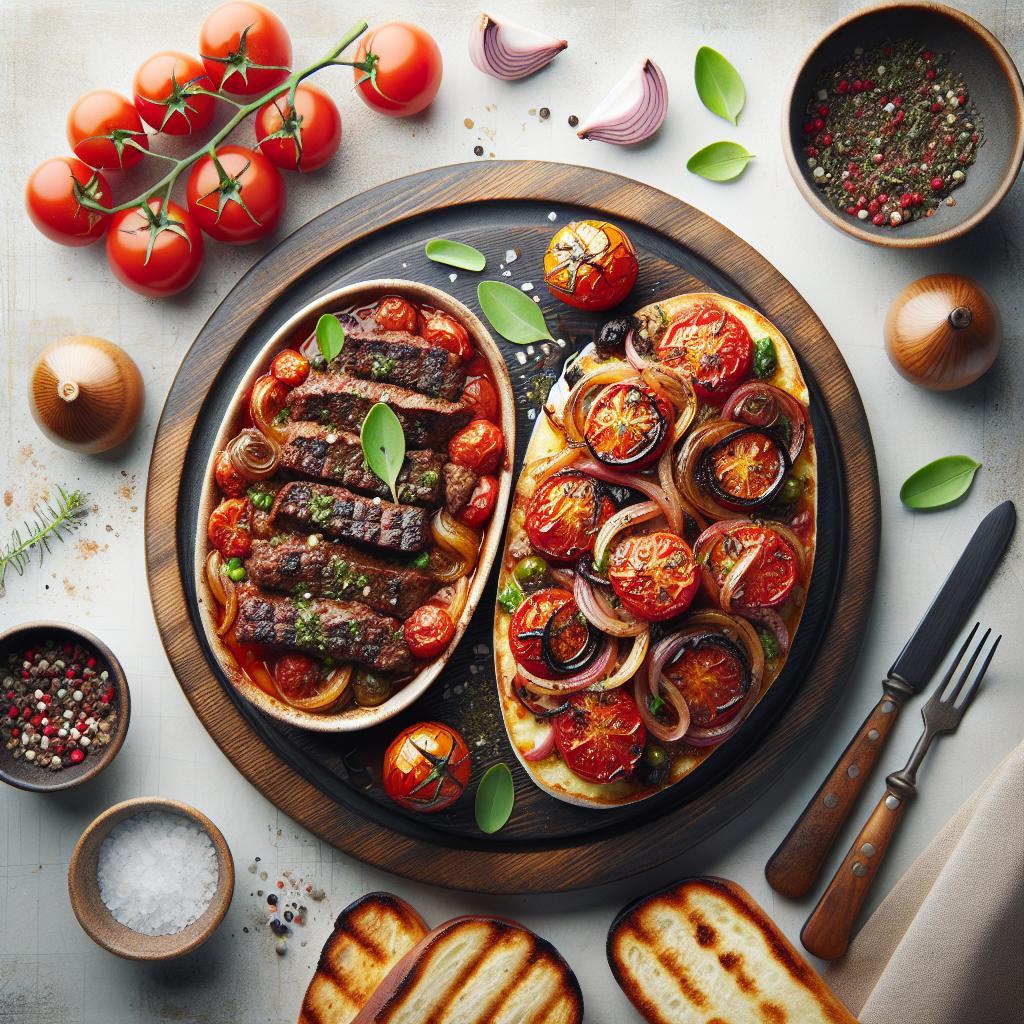

Savor the Flavors: Beef Moussaka & Roasted Tomato Bruschetta pairs a slow-layered, savory bake with a bright, roasted tomato appetizer for a truly balanced Mediterranean meal.
- Layer technique locks in texture for creamy béchamel and tender eggplant.
- Roasting tomatoes concentrates natural sugars and adds depth to bruschetta.
- Make-ahead components improve tenderness and flavor overnight.
Overview: Why these two dishes work together
The beef moussaka delivers rich, savory layers: spiced ground beef, roasted eggplant, and a silky béchamel topping. This creates a dense, comforting entrée that anchors a meal.
The roasted tomato bruschetta counters that richness with bright acidity, crunchy toasted bread, and fresh herbs. Combining them yields contrast in texture and flavor that diners notice and enjoy.
Prep and Cook Time
Preparation: 45 minutes. These minutes include slicing eggplant, chopping aromatics, and prepping tomatoes for roasting.
Cooking: 1 hour 15 minutes. Much of this is oven time; active hands-on work focuses on layering and the béchamel. Mediterranean cuisine techniques favor this rhythm of prep then finish.
Yield
Serves 6–8 generously. This yield makes the moussaka ideal for family dinners or small gatherings, with reliable leftovers.
Portion sizes: plan one hearty slice per adult and two bruschetta slices as an appetizer per person. Leftovers can concentrate flavors overnight for a more cohesive profile.
Difficulty Level
Medium difficulty. The recipe requires basic sautéing, making a roux-based béchamel, and confident layering in a baking dish.
Skill focus: timing and texture control. Pay attention to eggplant moisture and the béchamel’s thickness to avoid a soggy or runny finish.
Ingredients
Below are structured ingredient groups for efficient mise en place. Keep items grouped so assembly is seamless once sauces and veg are ready.
Key items include eggplants (aubergine), quality ground beef, canned crushed tomatoes, butter, flour, milk for béchamel, and a crusty baguette for bruschetta. For context on eggplant varieties, consult aubergine.
For the Beef Moussaka
2 large eggplants, sliced 1/2 inch thick; 2 tbsp olive oil; 1 lb ground beef; 1 large onion; 3 garlic cloves; 14 oz crushed tomatoes; 2 tsp ground cinnamon; 1 tsp dried oregano; 1/4 cup parsley; salt and black pepper.
For the béchamel: 4 tbsp unsalted butter; 1/4 cup all-purpose flour; 3 cups whole milk, warmed; 1/2 tsp grated nutmeg; 1 cup grated Parmesan; 2 large eggs.
For the Roasted Tomato Bruschetta
1 lb cherry tomatoes, halved; 3 tbsp olive oil; 3 garlic cloves, sliced; 1 tbsp balsamic vinegar; salt and cracked black pepper; 1 baguette sliced 1/2 inch thick; fresh basil leaves.
Roasting intensifies tomato flavor and reduces moisture, making topping placement on toasted bread cleaner and more vibrant for service. See the classic bruschetta reference for traditional variations.
Instructions
Follow the sequence: roast eggplant, cook beef filling, prepare béchamel, assemble and bake, then roast tomatoes and finish bruschetta. Sequencing reduces idle time and keeps components hot when plating.
Use the oven effectively: roast eggplant first, then tomatoes after moussaka is resting. This leverages residual heat timing and avoids overloading the oven.
Preparing the Eggplant
Preheat oven to 400°F (200°C). Brush both sides of eggplant slices with olive oil and roast on parchment for 20–25 minutes, flipping once until golden and tender.
Salting eggplant beforehand reduces bitterness and moisture. Rinse and pat slices dry before roasting to prevent sogginess and improve caramelization.
Making the Beef Filling
Heat 2 tbsp olive oil in a skillet. Sauté chopped onion until translucent, add garlic, then brown the ground beef, breaking it apart for even cooking.
Drain excess fat, add crushed tomatoes, cinnamon, oregano, parsley, salt, and pepper. Simmer uncovered for about 20 minutes to reduce liquid and concentrate flavor.
Preparing the Béchamel Sauce
Melt butter over medium heat and whisk in sifted flour to form a pale roux; cook 2 minutes without browning. Gradually whisk in warm milk to avoid lumps and bring to a gentle simmer until thickened.
Remove from heat and add nutmeg and Parmesan. Temper beaten eggs with 1/2 cup béchamel, then fold eggs back into the saucepan to create a rich, silky topping.
Assemble and Bake
Lower oven to 350°F (175°C). In a buttered dish, layer half the eggplant slices, spread the beef filling, top with remaining eggplant, then pour the béchamel evenly over the top.
Sprinkle extra Parmesan and bake uncovered for 50–60 minutes until golden and set. Rest 15 minutes before slicing to allow the layers to stabilize for cleaner serving.
Roasted Tomato Bruschetta
Increase oven to 425°F (220°C). Toss halved cherry tomatoes, garlic, olive oil, balsamic vinegar, salt, and pepper and roast until blistered, about 20 minutes.
Toast baguette slices until golden. Spoon roasted tomatoes onto warm toast, garnish with torn basil, and drizzle with extra virgin olive oil to finish.
[h2 will be followed by paragraphs to satisfy section rules]
Tips for Success
Eggplant prep: Salting before roasting draws out moisture and concentrates flavor; rinse and dry thoroughly to avoid sogginess. This step improves texture in the final bake.
Bechamel texture: Whisk constantly when adding milk and keep heat moderate to prevent lumps. Warm milk integrates faster and reduces risk of splitting the sauce.
Make-ahead magic: Moussaka often tastes better the next day because flavors meld and the béchamel firms, making slices cleaner to serve. Refrigerate assembled moussaka overnight, then reheat gently.
Bruschetta variations: Swap cherry tomatoes for roasted plum tomatoes or add crumbled goat cheese for richness. A pinch of chili flakes can lift the roasted tomatoes for a spicy counterpoint.
Serving Suggestions
Serve moussaka in rustic earthenware for visual warmth and garnish with fresh parsley or oregano sprigs. Slices look best when given time to rest after baking.
Pair with a lightly dressed green salad—lemon and olive oil work well—to cut richness. Arrange bruschetta on a wooden board for a convivial appetizer presentation.
Nutritional Snapshot
The table below provides a quick per-serving look at calories and macros for each dish, useful for menu planning and dietary choices.
Values are estimates and will vary with specific ingredient brands and portion sizes. For more comprehensive dietary context, refer to reliable culinary nutrition resources.
| Nutrient | Beef Moussaka (per serving) | Roasted Tomato Bruschetta (per 2 slices) |
|---|---|---|
| Calories | 430 kcal | 160 kcal |
| Protein | 28 g | 5 g |
| Carbohydrates | 22 g | 18 g |
| Fat | 25 g | 8 g |
Q&A
What makes beef moussaka a standout dish?
Beef moussaka stands out for its layered construction: a balance of savory meat, caramelized vegetables, and a creamy sauce that binds textures. The interplay of warm spices and slow reduction creates depth that rewards patient cooking.
This technique mirrors classic preparations found across Mediterranean food traditions and can be explored further via a reliable reference on moussaka.
How do I achieve perfect eggplant texture?
Salt sliced eggplant to extract excess moisture and reduce bitterness, then rinse and pat dry before roasting or frying to a golden finish. Roasting at the right temperature encourages caramelization without collapsing the flesh.
Choosing firm, medium-sized eggplants helps maintain structure during baking and delivers the best mouthfeel in the finished moussaka.
Which herbs and spices best lift the beef filling?
Combine warm spices like cinnamon with savory herbs such as oregano and fresh parsley to create a savory-sweet balance. These notes complement the béchamel’s creamy neutrality.
Adjust spice levels to taste and test a small portion of the filling while simmering to fine-tune salt and aromatic balance prior to assembly.
Can I adapt these dishes for dietary preferences?
Yes. Swap ground beef for plant-based crumbles or lentils for a vegetarian option, and use plant-based milk with olive oil for a dairy-free béchamel. Flavor remains viable with careful seasoning adjustments.
Substitutions change texture slightly, so taste as you go and tweak acidity or umami—balsamic or a splash of soy-based seasoning can help bridge flavor gaps.
Insights and Conclusions
These two recipes showcase complementary roles: the moussaka provides depth and comfort, while the roasted tomato bruschetta brings brightness and contrast. Together they create a well-rounded Mediterranean menu.
Apply the sequencing, texture tips, and make-ahead strategies described above to achieve consistent results. Practice yields cleaner slices, brighter bruschetta, and a dinner that reads as intentional and balanced.

See also: Beef Moussaka