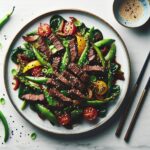
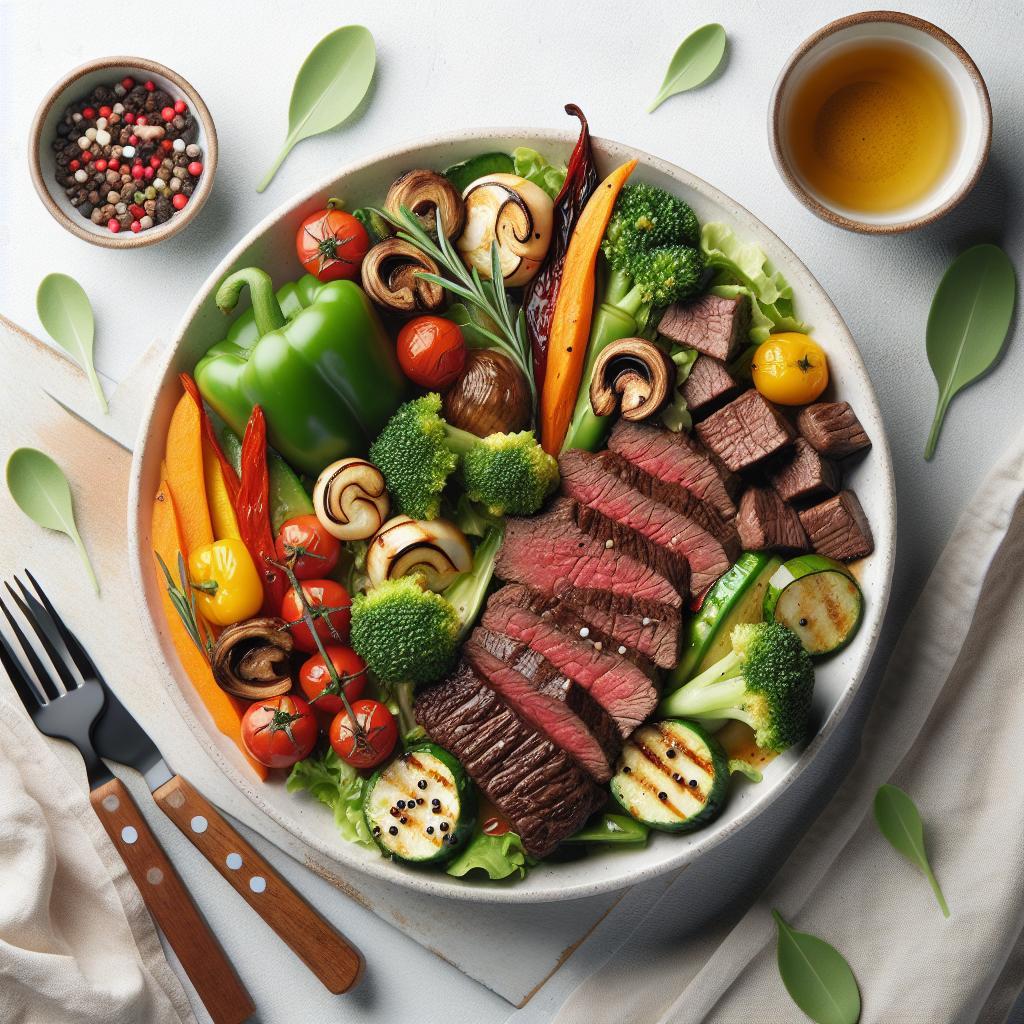

Beef stir-fry combines fast, high-heat searing with quick vegetable cooking to deliver bold flavor, crisp texture and balanced nutrition in one pan. This guide focuses on seven professional techniques—searing, staggered vegetable timing, a simple glaze, mise en place, batch handling, resting, and seasoning—that make a consistent home beef stir-fry reproducible every time.
- High-heat sear: lock juices and build crust on thin beef slices.
- Staggered vegetable timing: preserve color and crunch across mixed veg.
- Focused glaze: a soy-honey mix binds ingredients and sharpens umami.
- Mise en place and batch searing: controls pan temperature and finish.
Prep and Cook Time
Plan roughly 20 minutes of prep and 30 minutes of active cooking for a four-portion beef stir-fry. Prep time includes slicing beef thin across the grain, trimming vegetables, and measuring the glaze components so the pan workflow stays uninterrupted.
Use a hot skillet or wok and stage ingredients in the order you will add them. That sequencing shortens total time and prevents the common errors of overcooked beef or limp vegetables.
Yield and Difficulty
This recipe yields about four hearty servings and fits a medium difficulty level. You need confident knife work, pan control, and attention to timing to achieve both a seared beef crust and tender-crisp vegetables.
Practice improves speed. Once you internalize slicing thickness and pan temperatures, this beef stir-fry becomes a reliable weeknight solution that scales well.
Ingredients
Select ingredients suited for fast, high-heat cooking. Lean cuts such as sirloin or top round give reliable chew and brown quickly; vegetables should be cut to similar bite sizes for even cook.
Keep aromatics and a simple glaze on hand to unify the plate without masking quality. Below is a focused ingredient list you can follow or adapt to taste.
- 1 lb lean beef sirloin, thinly sliced across the grain
- 2 tbsp neutral oil with high smoke point, divided (e.g., grapeseed or avocado)
- 1 medium red bell pepper, julienned
- 1 medium zucchini, sliced into half-moons
- 1 cup broccoli florets, trimmed
- 3 cloves garlic, minced
- 1 tsp fresh ginger, grated
- 2 tbsp low-sodium soy sauce or tamari
- 1 tbsp honey or maple syrup
- ½ tsp crushed red pepper flakes (optional)
- Freshly ground black pepper to taste
- Salt to taste
- 2 green onions, thinly sliced for garnish
- 1 tbsp toasted sesame seeds for garnish
- 1 tsp toasted sesame oil (optional, added at the end for aroma)
Instructions
Execute the work in two stages: sear the beef for color and sealed juices, then stir-fry vegetables rapidly to keep them tender-crisp. Combine at the end with the glaze so everything finishes hot and evenly coated.
Set up equipment and ingredients in the order you will use them: beef, oil, aromatics, vegetables, sauce. That simple sequence prevents undercooked protein or soggy veg and supports a consistent glaze.
Preparing and Searing the Beef
Pat beef slices dry and season lightly with salt and pepper. Dry surfaces sear faster and brown better due to the Maillard reaction, which develops flavor during high-heat contact.
Heat 1 tbsp oil in a large skillet or wok over medium-high until shimmering and test with a drop of water to confirm the surface is hot enough. Work in single layers to avoid steaming the meat.
- Place beef in a single layer and sear 2-3 minutes until a deep brown crust forms; remove to a resting tray.
- If your pan is small, sear in batches to maintain surface temperature and maximize crust formation.
Stir-Frying Vegetables and Finishing
Add the remaining oil to the pan, then toss in aromatics—garlic and ginger—briefly to release fragrance. Add vegetables in order of density so each piece achieves the intended texture.
Return beef to the pan and pour the glaze over the mixture. Stir 1-2 minutes so the sauce thickens slightly and coats everything; remove from heat and rest one minute before serving.
- Stir-fry broccoli first for 2 minutes, then add zucchini and bell pepper and cook until tender-crisp, 3-4 minutes more.
- Return beef, add soy-honey glaze and red pepper flakes, toss to coat and finish with sesame oil and green onions.
Tips for Success
Choosing beef: pick lean cuts sliced thin for quick, even cooking. Trim excess fat to prevent smoking and uneven searing, and cut uniformly so each piece finishes simultaneously.
Vegetable timing: add vegetables by density—broccoli then zucchini then peppers—to maintain bite and color. Keep ingredients moving so nothing burns.
Serving Suggestions and Nutrition
Serve the beef stir-fry over steamed rice, brown rice, or whole-grain noodles to capture the glaze. A citrusy side—quick pickled cucumber or a light salad—adds acidity and cuts fat.
When paired with a grain, this plate supplies protein, fiber and key micronutrients. For broader context on dietary composition and nutrient roles see nutrition.
Internal references: explore other preparations on our site: Beef Recipes and a collection of quick pans: Stir-Fry Recipes.
Technique Notes and Culinary Context
Stir-frying as a method prioritizes high heat and rapid agitation to preserve texture and concentrate flavor. For technical background, review the cooking method on stir-frying.
The crust that develops on beef during searing is a chemical transformation known as the Maillard reaction; it creates many of the savory compounds you perceive as depth of flavor.
Ingredient context matters: choose a quality cut of beef and crisp, dense vegetables that stand up to fast heat. Small changes in acid, sweetener, or spice will shift the profile without changing the technique.
The Way Forward
Practice the core workflow—slice uniformly, preheat, sear, quick-veggie, glaze—and the sequence will become muscle memory. That repetition provides a reliable baseline to experiment with flavor layers and international profiles.
Try modest variations: swap honey for maple, add smoked paprika for depth, or finish with citrus zest. Each small change alters character while preserving the method that produces consistent results.
FAQ
How do I choose the best cut of beef for stir-fry?
Pick lean, tender cuts such as sirloin, flank, or top round sliced thinly across the grain. Thin, uniform slices cook quickly and yield tender bites.
Can I prepare this dish ahead of time?
Yes. Slice beef and chop vegetables up to 24 hours ahead and store chilled. Combine and cook on the day of serving for peak texture and flavor.
What if I don’t have a wok or high-heat pan?
Use the heaviest skillet available, ideally cast iron; preheat it thoroughly. Work in batches to maintain high surface temperature for proper searing.
How can I adjust the glaze for dietary needs?
For gluten-free, use tamari instead of soy sauce. Swap honey for maple to make it vegan-friendly if using a plant-based protein substitute.
How do I store leftovers safely?
Cool leftovers quickly and refrigerate in an airtight container for up to three days. Reheat over medium heat and add a splash of water or stock to loosen the glaze if needed.
See also: Beef Recipes
See also: beef stir-fry