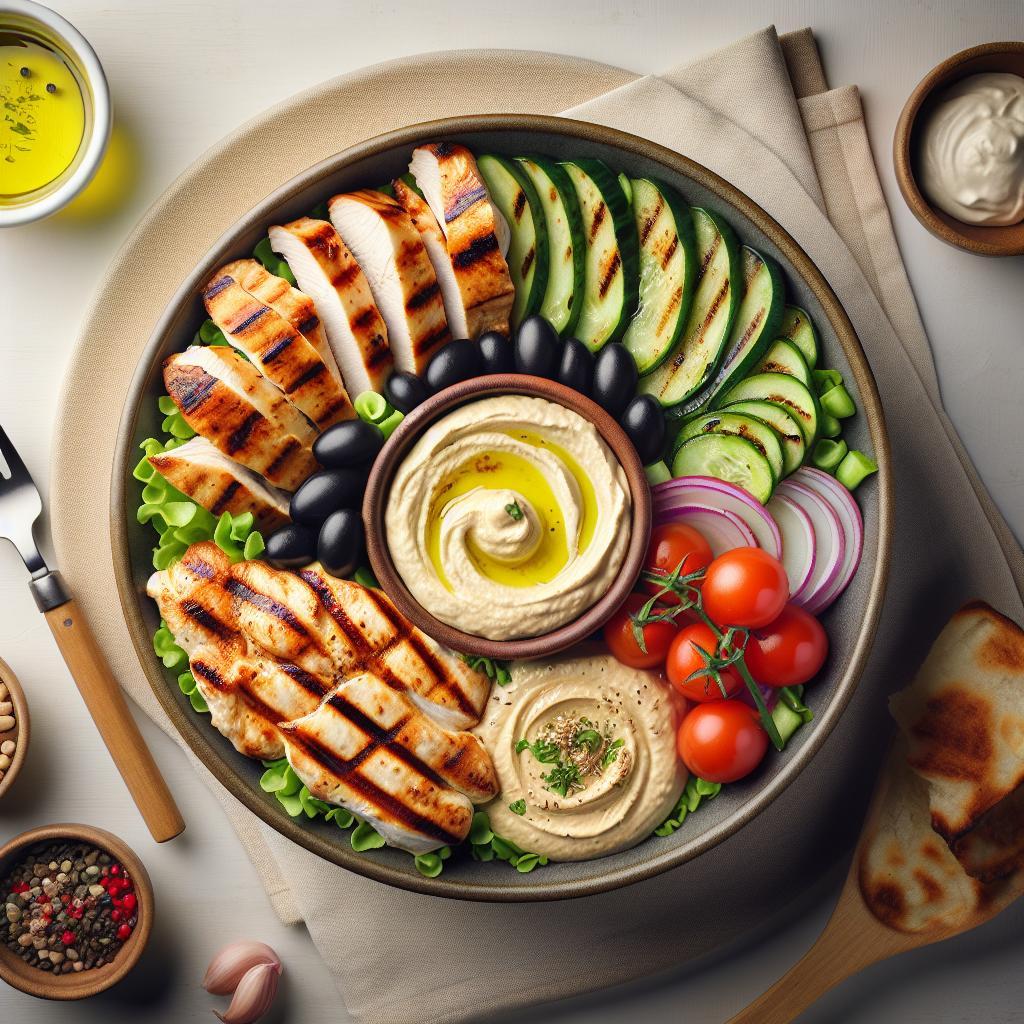

Savor the perfect match of creamy hummus and smoky grilled chicken: a balanced plate that combines texture, aroma, and nutrition. This pairing draws on Mediterranean tradition while offering practical versatility for weeknight dinners and entertaining.
- Simple pairing rule: mirror or contrast dominant marinade notes with your hummus choice.
- Grill for texture: sear fast and rest to keep chicken juicy.
- Serve smart: use hummus as a base, then layer chicken and bright garnishes.
- Prep ahead: marinate longer for deeper flavor; hummus holds well refrigerated.
The Art of Balancing Flavors Between Hummus and Grilled Chicken
The chemistry between hummus and grilled chicken relies on contrast and complement. Creamy, citrus-laced hummus calms the heat of spiced chicken while roasted, smoky notes from the grill add an umami edge to legume-based spreads.
For technical context, hummus centers on cooked chickpeas and tahini; this legume foundation provides fiber and plant protein that pairs naturally with lean poultry. Learn more about the core ingredient: chickpea.
Choosing Hummus Varieties That Match Marinades
First, identify the marinade’s dominant axis: citrus, smoke, heat, or herbaceous. Then choose a hummus that either amplifies or balances that axis to create a cohesive bite.
For classic Mediterranean pairings, the traditional garlic-lemon hummus performs reliably. For reference on regional flavor traditions, consult Mediterranean cuisine.
Classic Garlic & Lemon Hummus
Bright lemon and raw garlic cut through fatty or oily marinades, refreshing each forkful. Use this hummus when your chicken carries rosemary, thyme, or a zesty lemon rub.
Roasted Red Pepper or Harissa Hummus
Roasted red pepper adds sweetness and depth; harissa contributes smoky heat. Pair these with cumin- and paprika-forward marinades to build warmth across the plate.
Beetroot or Herb-Infused Hummus
Beet hummus introduces earthiness and color, which lifts a simple olive oil–garlic marinade. Herb blends, such as basil or dill mixed into hummus, echo fresh-tasting chicken rubs for a lighter profile.
Grilling Techniques That Enhance Harmony
Control over heat and timing determines whether chicken complements hummus or competes with it. A high, steady sear creates the char that provides a smoky counterpoint to creamy hummus.
For technical grilling concepts and surface science, see the overview of grilling techniques: grilling. Use a thermometer and monitor carryover heat to avoid overcooking.
Core tips: preheat thoroughly, oil grates to reduce sticking, and resist frequent flipping to develop a crust. Then let the meat rest to redistribute juices for optimal tenderness.
Marinating guidance: acids like lemon or yogurt tenderize; oil carries fat-soluble spice compounds into the meat. Marinate thighs longer for flavor depth; marinate breast briefly to prevent texture breakdown.
Plating, Garnish and Serving Strategies
Presentation matters because visual cues influence perceived flavor. Spread a generous layer of hummus as the plate’s foundation, then arrange sliced chicken so grill marks remain visible.
Use acid (lemon wedges), fat (good olive oil), and crunch (toasted pine nuts or seeds) to create a balanced tasting progression. A sprinkle of bright herbs or sumac adds aromatic contrast and color.
Pair the plate with warm pita, crisp vegetable crudités, or a light cucumber-tomato salad for freshness. These contrasts provide mouthfeel variety and round out macronutrients on the plate.
Prep & Timing: Practical Workflow
Organize mise en place to maximize efficiency: combine marinade first, prepare hummus next, then prep vegetables and garnishes. Time marinating so that hummus can be made while the chicken soaks.
Typical timeline: 15 minutes active prep, minimum 2 hours marinating, and roughly 15 minutes of grilling, plus a short rest. This sequencing minimizes hands-on time while maximizing flavor extraction.
Yield, Difficulty and Serving Counts
This recipe framework yields about 4 hearty portions when using 1.5 lbs of boneless chicken thighs and one cup of chickpeas in the hummus. Adjust quantities proportionally for larger groups.
Difficulty rates as medium: the technique focuses on timing and heat control rather than advanced skills. It suits cooks who want to elevate grilling with reliable, repeatable steps.
Ingredients: Core Components and Substitutions
Keep ingredient lists focused. For the chicken marinade, include olive oil, garlic, smoked paprika, ground cumin, lemon juice, and herbs. These ingredients build a balanced flavor matrix of fat, acid, and aromatics.
For hummus, standard components are cooked chickpeas, tahini, lemon juice, garlic, and olive oil. For smoother texture, consider removing skins from chickpeas or adding cold water during blending.
- Chicken Marinade: 1.5 lbs boneless chicken thighs, 3 tbsp olive oil, 2 cloves garlic, 1 tsp smoked paprika, 1 tsp ground cumin, 1 tbsp lemon juice, salt, pepper, 1 tbsp chopped parsley.
- Classic Hummus: 1 cup canned chickpeas (drained), 3 tbsp tahini, 2 cloves garlic, 3 tbsp fresh lemon juice, 1/2 tsp ground cumin, salt to taste, 1/4 cup cold water, 2 tbsp olive oil.
- Garnishes: chopped parsley, toasted nuts or seeds, warm pita, lemon wedges.
Step-by-Step Instructions
Follow a logical order: marinate, make hummus, preheat grill, cook chicken, rest and slice, then plate. This order reduces carryover waiting and keeps flavors fresh.
Use active control: set a medium-high grill, and monitor internal temperature to 165°F / 74°C for safety while avoiding dryness. Rest the meat briefly before slicing across the grain for tenderness.
- Whisk olive oil, garlic, smoked paprika, cumin, lemon juice, salt, pepper, and parsley. Coat chicken, cover, and refrigerate at least 2 hours.
- Blend chickpeas, tahini, garlic, lemon juice, cumin, and salt in a food processor; add cold water gradually to smooth. Finish with olive oil for richness.
- Heat the grill to medium-high and oil grates. Grill chicken 5–7 minutes per side depending on thickness until charred and at safe internal temperature.
- Rest chicken 5 minutes, then slice thinly against the grain. Spread hummus on a platter, arrange chicken, and add garnishes and lemon wedges.
- Serve immediately with warm bread or vegetables for dipping. Store leftovers properly chilled and consume within recommended safe timeframes.
Chef’s Notes, Variations and Storage
Small adjustments deliver large flavor returns: swap thighs for breast to reduce fat, but shorten cooking time and monitor temperature. Roast garlic for milder hummus, or blend in roasted beets for color and earthy sweetness.
Make-ahead options: marinate chicken up to 24 hours; prepare hummus a day ahead and top with fresh oil before serving. Refrigerate within two hours and consume hummus within 4–5 days for quality.
Nutrition and Portion Guidance
Combining hummus and grilled chicken yields a balanced plate: lean animal protein plus plant protein, fiber, and healthy fats. Typical per-serving estimates fall around 400–450 kcal depending on portion size and oil use.
Adjust portion sizes to match dietary goals: reduce oil and nuts to lower calories, or increase vegetables and whole grains to boost fiber and micronutrients.
| Nutrient | Per Serving |
|---|---|
| Calories | ~420 kcal |
| Protein | 35 g |
| Carbohydrates | 20 g |
| Fat | 22 g |
Serving Suggestions and Cultural Context
This pairing sits squarely within shared-plate Mediterranean traditions, where spreads complement grilled proteins and communal dining emphasizes variety. For cultural background, see hummus and its regional role.
Bright salads like tabbouleh or a cucumber-yogurt sauce add cooling contrast. Add pomegranate seeds or sumac for tartness and visual pop to modernize the presentation.
FAQ
What makes hummus and grilled chicken a good match?
They balance texture and flavor: hummus provides cream and acidity while grilled chicken offers smoky, savory notes. Together they create a layered tasting experience that hits multiple sensory targets.
How can I prevent chicken from drying while grilling?
Use a two-step technique: sear on high to develop color, then move to indirect heat to finish. Also, measure internal temperature and allow a short rest period before slicing.
Which hummus variation pairs best with spicy marinades?
Cooling or slightly sweet hummus variations—such as roasted red pepper or beet—calm heat. Alternatively, a lemon-tahini base moderates spice while preserving brightness.
Can I make this dish quickly for weeknights?
Yes. Use store-bought hummus paired with a quick stovetop grill or grill pan for the chicken. Keep marinades simple—olive oil, lemon, garlic—and cook to temperature rather than time alone.
How should leftovers be stored?
Refrigerate chicken and hummus separately in airtight containers within two hours. Consume within 3–4 days for best quality, and reheat chicken gently to avoid drying.
See also: hummus
- The Art of Balancing Flavors Between Hummus and Grilled Chicken
- Choosing Hummus Varieties That Match Marinades
- Grilling Techniques That Enhance Harmony
- Plating, Garnish and Serving Strategies
- Prep & Timing: Practical Workflow
- Yield, Difficulty and Serving Counts
- Ingredients: Core Components and Substitutions
- Step-by-Step Instructions
- Chef’s Notes, Variations and Storage
- Nutrition and Portion Guidance
- Serving Suggestions and Cultural Context
- FAQ