
Savor the Soul: Crafting the Perfect Broth and Exploring Chicken Ramen Essentials
Savor the soul of chicken ramen begins with a well-made stock and careful technique. This guide strips ramen-making to clear steps you can repeat at home for consistent, restaurant-quality bowls.
- Broth first: Slow-extracted stock delivers depth and mouthfeel.
- Texture matters: Fresh noodles and proper timing keep chew and spring.
- Toppings transform: Eggs, nori, and aromatics layer flavor and contrast.
- Make ahead: Broth improves after resting and a night in the fridge.
Intro: Why chicken ramen works
Chicken ramen balances a savory, gelatin-rich broth with springy noodles and bright toppings. That contrast—fat and umami versus freshness—makes each spoonful satisfying.
Ramen evolved into many regional styles; understanding fundamentals lets you adapt confidently. For background on ramen history and structure, see ramen.
Key times and yields
Prep: 30 minutes of active time. Use organized mise en place so simmering runs smoothly.
Cook: 2.5–3 hours of gentle simmering yields a full-bodied broth. The recipe below serves four.
Ingredients: What matters most
Focus on quality: bone-in chicken, fresh aromatics, and correctly seasoned liquid. These components drive flavor more than exotic add-ins.
Typical list includes whole chicken legs, onion, garlic, ginger, dried shiitake, soy sauce, mirin, fresh ramen noodles, eggs, nori, menma, and toasted sesame. For ingredient context, review stock techniques and umami sources.
- 3 lb bone-in chicken legs (thigh + drumstick)
- 1 large onion, halved
- 3 garlic cloves, smashed
- 1 thumb ginger, sliced
- 8 cups cold water
- 3 dried shiitake (rehydrate if hard)
- 2 green onions
- 2 tbsp soy sauce
- 1 tbsp mirin (optional)
- Fresh ramen noodles, 4 portions
- Soft-boiled eggs, nori, menma, sesame for garnish
Instructions
Keep paragraphs focused; each step should read like a single, repeatable action. Gather tools: a large stockpot, fine mesh strainer, and ladle.
Follow sequencing: brown, aromatics, cold water, gentle simmer, strain, season. This order controls clarity and extraction.
Browning and aromatics
Heat 1 tbsp vegetable oil in a stockpot until shimmering and brown the chicken skin-side down. Browning adds Maillard flavors that lift the final broth.
Add onion, smashed garlic, sliced ginger, and dried shiitake; stir briefly to toast aromatics. Toasting increases aromatic intensity without overcooking delicate notes.
Cold-water extraction and simmer
Cover with 8 cups cold water and bring up slowly to a gentle simmer; cold water encourages collagen extraction. Avoid rolling boil to keep the broth clear and silky.
Skim foam frequently in the first hour and add trimmed green onions before reducing heat to low. Let the pot simmer uncovered for 2.5–3 hours to extract gelatin and layered flavors.
Strain and season
Lift chicken and aromatics, then strain the liquid through a fine sieve into a clean pot. Cool the chicken slightly, then shred or slice for service.
Season the strained broth with soy sauce and mirin; taste and adjust salt. If you prefer, reserve a portion of unsalted broth and season individual bowls for better control.
Noodle technique and assembly
Cook fresh ramen noodles in vigorously boiling water for 2–3 minutes depending on thickness. Drain and refresh briefly under cold water to stop cooking; this preserves bite.
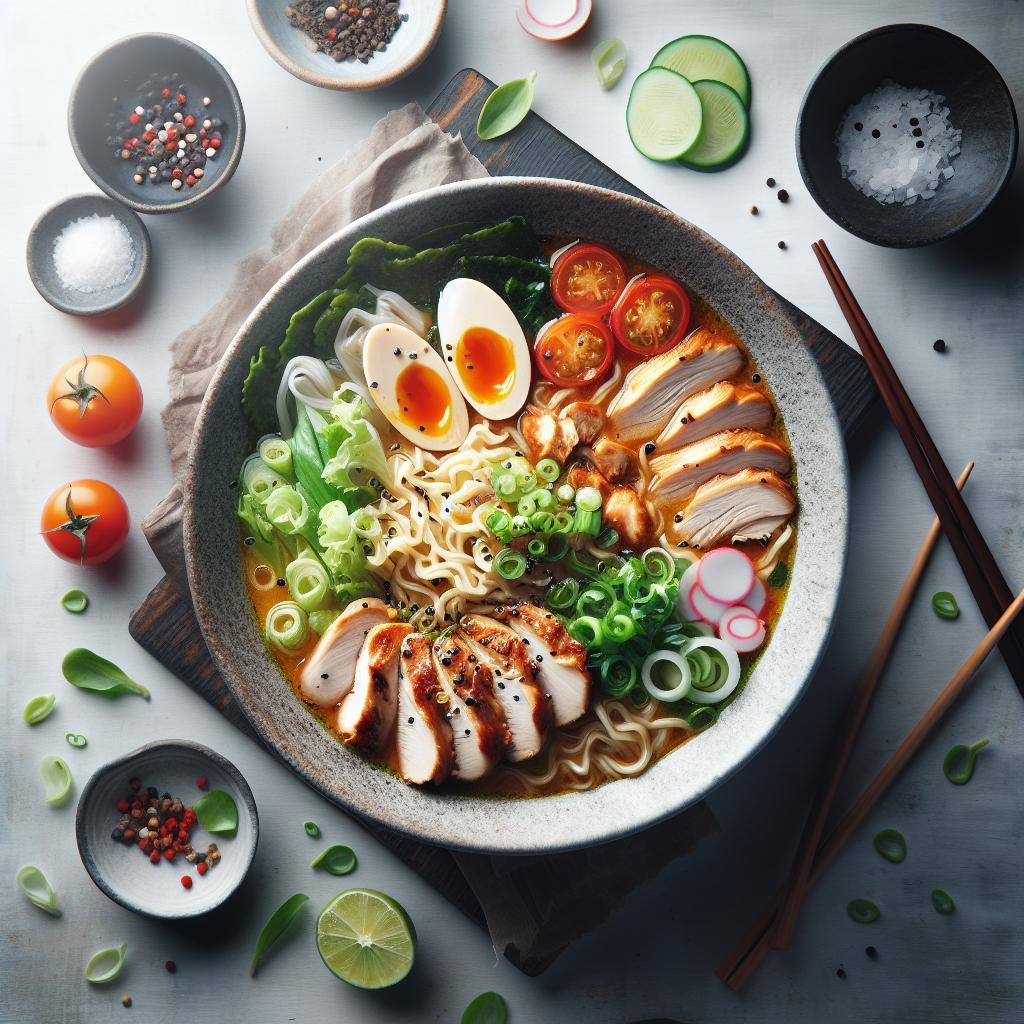
To serve, portion noodles, ladle very hot broth over them, then top with shredded chicken, halved soft-boiled egg, sliced green onion, nori, menma, and sesame. Serve immediately so noodles remain springy.
Tips for success: Elevate your chicken ramen
Choose skin-on and bone-in: The skin and bones release fat and collagen that create body. If you skim fat for a lighter bowl, refrigerate overnight and remove solidified fat.
Gentle simmering preserves clarity: Maintain 85–95°C (185–203°F) for best extraction without turbidity. Patience rewards flavor depth and mouthfeel.
Try rehydrating dried shiitake separately and add the soaking liquid to the broth for concentrated mushroom umami. Shiitake contribute savory depth that pairs well with chicken.
Make-ahead strategy: Cool broth quickly and refrigerate overnight to let flavors meld. Reheat gently before serving and skim excess fat if desired.
Serving suggestions and presentation
Choose wide, shallow bowls so toppings sit attractively above the noodles. Visual contrast enhances perceived flavor and encourages diners to sample every component.
Offer finishing condiments at the table: toasted sesame oil, chili oil, and a small dish of soy or seasoned tare. Let guests customize heat and salt to taste.
For pairing, serve lightly pickled cucumber or a simple sesame-dressed salad to cut richness. This contrast refreshes the palate between bites.
Nutritional snapshot
Per serving, a typical bowl ranges near 480 kcal with substantial protein and balanced carbohydrates from noodles. Adjust portions and toppings to meet dietary goals.
| Nutrient | Per Serving |
|---|---|
| Calories | 480 kcal |
| Protein | 42 g |
| Carbohydrates | 45 g |
| Fat | 15 g |
Resources and further reading
For more recipes and variations, see our related posts: Ultimate Homemade Chicken Ramen and Ramen Broth Guide. These internal resources expand on tare ratios and seasoning methods.
Technical references: learn more about the science behind stock and umami at the linked Wikipedia entries for stock, umami, and shiitake. Use them to refine flavor balance.

FAQ
How long should I simmer chicken ramen broth?
Simmer gently for 2.5–3 hours to extract collagen and flavor from bones and skin. Shorter times produce lighter stock; longer times yield richer mouthfeel but watch for over-reduction.
Can I use store-bought chicken or rotisserie meat?
Yes. Use rotisserie chicken for a quicker assembly and add commercial stock as needed, but fresh bone-in pieces produce superior gelatin and body. Adjust salt if using pre-seasoned meat.
What toppings make the biggest difference?
Soft-boiled marinated eggs, nori, green onions, and toasted sesame add texture and flavor contrast. Menma and fresh mushrooms increase complexity without much effort.
How do I keep noodles from getting soggy?
Cook noodles just to al dente and rinse briefly under cold water to stop carryover cooking. Add hot broth right before serving and consume immediately for best texture.
Is there a vegetarian approach that keeps a ramen-like depth?
Substitute kombu and dried shiitake for body, and use miso or soy-based tare for savory weight. Combine roasted vegetables with long-simmered mushroom stock to approach chicken-like depth.
Final note: practice and small adjustments create consistency. Track timings, salt levels, and noodle brands to dial in the bowl that matches your ideal profile.
For visual references on seaweed and finishing ingredients, see nori.
See also: chicken ramen