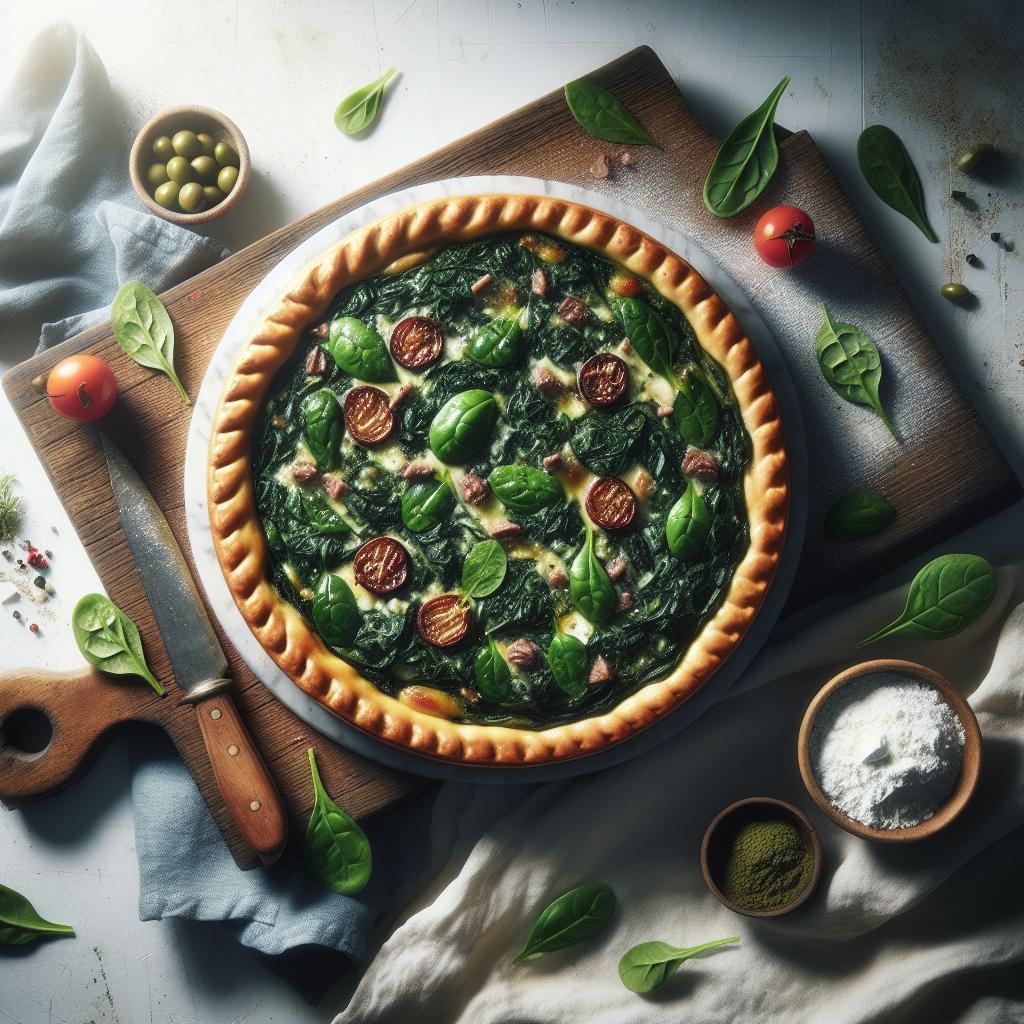

Savor the Tradition: Unveiling the Magic of Greek Spinach Pie
Spanakopita, the classic Greek spinach pie, combines crisp layers of phyllo with a savory filling of spinach, herbs and cheese. I write as a culinary specialist with decades of pastry and Mediterranean cooking experience; I focus on technique and predictable results.
- Key texture goal: flaky phyllo exterior, moist but not soggy filling.
- Ingredient balance: tangy feta plus ricotta or egg for binder.
- Time investment: mise en place speeds phyllo handling and reduces waste.
Introduction and Culinary Context
Spanakopita represents a concentrated expression of Mediterranean flavor economy: inexpensive greens and cheese transform into a celebratory pastry. The dish appears across home kitchens and bakeries, adapting to seasonal greens and local cheeses.
For historical context, see the spanakopita entry on Wikipedia. For the role of phyllo in layered pastries, consult the phyllo pastry page. These references anchor practical technique in culinary history.
Prep and Cook Time
Preparation: 30 minutes of active time, mostly chopping and wilting. Proper mise en place reduces stress when handling delicate phyllo sheets.
Cooking: 40–45 minutes at 350°F (175°C) for even browning. Allow a 10-minute rest to stabilize layers before slicing.
Yield
Serves 8 generous slices when baked in a 9×13-inch dish. Slice after the resting period to preserve a crisp top and intact portions.
You can scale this recipe: make individual triangles or a large tray; adjust bake time slightly for depth changes.
Difficulty Level
Medium. The technical challenge centers on phyllo handling and moisture control in the filling. With a few methodical steps you will achieve consistent results.
Practice improves speed. Use a damp towel, steady hands and a pastry brush to maintain even oiling of sheets.
Ingredients
Use fresh, well-drained spinach when possible and high-quality feta for authentic flavor. Ricotta or a similar mild cheese softens the filling while eggs bind it.
Core ingredients include spinach, crumbled feta, ricotta, eggs, dill, parsley, onion, garlic, olive oil and phyllo sheets. Opt for extra-virgin olive oil for flavor and browning control.
- 1 lb fresh spinach, washed and chopped
- 8 oz feta cheese, crumbled
- 1 cup ricotta cheese
- 1 medium onion, finely chopped
- 2 cloves garlic, minced
- 3 large eggs, lightly beaten
- 1/2 cup fresh dill, chopped
- 1/4 cup fresh parsley, chopped
- 1/2 cup olive oil for brushing and sautéing
- 12 sheets phyllo dough, thawed
- Salt and freshly ground black pepper to taste
For reading on ingredients: feta cheese and olive oil entries explain production and flavor profiles that affect the final dish.
Instructions
1. Prepare the filling. Heat 2 tablespoons oil over medium heat, sauté onion until translucent, then add garlic for one minute. Remove before browning to prevent bitterness and preserve bright aromatics.
2. Wilt and drain spinach. Add chopped spinach in batches to the pan and cook until wilted. Transfer to a colander and press firmly to remove excess water; squeeze with a clean towel if necessary.
Mixing the filling
3. Combine cheeses, herbs and eggs. In a bowl, fold feta, ricotta, beaten eggs, dill and parsley together, then fold in cooled spinach. Taste and adjust seasoning; the feta supplies salt so season sparingly.
4. Choose the right binder ratio. Aim for a moist but cohesive mix that holds when scooped. Too much liquid will steam the phyllo and cause sogginess.
Assembling and baking
5. Prepare phyllo and pan. Preheat oven to 350°F (175°C). Lightly oil a 9×13-inch dish and unroll phyllo, covering sheets with a damp towel to prevent drying.
6. Layer thoughtfully. Brush each sheet with oil, layer six sheets for the base, add the filling and top with the remaining sheets, brushing each. Score the top gently to guide slicing after baking.
7. Bake and rest. Bake 40–45 minutes until the surface is uniformly golden and crisp. Rest ten minutes to let steam escape and the filling set.
Tips for Success
Keep phyllo sheets covered under a damp towel throughout assembly to maintain elasticity and prevent cracking. Work quickly but deliberately; reheating rooms or drafts will dry sheets fast.
A successful spanakopita depends on moisture control. Squeeze or press cooked spinach to remove water. If necessary, use a fine-mesh sieve and apply hand pressure to force out liquid.
Cold filling helps. Chill the spinach and cheese mixture briefly if your kitchen is warm; cool filling reduces steam generation during baking and preserves crispness.
Serving Suggestions
Serve warm or at room temperature. A light cucumber-tomato salad dressed with lemon and oregano brightens the plate and cuts the richness.
Offer tzatziki or strained yogurt on the side for acidity and cooling contrast. Slice into the scored portions to present clean pieces.
Nutritional Snapshot
The recipe yields roughly 320 kcal per serving with balanced protein, carbohydrates and fat from cheese and olive oil. Adjust portion sizes to manage calorie intake.
Nutrition will vary by ingredient brands and portion size. Consider using part-skim ricotta or reduced-oil brushings to lower fat while retaining texture.
| Nutrient | Per Serving |
|---|---|
| Calories | 320 kcal |
| Protein | 12 g |
| Carbohydrates | 28 g |
| Fat | 18 g |
Practical Variations
Substitute frozen, well-drained spinach if fresh is unavailable. Thaw completely and press out water before mixing with cheeses and eggs.
To go vegan, replace feta with firm tofu blended with lemon and nutritional yeast and use an egg replacer such as aquafaba or flax slurry. Texture will differ but technique remains the same.
At a Glance: Technique Checklist
Follow this compact checklist during prep and assembly to ensure repeatable results.
- Wilt spinach, press dry and cool before mixing.
- Brush phyllo sheets thinly and evenly with oil to achieve flakiness.
- Score top layer to simplify final slices and preserve structure during cut.

Final Thoughts
Spanakopita rewards patience and method. Small investments in draining greens, maintaining phyllo humidity and even oil application yield a bakery-quality pie at home.
Repeated practice builds confidence; once you internalize the steps, the process becomes fast and forgiving, and the result reliably delicious.
FAQ
What is spanakopita?
Spanakopita is a Greek spinach pie made of layered phyllo and a filling of spinach, herbs and cheese. The dish highlights economical ingredients transformed by technique and seasoning.
Can I use frozen spinach?
Yes. Use fully thawed, well-drained frozen spinach and press out excess liquid. This step prevents a soggy filling and keeps phyllo crisp.
Why does phyllo become soggy?
Sogginess occurs when the filling retains excess water or when phyllo receives too much oil in a single spot. Drain greens thoroughly and apply oil evenly in thin layers.
How do I store leftovers?
Cool to room temperature, then refrigerate in an airtight container for up to three days. Reheat in a 325°F oven until warmed through to restore crispness.
Which cheese choices are traditional?
Feta provides tang and salt; ricotta or drained farmer cheese softens texture. Use a mix to balance tanginess and creaminess for the classic profile.
For further reading on related culinary topics, consult the Wikipedia entries on spanakopita, phyllo, and feta cheese.
See also: spanakopita