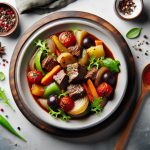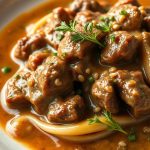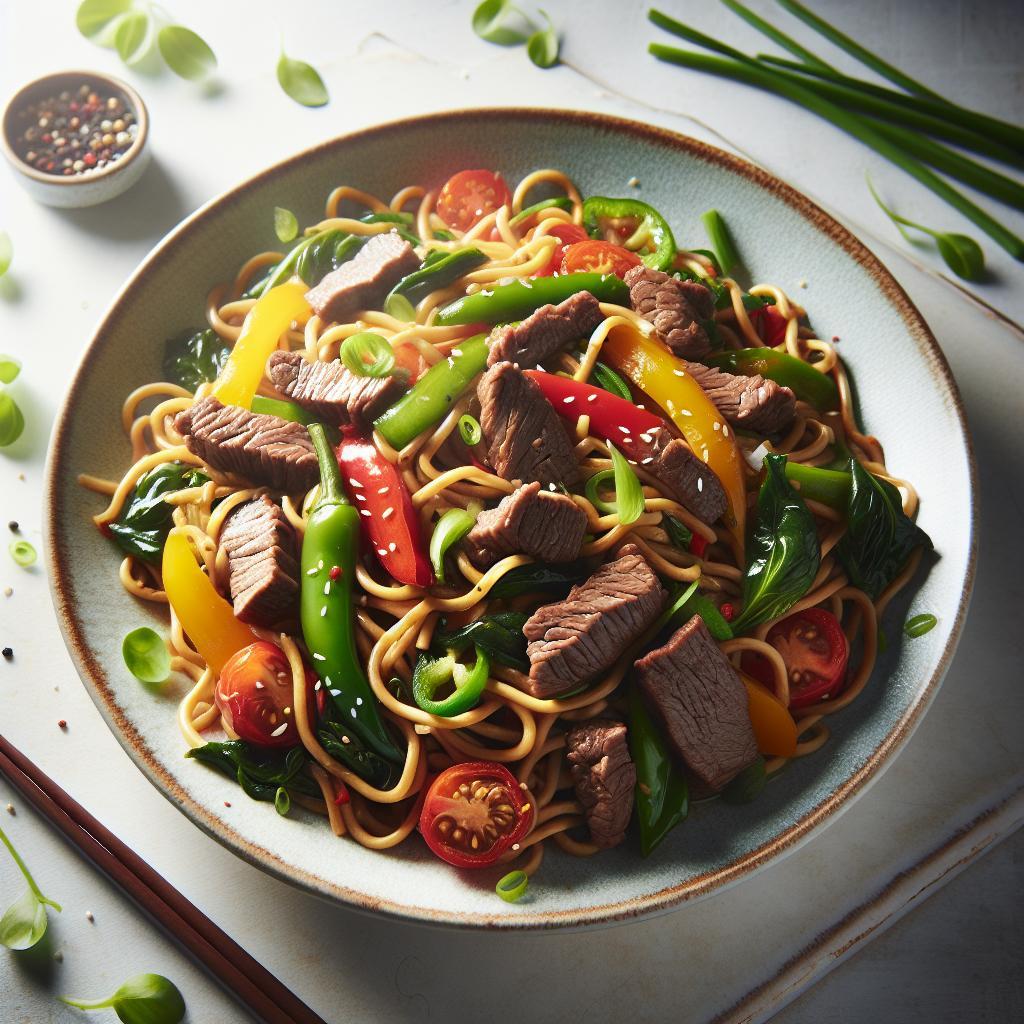

There’s a reason beef chow mein remains a go-to stir-fry: it pairs tender, marinated beef with crisp vegetables and glossy noodles for immediate satisfaction. This guide breaks down the technique, timing, and ingredient choices so you can reproduce restaurant-quality results at home.
- Key technique: very high heat and quick tosses lock texture and flavor.
- Marinade trick: a short cornstarch-soy coat yields juicier slices of beef.
- Noodle care: rinse and oil to prevent clumping and maintain chew.
- Sauce balance: adjust salty, sweet, and umami after tasting.
Why Beef Chow Mein Works
Beef chow mein depends on contrast: tender meat, springy noodles, and crisp vegetables. That interplay creates the satisfying mouthfeel that defines classic Chinese-style stir-fries.
The dish also highlights layered seasoning: a marinade for the beef, an aromatic sauté phase, and a finishing sauce that glazes everything. For cultural context, see chow mein on Wikipedia for history and regional variation.
Prep and Cook Time
Preparation: 15 minutes. Cooking: 15 minutes. The entire recipe finishes in roughly 30 minutes, making it ideal for busy evenings and last-minute entertaining.
Efficient mise en place keeps the cook time tight: slice beef thinly, measure sauce components, and have noodles drained and ready. When the wok hits high heat, everything moves fast and precisely.
Yield and Difficulty
This recipe yields about four hearty servings and sits at a medium difficulty level. The skill set is simple: sharp knife work, timing, and heat management.
If you master the timing and the order of operations, you can scale portions, swap noodles, or add vegetables without losing texture. For more on beef selection, consult this internal resource: Best Beef Cuts for Stir-Fry.
Ingredients
Keep ingredients fresh and prepped. Use thinly sliced flank or skirt steak, fresh chow mein or egg noodles, Napa cabbage, carrots, shiitake mushrooms, and green onions. Aromatics—garlic and ginger—provide the backbone of flavor.
For the sauce, combine oyster-style or mushroom sauce, light soy sauce, sesame oil, brown sugar, and beef or vegetable broth. The sauce needs to be thickened with a cornstarch slurry to create that glossy coating.
- 8 oz flank steak, thinly sliced against the grain
- 6 oz fresh chow mein or fresh egg noodles
- 2 tbsp vegetable oil, divided
- 1 cup Napa cabbage, shredded
- 1/2 cup julienned carrots
- 1/2 cup sliced shiitake mushrooms
- 3 green onions, sliced diagonally
- 3 cloves garlic, minced
- 1 tsp fresh ginger, grated
- 1 tbsp soy sauce for marinade
- 1 tsp cornstarch for marinade
- Sauce: 3 tbsp oyster-style sauce, 2 tbsp light soy sauce, 1 tbsp sesame oil, 1 tbsp brown sugar, 1/4 cup broth, and 1 tsp cornstarch mixed with 2 tbsp water
When listing mushrooms, note the aroma and texture of shiitake, which add pronounced umami. If you prefer a milder mushroom, choose cremini or button.
Instructions
Follow order and heat. First, marinate the beef briefly to tenderize. Second, prepare noodles so they won’t break down during the final toss.
Marinate and Prep
Combine thinly sliced beef with 1 tbsp soy sauce and 1 tsp cornstarch. Toss until every slice has a light, even coat and rest for at least 10 minutes to let the cornstarch form a protective layer.
Cook dried noodles to al dente if using them, rinse under cold water, and toss with a teaspoon of oil to keep strands separate. Wash and slice vegetables while the beef rests.
Stir-Fry and Finish
Heat 1 tbsp oil in a wok or large skillet until it almost smokes; add beef in a single layer and sear quickly, about 1-2 minutes per side. Remove beef and rest briefly off heat to preserve juices.
Add the remaining oil, then sauté garlic and ginger until fragrant. Stir-fry carrots, mushrooms, and Napa cabbage until crisp-tender, then return beef and noodles to the wok. Pour in the sauce and the slurry, toss until the sauce thickens and evenly coats the ingredients, then finish with green onions.
The cooking rhythm mirrors the principles of stir-frying: high heat, fast motion, and brief contact time that retain texture and color.
Tips for Success
Control the heat. A smoking-hot wok sears meat and chars edges without overcooking interiors. Use a heavy-bottom pan if you lack a wok, and preheat it well before adding oil.
Slice the beef very thin and always cut across the grain to interrupt muscle fibers. That produces tender bites that take on marinade quickly and deliver a soft texture.
Balance the sauce after you toss everything together. Taste and tweak with small dashes of soy or a pinch of sugar until the harmony of salty, sweet, and umami fits your palate.
Avoid overcrowding the pan. Overload leads to steaming instead of searing, which gives limp vegetables and dry meat.
For technique expansion, check this internal link: Ultimate Guide to Stir-Fry Techniques. That resource covers wok setup, heat sources, and common troubleshooting tips.
Serving Suggestions
Serve beef chow mein immediately for best texture. Sprinkle toasted sesame seeds and freshly chopped cilantro or scallions to add aroma and color contrast.
Offer lime wedges on the side to brighten the sauce, and pair the dish with light sides such as a crisp cucumber salad or simple miso soup. These pairings cut richness and refresh the palate between bites.
Nutrition and Portioning
An average serving provides protein, controlled fat, and carbohydrate from noodles. You can reduce calories by using leaner beef cuts, swapping in whole-grain or rice noodles, or increasing the vegetable ratio.
A typical nutrition snapshot: roughly 400–450 kcal, around 30–35 g protein, 35–40 g carbohydrates, and 10–15 g fat per serving depending on oil and noodle choices. Adjust portions for family needs and dietary goals.
Common Troubleshooting
If noodles clump, they likely stayed wet after cooking; rinse thoroughly with cold water and toss in a touch of oil. If the sauce separates, whisk a small cornstarch slurry and add a little at a time while stirring to re-emulsify.
If meat turns tough, it was probably overcooked or sliced with the grain. Slice thin, across the grain, and remove from heat as soon as searing completes to preserve tenderness.
FAQ
What cut of beef is best for chow mein?
Choose flank or skirt steak for their flavor and chew when sliced thinly across the grain. These cuts respond well to quick marinades and high-heat cooking.
Can I use dried noodles instead of fresh chow mein?
Yes. Cook dried noodles to al dente, rinse them under cold water, drain well, and toss in a small amount of oil to prevent clumping during stir-frying.
How do I make the sauce glossy and cling to noodles?
Use a cornstarch slurry added near the end of cooking. Heat activates the starch, thickening the sauce to a glossy sheen that adheres to meat and noodles.
How can I adapt this recipe for dietary restrictions?
Swap light soy for tamari for gluten-free needs and use mushroom or hoisin-style vegetarian sauce to omit animal products. Increase vegetables and use rice noodles for gluten-free options.
Why did my vegetables turn soggy, and how can I fix that?
Soggy vegetables usually mean low heat or overcrowding. Cook in batches if necessary and add vegetables that take longer first, finishing with delicate items like bok choy or scallions.
For further reading on core ingredients and techniques, consult Wikipedia entries on soy sauce and beef to understand flavor profiles and sourcing.
Finally, experiment: change vegetables, try different noodles, and adjust the sauce until you achieve the balance you prefer. Technique and incremental tasting guide you to a reliably great beef chow mein.
See also: Chow mein