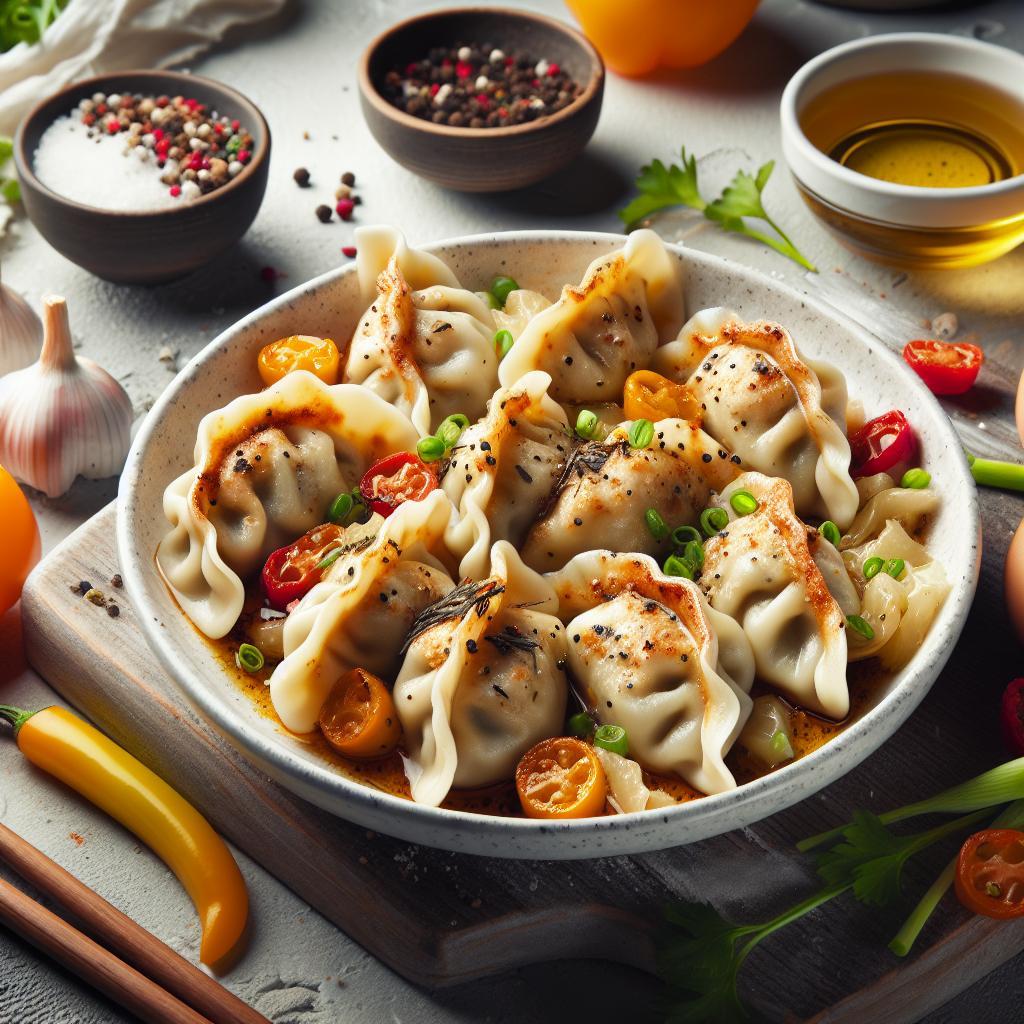

Savory chicken dumplings deliver a concentrated burst of comfort: tender meat wrapped in a resilient, delicate dough. These bites balance texture and flavor, connecting practical technique with approachable ingredients.
- Make dough once: rest to improve elasticity and rollability.
- Control moisture: squeeze shredded cabbage to avoid soggy filling.
- Three cook methods: boil, steam, or pan-fry for different textures.
- Freeze smart: flash-freeze on a tray before bagging to preserve shape.
Savory Chicken Dumplings: Dough Fundamentals and Texture
Good dumpling dough combines gluten strength with softness so wrappers stretch without tearing. Work the dough to a smooth, elastic state, then rest it; that relaxation reduces resistance when you roll thin rounds.
Use warm water and measured kneading to develop structure, and add a small amount of oil to improve pliability. For background on the broader category, see dumpling.
Essential Times, Yield, and Skill
Prep: about 40 minutes active plus 30 minutes dough rest. Cook: 15 minutes depending on method. Expect roughly 30 medium dumplings from the recipe below.
Skill level rates as medium: you need basic knife work, dough handling, and heat control. However, consistent technique yields restaurant-quality dumplings after a few batches.
Ingredients
Dough ingredients
Use reliable, simple components: all-purpose flour, warm water, salt, and a touch of neutral oil. Flour choice affects texture; higher-protein flours yield chewier skins, while lower-protein flours produce more tender wrappers.
For granular information on the grain base, consult wheat flour. Measure flour by weight when possible for repeatable dough.
- 2 cups all-purpose flour, sifted
- 3/4 cup warm water (about 110°F / 43°C)
- 1/2 tsp salt
- 1 tbsp vegetable oil
Filling ingredients
Choose ground chicken or very finely chopped chicken thigh for juiciness and mouthfeel. Balance protein with aromatics, a crunchy vegetable, and a binder to hold juices during cooking.
The protein component aligns with broader culinary practice for poultry; see chicken as food for context. Use cornstarch as a binder to retain moisture and deliver a cohesive filling.
- 1 lb ground chicken (thigh preferred)
- 2 green onions, finely chopped
- 3 garlic cloves, minced
- 1 tbsp grated fresh ginger
- 1 cup Napa cabbage, finely shredded and squeezed
- 2 tsp soy sauce (low sodium)
- 1 tsp toasted sesame oil
- 1/2 tsp white pepper
- 1 tbsp cornstarch
- Salt to taste
Step-by-step Instructions
Prepare and rest the dough
Combine sifted flour and salt in a large bowl. Slowly add warm water while stirring until a shaggy mass forms, then transfer to a floured surface.
Knead vigorously for about 8 minutes until smooth and elastic, then knead in the vegetable oil. Cover the dough with a damp cloth and rest for 30 minutes to relax the gluten, which makes rolling easier and reduces spring-back.
Make the filling
Mix ground chicken with chopped aromatics, shredded cabbage, and grated ginger in a bowl. Add soy sauce, sesame oil, white pepper, cornstarch, and salt, then fold until the mixture becomes slightly sticky—this promotes juiciness after cooking.
Chilling the filling briefly helps it bind and makes portioning simpler. Use consistent tablespoon-sized portions to ensure even cooking across dumplings.
Roll, fill, and shape
Divide rested dough into 30 equal pieces and roll each into a ball. Press or roll each ball to a thin round about 3 inches in diameter, keeping covered to prevent drying.
Place a tablespoon of filling into the center of each round, then fold and seal. For a classic pleated edge, make small pinches along the seam; ensure there are no air pockets to avoid splitting while cooking.
Cook: boil, steam, or pan-fry
Boil: simmer gently until dumplings float, then cook 2 more minutes. Steam: arrange dumplings in a lined steamer basket and cook for 8-10 minutes. Pan-fry: sear in oil until bottoms brown, add 1/2 cup water, cover and steam until water evaporates for a crisp-and-soft finish.
Choose method by desired texture: boiling yields soft wrappers, steaming keeps them delicate, and pan-frying creates a satisfying contrast between a crispy base and tender top.
Tips for Success
Small adjustments control the final quality: warm water for dough activation, squeezing cabbage to remove excess water, and the right cornstarch ratio in the filling. Also, maintain consistent portion size for uniform cook times.
[ TIP ]Expert Insight: Use slightly oily hands when handling the filling to prevent sticking; additionally, test-cook one dumpling to check seasoning before assembling the whole batch.[/TIP]
When rolling, rotate the wrapper often to keep it circular; that avoids thin spots and tearing. For freezer storage, flash-freeze dumplings on a tray, then transfer to a sealed bag to preserve shape and texture.
[ WARNING ]Pro-Caution: Overfilling wrappers or skipping dough rest increases the risk of splitting and undercooked centers. Also, ensure poultry reaches an internal temperature of 165°F (74°C) during cooking to eliminate food-safety risks.[/WARNING]
Serving Suggestions and Dipping Sauces
Pair dumplings with acidic or spicy dips to cut richness. A classic combination blends soy sauce, rice vinegar, and chili for bright, balanced contrast; for background on the condiment, see soy sauce.
For soft, aromatic contrasts, use a ginger-scallion yogurt or a sesame-peanut glaze. Fresh ginger elevates freshness in dipping sauces and fillings; view the ingredient reference at ginger.
Serve on a warm platter with toasted sesame seeds, scallions, and quick-pickled cucumbers or kimchi for texture variety. Offering two or three dipping options encourages guests to experiment and increases meal engagement.

| Nutrient | Per Serving (5 Dumplings) |
|---|---|
| Calories | 280 kcal |
| Protein | 18 g |
| Carbohydrates | 28 g |
| Fat | 7 g |
FAQ
How do I prevent dumplings from becoming soggy?
Remove excess moisture from vegetables by salting and squeezing them before mixing into the filling. Also, avoid over-steaming and allow boiled dumplings to drain briefly on a rack.
When pan-frying, ensure the water added evaporates fully before uncovering to retain a crisp bottom. Proper sealing also prevents juices from leaking into the cooking liquid.
Can I use store-bought wrappers instead of making dough?
Yes. Wrappers save time and work well for home cooks. Select fresh wrappers for a tender finish or thicker frozen wrappers for durability with heartier fillings.
When using store-bought options, adjust filling moisture and skip the dough-rest steps. Press wrapper edges firmly to avoid leaks during cooking.
What is the best chicken cut for juicy filling?
Ground chicken thigh yields the juiciest results due to higher fat content and connective tissue. Ground breast produces a leaner texture but responds well to added oil or binder for moisture retention.
For optimal safety and texture, keep the filling chilled during assembly and ensure dumplings reach at least 165°F (74°C) internally when cooked.
How do I freeze dumplings correctly?
Arrange assembled dumplings on a baking sheet in a single layer and freeze until solid, about 1-2 hours. Transfer frozen dumplings into airtight bags, removing excess air to prevent freezer burn.
Cook from frozen: steam for a few extra minutes, boil until floating plus 2-3 minutes, or pan-fry with a longer steam step after searing to ensure thorough cooking.
What dipping sauces should I prepare for a tasting flight?
Offer a classic soy-vinegar-chili mix, a creamy sesame-peanut option, and a bright ginger-scallion yogurt. These three cover savory, rich, and fresh profiles to complement different fillings.
Label each sauce for guests and suggest pairings by flavor: lighter dumplings with acidic dips, richer dumplings with nutty or creamy sauces to enhance mouthfeel.
For further technique notes on dumpling varieties and cultural practice, refer to the dumpling overview on Wikipedia. Use measured steps and progressive testing to refine your process batch by batch.
See also: chicken dumplings