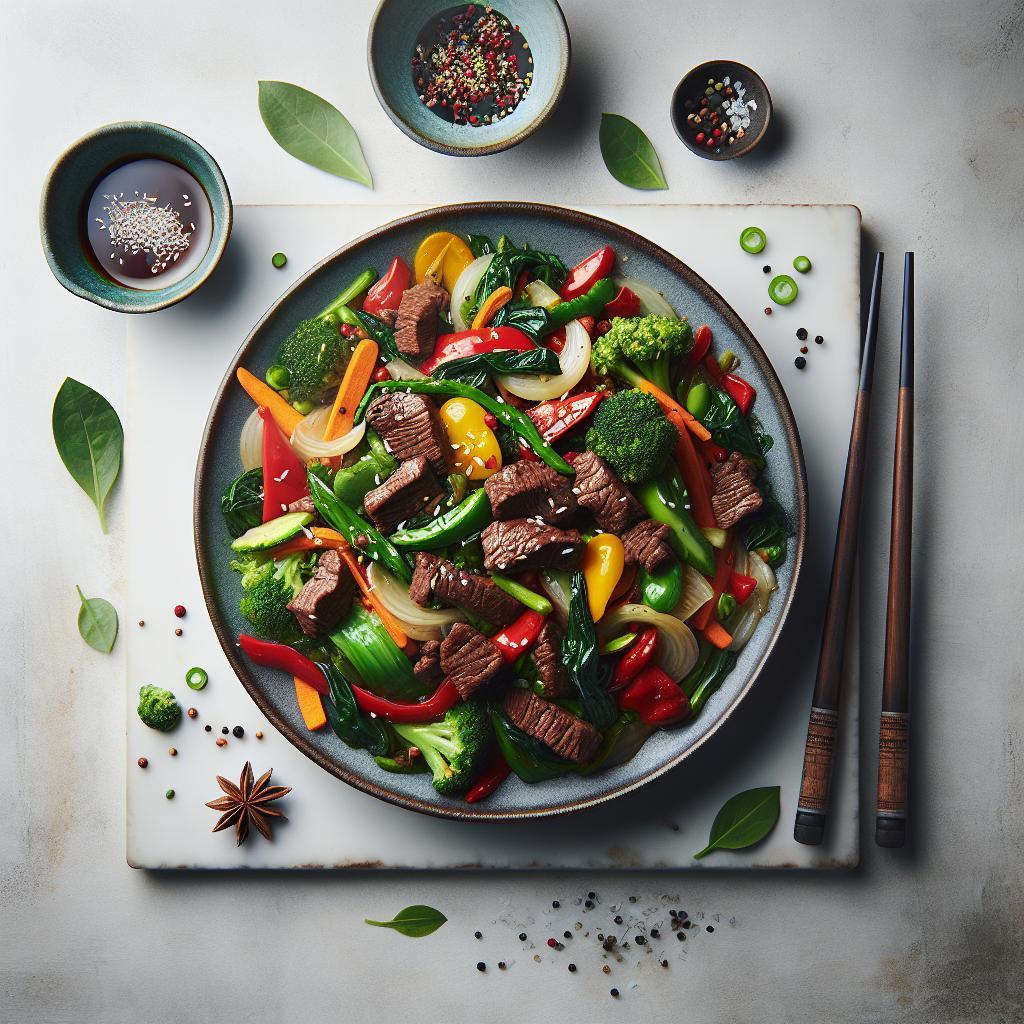

When the week’s pace demands a fast, flavorful dinner, a sizzling beef stir-fry delivers every time. This vegetable-forward recipe pairs tender, thinly sliced beef with crisp peppers, snap peas, and carrots, all finished in a balanced savory-sour sauce for a bright plate.
- Sourcing the Juiciest Cuts for Maximum Flavor
- Mastering the Art of Perfectly Crisp Vegetables
- Balancing Bold Sauces with Fresh, Vibrant Ingredients
- Tips for Quick Cooking That Locks in Taste and Texture
- Prep and Timing (H3: Quick Reference)
- Ingredients
- Instructions
- Tips for Success
- Serving Suggestions
- Nutrition Snapshot
- Make-Ahead and Meal-Prep Strategy
- FAQ
- Ready in 25 minutes: fast prep and high-heat cooking.
- Texture-driven: thin-sliced beef and staged vegetables keep crunch and tenderness.
- Sauce balance: blend salty, sweet, and acid for lift.
- Meal-prep friendly: cook components separately to preserve texture.
Sourcing the Juiciest Cuts for Maximum Flavor
Start with beef that sears and stays tender. Choose well-marbled cuts such as sirloin or flank that take high heat and produce a quick caramelized crust.
Buy from a butcher or a reliable market, and look for bright color and even marbling. For background on the meat itself see beef, which explains how marbling and cut selection affect flavor and cooking behavior.
Mastering the Art of Perfectly Crisp Vegetables
Vegetables must provide contrast: color, snap, and a clean vegetal note that lifts the beef. Use bell peppers, snap peas, julienned carrots, and baby corn for a varied texture profile.
Prep vegetables to uniform thickness, blanch hard items briefly if needed, and add them in stages during cooking. For a technical overview of the cooking method, consult stir-frying.
Balancing Bold Sauces with Fresh, Vibrant Ingredients
A well-balanced sauce ties the wok flavors together without overpowering fresh produce. Combine savory soy-based notes with a touch of sweetness and a bright acid to sharpen the palate.
Use toasted oil or aromatic finishes sparingly so the vegetables remain the stars. For context on classic seasoning components, see the history and varieties of soy sauce.
Tips for Quick Cooking That Locks in Taste and Texture
Heat control and timing define a successful stir-fry. Preheat your pan until very hot, then work in small batches so each item gets direct contact heat and browns instead of steaming.
Use a wok or large heavy skillet to move ingredients quickly and maintain high surface temperature. Learn how the tool influences results at the wok entry, which explains heat dynamics and utensil design.
Prep and Timing (H3: Quick Reference)
Prep and Cook Time
Preparation: 15 minutes. Prepare and portion vegetables first; mise en place speeds the cook phase.
Cooking: 10 minutes. High-heat, short bursts of cooking keep textures bright and flavors concentrated.
Yield and Difficulty
Yield: 4 servings. This scale fits a family dinner or two meal-prep portions.
Difficulty: Easy to medium. The technique is accessible, but timing and prep matter.
Ingredients
Arrange ingredients for speed: thin-sliced beef, assorted crisp vegetables, aromatics, and a simple sauce. Measuring and grouping ingredients prevents last-minute scrambling.
Ingredient list: 1 lb sirloin (thinly sliced), 1 red bell pepper (julienned), 1 cup snap peas (trimmed), 1 cup baby corn (halved), 1 medium carrot (julienned), 2 tbsp vegetable oil, 3 garlic cloves (minced), 1 tbsp fresh ginger (finely chopped), 3 tbsp soy sauce, 2 tbsp oyster sauce (optional), 1 tsp toasted sesame oil, 1 tbsp lime juice, 2 scallions (thin), cilantro for garnish, 1 tsp cornstarch mixed with 2 tbsp water (optional), salt and pepper to taste.
Instructions
Follow a clear sequence: sear the beef, remove it, cook vegetables, then combine with sauce. Keeping the beef moving in and out preserves moisture and finish.
Step-by-step: Pat the sirloin slices dry and season. Heat the pan until nearly smoking, add oil, sear beef in batches 1-2 minutes per side, remove. Stir-fry aromatics briefly, add harder vegetables then quicker-cooking ones, return beef, add sauces, thicken if desired, finish with lime and scallions, serve hot with cilantro.
Tips for Success
Small details yield big gains: keep ingredients dry, salt judiciously, and use the cornstarch slurry sparingly if you want a glossy cling without drowning the veg.
Also, rest beef briefly after searing if you seared larger batches; this locks juices and makes final tossing simpler. For gluten-free eaters, substitute tamari or coconut aminos for soy sauce.
Serving Suggestions
Serve over jasmine rice, brown rice, or a bed of noodles for a complete meal. Add toasted sesame seeds and extra herbs for texture and aroma.
A light cucumber salad or steamed greens gives a cooling contrast to the savory stir-fry. For a richer presentation, pair with dumplings or crispy wonton strips.
Nutrition Snapshot
Per-serving nutrition varies with cut and oil choices; estimated values help plate planning. This dish balances protein with moderate carbs and fats.
| Nutrient | Per Serving |
|---|---|
| Calories | 320 kcal |
| Protein | 28 g |
| Carbohydrates | 15 g |
| Fat | 14 g |
Make-Ahead and Meal-Prep Strategy
Cook beef and vegetables separately for best texture on reheating. Store in airtight containers and combine just before reheating to keep vegetables from softening overnight.
Reheat quickly over medium heat, adding a splash of water or stock to loosen sauce. This approach preserves the original contrast between tender meat and crisp vegetables.
FAQ
Below are concise, schema-friendly question blocks to address common practical concerns. Each answer offers an actionable solution you can use at the stove.
These FAQs focus on technique, substitutions, and storage to extend the recipe’s utility for busy cooks.
What cut of beef works best for fast stir-fry?
Choose well-marbled, thin-slicing-friendly cuts like sirloin or flank steak. Slice against the grain to shorten muscle fibers and increase tenderness.
How do I keep vegetables crisp without undercooking them?
Blanch hard vegetables briefly, then finish in the wok at high heat with softer vegetables added later. This two-stage approach preserves color and bite.
Can I make this gluten-free?
Yes. Replace soy sauce with tamari or coconut aminos and confirm that any oyster-flavored products are labeled gluten-free. Thickening agents like cornstarch and arrowroot are naturally gluten-free.
What is the best way to thicken the sauce without changing flavor?
Mix 1 tsp cornstarch with 2 tbsp cold water and add at the end of cooking. Cook for 30–60 seconds until glossy; avoid overcooking, which can thin the sauce again.
How should I store leftovers to preserve texture?
Store beef and vegetables in separate containers when possible. Reheat briefly over medium heat and add a splash of liquid to refresh the sauce and keep textures distinct.
Thank you for reading. Use these focused techniques to build confidence at the wok and deliver a fast, colorful dinner that stays true to fresh ingredients and bold, balanced seasoning.

See also: stir-fry