
Southern Corn Pudding Casserole: A Comfort Food Classic
Southern Corn Pudding Casserole captures a balance of sweet corn, a tender custard base, and a golden top that invites a second helping. This recipe sits at the intersection of simple ingredients and careful technique, which is why both home cooks and professional chefs return to it again and again.
- Overview and Context
- Prep and Cook Time
- Yield and Serving
- Difficulty Level
- Key Ingredients That Elevate Flavor
- Step-by-Step Guide to Perfect Texture
- Chef’s Notes: Practical Tweaks and Techniques
- Substitutions and Dietary Notes
- Serving Suggestions and Pairings
- Storage and Reheating
- Nutrition Snapshot
- Images and Further Reading
- FAQ
- In Retrospect
- Key takeaway: Use whole kernels plus creamed corn for texture and creaminess.
- Timing: Plan 15 minutes prep and about 45–50 minutes bake time for a 2-quart dish.
- Texture control: Avoid overmixing and watch bake time to keep the pudding custardy.
- Make-ahead: Assemble overnight for deeper flavor; allow extra bake minutes if chilled.
Overview and Context
Southern corn pudding grows from regional traditions that prioritize resourceful cooking and bold, comforting flavors. The dish highlights corn, an ingredient with deep agricultural and culinary roots across the Americas.
For background on the grain itself, see maize. For cultural context, consult Cuisine of the Southern United States.
Prep and Cook Time
Plan for approximately 15 minutes of hands-on prep plus 45–50 minutes of baking at 350°F (175°C). The total time usually falls near one hour, depending on oven variance and whether the dish starts chilled.
When the center still yields a few moist crumbs on a knife, remove the pudding from the oven and let it rest. Resting firms the structure and improves sliceability.
- Preparation: 15 minutes
- Cooking: 45–50 minutes
- Total Time: about 1 hour
Yield and Serving
This recipe yields about six generous servings from a 2-quart baking dish. It functions as a hearty side for holiday spreads or a comforting accompaniment to weeknight mains.
Portion to suit your menu. For a larger crowd, double the ingredients and use a larger pan, adjusting bake time by 10–15 minutes or until set.
Difficulty Level
The technique rates as easy, but small choices affect texture. Attention to mixing, liquid ratio, and bake time elevates the result from ordinary to irresistible.
Beginners will find the steps approachable; experienced cooks will appreciate the chance to tweak texture through small swaps like cream or buttermilk.
Key Ingredients That Elevate Flavor
Ingredient quality determines final flavor and mouthfeel. Combine whole kernel corn for bite with creamed corn for silkiness, and use whole milk or cream for richness.
When specific dairy choices matter, review the custard concept at custard for science-based guidance on egg-to-milk ratios and setting behavior.
- 2 cups fresh or frozen whole kernel corn — adds texture and natural sweetness
- 1 cup creamed corn — lends luscious creaminess
- 1 cup whole milk — provides smooth moisture
- 3 large eggs — bind the pudding into a custard-like consistency
- 1/4 cup unsalted butter, melted — adds depth and richness
- 2 tablespoons granulated sugar — balances savory mains with gentle sweetness
- 1/2 cup yellow cornmeal — adds subtle graininess and structure
- 1 teaspoon baking powder — lightens the pudding
- 1/2 teaspoon salt and 1/2 teaspoon freshly ground black pepper
- Optional: 1/4 cup finely chopped green onions or chives for a fresh note
Step-by-Step Guide to Perfect Texture
Start by preheating the oven to 350°F (175°C) and prepare a 2-quart baking dish with butter or nonstick spray. A lightly greased dish encourages an even crust and easy release.
Follow measured steps to retain custard-like tenderness: whisk eggs, fold in dairy and melted butter, then introduce dry ingredients with corn to avoid overworking the batter.
- Preheat oven to 350°F (175°C). Grease a 2-quart baking dish for even browning.
- Whisk eggs until frothy. Add whole milk, melted butter, and sugar until blended.
- Fold in corn and dry ingredients. Add whole kernel corn, creamed corn, cornmeal, baking powder, salt, and pepper.
- Mix until just combined. Avoid overmixing to preserve a tender crumb.
- Pour into the dish and smooth the surface. Bake uncovered for 45–50 minutes.
- Rest 10 minutes before serving. This stabilizes the pudding and improves slicing.
Baking Tips and Temperature Control
Ovens vary. Use an oven thermometer to confirm accurate temperature. If the top browns too quickly, tent foil loosely for the final 10–15 minutes.
For extra-creamy texture, consider a gentle water bath: set the baking dish inside a larger pan with hot water to regulate heat and prevent the edges from overcooking.
Chef’s Notes: Practical Tweaks and Techniques
Small ingredient changes shift texture and flavor. Swap whole milk for heavy cream to increase silkiness, or use buttermilk for a subtle tang and improved browning.
Adjust sugar to taste. A modest increase can balance savory main dishes, while a reduction suits those preferring restrained sweetness.
Substitutions and Dietary Notes
You can make the pudding gluten-free by omitting cornmeal or using certified gluten-free cornmeal. For a dairy-free version, swap to full-fat coconut milk or a high-quality plant milk and reduce bake time slightly.
To explore regional variations and the broader Southern repertoire, reference Southern US culinary traditions, which often inform seasoning and pairing choices.
Serving Suggestions and Pairings
Serve warm as a side to roasted chicken, braised pork, or a platter of sautéed greens. The pudding’s creamy texture complements smoky or acidic mains.
Garnish with fresh herbs for brightness. A small dollop of sour cream or a drizzle of hot honey adds contrasting notes that highlight the corn’s sweetness.
Storage and Reheating
Store leftovers in an airtight container in the refrigerator for up to three days. Reheat gently in a low oven or covered in the microwave to preserve moisture.
Avoid prolonged storage to maintain texture. If freezing, expect some texture change; thaw overnight in the refrigerator before reheating.
Nutrition Snapshot
This pudding provides energy and comfort rather than diet-specific benefits. Use whole ingredients for classic flavor; choose lighter dairy for a leaner profile.
Approximate per-serving values vary by exact ingredients and portion size; the table below offers a reliable baseline for planning.
| Nutrient | Per Serving |
|---|---|
| Calories | 210 kcal |
| Protein | 6 g |
| Carbohydrates | 28 g |
| Fat | 8 g |
Images and Further Reading
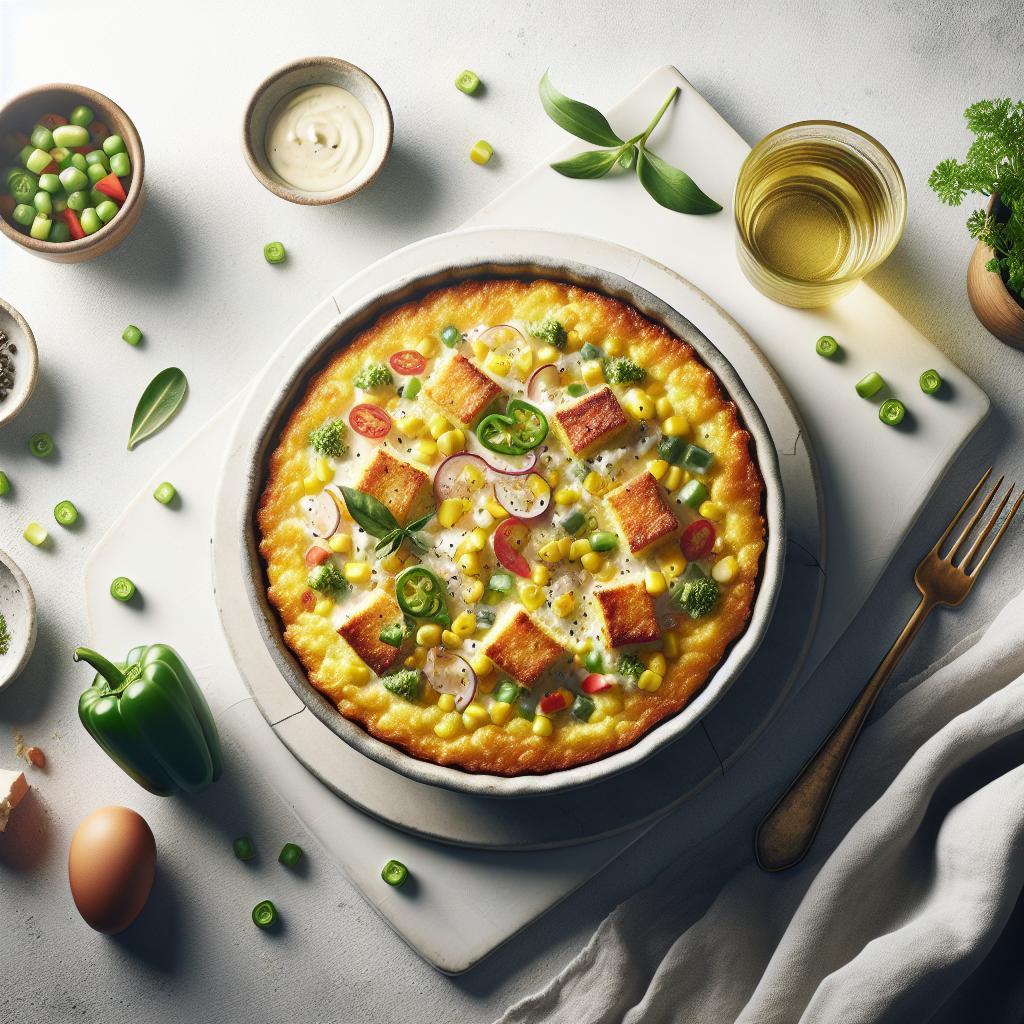
The visual cues—golden top, slight jiggle, browned edges—help you judge doneness. Use photography to guide plating and portioning for gatherings.
For historical context and regional variants, consult the maize entry at maize and the custard entry at custard.

FAQ
What is Southern Corn Pudding Casserole?
Southern Corn Pudding Casserole is a baked side dish that combines whole kernel corn, creamed corn, eggs, and dairy to form a tender, custard-like pudding. Its texture ranges from spoonable to sliceable depending on liquid ratios and bake time.
How does corn pudding differ from corn casserole?
Corn pudding emphasizes a smooth, custardy texture, while corn casserole can include coarser elements like cornbread mix or crunchy toppings. Corn pudding aims for silkiness; casserole often favors a denser crumb.
Can I make this gluten-free?
Yes. Omit cornmeal or use certified gluten-free cornmeal. Verify that any canned or packaged ingredients have no gluten-containing additives to maintain a safe gluten-free dish.
Can I prepare this ahead of time?
Assemble the pudding and refrigerate overnight; allow it to warm slightly before baking to ensure even cooking. Expect to add 8–12 minutes to the bake time when starting from chilled.
What tips ensure a creamy result?
Mix gently, measure liquids accurately, and avoid overbaking. A slight jiggle in the center at pull time signals a creamy interior that will set as it rests.
In Retrospect
Southern Corn Pudding Casserole succeeds through precise, simple choices: the right ratio of eggs to dairy, the mix of corn textures, and attentive baking. These choices produce a dish that feels familiar yet refined.
Make this recipe your own by testing small swaps, tracking bake time, and noting how texture changes with ingredient adjustments. The result rewards patience with comfort that tastes like tradition.
See also: Corn Pudding