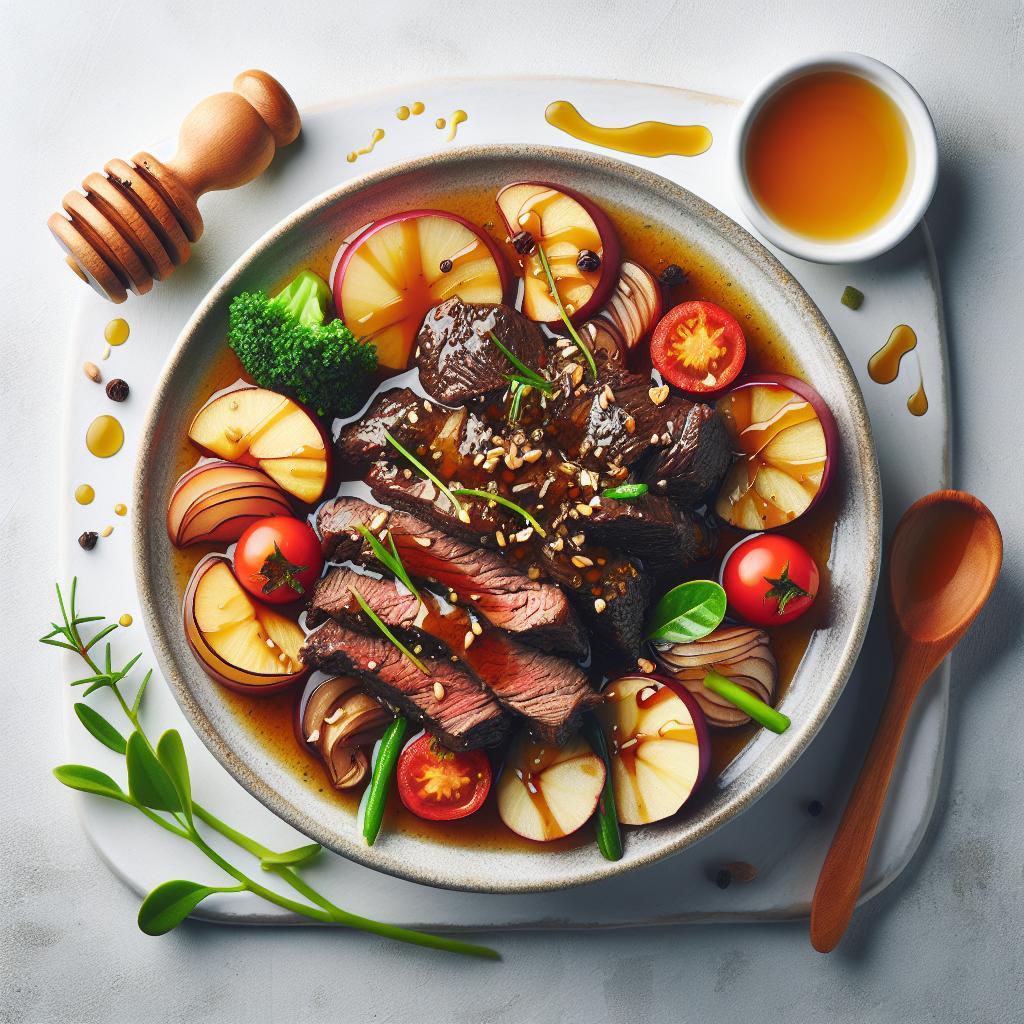

Sweet & Savory Slow Cooker Honey Garlic Beef Recipe Guide
There is something magical about the marriage of sweet honey and pungent garlic when they coat slow-cooked beef. This guide shows how to turn a well-marbled chuck roast into fork-tender pieces glazed in a balanced honey-garlic sauce. You will find step-by-step technique, cut selection, and practical troubleshooting that help home cooks achieve reliable results every time.
- Low-and-slow cooking converts collagen into gelatin for silky beef.
- Browning first adds Maillard flavor that lifts the entire dish.
- Simple sauce chemistry—acid, salt, fat, and sugar—creates depth and balance.
- Finish options let you control sauce texture and presentation.
Prep and Cook Time
Preparation: Plan for a short hands-on prep, usually around 15 minutes. During this time you will trim, cube, and brown the beef and mix the sauce components.
Cooking: Cook on low for 6 to 8 hours in a slow cooker to allow connective tissue to break down. Alternatively, use the high setting for 3 to 4 hours if pressed for time, but expect slightly less tender results.
Yield and Difficulty
This recipe yields about 6 servings, making it ideal for family dinners and meal prep. The yields assume roughly 2.5 pounds of chuck roast before trimming.
Difficulty: Easy to medium. The techniques are basic: browning, mixing a balanced sauce, and slow cooking. The most technical step is finishing the sauce to the desired thickness.
Ingredients
Use pantry-stable and fresh ingredients for consistent flavor. The list below prioritizes umami balance, acidity for brightness, and a sweet backbone from honey.
- 2.5 lbs beef chuck roast, trimmed and cut into 2-inch cubes
- 1/4 cup honey
- 6 cloves garlic, finely minced
- 1/3 cup low-sodium soy sauce
- 1/4 cup beef broth
- 2 tablespoons tomato paste
- 1 tablespoon rice vinegar
- 1 teaspoon freshly ground black pepper
- 1 tablespoon cornstarch, mixed with 2 tablespoons cold water (optional)
- 2 tablespoons vegetable oil
- Chopped green onions and sesame seeds, for garnish
Choosing the Perfect Cut of Beef for Slow Cooking
Pick a cut that benefits from long, moist cooking. The best choice is a well-marbled chuck cut because its connective tissue transforms into gelatin over hours, producing a tender mouthfeel and rich texture.
For background on meat cuts and how connective tissue behaves during cooking, see beef and the chuck cut on Wikipedia. Those pages explain muscle structure and why certain cuts suit low-temperature, long-duration methods.
Step-by-Step Guide to Crafting the Ideal Honey Garlic Sauce
Make the sauce by combining sweet, salty, acidic, and umami elements. This balance ensures the sauce glazes the beef without tasting cloying or flat.
Combine honey, soy sauce, minced garlic, beef broth, tomato paste, and rice vinegar in a bowl. Whisk until smooth and set aside until after you brown the meat.
Browning the Beef
Heat oil in a heavy skillet over medium-high heat and brown beef cubes in batches. Browning builds complex flavors through the Maillard reaction, which enhances depth beyond what the slow cooker alone can produce.
For a technical note on this chemical process, refer to the Maillard reaction entry. Browning also reduces surface moisture, which helps the sauce adhere better during slow cooking.
Slow Cooker Assembly and Timings
Transfer the browned beef into the slow cooker and pour the sauce evenly over the meat. Spread pieces in a single layer where possible to encourage consistent heat transfer and sauce saturation.
Cook on low for 6–8 hours until the meat reaches an internal feel of fork-tenderness. Use a meat thermometer to target internal texture rather than specific temperature alone.
Tips for Achieving Tender, Melt-in-Your-Mouth Beef Every Time
Low temperature over a long period converts collagen into gelatin, which yields silky texture. Allow the full 6 to 8 hours on low when possible; shorter, hot methods tend to deliver chewier results.
Always brown for greater flavor. If you skip browning, compensate with a short sauté of onions or tomato paste to add depth. Also, avoid over-trimming fat—some render adds mouthfeel and flavor during cooking.
Finishing and Thickening Options
If the sauce looks too thin at the end, remove beef and vegetables, then thicken the cooking liquid on the stovetop. Whisk in a cornstarch slurry and simmer until glossy and coat-worthy.
Alternatively, reduce the sauce by simmering it directly in a saucepan to intensify flavor. Both methods create a clingy glaze that photographs well and tastes concentrated.
After finishing the sauce, return the beef briefly to recoat evenly. This step ensures each bite carries a glossy, balanced film of sauce rather than puddles of thinned liquid at the plate base.
Serving Suggestions
This honey garlic beef pairs exceptionally with steamed jasmine rice, buttery mashed potatoes, or wide egg noodles. The starch absorbs sauce and creates satisfying contrast in texture.
Add crisp, bright vegetables like steamed bok choy, blanched green beans, or roasted broccoli to cut richness. Finish with sesame seeds and thinly sliced green onions for crunch and freshness.
Nutrition and Storage
Estimate per-serving nutrition at roughly 380 kcal, 35 g protein, 18 g carbohydrates, and 16 g fat. Values will vary by cut and portion size. These numbers help you plan meals and balance macros across a week.
Store leftovers in airtight containers in the refrigerator for 3–4 days. For longer storage, portion into freezer-safe containers and freeze up to three months. Thaw overnight in the refrigerator before reheating gently over low heat.
| Nutrition per Serving | Amount |
|---|---|
| Calories | 380 kcal |
| Protein | 35 g |
| Carbohydrates | 18 g |
| Fat | 16 g |
Common Problems and Quick Fixes
If the sauce tastes too salty, balance it with a small splash of vinegar or a teaspoon of extra honey. Adjust in tiny increments and taste as you go to prevent overshooting the balance.
If the beef is under-tender, resume low cooking for another hour or two. Moist-heat methods continue to break down collagen with additional time, so patient extension often fixes chewiness.
FAQ
Q: What cut of beef cooks best in a slow cooker?
A: Choose cuts with connective tissue and intramuscular fat, such as chuck, brisket, or short ribs. These cuts become tender and flavorful after hours of moist heat.
For documentation on meat anatomy and cuts, consult the beef overview and the chuck entry on Wikipedia.
Q: Can I use powdered garlic instead of fresh?
A: Fresh garlic delivers brighter, more aromatic flavors that hold up to long cooking. Garlic powder can work in a pinch, but increase quantity cautiously and add toward the end of cooking for better presence.
Fresh minimizes the flat, one-dimensional notes that dehydrated seasonings sometimes produce, especially after extended heat exposure.
Q: How do I prevent honey from burning when reducing the sauce?
A: Reduce the sauce over moderate heat and stir constantly. If the pan becomes too hot, lower the flame; the goal is gentle, even evaporation without localized scorching.
Because honey caramelizes at relatively low temperatures, constant attention during reduction preserves its sweet character rather than turning it bitter.
Q: Can I add vegetables to the slow cooker with the beef?
A: Yes. Root vegetables like carrots, potatoes, and onions work well and absorb sauce flavors. Place firmer vegetables beneath the meat if you want them especially tender.
Alternatively, add quick-cooking vegetables toward the last hour to preserve texture and color. Adjust timing to achieve the balance you prefer.
Q: Does the slow cooker model affect cooking time?
A: Yes. Different slow cookers run hotter or cooler. Treat manufacturer timings as starting points and check for fork-tenderness rather than relying solely on clock time.
Invest in a probe thermometer or test a piece of meat near the end of the window to confirm ideal doneness and texture.

Make this sweet & savory slow cooker honey garlic beef your go-to comfort meal. Follow the browning, balance, and finishing techniques above and you will achieve consistent, restaurant-quality results at home. Enjoy the process and savor every tender, glossy bite.
Reference: For background on slow cooking equipment consult slow cooker on Wikipedia. For honey properties see honey. For garlic chemistry see garlic.
See also: honey garlic