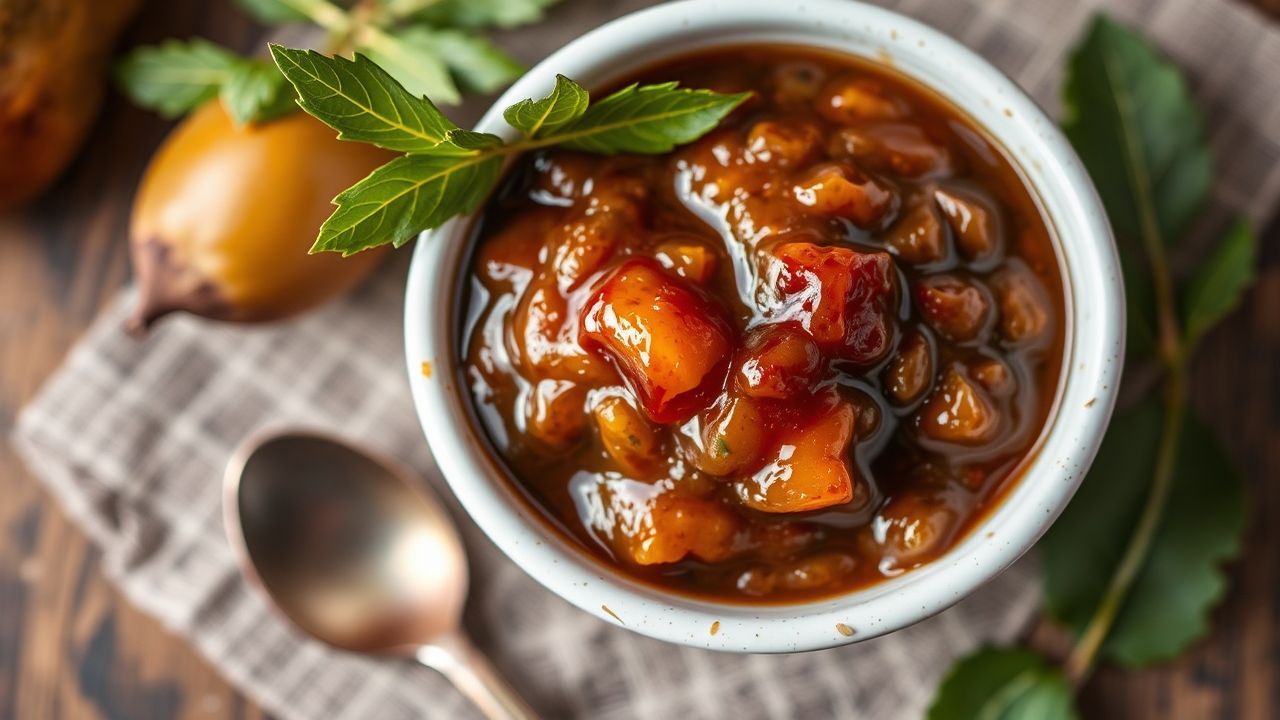

Tamarind chutney delivers a bright, layered tang that transforms simple snacks into memorable bites. This guide breaks the recipe into clear steps, practical swaps, and storage advice so you can reproduce consistent results every time.
- Make a syrupy, shelf-stable chutney: control water and cook time to reach the right viscosity.
- Balance with jaggery or sugar: adjust sweetness incrementally to tame tamarind’s acidity.
- Use toasted spices: roast cumin to deepen aroma and reduce bitterness.
- Store smart: refrigerate in sterilized jars and stir before serving to restore texture.
Overview and Cultural Roots
Tamarind chutney sits at the intersection of sour, sweet, and spicy flavors central to many South Asian snacks and street foods. It pairs especially well with fried snacks and tangy chaat, acting as a high-acid counterpoint that brightens rich or oily dishes.
For context on tamarind as an ingredient and its culinary role, see tamarind on Wikipedia. For the broader family of condiments it belongs to, consult the chutney overview.
Prep and Cook Time
Preparation: 15 minutes. Cooking: 25 minutes. Total active time roughly 40 minutes, with additional time for cooling and resting. These timings assume you process fresh tamarind pods; using tamarind paste can shorten prep by 5–10 minutes.
Managing heat and evaporation drives the final texture. Simmer on low to medium to concentrate flavor without scorching the sugars. If the mixture reduces too fast, lower the flame and cover partially to control splatter while keeping steam exchange.
Yield and Difficulty
Yield: Approximately 2 cups, enough for 6–8 snack servings. The recipe scales linearly: double ingredients and use a wider pan to keep the same evaporation rate.
Difficulty: Medium. The technique centers on balancing acidity and sweetness while preventing caramelized bitterness. Home cooks with basic stovetop skills will find the method straightforward with a little tasting discipline.
Ingredients
Core ingredients include fresh tamarind (or concentrated tamarind paste), a sweetener like jaggery or brown sugar, toasted spices, and a pinch of sulfurous black salt for that signature tang. For a reference on jaggery and its culinary properties, see jaggery.
Essential list (makes ~2 cups):
- 100 g tamarind pods or 1/2 cup tamarind paste
- 1 cup warm water (for soaking)
- 1/3 cup jaggery (or dark brown sugar)
- 1 tsp roasted cumin powder (toast whole cumin seeds first)
- 1 tsp red chili powder (adjust to taste)
- 1/2 tsp black salt (kala namak, optional)
- 1/2 tsp ginger powder or 1 tsp fresh grated ginger
- 1 tbsp neutral oil or mustard oil for aroma
- 2 tbsp chopped coriander (optional garnish)
Substitutions and Spice Notes
If you lack fresh tamarind pods, use a high-quality tamarind paste but reduce water; concentrate influences sweetness and acidity. For spice layering, toasted cumin anchors the chutney; see the cumin entry for botanical and flavor context: cumin.
Black salt imparts a mild sulfurous note; ordinary salt is a valid substitute but alters the signature profile. For vegan or lower-glycemic options, maple syrup or date syrup can replace jaggery with flavor shifts to consider.
Instructions
Follow the steps below in sequence. Each step includes a brief rationale so you make adjustments confidently.
Start by extracting pulp, then build layers of flavor with sweetener and toasted spices. Finish by reducing to syrupy consistency and cooling in sterilized jars.
Step-by-step Method
- Prepare tamarind pulp: Break tamarind pods and remove fibers and seeds. Soak the cleaned pulp in 1 cup warm water for 15 minutes until soft. Mash thoroughly and strain through a sieve to collect smooth pulp.
- Heat the base: Warm oil in a non-stick saucepan over medium heat. Pour in the strained tamarind liquid and bring to a gentle simmer to integrate flavors.
- Add jaggery and spices: Stir in jaggery until dissolved. Add roasted cumin powder, chili powder, black salt, and ginger. Stir frequently to prevent sticking and to marry spices into the liquid.
- Reduce to consistency: Simmer on low for 15–20 minutes until the mixture thickens to a syrup that coats a spoon. If it becomes too thick, add hot water a tablespoon at a time to reach desired viscosity.
- Adjust and finish: Taste and fine-tune sweetness or heat in small increments. Cool fully, then transfer to a sterilized jar. Garnish with coriander if desired.
Chef’s Notes and Pro Tips
Roasting whole spices yields a fresher, cleaner aroma than using pre-ground powders. Toast cumin seeds until aromatic and pulse to a powder for optimal flavor release. This step reduces raw spice bitterness and improves shelf stability.
Control sugar addition carefully: tamarind acidity can vary by batch, so always add sweetener in stages while tasting. If the chutney tastes flat, brief simmering concentrates acids and volatile flavors, improving brightness.
Use a fine-mesh sieve when straining to remove fibers and seeds; this creates a smooth texture that clings to snacks. If you prefer a chunkier sauce, strain less and leave some pulp for body.
Serving Suggestions
Tamarind chutney pairs with samosas, pakoras, and chaat, providing acidity to cut through fried textures. Drizzle lightly so the chutney complements rather than overwhelms the primary flavors.
Beyond snacks, use small amounts as a glaze on roasted vegetables or mixed into yogurt or dahl for a bright counterpoint. For curated menus, pair with spicy, fatty, or creamy elements to create a balanced bite.
Storage and Safety
Cool the chutney to room temperature before sealing jars. Refrigerate in sterilized glass jars; properly stored, it keeps up to two weeks. Freeze portions in ice-cube trays for longer storage and thaw as needed.
Always use a clean spoon to prevent microbial contamination. If you notice off-odors, visible mold, or unexpected fermentation, discard the batch and sanitize containers thoroughly before reuse.
Nutritional Snapshot
Per 2 tbsp serving, expect roughly 45 kcal, low protein, and primarily carbohydrate calories from sugars. Adjusting sugar or jaggery changes caloric count and glycemic load.
Use the chutney sparingly if you manage sugar intake. Replacing part of the jaggery with date paste reduces refined sugar while contributing fiber and mineral content.
| Nutrient | Per 2 Tbsp Serving |
|---|---|
| Calories | 45 kcal |
| Protein | 0.3 g |
| Carbohydrates | 12 g |
| Fat | 0.1 g |
Related Recipes and Further Reading
Explore complementary house recipes in our internal guides to build a snack menu: see guide to traditional Indian chutneys and the recipe index for snack pairings and chutney variations.
For more academic context on ingredients and culinary history, consult reputable references such as the Wikipedia entries linked earlier on tamarind, chutney, and jaggery. Those pages summarize botanical, historical, and culinary dimensions relevant to this chutney.
FAQ
How long does homemade tamarind chutney last?
Refrigerated in a clean jar, it lasts up to two weeks. Freezing in small portions extends life to several months and makes portioning convenient.
Can I use tamarind paste instead of pods?
Yes. Use less water and taste frequently: paste concentrates acidity and may need less simmering. Adjust sweetener proportionally to maintain balance.
What is the best sweetener for authentic flavor?
Jaggery mirrors traditional profiles and adds caramel notes. Brown sugar works as a substitute but lacks jaggery’s mineral complexity. Consider date syrup for a natural alternative.
Is black salt necessary?
Black salt adds a sulfurous tang typical in many regional recipes. Omit it if unavailable; use plain salt but expect a different flavor character.
How do I fix a chutney that’s too sour or too sweet?
For overly sour chutney, add small increments of sweetener and simmer to integrate. If too sweet, dilute with a splash of hot water and a touch of acid (a few drops of lemon) to rebalance.
By focusing on controlled reduction, toasted spices, and incremental adjustments, you can make a consistent, restaurant-quality tamarind chutney at home. Apply the techniques above and keep tasting—small tweaks yield large improvements.
See also: tamarind chutney