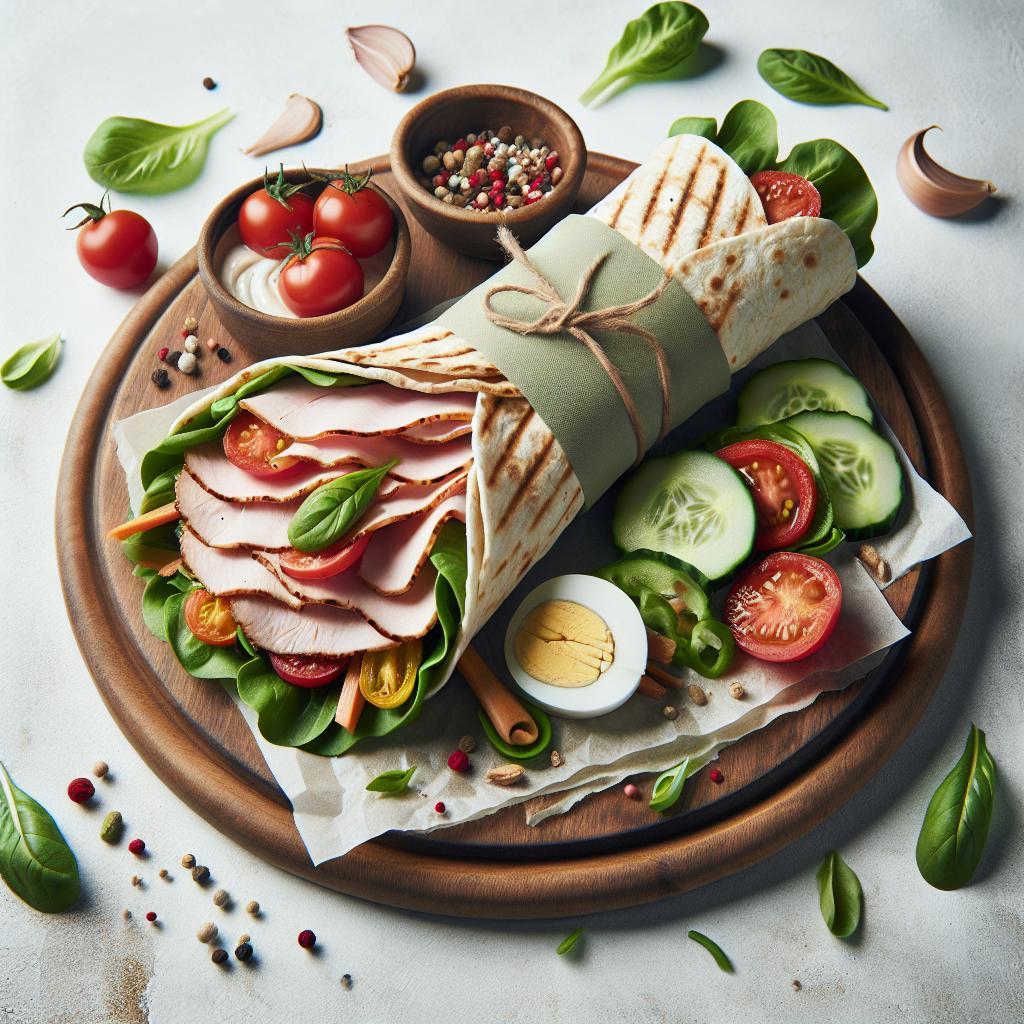

Turkey wraps offer a reliable blend of lean protein, fresh vegetables, and portable convenience. They assemble in minutes and adapt to varied flavor profiles, from Mediterranean to smoky-barbecue, making them a top pick for busy cooks who want both speed and nutrition.
- Ready fast: Assemble in 10–15 minutes for immediate meals or quick meal prep.
- Flexible: Swap proteins, spreads, and greens to suit dietary needs or pantry limits.
- Portable nutrition: Lean turkey plus vegetables delivers a balanced handheld meal.
- Batch friendly: Prep components ahead for grab-and-go lunches all week.
Prep and Cook Time
Timings matter when lunch needs to happen quickly. Most turkey wrap builds require minimal active time: about 10 minutes to prep and 5 minutes to warm or toast the wrap if desired.
If you plan to meal-prep proteins in advance, factor in resting and cooling time for safe storage. A brief toast in a grill pan crisps the exterior and improves mouthfeel without adding complexity.
Yield and Difficulty
This recipe yields 4 hearty wraps and suits cooks of any experience level. The technique emphasizes layering and tight rolling rather than advanced knife skills.
Use a serrated knife for clean diagonal slices and a warm towel to help tortillas remain pliable while assembling. These small steps deliver consistent results, every time.
Ingredients
Keep ingredients simple and focused on texture contrasts: soft protein, creamy elements, crisp vegetables, and a binding spread. The ingredient list below balances flavor and shelf stability for easy shopping.
Use whole-wheat or flavored tortillas for structure and fiber, and choose low-sodium roasted turkey breast to manage sodium intake while preserving protein content.
- 4 large whole wheat or spinach tortillas, warmed for pliability (tortilla background)
- 8 oz sliced roasted turkey breast, preferably low sodium
- 1 ripe avocado, sliced thinly (avocado nutrition and uses)
- 1 cup fresh baby spinach leaves, washed and dried
- 1 medium tomato, thinly sliced
- ½ cup shredded sharp cheddar cheese or plant-based alternative
- 2 tablespoons hummus or Greek yogurt spread (hummus overview)
- 1 small cucumber, julienned
- 1 tablespoon Dijon mustard (optional)
- Salt and freshly cracked black pepper, to taste
- Fresh lemon juice, a squeeze for avocado freshness
- Optional: sliced red onion or sprouts for extra crunch
Instructions
Follow a consistent assembly order to achieve even distribution and avoid soggy wraps. Start with a spread to create a moisture barrier, then stack leaves, protein, creamy elements, and crunchy vegetables.
Finish by rolling tightly and, if desired, warming briefly for a crisp exterior. The technique is scalable for batch assembly or single-serving prep.
Step-by-step Assembly
- Warm your tortillas in a dry skillet over medium heat for 20–30 seconds per side. Keep them covered with a clean towel so they stay pliable while you assemble.
- Apply a spread like hummus or Greek yogurt across the center of each tortilla to form a moisture barrier. This improves shelf life and prevents the tortilla from getting soggy.
- Layer greens next: a handful of baby spinach or mixed greens provides structure and nutrition. Greens also separate wetter ingredients from the wrap surface.
- Add turkey slices evenly—about 2 ounces per wrap—to balance protein with other components. Fold slices if needed for even coverage.
- Place avocado slices over turkey and squeeze lemon juice to delay browning. Season lightly with salt and black pepper.
- Stack remaining fillings: tomato, cheese, cucumber, and optional red onion or sprouts for crunch. Add mustard or a drizzle of vinaigrette for acidity.
- Roll tightly by folding the bottom edge up, tucking in the sides, then rolling forward to create a compact cylinder. Wrap in parchment for travel.
- Optional finish: Toast in a grill pan or sandwich press for 2–3 minutes per side to crisp the tortilla and melt the cheese slightly.
- Slice and serve on the diagonal to display the layered cross-section and make handling easier.
Tips for Success
Small technique tweaks yield big improvements in texture and longevity. Use spreads strategically, keep wet components separated until eating, and choose sturdy wraps if you need to pack them.
When prepping for the week, store wet ingredients like tomatoes separately and assemble wraps the morning you plan to eat them. This preserves crunch and maintains the intended mouthfeel.
Serving Suggestions and Sides
Pair turkey wraps with side dishes that add complementary textures and flavor profiles. Think roasted root vegetables for warmth or a bright fruit salad for contrast.
For Mediterranean-inspired wraps, serve with a cucumber salad or a lemony slaw to echo the wrap’s fresh components and add volume to the plate.
- Oven-baked sweet potato fries seasoned with smoked paprika.
- Citrus coleslaw combining shredded cabbage and carrot with a light lemon vinaigrette.
- Fresh fruit salad of berries, melon, and mint for a refreshing finish.
- Mediterranean cucumber salad with olives and feta for added salt and tang.
Explore other wrap recipes for variety; our internal resources offer compatible ideas and meal-prep strategies for busy weeks. See our Quick Chicken Wraps Recipe and Meal Prep Wraps Guide for interchangeable techniques and flavor swaps.
Nutrition Info
Turkey serves as a lean protein source, which supports satiety and muscle maintenance with fewer calories than fattier meats. Combining turkey with vegetables and whole-grain tortillas yields a balanced macronutrient profile for most adults.
For deeper context on dietary considerations and nutrient balance, consult general nutrition references. Reliable overviews explain protein, fat, and carbohydrate roles in meal planning (nutrition basics).
| Nutrition Info (per wrap) | Amount |
|---|---|
| Calories | ~350 kcal |
| Protein | ~28 g |
| Carbohydrates | ~30 g |
| Fat | ~12 g |
Storage and Meal-Prep Strategies
To extend freshness, store components separately and assemble just before eating. Keep turkey chilled and use airtight containers to minimize moisture transfer among ingredients.
Wrap finished sandwiches tightly in parchment or foil and refrigerate up to 24 hours for best texture. For longer storage, store fillings separately and assemble within 48–72 hours depending on ingredients.
FAQ
Q: How do I stop my wrap from becoming soggy?
Layer a thick spread like hummus directly on the tortilla to create a barrier. Keep wet items such as tomatoes or dressings in separate containers until ready to eat.
Q: Can I make these wraps vegan or vegetarian?
Yes. Substitute turkey with smoked tofu, roasted chickpeas, or seasoned tempeh. Use plant-based spreads and skip cheese to keep the wrap fully vegan.
Q: What flatbreads work best for these wraps?
Whole-wheat or spinach tortillas provide structure and fiber. Large lettuce leaves work for low-carb options but require gentler handling and immediate consumption.
Q: Are turkey wraps good for meal prepping?
They are, when components remain separate until assembly. Prepare proteins and vegetables ahead, then build wraps the day you plan to eat them for optimal texture.
Q: How can I add more nutrition without extra prep time?
Add pre-washed leafy greens like baby spinach and use avocado or a sprinkle of seeds for healthy fats. These additions require minimal prep yet improve nutrient density.
Final Notes
Turkey wraps balance convenience and nutrition by combining lean protein with fresh produce and simple assembly techniques. They scale well for family meals, packed lunches, and quick dinners.
Experiment with spices, spreads, and side pairings to keep variety in rotation. Use internal resources for more wrap ideas and meal-planning templates to increase kitchen efficiency.
Image: 
Related reading: Turkey (bird), Tortilla, and Avocado for ingredient context.
See also: Turkey wraps