
Unlock Flavor: The Ultimate Guide to Homemade Marinara Sauce
There is real magic when ripe tomatoes, fragrant garlic, and fresh basil meet in a simmering pot. This homemade marinara blends simple ingredients with technique to produce layers of bright, balanced flavor.
- Fresh tomatoes and low heat yield the richest, cleanest tomato taste.
- Timing herbs creates clear aromatic layers rather than muddled flavors.
- Small adjustments to salt and sugar balance acidity without masking freshness.
- Make-ahead increases depth as flavors continue to meld overnight.
Why Homemade Marinara Outperforms Jars
Homemade sauce gives you full control over ingredient quality and salt levels. You can match texture and acidity to your recipe and palate.
Store-bought jars often rely on stabilizers and higher sodium to preserve shelf life. By contrast, a pot of fresh marinara showcases bright tomato flavor and fresh herb notes.
Prep and Cook Time
Preparation: 10 minutes. These steps focus on efficient prep so your sauce spends most time doing the work on the stove. That short prep keeps ingredients fresh and active.
Cooking: 1 hour 15 minutes. Simmering low and slow concentrates flavor while keeping bright tomato notes. Monitor heat; avoid rolling boil to prevent harsh flavors.
Yield and Difficulty
Yield: Approximately 4 cups, enough for 6–8 servings. Portioning into jars or freezer bags helps with meal planning and reduces waste. For larger batches, scale tomatoes and oil proportionally.
Difficulty: Medium. The technique is straightforward but pays off when you control temperature, seasoning, and herb timing. Even beginners achieve excellent results by following steps precisely.
Ingredients
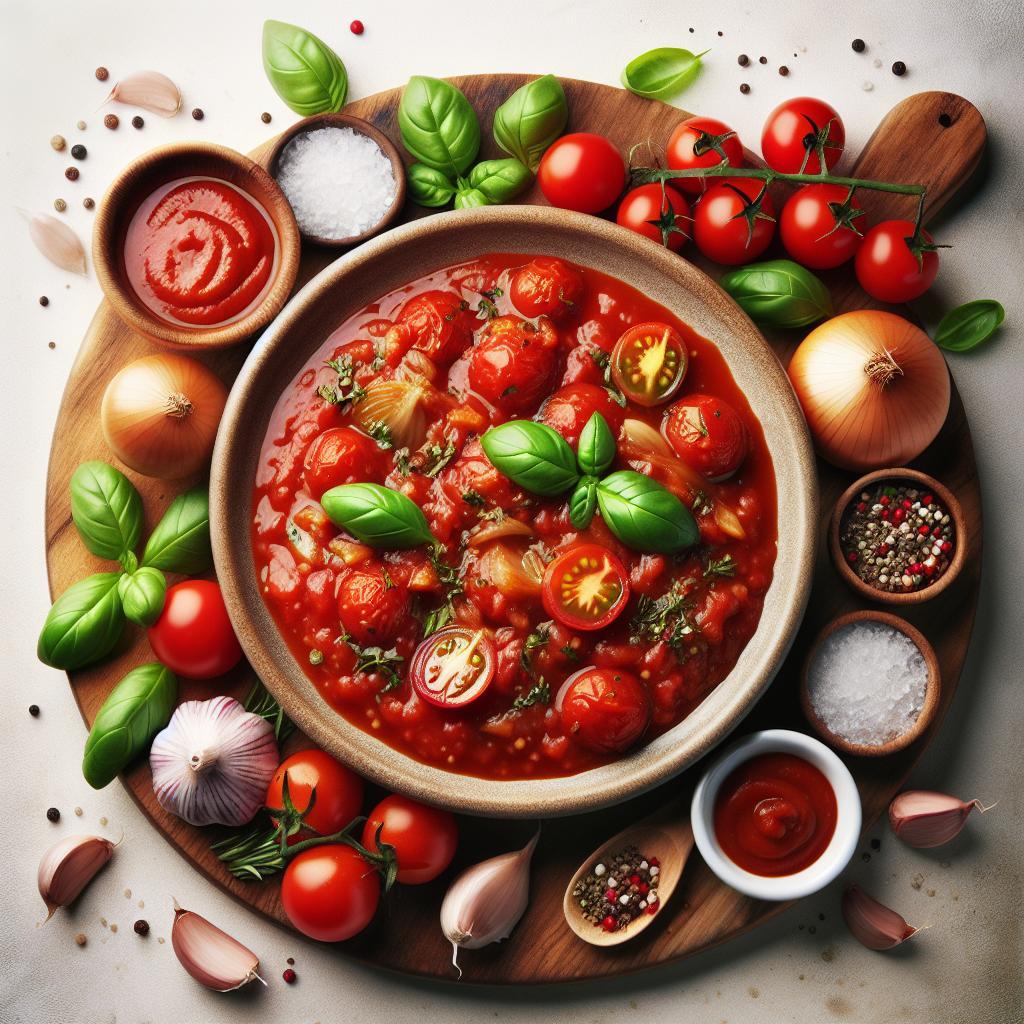
3 lb ripe plum tomatoes (Roma or similar), quartered and lightly crushed. Fresh tomatoes give the best natural sweetness and body to the sauce.
1/4 cup extra virgin olive oil, 1 medium yellow onion, 4 cloves garlic, 1 tsp sea salt, plus pepper, oregano, a pinch of red pepper flakes, 1 tsp sugar, and 1 cup fresh basil torn at the end. Use good-quality olive oil to add fruitiness without heaviness.
Tomato Selection and Handling
Choose firm, fragrant fruit that yields juice but keeps some texture after simmering. When in doubt, pick tomatoes with a deep color and a balanced sweet-acid aroma.
For background on tomato varieties and cultivation, see the Tomato overview. Proper selection alters cooking time and final texture.
Essential Equipment
Use a heavy-bottomed saucepan for even heat distribution and to prevent scorching. A wide pan speeds evaporation, which concentrates flavor faster and reduces simmer time slightly.
Keep a wooden spoon for gentle stirring and an immersion blender if you want a smoother finish. A fine strainer or food mill yields restaurant-quality silkiness when desired.
Instructions
1. Prepare the tomatoes: Core and quarter tomatoes, then crush gently by hand or with a masher to release juices. Reserve some larger pieces if you prefer a rustic texture.
2. Sauté aromatics: Warm olive oil over medium heat and sweat diced onions until translucent, about 7 minutes. Add garlic for the last 1–2 minutes and remove heat quickly if garlic starts to brown.
3. Combine and season: Add crushed tomatoes, salt, pepper, oregano, and a pinch of sugar to the pan. Stir to combine so the aromatics and tomatoes marry evenly.
4. Simmer: Reduce to low and simmer uncovered for 60–75 minutes, stirring occasionally. Keep heat low to maintain fresh tomato brightness while concentrating the sauce.
5. Finish with fresh herbs: Stir in torn basil and chopped parsley in the last five minutes to retain aromatic lift. Adjust seasoning to taste and blend briefly if you want a smoother texture.
Tips for Success
Start with quality produce and good olive oil because the sauce relies on few ingredients to deliver complex flavor. Avoid overcooking aromatics, which can introduce bitter notes.
When simmering, skim any foam early and stir gently to prevent sticking. Small, steady corrections to salt and sugar result in a balanced final sauce.
For concentrated tomato flavor without heaviness, reduce the sauce uncovered to evaporate water slowly. This concentrates natural sugars while keeping herbal notes intact.
Serving Suggestions
Serve the sauce over al dente pasta, use it as a base for pizza, or spoon it onto roasted vegetables. The sauce works equally well as a warming bowl with crusty bread or as a finishing glaze for proteins.
For classic pairings and pasta form factors, review general pasta techniques at the Pasta entry. Match shapes to sauce consistency for the best mouthfeel.
Variations and Additions
Keep the classic recipe simple, or layer in extras for depth. Small additions like roasted mushrooms, caramelized onions, or a splash of good balsamic reduce the need for added salt while adding umami.
For garlic-forward versions, roast whole cloves first to add sweetness without raw bite. For a smoky note, briefly char plum tomato halves under high heat before crushing.
Storage and Shelf Life
Cool sauce quickly and store in airtight containers in the refrigerator for up to 4–5 days. For longer storage, freeze in portioned containers for up to 3 months and thaw in the refrigerator overnight.
Reheat gently on low heat and stir to reincorporate any separated oil. Taste and adjust seasoning after reheating to refresh aromatics and balance.
Nutrition Snapshot
This marinara is naturally low in saturated fat and offers vitamins from fresh tomatoes and herbs. A typical half-cup serving provides about 90 kcal, modest protein, and fiber from whole ingredients.
To view broader nutritional contexts for common ingredients, explore the Olive oil and Basil summaries for expected micronutrient contributions.
| Nutrient | Per 1/2 cup serving |
|---|---|
| Calories | 90 kcal |
| Protein | 2 g |
| Carbohydrates | 10 g |
| Fat | 5 g |
Common Questions Answered
Below are concise, tested answers to frequent home-cook concerns. Each response reflects practical kitchen experience and culinary science where applicable.
When you finish reading the FAQ, you should feel ready to choose tomatoes and control simmering confidently. These fundamentals prevent common mistakes and speed productive practice.
FAQ
What makes homemade marinara sauce different from jars?
Homemade marinara emphasizes fresh ingredients, controlled salt, and precise simmering time. This results in brighter tomato flavor and the ability to tune herbs and texture to your dish.
Commercial jars often prioritize shelf stability and uniform flavor, which can mute the fresh, multilayered character of a pot-cooked sauce.
Which tomatoes work best for marinara?
Plum-style tomatoes such as Roma generally balance flesh-to-juice ratio well for sauce. Use vine-ripened fruit when available for superior natural sweetness and aroma.
For more on tomato varieties, cultivation, and culinary uses, see the Tomato page.
How long should I simmer for optimal flavor?
A gentle simmer for 60–75 minutes concentrates flavors without losing bright tomato notes. Stir periodically and adjust heat to keep the surface barely moving.
If you prefer a very smooth, reduced sauce, extend simmering and finish with an immersion blender to reach desired texture.
Can I use this sauce as a base for other dishes?
Yes. Use marinara as the foundation for eggplant Parmesan, pizza, meatballs, or vegetable stews. Its clean tomato profile supports many finishing flavors.
Adapt spice and herb timing to the final dish so that the sauce complements rather than competes with other strong ingredients.
How should I store leftovers safely?
Cool quickly, then refrigerate in airtight containers for up to five days. For long-term use, freeze in single-meal portions for up to three months.
Label containers with date and contents. Thaw in the refrigerator and reheat gently to maintain texture and flavor.
In Retrospect
Mastering marinara is a practical path to better meals. By focusing on ingredient quality, controlled heat, and precise seasoning, you achieve depth without complexity.
Start with this recipe, then tune details to your taste. Over time you will develop a version that matches your pantry and preferred textures—this is the point of home cooking: repeatable, dependable flavor you can adapt and trust.

See also: marinara sauce