
The Ultimate Roasted Vegetable Stew Recipe
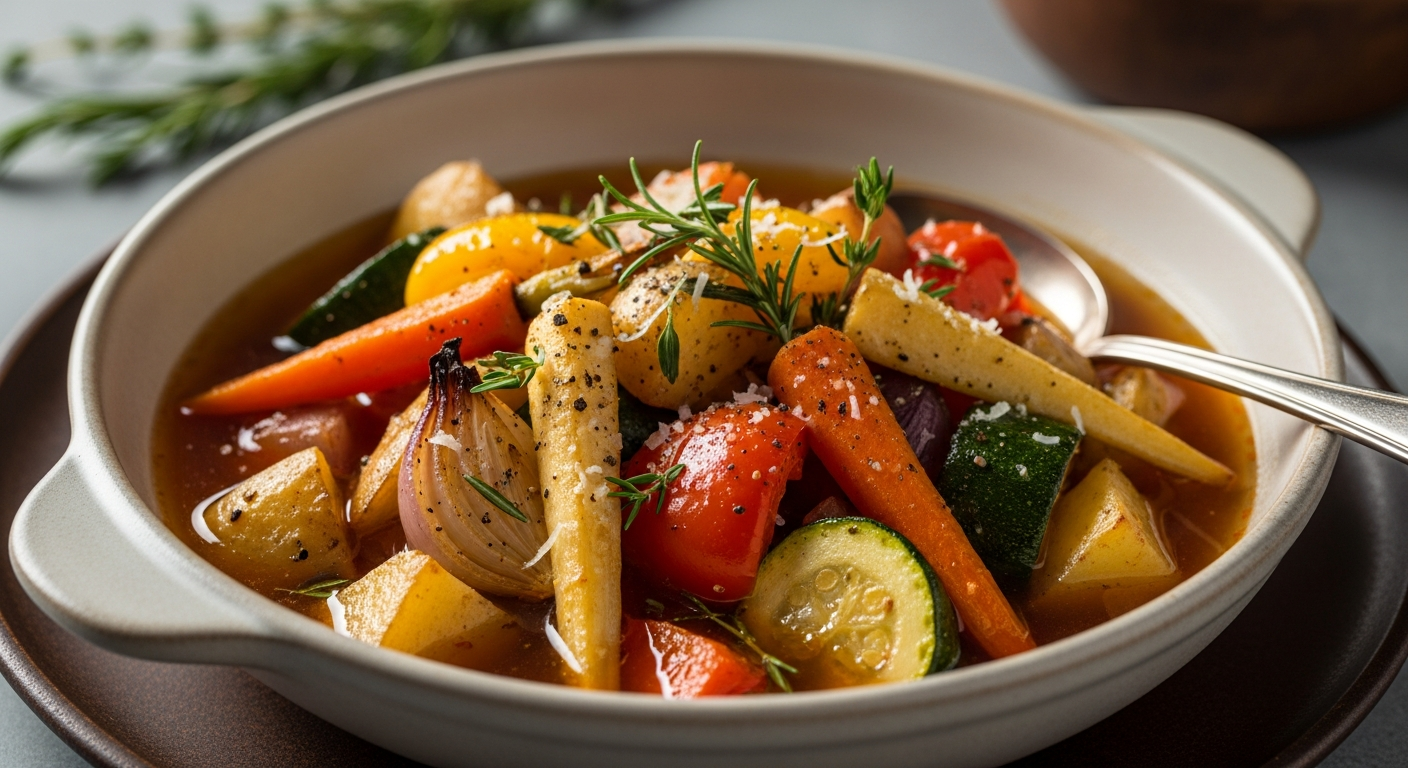
Few dishes evoke warmth and comfort like a hearty vegetable stew. Roasting the vegetables before simmering concentrates sugars and creates savory caramelization that deepens the broth’s flavor.
- Roast first: caramelization adds depth without extra fat.
- Use mixed textures: combine root veg and tender squash for complexity.
- Make-ahead friendly: flavors improve after refrigeration.
Ingredients for Roasted Vegetable Stew
The ingredient list below balances aromatics, sturdy roots, and quick-cooking squash for a consistent stew texture. Quantities yield roughly six portions depending on serving size.
These choices make the stew adaptable for seasonal swaps and simple protein additions like beans or grilled meats. For background on common root vegetables, see root vegetables.
- 1 large onion, chopped
- 2 carrots, peeled and chopped
- 2 parsnips, peeled and chopped
- 2 bell peppers (any color), chopped
- 1 pound cremini mushrooms, quartered
- 2 zucchini, chopped
- 2 yellow squash, chopped
- 4 cloves garlic, minced
- 2 tablespoons olive oil
- 1 teaspoon dried thyme
- 1 teaspoon dried rosemary
- ½ teaspoon smoked paprika
- 4 cups vegetable broth
- 1 (14.5 ounce) can diced tomatoes, undrained
- 1 (15 ounce) can chickpeas, drained and rinsed
- Salt and pepper to taste
- Fresh parsley, chopped (for garnish)
Preparation Method: Step-by-Step Instructions
Roasting first concentrates flavors and reduces water content, which prevents a bland, watery stew. Use a single baking sheet with space between pieces for proper browning.
Follow the organized steps below and keep tools ready: mixing bowl, rimmed sheet, and a large Dutch oven or heavy pot. If you prefer, open a reference on the culinary method roasting (food) to review heat transfer and Maillard reaction basics.
- Preheat your oven to 400°F (200°C).
- In a large bowl, combine the onion, carrots, parsnips, bell peppers, mushrooms, zucchini, and yellow squash.
- Drizzle the vegetables with olive oil and season with thyme, rosemary, smoked paprika, salt, and pepper. Toss to coat evenly.
- Spread the vegetables in a single layer on a large baking sheet. Roast for 30–40 minutes, or until tender and slightly caramelized, flipping halfway through. [IMAGE_PROMPT: A close-up shot of the vegetables roasting on a baking sheet in the oven. The vegetables should be slightly caramelized and look tender.]
- While the vegetables are roasting, heat a large pot or Dutch oven over medium heat. Add the minced garlic and sauté for 1–2 minutes, or until fragrant.
- Pour in the vegetable broth and add the diced tomatoes (with their juice). Bring to a simmer.
- Once the roasted vegetables are ready, add them to the pot with the broth and tomatoes.
- Stir in the chickpeas.
- Reduce the heat to low, cover the pot, and simmer for at least 30 minutes, or up to an hour, to allow the flavors to meld.
- Taste and adjust the seasoning as needed. Add more salt, pepper, or herbs to your liking.
- Ladle the vegetable stew into bowls and garnish with fresh parsley. Serve hot.
Nutritional Information (Approximate, per serving)
These values are estimates and will vary by specific brands and precise portions. Use a nutrition calculator if you need exact macro targets for a meal plan.
Typical nutrient contributions include fiber from the chickpeas and vegetables, moderate carbohydrates, and low saturated fat unless you add animal proteins. For background on chickpeas and their nutritional role, see chickpea.
- Calories: 250–300
- Fat: 8–12g
- Protein: 8–10g
- Carbohydrates: 40–45g
- Fiber: 10–12g
Chef’s Secrets and Pro Tips for the Best Vegetable Stew
Small technique changes produce large flavor gains. Caramelize well, balance acidity, and respect ingredient timing to preserve texture.
Use a low-sodium broth so you control final seasoning. Consider finishing with a splash of acid—lemon juice or a small amount of vinegar—to brighten the pot.
Practical Technique Notes
Avoid crowding the roasting pan; crowded veg steam rather than roast. If you need to double the recipe, use two pans and rotate racks for uniform results.
Root vegetables like parsnips and carrots take longer than zucchini. Cut tougher vegetables into similar-size pieces to ensure even roasting. For more on parsnip characteristics, see parsnip.
After roasting, add vegetables directly into the simmering broth to deglaze the pan flavors. Any browned bits stuck to the sheet will still contribute if you scrape them into the pot.
Flavor Variations and Proteins
For a heartier bowl, add lentils or white beans during the simmer step. Pulse a portion of the stew with an immersion blender to thicken while keeping texture in the pieces you didn’t blend.
Spice profiles shift the dish: add smoked paprika and cumin for a North African tone, or oregano and a bay leaf for Mediterranean notes. This versatility makes the stew suitable for weekly rotation.
Let the stew rest off heat for 5–10 minutes before serving to let flavors settle. Garnish with fresh herbs or a drizzle of extra-virgin olive oil for aroma and mouthfeel.
Final Notes and Storage Guidance
This stew improves after sitting overnight because the roasted sugars and herbs integrate with the broth. Store airtight in the fridge for up to three days for best quality.
For longer storage, cool fully and freeze in portioned containers for up to three months. Thaw in the refrigerator and reheat gently on the stove, adding a splash of broth if it has thickened too much.
Explore related recipes on the site: vegetable recipes collection and make-ahead meal ideas. These internal pages provide complementary techniques and serving suggestions.
FAQ
Can I freeze this vegetable stew?
Yes. Cool completely, portion into freezer-safe containers, and freeze for up to three months. Thaw overnight in the refrigerator before reheating slowly on the stove until piping hot.
What other vegetables can I add to this stew?
Use almost any firm vegetable: sweet potatoes, butternut squash, green beans, peas, or leafy greens like spinach added near the end. Adjust roasting times to match each vegetable’s density.
Can I make this vegetable stew in a slow cooker?
Yes. Roast as directed, then transfer roasted vegetables to the slow cooker with broth, tomatoes, and chickpeas. Cook on low for 6–8 hours or on high for 3–4 hours to develop flavor.
How do I prevent the stew from becoming watery?
Roast vegetables until caramelized to remove excess moisture. Simmer uncovered for the last 10–15 minutes to concentrate the broth, and pulse a portion of the stew if you prefer a thicker body.
Can I add meat or animal proteins?
Yes. Brown chicken thighs or sausage before adding garlic, then deglaze with broth. Finish by adding roasted vegetables and simmering together so flavors meld without overcooking proteins.
For general background on stews and their culinary place, see stew. For information on vegetables as a food category, see vegetable.
See also: vegetable stew