
Wholesome vegetable ramen brings concentrated umami, bright vegetables, and warm noodles together in a bowl designed to satisfy hunger and support nutrition. The recipe below focuses on balance: clear technique, layered broth, and toppings that add texture and protein while keeping the profile plant-forward.
- Fast flavor: build a miso-forward broth and use quick-sauteed veggies.
- Texture contrast: balance soft noodles with crunchy vegetables and seeds.
- Flexible protein: tofu or soft-boiled eggs raise satiety without heavy meat flavors.
Wholesome Ingredients That Elevate Your Vegetable Ramen
Start with a clean, savory stock and layer umami-rich ingredients for depth. For example, a combination of dried kelp and rehydrated dried mushrooms creates a mineral-rich base that supports miso without masking fresh vegetable notes.
Additionally, choose vegetables that provide color, mouthfeel, and nutrient variety. Mushrooms such as shiitake add savory depth, while greens like spinach contribute iron and folate. For background on key ingredients, see ramen, miso, and umami.
Prep and Specs
This recipe fits a one-hour workflow with most hands-on steps happening at the start and finish. Plan 20 minutes for prep and about 40 minutes to simmer and assemble, allowing flavors to marry while you prep toppings.
The recipe yields four generous bowls and sits at a medium difficulty level—suitable for cooks who understand basic knife skills and temperature control. Use low-sodium broth to manage salt, adding soy or miso slowly to taste.
Prep and Cook Time
- Preparation: 20 minutes
- Cooking: 40 minutes
- Total: 1 hour
Yield
- Serves 4 generous bowls
Difficulty Level
- Medium – ideal for home cooks ready to deepen their ramen-making skills
Ingredients
Gather whole-food ingredients that layer clean umami, a touch of fat for mouth-coating richness, and fresh produce for brightness. Select low-sodium or homemade broth as the backbone to control final seasoning.
Below is a concise ingredient list for four bowls. Adjust quantities for texture or dietary needs; for gluten-free, swap tamari for soy sauce and choose suitable noodles.
- 8 cups vegetable broth (preferably homemade or low-sodium)
- 1 cup shiitake mushrooms, sliced
- 1 tbsp toasted sesame oil
- 2 cloves garlic, minced
- 1-inch knob fresh ginger, grated
- 2 tbsp miso paste (white or yellow for milder sweetness)
- 2 tbsp soy sauce or tamari for gluten-free
- 200g fresh ramen noodles or dried
- 1 large carrot, julienned
- 1 cup baby spinach or kale
- 1/2 cup bamboo shoots, thinly sliced
- 2 green onions, chopped
- 1/2 cup corn kernels (fresh or frozen)
- 1 soft-boiled egg per serving, optional for extra protein
- Sesame seeds and nori strips for garnish
Instructions
Follow a clear sequence: flavor the oil, build savory base, finish with vegetables and toppings. Work in parallel when possible—cook noodles while the broth simmers to keep timing tight and textures optimal.
Maintain a gentle simmer during stock infusion and finish by assembling bowls to retain heat and texture. Stir in delicate ingredients last so they stay bright and not overcooked.
- Prepare the broth: Heat toasted sesame oil over medium heat. Add minced garlic and grated ginger, then sauté until fragrant and lightly golden, about 2 minutes.
- Enhance with mushrooms: Stir in sliced shiitake and cook 5 minutes until they soften and release savory juices.
- Add liquids and seasoning: Pour in vegetable broth and bring to a simmer. Lower heat and whisk in miso paste until dissolved, then add soy sauce. Simmer gently 15 minutes to marry flavors.
- Cook the noodles: Separately, cook ramen noodles to al dente per package instructions. Drain and briefly rinse under cold water to stop cooking, then set aside.
- Prepare the vegetables: While the broth simmers, julienne the carrot, slice bamboo shoots, and chop green onions. Wilt spinach or kale in the last 2 minutes of simmering.
- Assemble bowls: Divide noodles into bowls. Ladle hot broth with mushrooms and greens over the noodles.
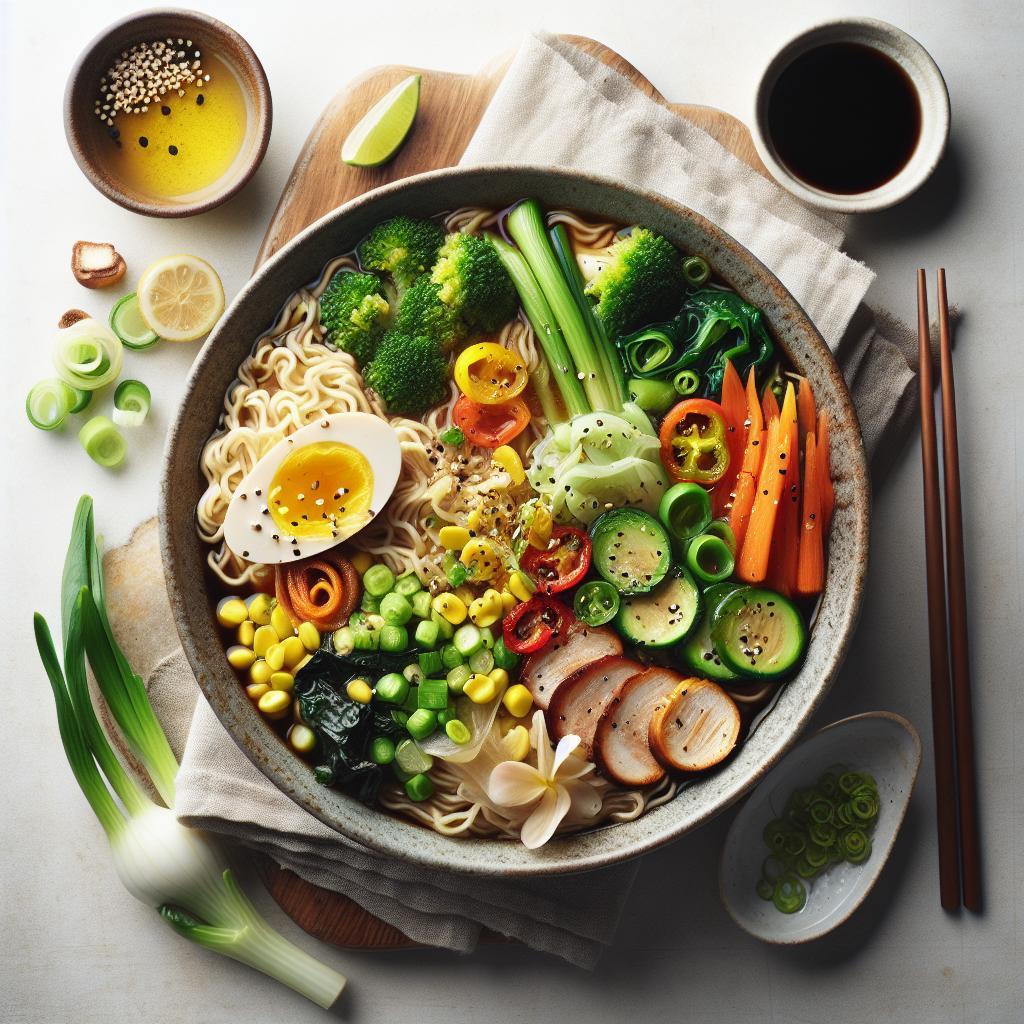
- Add toppings: Garnish with julienned carrots, bamboo shoots, corn, green onions, sesame seeds, and nori strips. Add a soft-boiled egg if desired.
- Serve: Serve immediately while piping hot, and encourage mixing of toppings for varied texture in each spoonful.
Chef’s Notes
Small technique shifts yield big flavor gains: bloom aromatics in oil, dissolve miso off-heat to avoid bitterness, and finish greens briefly for color and vitamin retention. Use a fine sieve if you prefer a crystal-clear broth.
For protein, press and pan-sear firm tofu cubes to add umami and texture. Alternatively, soft-boiled eggs add a silky yolk that enriches the broth when mixed into the bowl.
- Miso Variations: For a bolder profile, add a teaspoon of red miso and adjust salt conservatively.
- Vegetable Swaps: Use seasonal items like broccoli florets or snap peas for crunch.
- Broth Make-Ahead: Prepare the base up to two days ahead; flavors deepen on resting.
- Vegan Adaptation: Omit the egg and add more mushrooms or tofu for protein.
- Silky Broth: Stir in a teaspoon of tahini or peanut butter for creaminess without dairy.
Rest at least one minute after the tip above before moving to serving suggestions below, so the miso integrates evenly through the pot.
Serving Suggestions
Present ramen in wide, shallow bowls to showcase colors and layers. Offer small dishes of condiments—chili oil, toasted sesame, and pickled vegetables—so diners can tailor heat and acidity.
Pair ramen with a light side like cucumber salad or steamed edamame to round the meal. Use chopsticks and a soup spoon to encourage the correct eating rhythm: pick, slurp, sip.
Nutrition and Practical Notes
Estimating nutrition helps manage portions and align ramen with dietary goals. This bowl provides a balanced mix of carbohydrates, plant protein, and healthy fats when topped with seeds or tofu.
Use the table below as a guideline. Actual values depend on ingredient brands and portion sizes, so weigh items when precise tracking matters for athletic or medical plans.
| Nutrient | Per Serving |
|---|---|
| Calories | 350 kcal |
| Protein | 12 g |
| Carbohydrates | 50 g |
| Fat | 8 g |

FAQ
What makes vegetable ramen a wholesome and flavorful meal?
Vegetable ramen combines a nutrient-dense broth base, varied vegetables, and an energy source like noodles to deliver vitamins, minerals, and fiber. Layered umami from miso and mushrooms mimics richness often supplied by animal stocks, improving satisfaction.
Which vegetables work best in vegetable ramen?
Crunchy carrots, bok choy, shiitake mushrooms, corn, and leafy greens perform well. They provide textural contrast and both sweet and savory notes that lift the broth.
How can I make the broth rich without using meat?
Use kombu and dried mushrooms to extract glutamates, then add miso or tamari for fermented depth. Slow simmering extracts minerals and creates a fuller mouthfeel, similar to traditional stocks.
Can I customize vegetable ramen for dietary needs?
Yes. Swap noodles for gluten-free options, add tofu or edamame for protein, or reduce sodium by using low-sodium broth and minimal added soy. Adjust toppings to control calories and macros.
How should I store leftovers?
Store broth separate from noodles and soft toppings to retain texture. Refrigerate within two hours and consume within 48 hours for best flavor and safety.
Insights and Conclusions
Vegetable ramen rewards attention to ingredient quality and timing. A focused broth strategy and smart topping choices produce a bowl that tastes complex yet remains approachable for home cooks.
Finally, experiment with seasonal produce and small technique changes to evolve the recipe. Over time, you will build a personal version that matches your flavor preferences and dietary priorities.
For additional background on ingredients referenced here, consult reliable sources about shiitake and kombu to learn how they influence broth chemistry and umami.
See also: vegetable ramen