
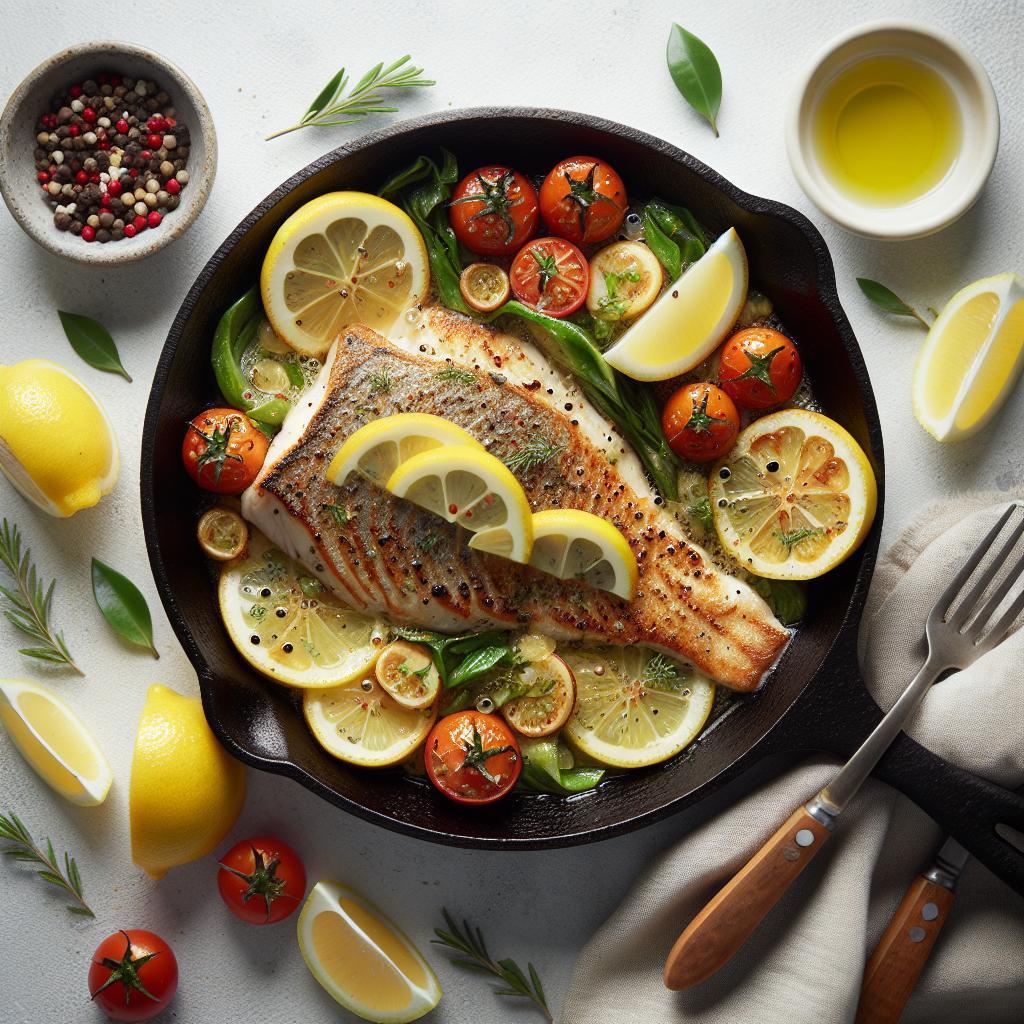

Zesty Skillet Lemon Butter Fish: A Flavorful Quick Catch
When the clock tightens and dinner must arrive fast yet memorable, this Zesty Skillet Lemon Fish delivers. The technique produces crisp skin, flaky flesh and a bright lemon-butter sauce that finishes the plate with gloss and flavor.
- Why this Lemon Fish recipe works
- Prep and Cook Time for Lemon Fish
- Yield and portioning for Lemon Fish
- Ingredients for Lemon Fish
- Equipment and technique notes
- Instructions for Lemon Fish
- Tips for success with Lemon Fish
- Serving Suggestions for Lemon Fish
- Nutrition and portioning for Lemon Fish
- Common variations for Lemon Fish
- FAQ
- Ready in 22 minutes from prep to plate for four people.
- Simple technique: high-heat sear, butter finish, fresh lemon boost.
- Flexible protein: use cod, halibut or similar firm white fish for consistent results.
Why this Lemon Fish recipe works
The skillet method creates a Maillard-seared crust that traps juices and adds texture. Fat plus acid — butter and lemon — balance mouthfeel and brightness for a single, efficient sauce.
This recipe favors firm, white-fleshed fillets that stand up to quick, high heat. For basic context on muscle structure and why firm fillets hold, see fish.
Prep and Cook Time for Lemon Fish
Preparation: 10 minutes. Patting fillets dry and seasoning correctly sets the stage for a reliable sear. Dry skin contacts hot metal; moisture creates steam and prevents browning.
Cooking: 12 minutes. Sear skin-side down until golden, flip once, then finish with butter, garlic and lemon. The timeline stays tight so timing cues matter more than exact seconds.
Yield and portioning for Lemon Fish
Serves 4 fillets, roughly 6 ounces each. Portioning by weight gives consistent doneness across servings and predictable nutrition calculations.
Scale by pan surface area: overcrowding lowers temperature and ruins a proper sear. Cook in batches if needed to keep a steady sizzle.
Ingredients for Lemon Fish
Use firm, white-fleshed fish — cod, halibut or snapper — for the best texture and predictable cooking. These choices tolerate heat and maintain shape during a high-heat sear.
Key ingredients: olive oil, unsalted butter, garlic, lemon zest and juice, and fresh parsley. For culinary background on citrus, consult lemon.
- 4 skin-on fillets (6 oz each) firm white fish
- Salt and freshly ground black pepper, to taste
- 2 tbsp olive oil
- 3 tbsp unsalted butter
- 2 cloves garlic, minced
- Zest of 1 lemon
- Juice of 1 lemon (about 2 tbsp)
- 2 tbsp fresh parsley, finely chopped
- Optional: lemon wedges for garnish
Equipment and technique notes
Favor a heavy skillet — stainless or cast iron — for even heat and reliable crust formation. Nonstick works for delicate fillets, but heavy pans give superior crust development.
Pan-frying is the technique; maintain medium-high heat and avoid smoking the oil. For method context, see pan frying.
Instructions for Lemon Fish
Prep everything before heat: have butter, minced garlic and lemon ready because the sauce finishes quickly. Work confidently; the finishing sauce emulsifies in less than a minute.
Follow these sequential steps and watch color rather than trusting time alone. Use a thin-edged spatula to flip without tearing the fillet.
- Pat fillets dry with paper towels and season both sides with salt and pepper. Dry skin sears; surface moisture prevents browning.
- Heat oil in a large skillet over medium-high until shimmering. Add a single drop of water: it should sizzle and evaporate quickly.
- Place fillets skin-side down and press gently to keep skin flat. Sear undisturbed 4–5 minutes until skin is deeply golden and releases from the pan.
- Flip gently and cook 2–3 minutes more, depending on thickness, until flesh is opaque and flakes with slight pressure.
- Lower heat to medium-low, then add butter and minced garlic; sauté 20–30 seconds until fragrant but not browned.
- Stir in lemon zest and juice, swirl the pan to emulsify the butter into a glossy sauce. Spoon the sauce over the fillets for 1–2 minutes to coat and warm through.
- Remove from heat, sprinkle parsley over the fillets, and serve immediately with lemon wedges for extra brightness.
Step details and timing cues
Assess doneness by color and texture: a golden edge and firm flesh indicate cooked-through better than strict timers. Residual heat carries the fillet a bit after you remove it from the pan.
Use clarified butter to raise the smoke point if your pan runs hot, or finish with cold butter off heat for a silkier emulsion. For butter background, see butter.
After searing, rest fillets briefly on a warm plate while you finish the sauce. This short pause balances internal temperature without drying the fish.
Tips for success with Lemon Fish
Choose the right fillet: thicker, firm cuts resist overcooking and keep a tender interior. Thin fillets cook faster but need closer attention to avoid dryness.
Control moisture: always dry fish before seasoning and searing. Water in the pan stalls browning and creates steam instead of a crust.
Temperature control: if butter smokes, lower the heat immediately. Maintain a steady sizzle rather than aggressive smoke to protect flavor.
Season confidently: salt early to draw out a bit of moisture for crisp skin, then adjust just before serving if needed.
Serving Suggestions for Lemon Fish
Pair Lemon Fish with a crisp green salad dressed in a light vinaigrette, steamed asparagus, or lemon-herb quinoa for a balanced plate. The citrus in the fillets complements slightly bitter greens.
For starch, choose garlic-roasted potatoes or quick-cooked rice; both soak up the lemon-butter sauce and round out the meal. See more ideas on our site: Lemon Fish tag and the homepage at CookHarvest.
Nutrition and portioning for Lemon Fish
Per serving estimates for a 6 oz fillet with butter sauce: roughly 320 calories, 38 g protein, 16 g fat and 2 g carbohydrates. Values vary by fish type and butter quantity.
To adjust calories, reduce butter or use a light olive oil emulsion. For macro control, remove skin or trim fat as required by dietary goals.
Common variations for Lemon Fish
Add fresh herbs like dill or thyme for aromatic lift, or a pinch of red pepper flakes for heat. Small changes alter flavor without changing technique.
For richer sauce, fold in a tablespoon of cold butter off heat (monter au beurre) to create a silky emulsion. For a lighter option, finish with extra lemon juice instead.
FAQ
Q: Which fish types are best for Lemon Fish?
A: Firm, white fish such as cod, halibut or snapper perform best because they hold together during searing. These species tolerate heat and keep a clean flake when done.
Q: How do I achieve perfectly crisp skin on Lemon Fish?
A: Dry the skin thoroughly, season just before searing, and press the fillet into the pan until the skin sets. Avoid flipping until the skin releases easily and turns golden brown.
Q: Can I make the lemon butter sauce ahead for Lemon Fish?
A: You can mix zest and juice with softened butter and refrigerate, but add raw garlic just before serving to retain fresh bite. Reheat gently and spoon over just-cooked fillets.
Q: Is this Lemon Fish recipe suitable for beginners?
A: Yes. The steps remain straightforward, and the technique becomes reliable with practice. Short timing windows and visible indicators like color and opacity guide success.
Q: How should leftovers of Lemon Fish be stored and reheated?
A: Store in an airtight container in the refrigerator up to two days. Reheat gently in a skillet over low heat and add a fresh squeeze of lemon to revive brightness.
Final note: keep the approach simple and repeatable. The combination of a hot skillet, well-prepared fillets and a quick lemon-butter finish consistently produces a restaurant-quality plate at home.

Recommended Reading:
- Savor the Richness: Creamy Spinach Chicken Pasta Delight
- Savor the Flavor: One-Pot Cajun Chicken Rice Recipe Guide
- One Pot Sausage and Pasta: Easy Flavor-Packed Weeknight Meal